Sports
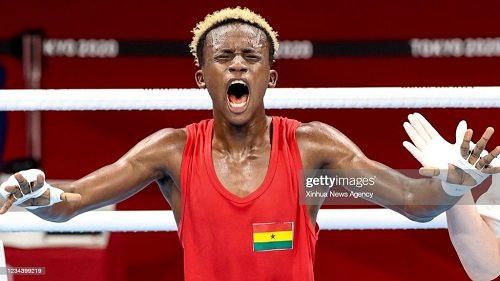
Takyi’s bravado saves a nation’s Olympic blushes

- /home/u249204778/domains/spectator.com.gh/public_html/wp-content/plugins/mvp-social-buttons/mvp-social-buttons.php on line 27
https://spectator.com.gh/wp-content/uploads/2021/08/Takyi.jpg&description=Takyi’s bravado saves a nation’s Olympic blushes', 'pinterestShare', 'width=750,height=350'); return false;" title="Pin This Post">
- Share
- Tweet /home/u249204778/domains/spectator.com.gh/public_html/wp-content/plugins/mvp-social-buttons/mvp-social-buttons.php on line 72
https://spectator.com.gh/wp-content/uploads/2021/08/Takyi.jpg&description=Takyi’s bravado saves a nation’s Olympic blushes', 'pinterestShare', 'width=750,height=350'); return false;" title="Pin This Post">
To the cavilers, Ghana’s campaign at the Tokyo Olympic Games was disastrous. To others, it was a cameo suggesting there is great future ahead.
Amid a typhoon-like Covid pandemic that ruthlessly swept its anger across the world – killing thousands – and destroying livelihoods, Japan’s capital Tokyo, still proceeded to welcome some 11,500 passion-driven athletes to the Games.
So, after the hustles and bustles of intense chase, 14 athletes from Ghana were able to make the Olympic qualification nark – swaggering into a quadrennial event that has not given the nation a medal since 1992 in Barcelona, Spain, when the Black Meteors clinched what was Africa’s first medal (bronze) in football.
Again, for 49 years, no single individual sport has given the nation a medal.
Truth is that expectation of a medal from Tokyo was deemed almost a distant possibility. Even the biggest optimist doubted for once – reason being that preparation was woefully inadequate.
However, captain of Ghana’s amateur boxing team (Black Bombers), Sulemana Tetteh, on July 26 offered the nation the biggest hope as he won his first bout – silently knocking off any lingering doubt of a medal fiasco in Tokyo.
But two days later, Ghana’s representative in judoka Sensei Anani Kwadjo was swatted aside in the 90kg event. It was a learning curve for the 21-year-old who bowed to a more experienced South Korean.
On the same night, the unheralded Samuel Takyi wrapped up a unanimous 5-0 win against Ecuador’s Caicedo Pachito in his opening featherweight contest.
Sadly, the joy that greeted Takyi’s victory was to evaporate with humiliating rapidity few hours later when light heavyweight Shakur Samed was technically stopped by his Turkish opponent Bayram Malkan. It was a humbling experience too for the loser whose siblings were also ‘medal-less’ at the 2008 Beijing Olympics.
Come July 29, Ghana’s finest swimmer Abeiku Jackson, finished first in the 100m men’s butterfly. Many Ghanaians cart-wheeled into celebration only to be told that his time of 53:39, was not enough to see him into the semi-final stage. All the same, it was a great performance, and a corking one for the future. A day later, though, Abeiku’s swimming compatriot Unilez Takyi – placed last in the women’s 50m freestyle event. No comment on that one.
Perhaps, the most bewildering performance came from Nadia Eke in the triple jump – recording no jumps in all three attempts. It was limpidly clear she was not ready for the event; maybe, just happy to have tasted Olympics.
Little wonder, Eke was quick to announce her retirement soon after her failure.
On Saturday, July 31, Benjamin Azamati surprised many Ghanaians after placing fourth during heat 7 of the 100m race, recording 10.13 secs. Winner of that heat was Australia’s Rohan Browning. He was tipped to do far better.
Azamati made history by breaking a 22-year national record held by Leo Myles Mills on March 26, 2021 in Texas, USA, by clocking 9.97 seconds to qualify for the Tokyo and many he could reenact that performance. He blames his Tokyo performance to stage fright. Well, he is a huge potential.
On same day, Christian Amoah slumped badly in weightlifting, attributing his bad output to an injury he sustained earlier. It looks like he had seen his last Olympics, having tasted the previous one in Rio, Brazil.
After bouts of bitter-sweet recordings, the biggest joy popped up like champagne in the early hours of August 1 when Takyi decisioned his opponent 3-2 and hopped into the medal zone – basically giving Ghana its first boxing medal (bronze) since Prince Amartey in Munich ’72. A 49-year-old demon was effectively exorcised by the 21-year-old lad who has proven to be a huge revelation in Tokyo.
On July 3, Takyi attempted to box his way beyond his bronze feat but crashed 1-4 to the more experienced United States’ Duke Ragan.
The defeat, notwithstanding, the former ‘truck pusher’ has written his name in the hearts of Ghanaians. He was the biggest thing that happened to Ghana in Tokyo – and must be hugely celebrated when the contingent returns home.
Any hope for the sprints? Well, Sprinter Joseph Paul Amoah finished third in heat 7 to cruise into the semis but subsequently failed to make the final cut later.
But when it all appeared that athletics was not going to make any big impression, Ghana’s 4x100m men’s quartet qualified for the Olympic finals with a new national record of 38.08 secs. As of press time, the team was preparing to dash for the medal race. Who knows it might be another medal for Ghana? And, that would have been awesome!
Having said that, the total performance of our contingent indicated that we could have done better if we had prepared well. It was no Covid issue. We failed to invest in our preparations and the upshot was exactly what we reaped.
We must be extremely lucky to be returning with something, courtesy Takyi! He saved the nation’s Olympic blushes!
PlainTalk with JOHN VIGAH


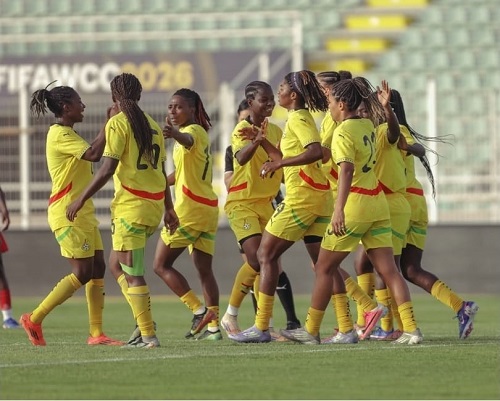
The Black Queens kick off their 2026 CAF Women’s Africa Cup of Nations journey on Wednesday, July 29, when they take on Cape Verde in their Group C opener in Morocco.
Coach Kim Lars Björkegren and his team go into the match full of confidence after weeks of intensive preparations.
The Queens held a successful pre-tournament training camp and played friendly matches to fine-tune ahead of the competition.
With morale high, Ghana’s senior women’s team will be targeting maximum points to get their campaign off to the perfect start.
The match is set for 5:00 PM GMT at the Moulay Rachid Stadium.
Football fans across Ghana will be watching closely, hoping the Queens can secure a positive result and lay the foundation for a memorable WAFCON 2026 run.
By Edem Mensah-Tsotorme
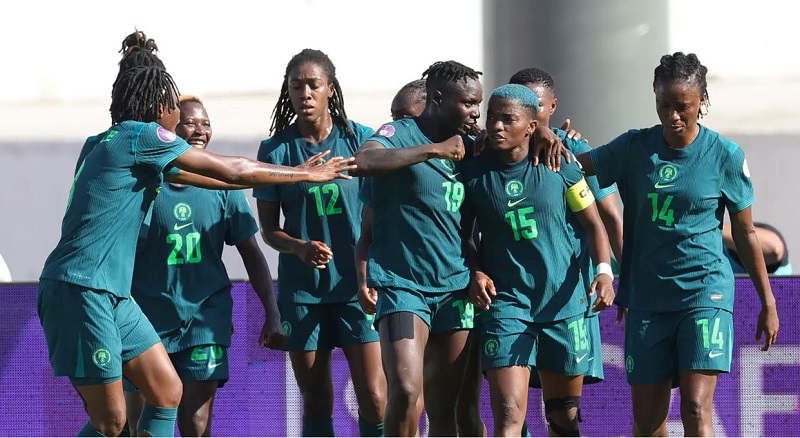
With the World Cup fever gradually dying down, attention would switch to other equally important competitions from now to the latter parts of the year.
Barely a week after the global football showpiece that saw Spain upstaged Argentina as World Champions, over 70 countries gathered in Glasgow, Scotland for the Commonwealth Games that is attracting hundreds of athletes from the Commonwealth community.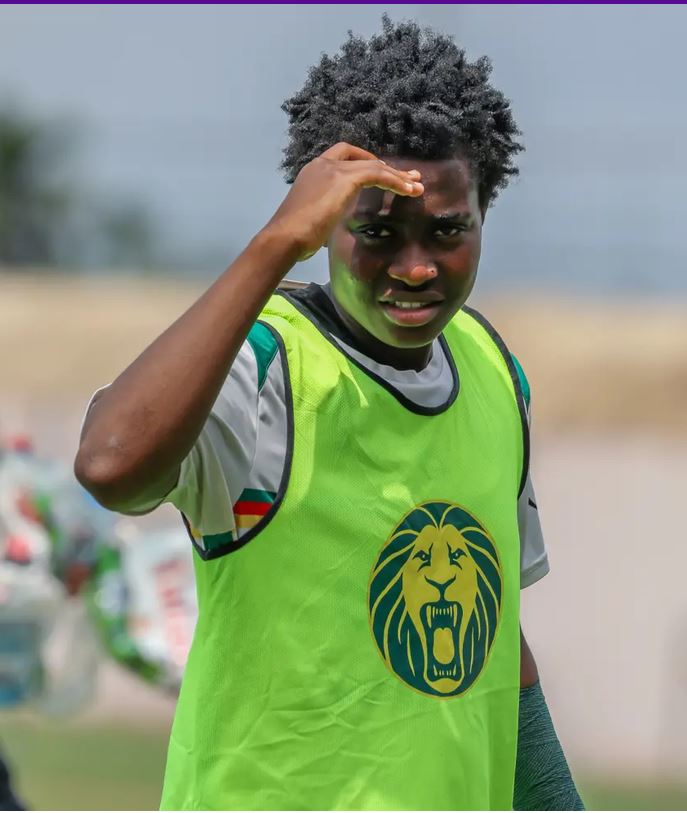
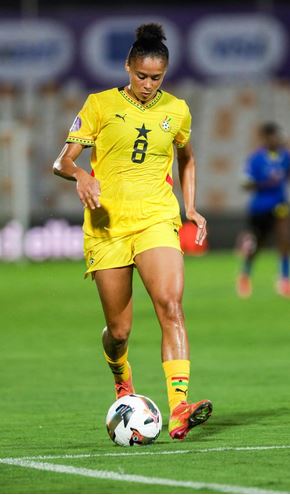
Equally, 16 top female national teams in Africa would commence competition for the bragging rights as African champions when the delayed Women’s Africa Cup of Nations 2026 kicks off in Morocco tomorrow.
The Super Falcons of Nigeria are usually considered favourites for this showpiece, having shown the strength and character to dominate the game on the continent.
As defending champions, they come in strongly again, expected to face a more difficult sides like the Black Queens of Ghana, Zambia and Morocco who have been touted as possible teams to cause an upset.
Of the 16 qualified teams, nine featured at the previous edition held in 2024.
Botswana, the Democratic Republic of the Congo and Tunisia, who qualified in 2024, missed out this time, while Cape Verde and Malawi will make their first appearance in the tournament.
Today, The Spectator Sports takes a look at some of the teams expected to rub shoulders with the big guns in the female game.
Cameroon
After missing the previous edition, Cameroon returns to the CAF Women’s Africa Cup of Nations Morocco 2026 determined to re-establish themselves among Africa’s elite.
The Indomitable Lionesses, one of the continent’s most successful women’s national teams, secured a place at the expanded 16-team tournament after receiving a second chance through CAF’s revised qualification system.
Now, under newly appointed head coach Valentine Nguele and inspired by emerging midfield star Naomi Eto, Cameroon will be aiming not only to reclaim their place among Africa’s leading nations but also to secure qualification for the 2027 FIFA Women’s World Cup.
Cameroon boasts one of the richest histories in the Women’s Africa Cup of Nations.
The Indomitable Lionesses have reached the final on three occasions—in 2004, 2014 and 2016—but are still searching for their first continental title.
Their consistency has also been reflected in three third-place finishes in 2002, 2012 and 2018, giving Cameroon six podium finishes overall.
Only Nigeria and South Africa have accumulated more top-three finishes in the history of the competition, underlining Cameroon’s long-standing status among Africa’s leading women’s football nations.
Zambia
After finishing third in 2022 and falling short of expectations at the 2024 edition, Zambia head to the TotalEnergies CAF Women’s Africa Cup of Nations Morocco 2026 determined to establish themselves among Africa’s elite.
With one of the continent’s most feared attacking units and new head coach Nora Häuptle at the helm, the Copper Queens will be aiming to lift the Women’s AFCON trophy for the first time.
Barbra Banda remains one of the biggest names in African women’s football.
The Orlando Pride striker has established herself among the leading forwards in the National Women’s Soccer League (NWSL) and returns to international competition after recovering from a hip injury suffered late last year.
Powerful, direct and clinical in front of goal, Banda will once again spearhead Zambia’s attack as the Copper Queens pursue their first continental title.
Burkina Faso
Burkina Faso (Stallions Ladies) return to the competition determined to make history after missing the 2024 edition. Encouraged by an impressive qualifying campaign, the Stallions Ladies head to Morocco aiming to progress beyond the group stage for the first time.
Burkina Faso secured qualification with convincing victories over Burundi and Togo.
The Stallions Ladies defeated Burundi 5-1 on aggregate, following a commanding 4-1 first-leg victory before completing the job with a 1-0 win in the return fixture.
They carried that momentum into the final qualifying round against Togo, winning 2-0 in the first leg before sealing qualification with another 1-0 victory to complete a 3-0 aggregate success.
Nigeria
Reigning champions Nigerias head to Morocco 2026 looking to extend their remarkable record in the competition. With 10 continental titles to their name, the Super Falcons remain the most successful team in the tournament’s history..
Led by Captain Rasheedat Ajibade and head coach Justine Madugu, Nigeria once again begin the competition among the favourites.
Nigeria secured qualification to Morocco 2026 by defeating Benin 3-1 on aggregate in the second round of qualifying.
Having received a bye in the opening round, the Super Falcons took control of the tie with a 2-0 away victory in Cotonou.
They completed the job in Abeokuta, drawing 1-1 in the second leg after Ashleigh Plumptre opened the scoring before Benin equalised through Yasmine Djibril.
The result ensured another successful qualification campaign for the reigning African champions.
Cote d’Ivoire
After a 12-year absence from Africa’s biggest women’s football competition, Côte d’Ivoire returns to the TotalEnergies CAF Women’s Africa Cup of Nations aiming to re-establish themselves among the continent’s leading nations.
The Elephants secured an unexpected route back to the finals following the expansion of the tournament from 12 to 16 teams.
Now guided by experienced French coach Reynald Pedros and inspired by prolific striker Habibou Ouedraogo, Côte d’Ivoire believe they have the talent to challenge Africa’s established powers once again.
The Elephants were knocked out in the final qualifying round after a fiercely contested tie against Senegal. Neither side managed to score across the two legs, with Senegal eventually prevailing 5-4 on penalties to deny the Ivorians automatic qualification.
Following the expansion of the Women’s AFCON from 12 to 16 participating teams, CAF allocated the additional places based on the FIFA Women’s World Ranking.
⚽ Group A: Morocco, Algeria, Senegal, Kenya,
⚽ Group B: South Africa, Ivory Coast, Burkina Faso, Tanzania
⚽ Group C: Nigeria, Zambia, Egypt, Malawi
⚽ Group D: Ghana, Cameroon, Mali, Cape Verde
By Andrew Nortey