News
Stop abusing mental health, epileptic patients – Advocate

- /home/u249204778/domains/spectator.com.gh/public_html/wp-content/plugins/mvp-social-buttons/mvp-social-buttons.php on line 27
Warning: Trying to access array offset on false in /home/u249204778/domains/spectator.com.gh/public_html/wp-content/plugins/mvp-social-buttons/mvp-social-buttons.php on line 27
&description=Stop abusing mental health, epileptic patients – Advocate', 'pinterestShare', 'width=750,height=350'); return false;" title="Pin This Post">
- Share
- Tweet /home/u249204778/domains/spectator.com.gh/public_html/wp-content/plugins/mvp-social-buttons/mvp-social-buttons.php on line 72
Warning: Trying to access array offset on false in /home/u249204778/domains/spectator.com.gh/public_html/wp-content/plugins/mvp-social-buttons/mvp-social-buttons.php on line 72
&description=Stop abusing mental health, epileptic patients – Advocate', 'pinterestShare', 'width=750,height=350'); return false;" title="Pin This Post">
Discrimination and use of abusive words and negative language on persons with mental health conditions as well as epileptic patients, have been identified as “debasing and an affront to their full recovery.”
The use of words such as ‘imbecile’, ‘mad’, ‘idiot’, ‘stupid, ‘moron’, and ‘crazy’ particularly in local language or any other language are said to downgrade patients and slow down their pace of healing.
Through no fault of his Mr. Polycarp Yelyuo a 42-year-old man with epilepsy at Fian in the Daffiama-Bussie-Issah District of the Upper West Region is constantly faced with abuse and stigma from neighbours and this has affected his self-esteem.
“I am not mad, I only have epilepsy which I have been fighting for a while with not much success but people often refer to me as the ‘mad man’, among other names”, he said.
Epilepsy is a neurological disorder in which nerve cell activity in the brain is disturbed and causes seizures.
Although it is a neurological disorder, recurring epileptic seizures as noted by the Regional Mental Health Coordinator, Mr Sylvester Basagnia could affect a part of the human brain given the concussion, a traumatic brain injury that affects your brain function, that occurred with every episode.
He said the frequency could cause mental health conditions but was quick to add that “some patients with seizure disorders had no mental health conditions at all”.
For Mr. Polycarp, the breaking point was when a family member referred to him a ‘useless mad man’ just because another family member wanted to gift him some used clothing to keep warm.
He told The Spectator that due to stigma, he had not been able to marry and lived by himself in his home at Fian where he reared fowls for sale.
“People sometimes call me wizard and claim I will use my witchcraft to kill them so they don’t associate with me; members of my family do not eat together with me as they claim I might infest them”, he narrated.
According to him, he had experienced quite a number of episodes within shorter intervals as a result of depression which stemmed from negative attitude received from people.
“I am used to outsiders bullying me but it becomes very difficult to contain when my own family members do that to me and refuse to support me”, he said.
A mental health advocate and Programmes Coordinator of the Centre for People’s Rights Initiative (CPRI), Mr Dominic Wunigura said Polycarp started receiving treatment for his condition when he was 20 years at which time it was difficult to stabilise the condition.
“Epilepsy when identified early and treated on time from the infant stage can be cured completely in some cases but when the disease lingers on for a while before management, then it becomes difficult to stabilise the condition”, he said.
He said in partnership with the Ghana Somubi Dwumadie, a project targeted at promoting positive language among persons with mental health conditions as well as recovered mental health patients, his outfit had been able to organise these people into Self-Help Groups to among other things, share emotional and physical support.
“Under the project, we are sensitising people and also the media to the use of positive language on persons with mental health conditions”, he added.
From Lydia Darlington Fordour, Wa



Veteran Nigerian actor and African screen legend, Pete Edochie, has paid a courtesy call on the Chief Executive Officer of the Ghana Gold Board (GoldBod), Sammy Gyamfi, during his visit to Ghana.
Edochie is in Ghana to launch the African Legacy Project, which includes a book, documentary film and an African Youth Mentorship Initiative targeting about 500,000 young people across the continent.
Mr. Gyamfi welcomed the opportunity for GoldBod to support the mentorship initiative, noting that it aligns with the Board’s Special Intervention Programme and its focus on social impact and economic empowerment.
GoldBod’s work is also referenced in Pete Edochie’s new book, which highlights Ghana’s efforts to ensure its gold resources contribute to national development.
By Edem Mensah-Tsotorme
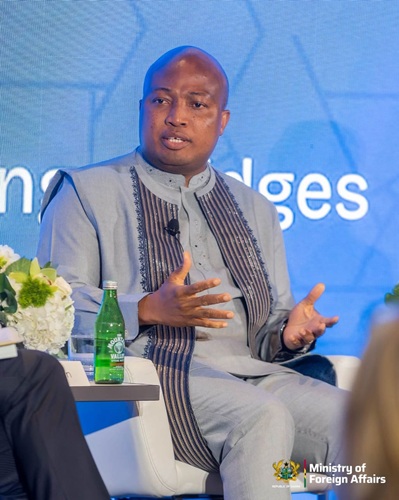
The Ministry of Foreign Affairs has warned Ghanaians seeking employment in Zambia to be cautious of fraudulent job offers that could expose them to human trafficking and forced involvement in cybercrime.
The warning follows the arrest of six Ghanaians in Lusaka, Zambia, during a joint operation by the Zambia Police Service, the Drug Enforcement Commission and the Department of Immigration on August 23, 2026.
According to the Ministry, the operation targeted a facility suspected of being involved in organised cybercrime activities and led to the arrest of 79 people, including 10 Zambians and 69 foreign nationals.
The Ministry said six of the foreign nationals arrested were Ghanaians.
It explained that reports received by the Ghana High Commission in Lusaka indicated that some of those arrested had been recruited through what appeared to be legitimate employment opportunities, including online data entry jobs.
However, the Ministry said some were allegedly forced into online scam activities after their passports were confiscated by their employers.
It warned that the situation highlights how human trafficking groups are using fake employment opportunities to lure unsuspecting job seekers into illegal activities.
The Ministry has therefore advised Ghanaians travelling to Zambia or seeking employment there to thoroughly verify job offers, recruitment agencies and prospective employers before travelling.
Ghanaians living in Zambia have also been urged to remain vigilant when responding to online job opportunities and maintain regular contact with the Ghana High Commission in Lusaka for consular assistance when necessary.
The Ministry said the government remains committed to protecting the welfare and interests of Ghanaians travelling to or living outside the country.
By: Jacob Aggrey