News
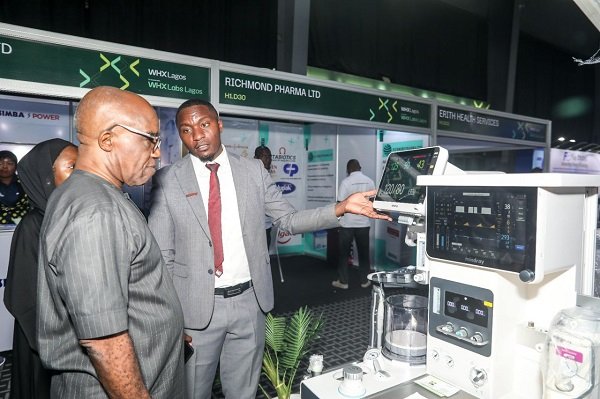
WHX in Lagos to highlight pathways for localising West Africa’s health supply chain

- /home/u249204778/domains/spectator.com.gh/public_html/wp-content/plugins/mvp-social-buttons/mvp-social-buttons.php on line 27
https://spectator.com.gh/wp-content/uploads/2026/05/WhatsApp-Image-2026-05-15-at-14.25.08-1.jpeg&description=WHX in Lagos to highlight pathways for localising West Africa’s health supply chain', 'pinterestShare', 'width=750,height=350'); return false;" title="Pin This Post">
- Share
- Tweet /home/u249204778/domains/spectator.com.gh/public_html/wp-content/plugins/mvp-social-buttons/mvp-social-buttons.php on line 72
https://spectator.com.gh/wp-content/uploads/2026/05/WhatsApp-Image-2026-05-15-at-14.25.08-1.jpeg&description=WHX in Lagos to highlight pathways for localising West Africa’s health supply chain', 'pinterestShare', 'width=750,height=350'); return false;" title="Pin This Post">
West Africa’s In Vitro Diagnostics (IVD) market currently stands at
US$0.988 billion in 2025 and is set to grow at a 4% CAGR, reaching US$1.388 billion by 2034.
Meanwhile, Africa’s broader medical supplies market is soaring from US$6.5 billion in 2025 to
US$11.18 billion by 2031 at a 10.4% CAGR, with pharmaceutical imports, led by Nigeria’s 60% regional share, are projected to hit US$6.5 billion by 2030, straining cold-chain and logistics
infrastructure.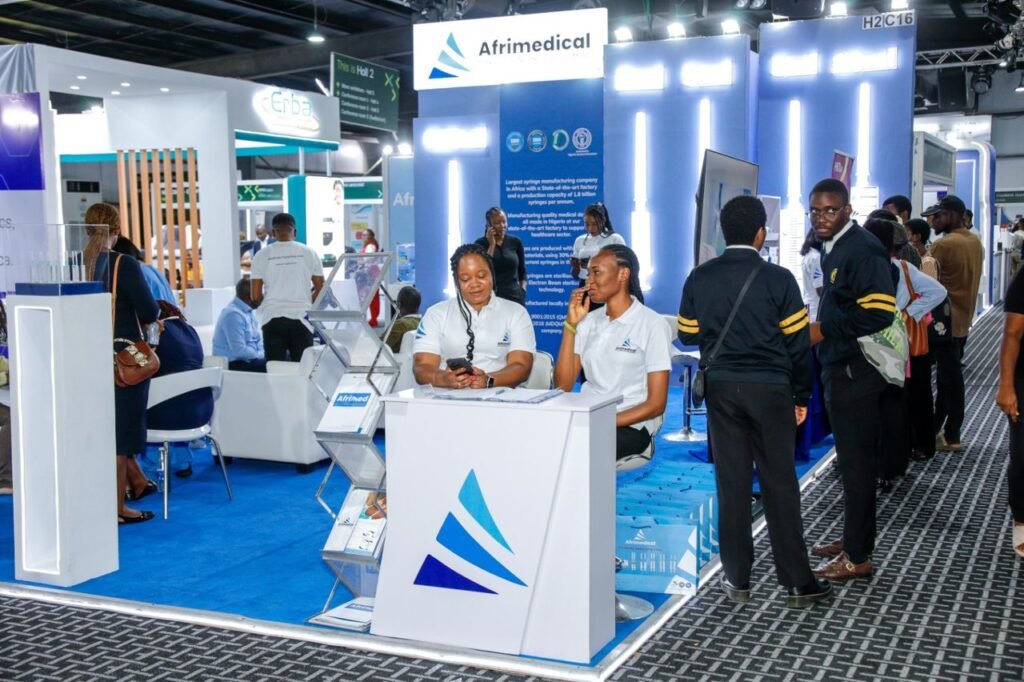
Yet, amid this rapid expansion, West African hospitals and labs face acute vulnerabilities; 85–99% import dependency on medical equipment and IVDs triggers two-to-four-week delays and severe downtime, foreign exchange shortages drive cost volatility, and over 70% out-of-pocket spending demands urgent efficiencies.
Procurement leaders are responding with a strategic pivot, from lowest-cost bids to service-led sourcing, foreign exchange-hedged contracts, and inventory buffering for reagents, while
regional suppliers already deliver 30–40% faster lead times.
The Hospital Investment & Buyer Leadership Forum, held in collaboration with ABCHealth on 3
June, as part of the World Health Expo (WHX) in Lagos (2-4 June 2026, Landmark Centre), creates a platform for healthcare leaders and vetted suppliers for diagnostics, cold-chain, and digital platforms to connect.
Held under the theme “Advancing hospital growth and innovation:
Investment, strategic partnerships, and technology adoption in West Africa”, attendees can look forward to intelligence on policies like Nigeria’s duty waivers, benchmarking regional
manufacturers, and securing framework agreements for crisis-ready chains, as well as capitalising on the African Continental Free Trade Area (AfCFTA) reforms and donor funding for transparent, tech-enabled systems.
“The Hospital Investment & Buyer Leadership Forum at WHX turns these challenges into opportunities,” Tom Coleman, Portfolio Director – Healthcare, Informa Markets explained.
He noted that“Leaders can secure framework agreements with vetted suppliers, tap AfCFTA and policyincentives like Nigeria’s duty waivers, and build crisis-resilient systems.”
According to a 2026 WHX report titled ‘Building Resilient Healthcare Supply Chains in West Africa, structural shift in West Africa is gaining momentum through localisation, with
Afreximbank’s US$75 million facility spurring the production of devices, vaccines, and biologics alongside Nigeria’s progress from 30% local medicine output in 2024 toward a 70% target by 2030.
The AfCFTA initiative is further accelerating distribution hubs in Nigeria, Ghana, and Côte
d’Ivoire, enabling blended original equipment manufacturer-regional sourcing.
“The Hospital Investment & Buyer Leadership Forum at WHX is a pivotal gathering for healthcare leaders, investors, and suppliers to drive hospital expansion across Nigeria and the region,” Dr. Mories Atoki, CEO, ABCHealth said.
According to him, “We are excited to engage on key topics, from
tools and systems hospitals prioritise for better care, to strategies strengthening facilities and
workforce capabilities, innovative partnership models for resource and technology integration, and financing models enabling sustainable growth. This forum creates unmatched opportunities to forge connections that accelerate service expansion and technology adoption amid West Africa’s healthcare transformation.”
WHX brings together more than 500 exhibitors showcasing cutting-edge medical solutions, over 8,000 professional visitors and 30 world-renowned speakers sharing insights that matter across three dynamic parter-led forums, creating opportunities for market expansion and strategic partnerships.
Sectors represented at the exhibition include medical devices and equipment, disposables and consumer goods, orthopaedics and physiotherapy, imaging and diagnostics, healthcare and general services, healthcare infrastructure, wellness and prevention, laboratory,
as well as IT and solutions.
New features at WHX include an integrated Lab Zone, showcasing diagnostics, equipment, and
consumables with live demonstrations, and a networking lounge for business connections, hands-on workshops, expert insights and buyer matchmaking to drive commercial outcomes.
The WHX portfolio includes three key healthcare events in Africa, held in Johannesburg, Nairobi,
and Lagos. These events form a unified platform that connects global brands with regional
distributors.
Healthcare professionals, suppliers, and investors are encouraged to register to attend WHX,
apply to exhibit, and explore its rich conference learning and networking opportunities as part of
Africa’s healthcare future.








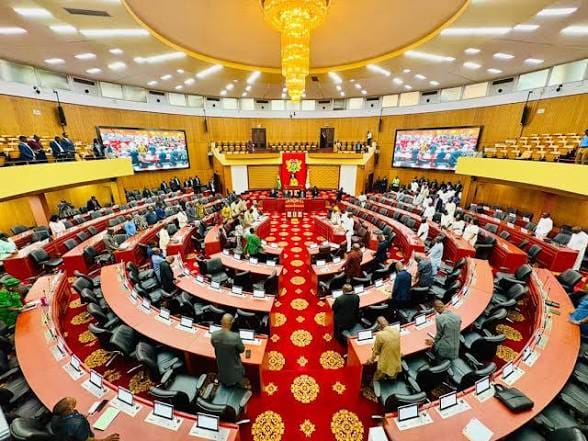
Parliament has clarified public commentary on social media regarding a notice on its notice board that read “No Vacancy for National Service Personnel 2026/2027. Kindly go for reposting.”
In a statement, signed by the Director of Media Relations, David Sebastian Damoah, Parliament said the notice has been misconstrued and was not a policy statement, a freeze on national service placements, or a change in its support for the National Service Scheme.
According to Parliament, the notice was a routine administrative message to prospective personnel who reported to the House, informing them that it has received more personnel than it can accommodate for the 2026/2027 service year and that they should seek reposting to other institutions.
It said it remains committed to the National Service Scheme and values the contribution of service personnel to its work, and regrets any confusion or inconvenience the wording may have caused.
By Edem Mensah-Tsotorme
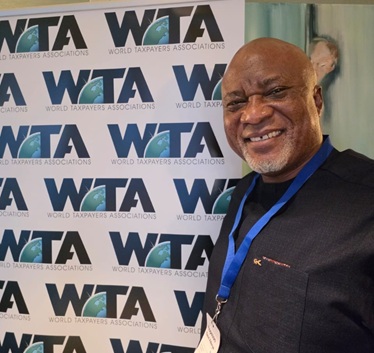
Ghanaian public advocate Hopeson Yaovi Adorye has been elected to the Board of Directors of the World Taxpayers Association (WTA).
The election took place on Sunday, October 5, 2026, during the Association’s conference in Kraków, Poland.
His election marks a significant addition to his international leadership portfolio and provides a platform for Ghanaian and African perspectives to contribute to global discussions on taxpayer rights, responsible taxation, transparency and prudent management of public resources.
Reacting to his election, Mr. Adorye expressed appreciation to the leadership and members of the WTA for the confidence reposed in him.
“I am deeply honoured by this confidence and conscious of the responsibility that comes with it. Taxpayers are at the heart of every economy, and they deserve fairness, transparency, accountability and value for the taxes they pay. I look forward to working with colleagues from across the world to strengthen the voice of taxpayers and promote responsible fiscal governance,” he said.
According to him, taxation should not be viewed solely as a mechanism for raising government revenue, but also as an important component of the social contract between citizens and the state.
Mr. Adorye said governments have a responsibility to ensure taxes are collected fairly and public resources are utilised efficiently to deliver quality infrastructure, healthcare, education, security and other essential services.
His election also creates an opportunity to bring African experiences into international conversations on taxation and public expenditure.
Mr. Adorye, who is Executive Director of Taxpayers League Ghana, has previously served as Global Board Chairman of the International Youth Network for UN Security Council Resolution 2250, an NGO associated with the United Nations Economic and Social Council (ECOSOC).
He is expected to use his new role to champion fiscal accountability, taxpayer education, good governance and stronger citizen participation in public financial management.