Features
Remember Lot’s wife

- /home/u249204778/domains/spectator.com.gh/public_html/wp-content/plugins/mvp-social-buttons/mvp-social-buttons.php on line 27
Warning: Trying to access array offset on false in /home/u249204778/domains/spectator.com.gh/public_html/wp-content/plugins/mvp-social-buttons/mvp-social-buttons.php on line 27
&description=Remember Lot’s wife', 'pinterestShare', 'width=750,height=350'); return false;" title="Pin This Post">
- Share
- Tweet /home/u249204778/domains/spectator.com.gh/public_html/wp-content/plugins/mvp-social-buttons/mvp-social-buttons.php on line 72
Warning: Trying to access array offset on false in /home/u249204778/domains/spectator.com.gh/public_html/wp-content/plugins/mvp-social-buttons/mvp-social-buttons.php on line 72
&description=Remember Lot’s wife', 'pinterestShare', 'width=750,height=350'); return false;" title="Pin This Post">
Monuments are structures erected to commemorate a person, group, or an event whose memory is deemed significant and worthy of preservation. They come in various forms like statues, war memorials, parks, and historical buildings.
Cape Coast,for example, boasts of several monuments such as the Castle used to hold slaves before they were loaded onto ships and sold in the Americas, especially the Caribbean. The “Gate of No Return” at the Castle through which captured slaves, the virile ones, of course, were herded to waiting vessels,was the last stop for these poor souls before crossing the Atlantic Ocean to be sold. The sad history has turned the Cape Coast Castle into a focal point of Pan-African history, and a venue of cultural and spiritual pilgrimage for Africans from the diaspora who troop in periodically to honour the memory of their ancestors.
There is also the Victoria Park which is said to hold the distinguished honour of being the first official grounds to host association football in Ghana, then known as the Gold Coast, and under British colonial rule. It was named after the British monarch at the time, Queen Victoria,said to have acceded, at least, in part, to a request by some Gold Coast patriots, to be granted access to some lands. As a token of appreciation, they established the park and erected the queen’s bust at the entrance.
One monument whose construction I cannot fathom is that of a huge crab at the city centre.The crustacean is the adopted mascot of Cape Coast,and it sits atop a huge platform erected near the London Bridge whose name deceives people until they visit the popular place and realise, to their chagrin, that it is nothing more than a culvert boldly emblazoned with the inscription: London Bridge. Back to the crab. Why that mascot? If you observe crabs in a container displaying their character, you would not recommend that anthropoid as a mascot. They all have PhDs.While one tries to climb to the top, another will pull him down. Under that circumstance, none of them makes it to the top.
In, perhaps, the shortest sermon He ever preached, Jesus points humanity to one monument whose significance transcends time into eternity. “Remember Lot’s Wife,” He said. What is it about Lot’s wife that we need to know? What has it got to do with all that I have been writing aforehand about monuments? What lesson do we have to take to heart about Lot’s wife?
First, God turned her into a monument in a split second for disobedience. A living, walking being was turned into a pillar of salt in a twinkling of an eye to remind succeeding generations of the abomination of Sodom and Gomorrah, and the punishment of those who have the slightest inclination towards those cities and what they represent.
For the sin of homosexuality, God literally rained fire on those cities and destroyed all except Lot, his wife, and three children. As Lot’s family were led out to safety,they were instructed not to look backward towards the doomed metropolis. But Lot’s wife disobeyed that instruction and paid the ultimate price for her action.Remember that she was not even a lesbian. She only showed an inclination towards the doomed cities. Of how much sorer punishment do you think practitioners are worthy?
Did you know that the word “sodomy” originated from the name of that city? From time immemorial, God has been frowning on the practice and has spelt out the penalty for those who brazenly flout His commandment.
When Ghanaians feared the Lord in days past, this shameful practice was alien to our culture. Of course, there was “supi,”a form of lesbianism among some girls in some secondary schools.Men with men doing the abominable was more under wraps in the closet. Now, that has changed. Everything is in the open and surprisingly, people who should know better are claiming that everyone has the right to love whoever they want. In accents louder than words, many respected people in academia, politics, media, and the legal profession among others, have lent their support to the aberration with their overt and subtle consent.
But the scriptures unequivocally declare that homosexuality is sin and punishable by eternal damnation. “Or do you not know that the unrighteous will not inherit the kingdom of God? Do not be deceived: neither the sexually immoral, nor idolaters, nor adulterers, nor men who practise homosexuality, nor thieves, nor the greedy, nor drunkards, nor revilers, nor swindlers will inherit the kingdom of God. 1 Corinthians 6:9-10, ESV.
In another passage, it is stated unambiguously: “For this reason, God gave them up to dishonourable passions. For their women exchanged natural relations for those that are contrary to nature; and the men likewise gave up natural relations with women and were consumed with passion for one another, men committing shameless acts with men and receiving in themselves the due penalty for their error. And since they did not see fit to acknowledge God, God gave them up to a debased mind to do what ought not to be done …Romans 1:26-28, ESV. What could be clearer than this?
God says because men do not want to acknowledge His authority, He has given up on them to do what they want. But even then, once a person turns from it, God is more than willing to forgive and pardon.
To those who assault the integrity and trustworthiness of the Bible and argue that the story is just a fable, or a myth, may I submit that the authority, inerrancy, and sufficiency of the Bible is without debate. It is God’s literal words given to men by the inspiration of His Holy Spirit over different periods of time to record for humanity. It is for instruction in righteousness, correction, and reproof. In that respect, the Bible speaks with infallible divine authority in all matters upon which it touches, including homosexuality. Everything we need to know about God, about life – past, present, future – about eternal salvation and damnation, all these and more are contained in the scriptures.
Such people would do well to know that Jesus was a historical figure who alluded to Lot’s wife as well as the destruction of Sodom and Gomorrah by literal fire. Besides, any time He makes a reference to an issue whose origin dates back to the Old Testament prophets before He appeared on the earth, He is authenticating the record. In fact, the Bible says if people refuse to believe its submissions, their unbelief would not invalidate the facts.
But why remember Lot’s wife?The Bible has become the focal point of the devil’s constant and relentless assault. Crass falsehood is spreading like wildfire and causing widespread rejection of the truth of God’s Word, leading to a pervasive deception of the masses by popular culture.
In view of the emerging liberal and non-literal interpretation of the Bible, and its attendant deception of the world, the words of the Lord Jesus Christ become all the more relevant for these ominous days.
The serpent is back in the garden spreading doubts and lies. The first question in the Bible was posed by the devil. When God specifically and explicitly warned Adam and Eve not to eat a particular fruit, the devil came and deceived the woman with a dubious question enquiring, “Has God really said?”He is at it again telling those who want to hear that God does not restrict the gender of their sexual partners to the opposite sex, and that man to man is just right with the Almighty.
Thank God for real men like Honourable Sam George the MP for Ningo/Prampram and the lead sponsor of the proposed anti-gay bill dubbed: The Promotion of Proper Human Sexual Rights and Ghanaian Family Values Bill, 2021.
Let it be trumpeted loud and clear that no amount of name-calling and threats emanating from a minority and their international partners can ever intimidate the right-thinking people of Ghana and compel them to condone that evil.
The proponents of that evil agenda allude to democracy and all its so-called freedoms, but they leave out the fact that under parliamentary democracy, the minority in a vote count accede to the majority. That is the rule, and it will apply in any vote concerning the issue.
Supporters of the LGBTQI are even arguing about rights. How audacious for mortal man to talk about rights in the kingdom of the great God who declares forcefully that the earth and all its fulness belong to Him! He is an absolute monarch and has set His rules to govern His kingdom.
To think that God would condone same-sex marriage is an illusion and trance. It is the foulest delusion that ever cheated the hopes of men. With submissions impossible to refute, the Bible reduces the argument to an absurdity.It is Adam and Eve, not Adam and Steve. Period!
“For the sin of homosexuality, God literally rained fire on those cities and destroyed all except Lot, his wife, and three children. As Lot’s family were led out to safety,they were instructed not to look backward towards the doomed metropolis. But Lot’s wife disobeyed that instruction and paid the ultimate price for her action. Remember that she was not even a lesbian. She only showed an inclination towards the doomed cities. Of how much sorer punishment do you think practitioners are worthy?”
Contact: teepeejubilee@yahoo. co.uk
By Tony Prempeh


There is a scripture that is found in Matthew 6:22 which says that the lamp of the body is the eye and therefore the eye must see well to enable the body to get to its destination.
What most people do not know is that behind the scenes, there is a strong interaction between the eyes and the brain before a picture becomes clear. The state of mind therefore is crucial to the eye seeing clearly to enable the body to process accurately the information the eyes are feeding it for proper identification of what the eyes see.
This is similar to how a person behaves i.e. what informs the decisions that forms in the mind that results in the actions that a person performs. The actions of a person does not therefore just happen but is as a result of things that went on in the mind, which in most cases resulted from information passed on to it by the eyes either consciously or unconsciously.
There are so many issues that affect our society which makes one wonder, whether the people who displayed such acts were created by someone or something other than God.
How can a person see a beach created by God with beautiful beaches and fresh air blowing all around, decides to defecate at such places, and therefore desecrate the environment? lt is simply mind boggling?
When other people in other countries who dwell on the coast are using their beaches for tourist attraction purposes as a means of livelihood and also to promote environmental health, some people living around our beaches, have turned them into rubbish dumping sites and toilets.
It is a very sad situation and the earlier we did something about it the better. It is a national emergency that must engage the attention, first of the government and then the citizenry, where religious bodies and NGOs must play a critical role.
The things we focus on in this country, needs to be addressed. Our minds which processes the info the eyes send to the brain, must be disciplined. There are certain behaviours that a disciplined mind can ignore even when the eye has provided info to the brain. One of the things a disciplined mind does, is the avoidance of a second look, which is critical for every person who wants to avoid adultery or fornication.
Once a person is not blind, he will see things. The boobs, the ‘shankus’, the coca cola shapes, the light complexioned, the dark complexioned etc. the eyes will definitely see and report same to the brain. What the brain or the mind decides to do or instructs the eye to do is the issue.
It can decide to instruct the eye to take a second look and let the mind drool over it or say ignore it and that will be the end.
If the mind becomes trained to focus on environmental issues like clean environment, the eyes will automatically be reporting on insanitary conditions to the brain as and when it sees them. The mind will pay attention to such data and begin to process them and to identify solutions to deal with the reported insanitary conditions.
There is the need to encourage citizens to train the mind to focus on the right thing so that in tandem with the eyes, focus will be maintained. When the mind is so trained, it communicates with the eye to also focus on hood things that helps in both are spiritual life and our secular lives, for indeed the eyes are the lamp of the body. God bless.
THE relationship between New Times Corporation (NTC) and African Concrete Productions (ACP) is based entirely on matters of the stomach. Each depends on the other in a dietary symbiosis, reinforced by the close proximity of each other
At lunchtime, you’d see a particular set of Times workers marching regimentally to ACP to face the wall. You’d think they are soldiers. It has long been declared that the company manufactures the best kokonte in the Greater Accra Region. ACP is, therefore, a culinary haven for those NTC kokonte fans, both male and female.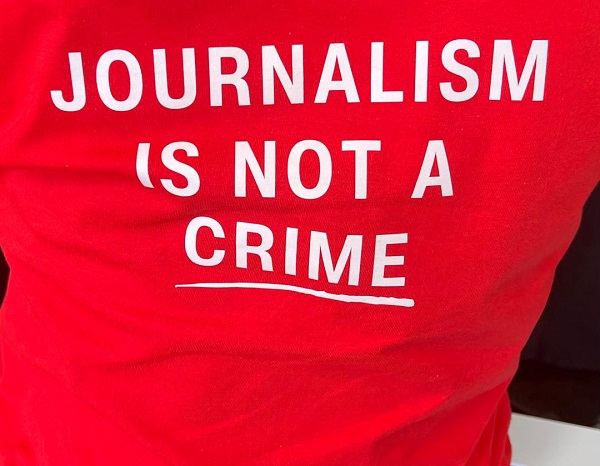
As the NTC kokonte warriors cross the border to ACP, you’d see some ACP banku fanatics dancing joyously to NTC. They are lucky folks because they do not have to obtain visa to enter into ‘Times’ to attack the balls of banku with precision and accuracy. They also claim that the lightsoup at ‘Times’ is arguably the best in West Africa.
So the relationship between the two entities was quite cordial and based practically on stomach palaver, until ACP workers staged an industrial revolution, whereupon the managing director, accountant and estate manager were allegedly stripped naked and locked up in a room. An insurgency had began in earnest.
An ACP worker came to ‘Times’, this time not to eat banku and okro. He had come to inform newsmen that juicy stuff awaited them at ACP. It could make a front page lead story.
A camerawoman and a female reporter were accordingly dispatched to go and bring back news, juicy news as juicy as kokonte and groundnut soup.
I was driving to work when I espied the familiar camerawoman clicking away outside the ACP premises. I didn’t see any ‘Times’ reporter but angry workers who were on the verge of getting violent. I slowed down and the driver behind blew his horn at me like a lunatic. I drove on.
Later, I heard the reporter and camerawoman were harassed and brutalised. The report came,. “The camerawoman, Mrs Salome Adonu-Agbottah and reporter Mrs Doreen Allotey, in an attempt to retrieve the camera which the workers had seized from them were severely beaten. They were manhandled and almost pushed into a big gutter opposite the company’s premises.
BRUISES
“….The camerawoman had bruises on her body, her hand bag was destroyed and the money in it stolen. Mrs Allotey’s watch was also snatched and her feet stamped on.”
Luckily, it was not her nose that was trampled upon. She has a beautiful nose.
The bad news was received with extreme sorrow. If the victims had been men, it would not have seemed too bad. But to brutalise women is just unacceptable. The New Times Corporation has not stopped mourning the incident which has been condemned in many circles.
Some people keep asking me why Times sent females to cover a potentially violent demonstration. I tell them they might as well ask why CNN’s amazon, Christina Amanpour, is assigned to cover the carnage in Bosnia-Herzegovina and Rwanda. She is always on the frontline in jeans and jacket.
Journalism is a potentially hazardous profession, and once you accept to study and practise the trade, you might as well bone up to face any assignment as long as your superiors feel you are capable of handling it or you have demonstrated the capacity to handle it. Both males and females can be assigned anywhere, anytime just like policemen and women are assigned.
The only difference between cops and pressmen is that the latter are armed only with a pen and the former with a gun. The question is should newsmen also arm themselves so that in any event of an assault they would not be found wanting in self-defence? They can’t adequately defend themselves with a pen and a jotter. A pen cannot even disfigure an opponent’s upper lip.
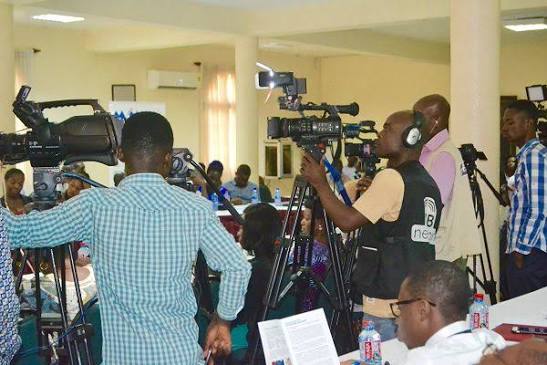
Photo-journalists have particularly suffered violence. Spectator ace-cameraman Vincent Dzatse was severely assaulted by AMA men when he attempted to take pictures of their indiscretions.
Sports cameraman, P. K. Arthur has been beaten more than once at the sports stadium when riots errupted and he wanted to capture it on his lenses.
Some sports journalists have been banned from entering the Accra Sports Stadium by supporters because in their comments, they didn’t write “sense”. Some supporters once nearly lynched Christian Abbew, Spectator Sports Editor, near a courtroom. He was stoned like the biblical Stephen. He had gone to defend a contempt charge.
I think it is time journalists met and discussed how best to defend themselves in any event of an attack by individuals or mobs. In the pursuance of their duty, they must be free from harassment and assault.
Some journalists go to work and return home with a black-eye or a double fore-head. It is just not right. Something has to be done about it. I think journalists should be armed. But first we must be trained in the use of firearms so that our warning shot do not hit below the belt. What about training in Kung Fu?
This article was first published on Saturday, October 17, 1998.