News
Quality Assurance key to educational transformation- WAAQAN President

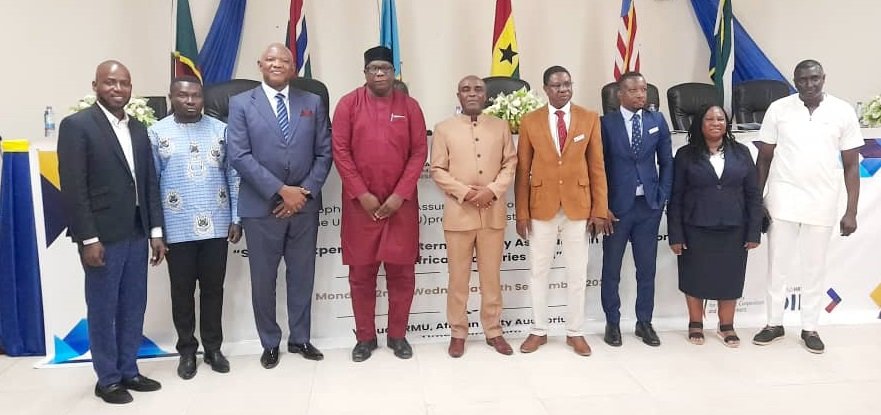
The President for the West African Anglophone Quality Assurance Network(WAAQAN) Prof. Kayode Adekeye has said, quality assurance is key to educational transformation in Africa.
Delivering a keynote address at the opening ceremony of three-day maiden WAAQAN Conference at the Regional Maritime University(RMU) in Accra on Monday, he explained that quality assurance was essential in ensuring effective and efficient education at higher institutions of learning across the continent.
He said, registration, academics, staff recruitment, examination conducts, mode of course delivery as well as the issuance of transcripts to students, would require quality assurance drivers to ensure that there are instruments in place for measuring the effectiveness and efficiency of all operations for quality deliverables.
Consequently, he said WAAQAN since 2019 had trained over 60 individuals to become quality assurance drivers in various African countries.
“All stakeholders of our institutions should taking into consideration, quality assurance managers as they are at the center of healthy institutions,” he said.
He commended management of RMU for hosting the conference as it would present a learning opportunity for all stakeholders and essentially translate into quality education within tertiary institutions.
“Let as fix the processes within the system with quality assurance and the products would come out as the best,” he stated.
The Ag. Vice Chancellor of the RMU, Dr Jethro W. Brooks Jr said the collaboration between the WAAQAN and RMU was a testament to the power of partnership in advancing quality assurance in the sub-region.
“Through initiatives such as this conference, we can pool collective knowledge and experience, learn from one another and build a stronger and higher education system in West Africa,” he stated.
“As we move forward, let us remain committed to the principles of quality, accountability and continuous improvement. Let is work together to ensure that our respective institutions can serve as grounds where students can thrive, where faculty can innovate and where knowledge can be created and shared for the betterment of our sub-region,” he added.
By working together he said, they could influence policy at the national and regional levels, advocate for the resources and support needed to sustain quality assurance efforts and ensure that institutions were recognised for their commitment to excellence.
“By strengthening our internal quality assurance systems, we can position our institutions as leaders in the global academic community. We can produce graduates who are not only academically accomplished, but are also equipped with the relevant skills and knowledge they need to succeed in the global marketplace in whatever sphere of endevour” he stressed.
The conference under the theme, “Sharing Experiences on Internal Quality Assurance in Anglophone West African Countries Higher Education Institutions (HEIs),” brought together practitioners from Nigeria, Liberia, the Gambia, Sierra Leone and Ghana, to share experiences, provide solutions to quality assurance challenges and enhance quality education to meet international standards.
Opening the conference, the Deputy Executive Secretary, National Universities Commission, Nigeria Dr Noel Biodun Saliu said, the importance of quality assurance in education could not be underestimated.
The conference he said, was crucial as it would enlighten participants on the premium placed on quality assurance as the driver for growth at every sector.
“Let us collaborate effectively and ensure that we bring everyone on board as we seek to provide quality services within our institutions,” he stated.
In his presentation, the Director General of Ghana Tertiary Education Commission, Prof.Ahmed Jinapor Abdulai also expressed government’s commitment to ensuring quality education across the country.
He therefore called on all stakeholders within the education sector to make conscious efforts of providing quality services at all times.
Michael D. Abayateye









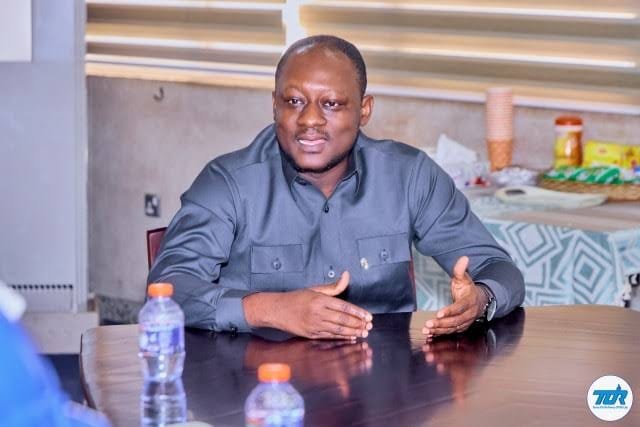
The Managing Director of Tema Oil Refinery (TOR), Edmond Kombat, has outlined a major expansion drive to restore the refinery to full commercial operation.
Speaking at the Government Accountability Series held at the Jubilee House today, Mr. Kombat said in the near term, engineers from Verga Engineering are working with TOR’s technical team to complete the tie-in and commission the F-61 this month.
He explained that this will allow the Crude Distillation Unit to move from its current throughput of about 28,000 barrels per stream day (bpsd) to its nameplate capacity of 45,000 to 55,000 bpsd.
In the medium term, TOR plans to install a new air cooler to raise capacity to 60,000 bpsd and replace the 6,500 barrel-a-day catalytic reformers with a 10,000 barrel-per-day continuous catalytic reformer.
Mr. Kombat added that the new 120-ton boiler has been installed, while work on the RFCC turnaround and SCADA system continues.
He disclosed that on August 1, 2026, President John Mahama directed the Minister for Energy and Green Transition to work with the TOR Board and management on a strategic roadmap to raise processing capacity to 100,000 barrels a day, with a further plan to increase it to 200,000 barrels per day as an end-state.
He also announced plans to restructure TOR so that it can operate on sound commercial principles without undue political interference. According to him, the Ministry of Finance is currently working with TOR to consider writing off $120 million of TOR’s legacy debt owed to the Government of Ghana or converting it into equity.
“TOR is part of a national plan. With the refinery’s expansion from 45,000 to 100,000 barrels a day, Government is targeting about 70 percent of national fuel demand from local refining by 2028,” he said.
By Edem Mensah-Tsotorme

The Managing Director of the Tema Oil Refinery (TOR), Edmond Kombat, has revealed that crude processing at the refinery has resumed after years of dormancy.
Speaking at the Government Accountability Series, Mr. Kombat said crude processing started on December 19, 2025, with all product streams going to storage for the first time in years.
He disclosed that since May 2026, TOR has received four five-million-barrel crude cargoes: Bonga, Baleine, Bonnie Light, followed on July 15 by Ghana’s Jubilee Medium Sweet crude, an indigenous crude delivered aboard MT Apache.
According to him, TOR paid for the Jubilee cargo in full, making it the refinery’s first Jubilee cargo in a decade.
Mr. Kombat added that on August 1, 2026, the President commissioned the refurbished Crude Distillation Unit.
The refinery, he said, then received another parcel of Ghanaian indigenous crude of 950,000 barrels of Sankofa crude on September 25, 2026, from its sister agency, the Ghana National Petroleum Corporation (GNPC).
By Edem Mensah-Tsotorme