Hot!
Pink month here again, let’s join fight against breast cancer


Mrs Kumah-Dzagah (Supporting picture)
Breast Cancer continues to claim the lives of both young and older persons, especially women.
But even among those that survive the disease, they continue to live with the fear of the cancer recurring.
It is a relentless adversary; claiming lives and shattering families.
The severity of the disease does not only lie in its physiological impact but also in the emotional and social turmoil it instigates.
Beyond the physical pain, the emotional torture on patients and their loved ones is profound.
Breast Cancer has become the number one killer disease among women with more than 4,650 diagnoses and over 2,000 deaths annually in Ghana.
Globally, it is estimated that about 2.3 million women are diagnosed with breast cancer, claiming 685,000 deaths.
At the end of 2020, 7.8 million women were diagnosed with breast cancer, making it the world’s most prevalent cancer among women.

In a global effort to raise awareness on breast cancer, October has been designated as a Pink Month.
The Pink Month is set aside to educate both women and men about the disease, including early identification as well as signs and symptoms associated with it.
This year’s celebration is under the theme ‘Join the fight’ aiming a call on genders of all ages to be involved in the fight against the deadly disease.
A breast cancer survivor Georgina Setorwu Kumah-Dzagah, was diagnosed with Breast Cancer in 2018 at the age of 31.
She first felt a sharp pain in her right breast in October 2017 which she ignored for weeks until she detected something unusual in the same breast.
Sharing her experiences of the killer disease with The Spectator in Accra on Monday, Mrs Kumah-Dzagah narrated how she consulted a General Physician after she had attempted treating herself for three months; a period within which a lump she discovered grew bigger and became more painful.
“I was not convinced when the first doctor I consulted told me the lump was just some fatty tissues. This was after he had conducted a Clinical Breast Examination and Breast Ultrasound Scan on me. In my despair, I sought a second, third and fourth opinion.
“My real nightmare was when the fourth doctor requested for a complementary breast ultrasound scan and mammogram and two biopsies.
Her first biopsy was benign but the doctor insisted on a second opinion which eventually confirmed my diagnosis in 2018.
Mrs Kumah-Dzagah’s initial diagnosis was a Ductal Carcinoma In-Situ (DCIS), a non-invasive type of breast cancer.
A non-invasive breast cancer is when the cells that line the ducts changes to cancer cells but have not spread through the walls of the duct into the nearby tissue.
But after the surgery, the diagnosis changed to 95 per cent DCIS, five per cent Colloid Carcinoma.
Colloid Carcinoma is rare form of invasive ductal cancer characterised by large amount of mucous deposition.
“My breast cancer diagnosis was much unexpected. I grieved for days. The disease did not only invade my body, it interrupted my life by bringing it to an abrupt standstill.
TREATMENT
Treatment for the disease is another long tortuous journey. “I had two surgeries, chemotherapy, radiotherapy and hormonal therapy.”
Mrs Kumah-Dzagah told The Spectator she had her first surgery – a wide local excision plus axillary clearance – a week after the diagnosis.
In that process, 14 lymph nodes were removed. Luckily, she had one of her breast conserved.
“My treatment continued with six ‘gruesome cycles’ of chemotherapy, the total removal of my affected breast (mastectomy), three weeks of radiotherapy and an added 10 years of hormonal therapy plan,” she said.
The hormonal therapy is a daily hormone suppresser pill she had to take for 10 years.
She stated that the side effects of the medication which were menopausal symptoms like hot flashes, fatigue, forgetfulness and confusion had compromised the quality of her life but said “I will rather live with all these side effects than to have the cancer return.”
It has been six years since Mrs Kumah-Dzagah detected the breast cancer lump that almost killed her and four years since she completed her active treatment.
LIFE AFTER CANCER
She admitted that breast cancer changed the course and focus of her life, saying that her perception about life had changed and that some things that were important to her were no longer so.
“I was an active and busy person, but I have slowed down, especially during my chemotherapy and after the surgeries. I had to depend on others for assistance which was not my attitude.
“I always wanted to be the survivor so I sought for and looked up to what I did not find during my treatment. I prayed and fought to survive so I could be a beacon of hope to others,” she added.
Mrs Kumah-Dzagah had therefore committed her life to helping others win their fights against breast cancer through advocacy and sharing her breast cancer story.
I hope by advocating and sharing my story with other breast cancer patients and survivors, they will be inspired and realised that it was possible to regain their lives and be stronger, healthier and happier after diagnosis and treatment.
Mrs Kumah-Dzagah called for a concerted effort from all stakeholders including non-governmental organisations, religious bodies, philanthropists and governments in the fight against breast cancer.
She also called for support for breast cancer patients especially with payment for chemotherapy and dialysis.
SYMPTOMS
Different women have different symptoms of breast cancer while some do not have any signs or symptoms at all.
Some of the symptoms include new lump in the breast or underarm (armpit), thickening or swelling of part of the breast, irritation or dimpling of breast skin, redness or flaky skin in the nipple area or the breast, pulling in of the nipple or pain in the nipple area.
Other symptoms are nipple discharge other than breast milk, including blood, any change in the size or the shape of the breast, pain in any area of the breast.
RISK FACTORS
Studies have shown that one’s risk for breast cancer was due to a combination of factors.
The main factors that could influence a person’s risk include being a woman, getting older, reproductive history, having dense breast, personal history of breast cancer or certain non-cancerous breast diseases, family history of breast or ovarian cancer, previous treatment using radiation therapy.
DIAGNOSIS
Mammograms are commonly used to screen for breast cancer. If an abnormality is detected on a screening mammogram, the doctor may recommend a diagnostic mammogram to further evaluate that abnormality. Ultrasound uses sound waves to produce images of structures deep within the body.
By Jemima Esinam Kuatisnu


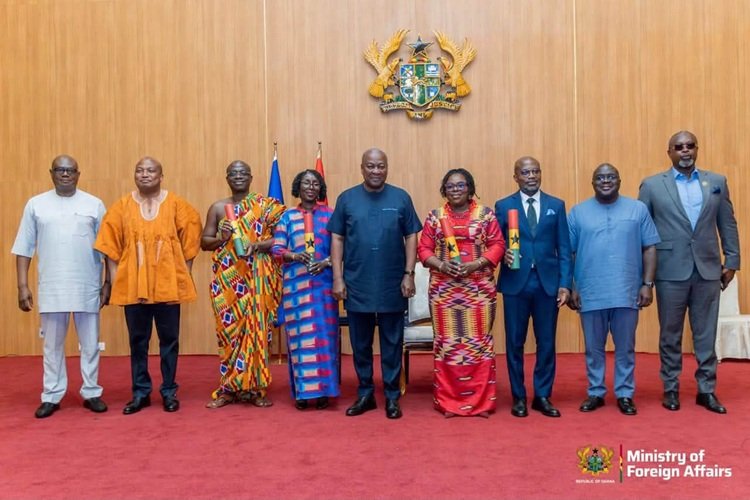
President John Dramani Mahama has commissioned four career diplomats as ambassador-designates to represent Ghana in four countries.
The commissioning ceremony took place on Friday, October 16, 2026.
The new envoys are Her Excellency Nana Antwiwaa Dodoo, Ambassador-Designate to Angola; His Excellency Louis Kwame Obeng, Ambassador-Designate to Qatar; Her Excellency Evelyn Korantemaa Ofosu-Amable, Ambassador-Designate to Israel; and His Excellency Jedidiah Reuben Adogla, Permanent Representative-Designate to Switzerland.
President Mahama charged them to advance Ghana’s national interests through strategic partnerships, economic diplomacy, investment mobilization, and expanded access to international markets.
He said Ghana’s diplomatic engagements must deliver tangible economic benefits, create jobs, and strengthen the country’s standing on the international stage.
The four envoys are career diplomats with over 27 years of experience.
On behalf of her colleagues, Her Excellency Nana Antwiwaa Dodoo thanked the President for the confidence reposed in them and pledged their commitment to emulate his leadership and deliver on the mandate given to them.
By Edem Mensah-Tsotorme
The professor who spends his days exploring the intricacies of African languages found himself at the centre of a different kind of lesson on Friday, October 2, 2026. 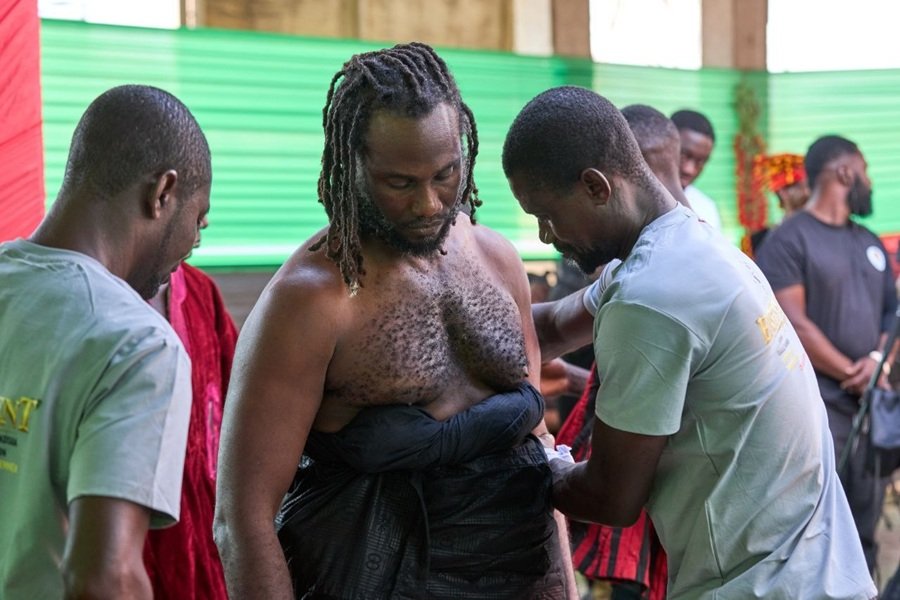
This time, there were no lecture notes, academic arguments or university classrooms. Instead, there was the weight of tradition, the rhythm of a community celebration and the solemnity of an oath at a royal palace.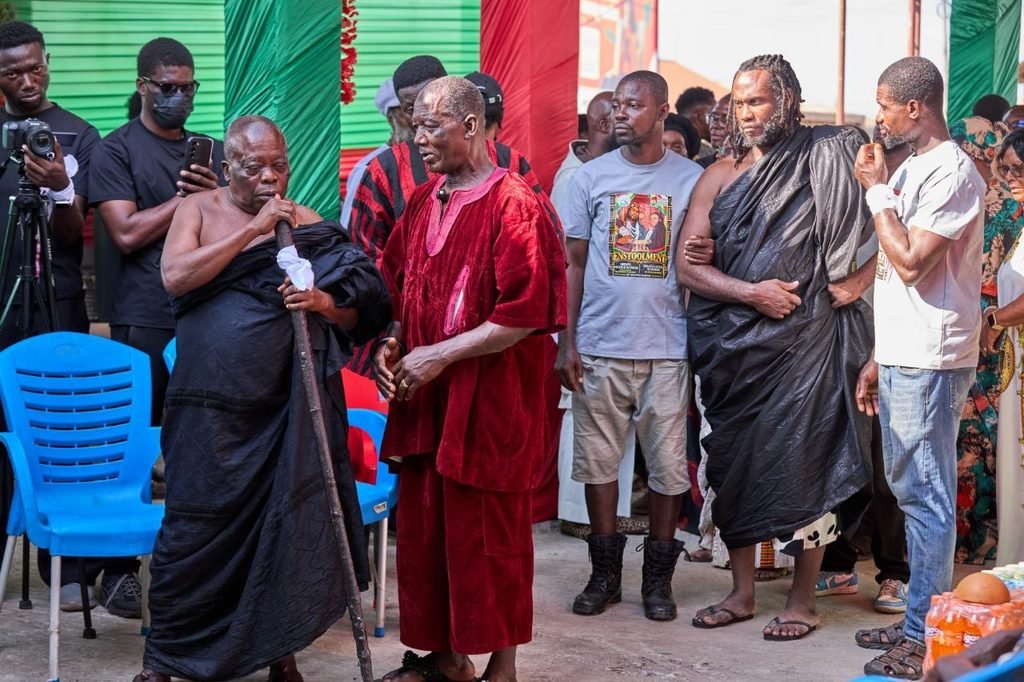
Professor Ọbádélé Kambon, a full Professor of African Linguistics at the University of Ghana, was enstooled as Apagyahene and Sunsum Ɔsahene of Akuapem Mampong in the Eastern Region in a ceremony that brought academia and traditional authority together.
For the professor, the occasion was more than a new title. It was a moment that connected his academic interests in African languages and indigenous knowledge with the living traditions of an Akan community.
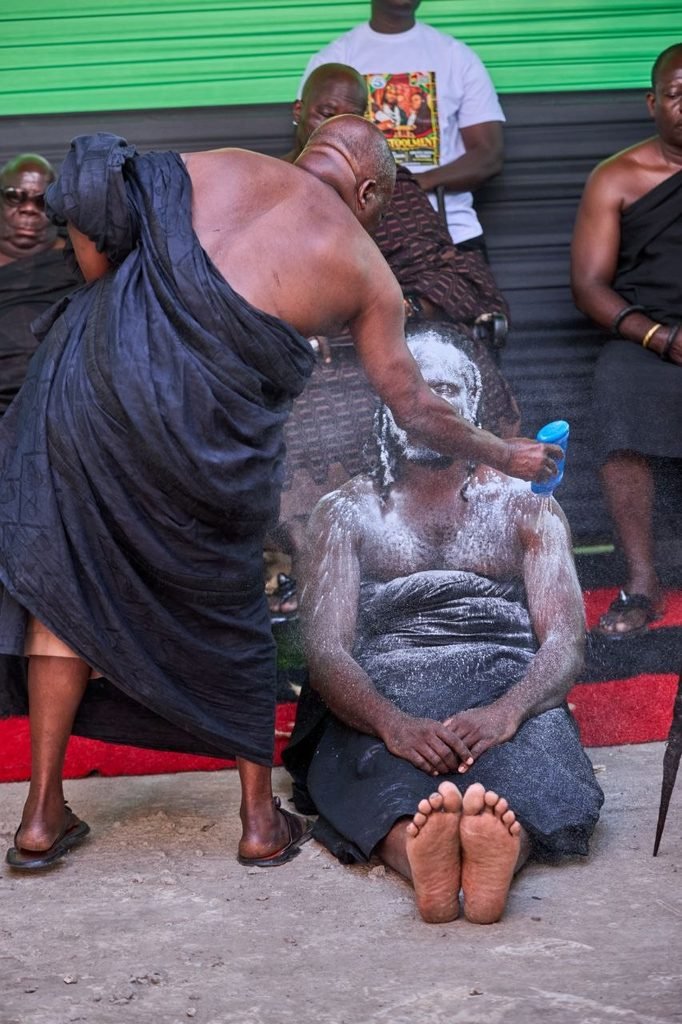
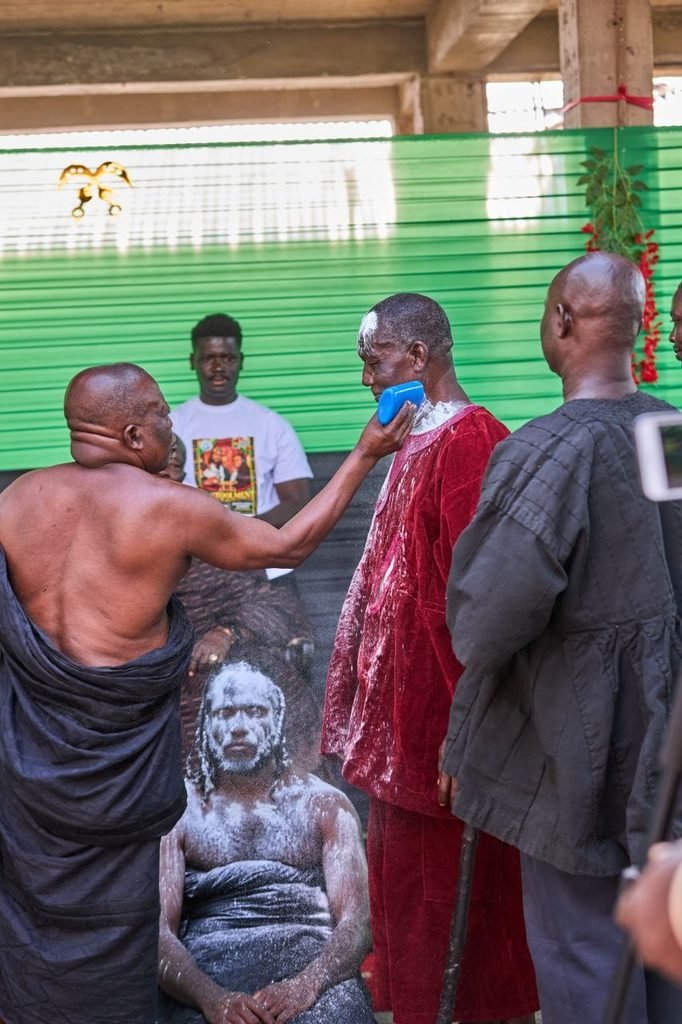
The day’s events unfolded through a series of customary observances. Kambon was first taken to the compounds of the Ɔkyeamehene and Gyasehene, where the preparations for his installation continued.
Then came the application of hyire, the white kaolin powder associated with traditional rites.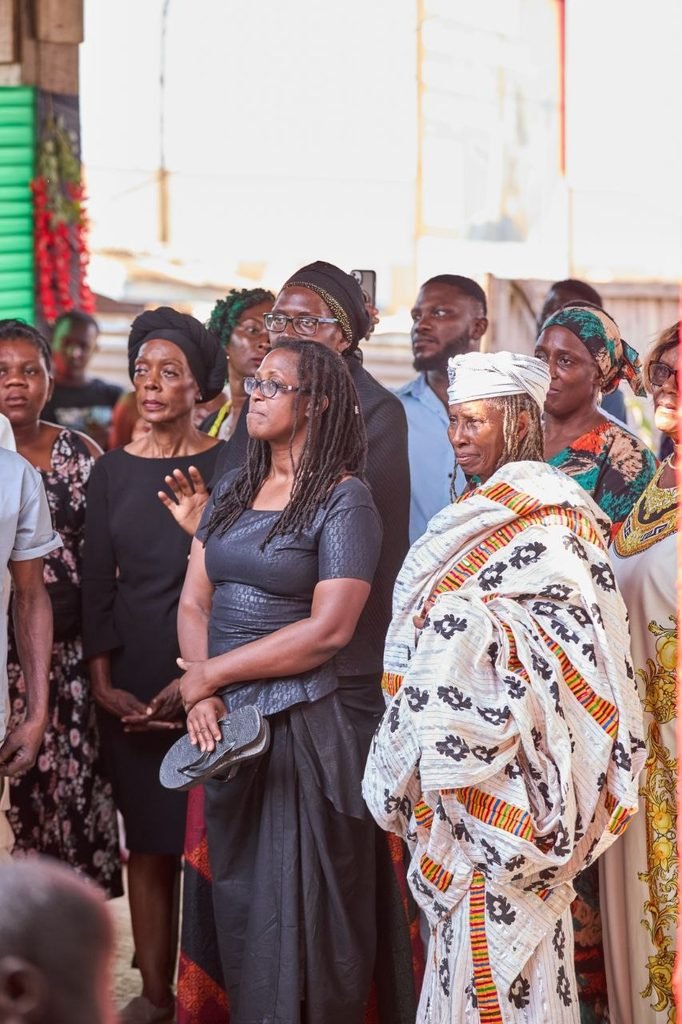
With the customary proceedings underway, the new chief was lifted onto the shoulders of celebrants and carried along the main thoroughfare of Akuapem Mampong.
The procession transformed the streets into a public stage for a ceremony rooted in the community’s traditional institutions.
There was something striking about the image, a university professor, accustomed to the measured language of academic discourse, being carried through the town in a display of traditional recognition.
Yet the celebration was not complete with the procession.
A ram was sacrificed at the Mamponghene’s compound before Kambon was taken to the palace, to swear the oath associated with his new offices.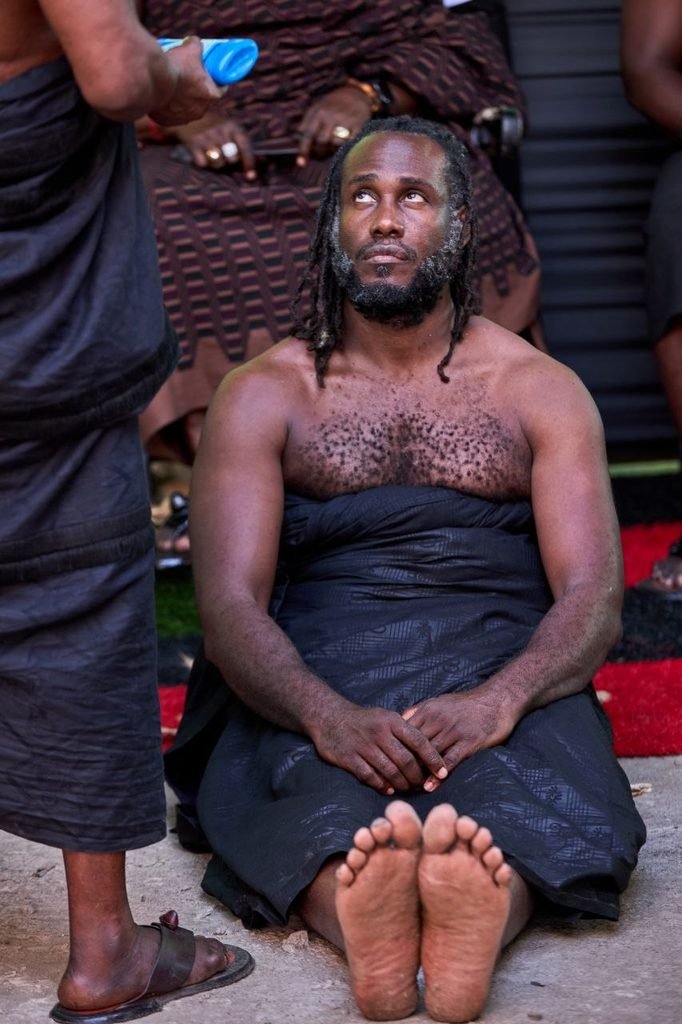

The ceremony brought him formally into his roles as Apagyahene and Sunsum Ɔsahene.
Beyond the colourful proceedings, the titles themselves carry layers of historical meaning.
Kambon in his research explores the historical connections between Apagya and Akan political and military organisation.
Accounts cited in his work linked Apagya to an asafo, or military company, while historical writing traces an Apagya stool in Asante to the reign of Opoku Ware I in the eighteenth century.
These historical associations offer a glimpse into the institutions that have shaped Akan society over generations, although they do not automatically define the precise responsibilities of the office in Akuapem Mampong.
Kambon’s own professional life reflects a similar interest in preserving and examining African knowledge.
His work encompasses Akan language structure, naming practices across the Black world, proverbs and indigenous intellectual traditions.
Through Abibitumi, the platform he founded, he also promotes language learning, scholarship and cultural engagement.
But tradition was only one part of the story that day.
When the formal ceremony gave way to a reception, the occasion expanded into a celebration of three milestones: Kambon’s enstoolment, his promotion to full professor and his daughter Ama’s admission to the University of Ghana.
The gathering therefore carried a personal significance that went beyond the honours bestowed on one man. 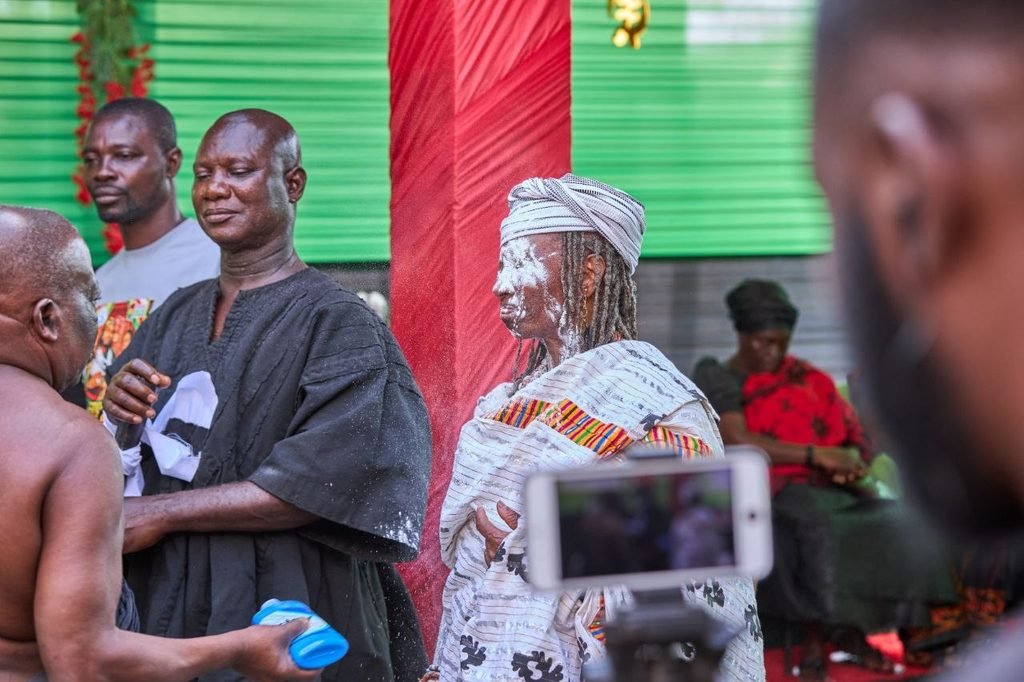
It celebrated professional advancement, the continuation of family aspirations and a connection to cultural heritage.
For a father, seeing a daughter gain admission to the same university where he holds a distinguished academic position offered another reason to celebrate.
For the professor, the moment placed family achievement alongside his own professional and traditional milestones.
Kambon had already established a place in the traditional life of Akuapem Mampɔn through an earlier installation as Banmuhene Kyidɔmhene, recorded in 2017.
His latest enstoolment adds another chapter to that relationship.
In Akuapem Mampɔn, the day brought together the university, the palace and the family table in one celebration. And for Kambon, the journey from the lecture room to the traditional procession showed how scholarship, cultural responsibility and family achievement could converge in a single memorable occasion.
By Enoch Ntiamoah Siaw
SKIP THE QUEUE, TAP THE NEWS
You can now read the Ghanaian Times and The Spectator newspapers from the comfort of your device via TimesNewsPlus.
Join our WhatsApp Channel: https://whatsapp.com/channel/0029VbBElzjInlqHhl1aTU27