Hot!
Extending shelf life of perishable fruits, solving PHLs …The birth of Jozy Snacks


● Ms Josephine Oduro-Boateng
The issue of Post-Harvest Loss (PHL) has been the bane for positioning agriculture as the backbone of Ghana’s economy.
It has left farmers frustrated since their efforts to produce enough food to ensure Ghana was food sufficient and to boost the local economy has been rendered unproductive.
In Ghana’s quest to find a lasting solution to the problem, several initiatives have been proposed over the years; the most recent is the government’s One District, One Factory (1D1F) initiative which seem to have taken a long nap.
However, some private individuals and entrepreneurs, have taken it upon themselves to be innovative and assist in tackling the PHL concern.
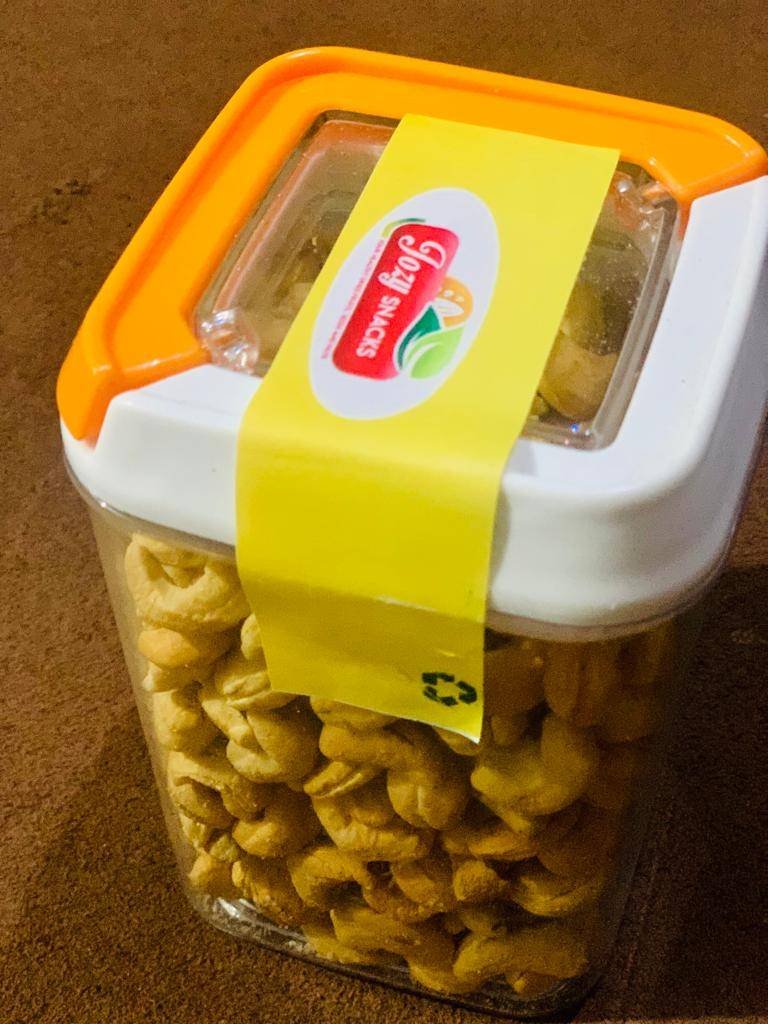
One of such individuals taking the bull by the horn to make something meaningful out of fruits that are highly perishable and prevent PHL is, JODACY PLUS with brand name Jozy Snacks.
Operating from her residence at Spintex in Accra, Ms Josephine Oduro- Boateng who started the business in 2018 with three employees is supplying most shops and supermarkets in Accra with Dried Mango Chips, Dried Pineapple Chips, Coconut Chips, Coconut flakes with Ginger as well as Cashew Nuts and Granola.

The business, however began with the Dried Mango Chips considering the fact that the fruit is usually cheap while in season and very expensive and scarce when out of season.
Jozy Snacks purchases Mangoes from farms in Somanya in the Eastern Region, processes and makes a very delicious snacks that could last on the shelves for years.
The business started in 2018 on a very informal note with the innovative product sold to mostly friends, church members and people in the neighbourhood.
Just after a year when Ms Oduro- Boateng was expecting that the business would take- off and the product to go on sale on a large scale, COVID-19 set in. Unperturbed though, she decided to use the period to push for certification from the Food and Drugs Authority (FDA) and other agencies.
Motivation
She realised after travelling to some villages that when fruits are in season (especially Mangoes), there is a lot of waste on people’s farms.
She had the conviction that dried fruits were the solution to the problem so she purchased a fruit dehydrator at the cost of GH¢6,000 and other items altogether worth, GH¢12,000 to begin the fruit-drying business.
Now she could boast of a good product after going through almost three months of experimentation with the new machines.
It was not long before they had their first contract with Vivo Energy to supply to their shops.
That opened the floodgates for more collaborations to come on board including training from United Nations Industrial Development Organisation (UNIDO) in areas of standards, food safety and management skills as well as costing.
She later secured other partnerships with China Mall, Shell, Exim Bank and other supermarkets and shops where they supply the product.
Capacity
They are currently producing about 1,000 packs of the 100gramme snacks daily and looking forward to expanding with more machines.
Production Process
From the farms, fruits were sorted to remove damaged ones, with the rest stored for ripening for about three days. Then they would be washed three times, cut and arrange into the dehydrator.
They then set the appropriate temperature and allow it to dry, take it out, and make it cool, bag and seal.
Challenges
The main challenge to the company was finding the machine and the technical support since they were not manufactured in Ghana.
Finance, according to Mrs Oduro-Mensah was another huge challenge for the company since there was massive demand for the dried fruits but unable to supply since they do not have the capacity to produce to meet the expected demand.
Another challenge is the fact that accessible funds from banks have very huge interest rates which scares farmers and small businesses away, hence recommending a flexible capital with low interest for young entrepreneurs in agriculture.
Also hindering their successful operations, is the terrible nature of roads in the country which has huge effect on vehicles and affecting the movement of produce from farms to the factory.
The high cost of power (electricity) could also not be left out of the equation as it is having a huge toll on the business.
Education
A product of the University of Ghana who studied Business Administration and majored in Human Resource Management, she surprisingly did not do anything nutrition but naturally love to play with food and combine a lot of things to see the outcome. A pure business student.
Work
She worked with few private companies but now with the Ghana Revenue Authority as a Revenue Officer, Operations.
The fruit-drying business, is however her side business production is usually done in the evening after closing from GRA.
Hobbies
Writing and being creative, she loves music, sings a lot and even attempted being a musician in the past.
Family
The 46-year-old is a single mother of two teenagers (16 and 19). “I’ll go all length to ensure that the children are taken care off,” she said.
Future
In the next five to 10 years, she wants to employ a lot of people, expand the business and export to other countries. The business would also become an institution where people learn to reproduce what she does.
Quote
Her favourite quote is ‘we are too poor to relax’. She realised that most people especially the youth are struggling financially yet, comfortable and do not want to fight their way out of poverty; the reason for some vices in the country.“There is so much money in the agriculture value chain that the youth can take advantage of,” she stressed.
Recommendation
She said, the government must begin to look for entrepreneurs like Jozy Snacks. She is of the view that there is no focus believing that agriculture would have saved the country by taking a lot of people out of poverty when properly invested into to generate the required revenue.
The company could produce and export when given the needed financial boost.
For government, there should be clear-cut policies and an area of focus since the future in Agriculture is very bright.
“It is a big deal and we must all come together to make it work. Our challenge now is capacity as we are not able to produce enough to meet the demand. There should be some technical support for local fabricators to build the machines so we could buy them,” she stated.
With the right support from the government and other organisations, she is optimistic that the objective of positioning Agriculture as the backbone of Ghana’s economy would be achieved.
By Michael D. Abayateye


The professor who spends his days exploring the intricacies of African languages found himself at the centre of a different kind of lesson on Friday, October 2, 2026. 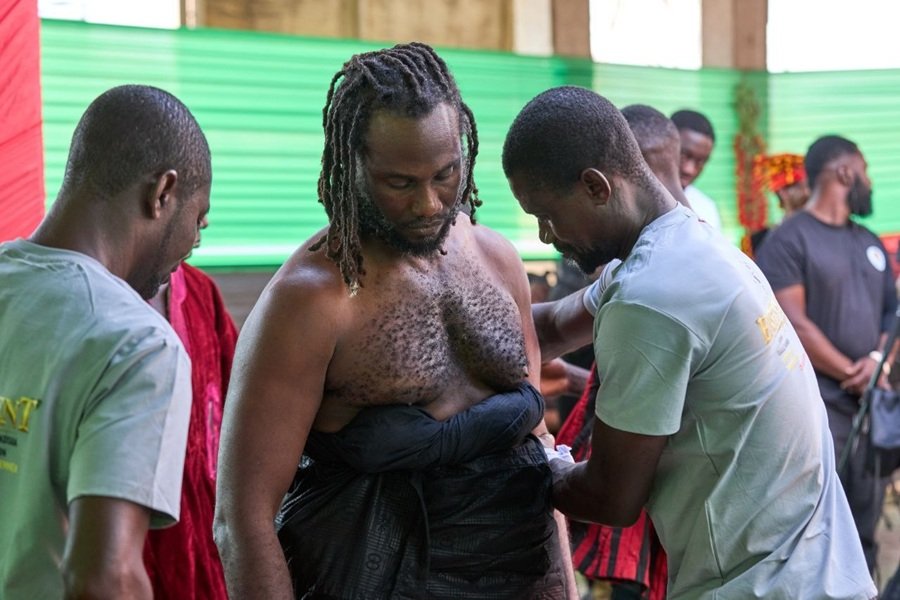
This time, there were no lecture notes, academic arguments or university classrooms. Instead, there was the weight of tradition, the rhythm of a community celebration and the solemnity of an oath at a royal palace.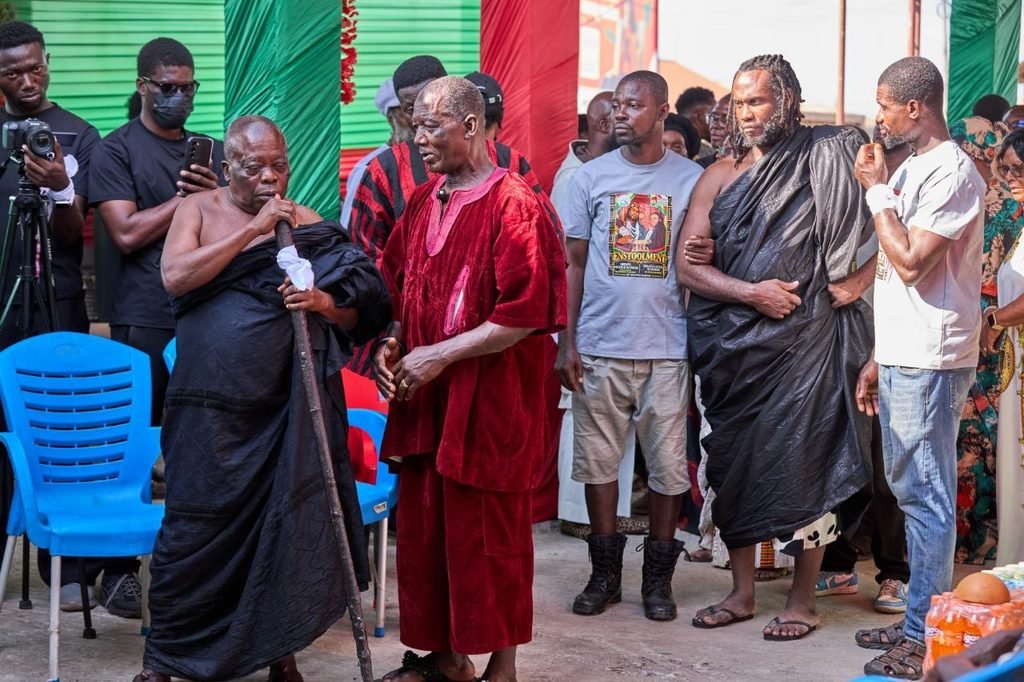
Professor Ọbádélé Kambon, a full Professor of African Linguistics at the University of Ghana, was enstooled as Apagyahene and Sunsum Ɔsahene of Akuapem Mampong in the Eastern Region in a ceremony that brought academia and traditional authority together.
For the professor, the occasion was more than a new title. It was a moment that connected his academic interests in African languages and indigenous knowledge with the living traditions of an Akan community.
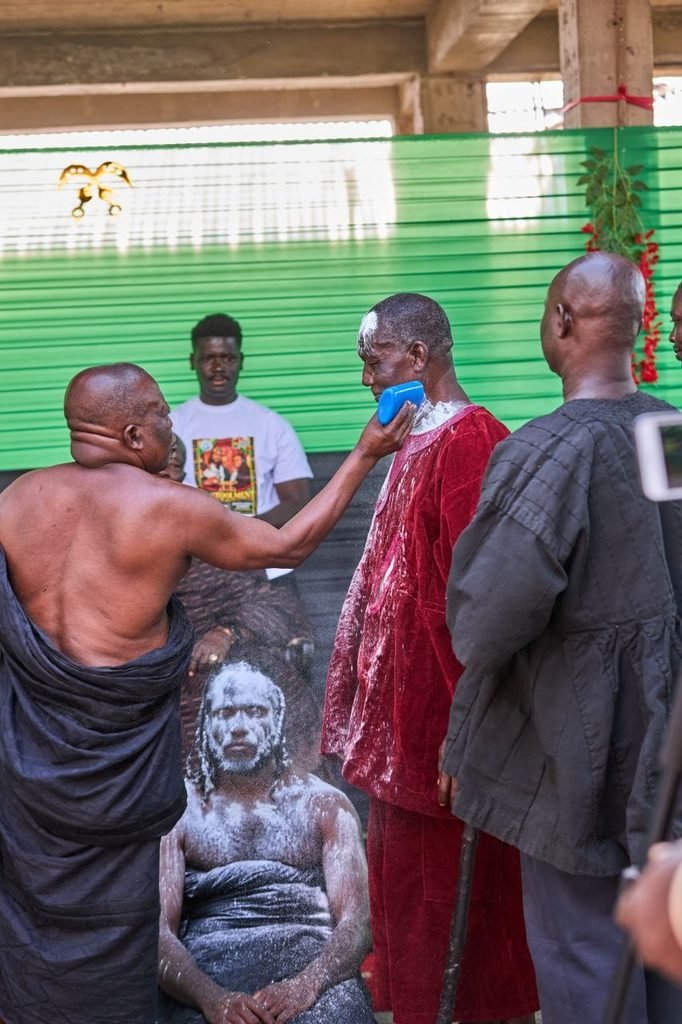
The day’s events unfolded through a series of customary observances. Kambon was first taken to the compounds of the Ɔkyeamehene and Gyasehene, where the preparations for his installation continued.
Then came the application of hyire, the white kaolin powder associated with traditional rites.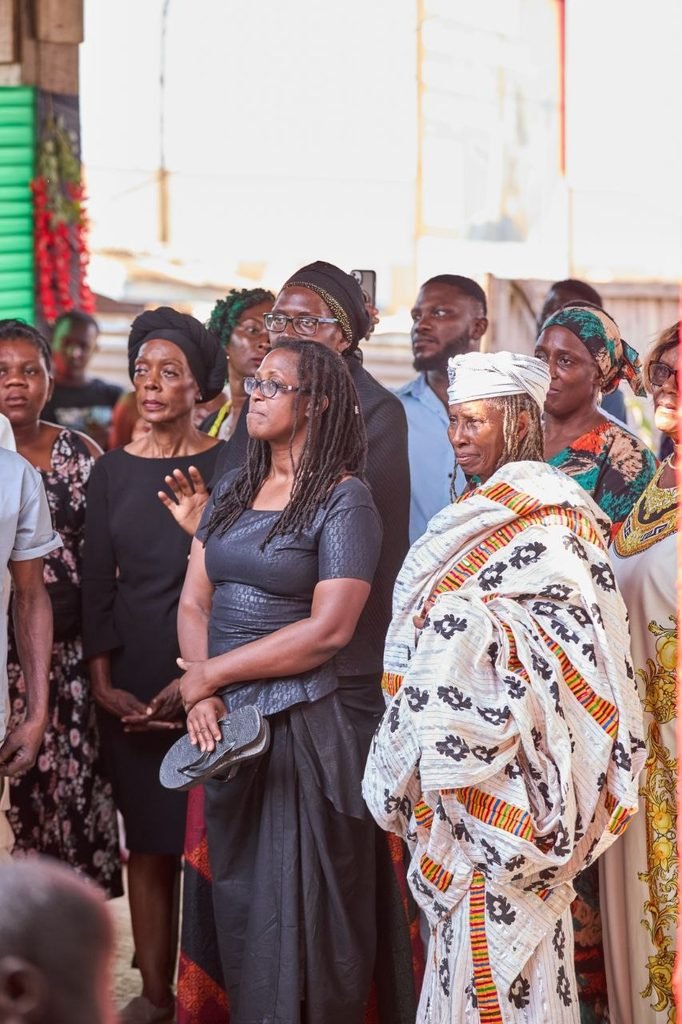
With the customary proceedings underway, the new chief was lifted onto the shoulders of celebrants and carried along the main thoroughfare of Akuapem Mampong.
The procession transformed the streets into a public stage for a ceremony rooted in the community’s traditional institutions.
There was something striking about the image, a university professor, accustomed to the measured language of academic discourse, being carried through the town in a display of traditional recognition.
Yet the celebration was not complete with the procession.
A ram was sacrificed at the Mamponghene’s compound before Kambon was taken to the palace, to swear the oath associated with his new offices.

The ceremony brought him formally into his roles as Apagyahene and Sunsum Ɔsahene.
Beyond the colourful proceedings, the titles themselves carry layers of historical meaning.
Kambon in his research explores the historical connections between Apagya and Akan political and military organisation.
Accounts cited in his work linked Apagya to an asafo, or military company, while historical writing traces an Apagya stool in Asante to the reign of Opoku Ware I in the eighteenth century.
These historical associations offer a glimpse into the institutions that have shaped Akan society over generations, although they do not automatically define the precise responsibilities of the office in Akuapem Mampong.
Kambon’s own professional life reflects a similar interest in preserving and examining African knowledge.
His work encompasses Akan language structure, naming practices across the Black world, proverbs and indigenous intellectual traditions.
Through Abibitumi, the platform he founded, he also promotes language learning, scholarship and cultural engagement.
But tradition was only one part of the story that day.
When the formal ceremony gave way to a reception, the occasion expanded into a celebration of three milestones: Kambon’s enstoolment, his promotion to full professor and his daughter Ama’s admission to the University of Ghana.
The gathering therefore carried a personal significance that went beyond the honours bestowed on one man. 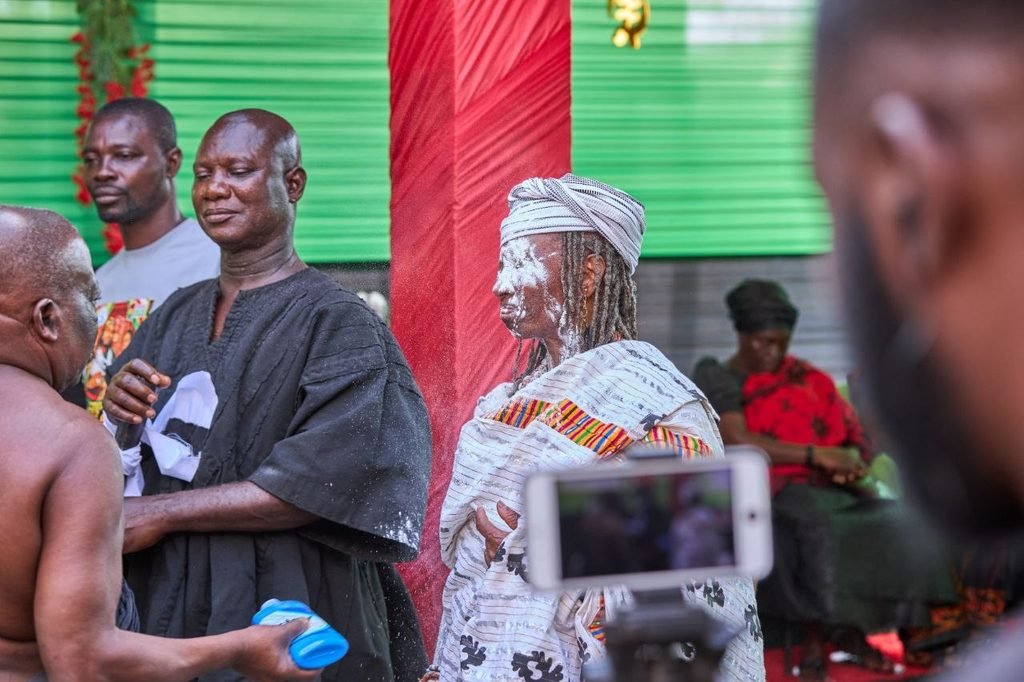
It celebrated professional advancement, the continuation of family aspirations and a connection to cultural heritage.
For a father, seeing a daughter gain admission to the same university where he holds a distinguished academic position offered another reason to celebrate.

For the professor, the moment placed family achievement alongside his own professional and traditional milestones.
Kambon had already established a place in the traditional life of Akuapem Mampɔn through an earlier installation as Banmuhene Kyidɔmhene, recorded in 2017.
His latest enstoolment adds another chapter to that relationship.
In Akuapem Mampɔn, the day brought together the university, the palace and the family table in one celebration. And for Kambon, the journey from the lecture room to the traditional procession showed how scholarship, cultural responsibility and family achievement could converge in a single memorable occasion.
By Enoch Ntiamoah Siaw
SKIP THE QUEUE, TAP THE NEWS
You can now read the Ghanaian Times and The Spectator newspapers from the comfort of your device via TimesNewsPlus.
Join our WhatsApp Channel: https://whatsapp.com/channel/0029VbBElzjInlqHhl1aTU27

Intercity STC Coaches Limited has interdicted a driver captured in a viral video allegedly hitting a Sprinter bus during an overtaking manoeuvre at Pokuase before driving away from the scene.
In a public notice, the company described the driver’s conduct as unacceptable, stressing that it did not reflect the safety standards and professionalism it upholds.
Management said it had commenced an immediate investigation into the incident and identified the driver, who has been interdicted pending the outcome of the disciplinary process.
The company added that it was awaiting an official report from the Pokuase Police Command to help establish the facts surrounding the incident.
STC reaffirmed its commitment to passenger safety and responsible road use, while thanking members of the public for bringing the incident to its attention.
Management assured the public that appropriate action would be taken following the investigation.
By: Jacob Aggrey