News
Penile implant a cure for Erectile Dysfunction

- /home/u249204778/domains/spectator.com.gh/public_html/wp-content/plugins/mvp-social-buttons/mvp-social-buttons.php on line 27
Warning: Trying to access array offset on false in /home/u249204778/domains/spectator.com.gh/public_html/wp-content/plugins/mvp-social-buttons/mvp-social-buttons.php on line 27
&description=Penile implant a cure for Erectile Dysfunction', 'pinterestShare', 'width=750,height=350'); return false;" title="Pin This Post">
- Share
- Tweet /home/u249204778/domains/spectator.com.gh/public_html/wp-content/plugins/mvp-social-buttons/mvp-social-buttons.php on line 72
Warning: Trying to access array offset on false in /home/u249204778/domains/spectator.com.gh/public_html/wp-content/plugins/mvp-social-buttons/mvp-social-buttons.php on line 72
&description=Penile implant a cure for Erectile Dysfunction', 'pinterestShare', 'width=750,height=350'); return false;" title="Pin This Post">
Men in Ghana, including those as old as 80 are suffering from conditions like hypertension and diabetes, now have a reliable treatment option for Erectile Dysfunction (ED), which is penile implant surgery.
In an interview, a Consultant Urologist and Sexologist, Dr Samuel Amanamah, shared that 52 per cent of men aged 40–70 were affected by ED in varying degrees.
He described ED, referred to as impotence, as the persistent inability to achieve or maintain an erection sufficient for sexual intercourse.
The condition, he stressed, has contributed to marital breakdowns, low self-esteem, and even infertility.
“Men in this situation can now breathe a sigh of relief,” Dr Amanamah said, adding that, “Age or chronic conditions like diabetes are no longer barriers to treatment. Even 80-year-olds have successfully undergone the procedure.”
The penile implant was considered the final treatment option for men when all other interventions, including oral medications, injectables, and medical devices fail.
The procedure involved inserting a silicon rod into the erectile tissues of the penis, providing an immediate and controllable erection, stating that there were two types of implants: malleable, which is always firm, and inflatable, which allows the user to regulate erections.
Dr Amanamah mentioned that the surgery required only a small 4cm incision beneath the penis.
“The incision site is barely visible after healing,” he said, adding that the minimally invasive procedure usually lasts an hour. Patients are typically discharged within one or two days.
Aesthetically, the penis remains unchanged after the procedure, and it is almost impossible to distinguish between one with an implant and one without, he noted.
“Functionally, the implant is even superior to natural erections,” he underlined. “It can last over 20 years and allows for intercourse as often as the patient desires.”
He added that patients can still father children after the procedure, provided they do not have underlying fertility issues.
“Some patients who suffered from 10 years of infertility have gone on to have twins after the surgery,” he noted, adding that others have reconciled with spouses after being previously divorced due to ED.
Although complications were possible, the success rate of penile implants was as high as 93 per cent, Dr Amanamah emphasised, stating that occasional erectile failure does not qualify as ED.
He also outline that the dysfunction must be persistent. “Some men start with a good erection but lose it during intercourse. That still counts as ED.”
Furthermore, he explained that ED can stem from various causes, including cardiovascular issues, neurological disorders, hormonal imbalances, and chronic conditions like hypertension and diabetes.
Psychological factors such as unresolved marital problems also play a role. Conditions like priapism, that is, prolonged erection often linked to sickle cell disease or abuse of sex-enhancement drugs could also result in ED if not promptly treated.
Moreover, Dr Amanamah underscored the importance of treating the root cause noting that “simply giving medication without addressing underlying issues only delays the problem,” and added that “effective treatment must be holistic.”
“When oral or injectable medications and medical devices fail, the penile implant remains a safe and long-term solution for restoring sexual function and quality of life,” he noted.
From Ama Tekyiwaa Ampadu Agyeman, Koforidua


Over 20 structures built within the 50-metre buffer zone of the Kpeshie Lagoon at the Laboma Beach Resort in the La Dade-Kotopon Municipality were on Sunday demolished by the Greater Accra Regional Coordinating Council (GARCC).
Buildings such as single-unit semi-detached under construction and completed chalets at the resort were pulled down while portions of a newly constructed perimeter wall were also demolished. Read More
SKIP THE QUEUE, TAP THE NEWS
You can now read the Ghanaian Times and The Spectator newspapers from the comfort of your device via TimesNewsPlus.
Join our WhatsApp Channel: https://whatsapp.com/channel/0029VbBElzjInlqHhl1aTU27

About 120 golfers from clubs across Ghana participated in an 18-hole competition, dubbed ‘MTN 30th Anniversary CEO Invitational Golf Tournament’ held at the Achimota Golf Club on Saturday.
At the end of the hectic day, Frederick Semenu Duvor won the Men’s Group A event with 39 points, while Julienne Afi claimed the Ladies’ Group A title with the same score.
Yaw Mireku Jnr. won the Men’s Group B with an impressive 45 points, while Kous Louanges Mang took the Ladies’ Group B title with 38 points.
Kofi Mangesi won Men’s Group C with 40 points while Elorm R. Akuash Bonney claimed the Ladies’ version with 42 points.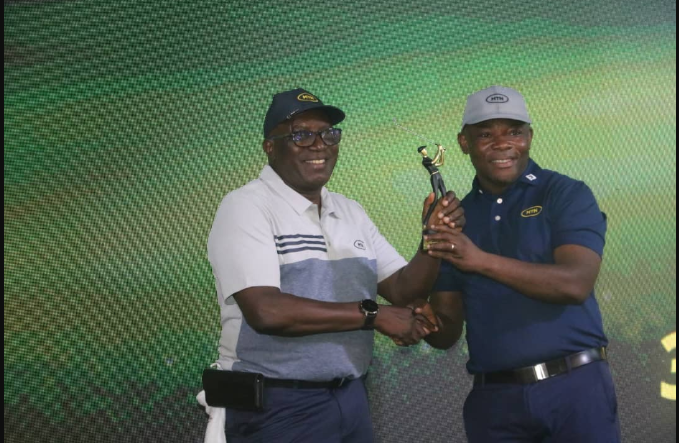
In the Seniors Division, Jan Vogel emerged winner of the men’s category with 39 gross, while Helen Appah topped the ladies’ category with 44 gross.
Addressing participants, the company’s Board Chairman, Mr Ishmael Yamson, urged the company to approach its next phase with the same resilience, discipline and determination that have defined its success over the past three decades.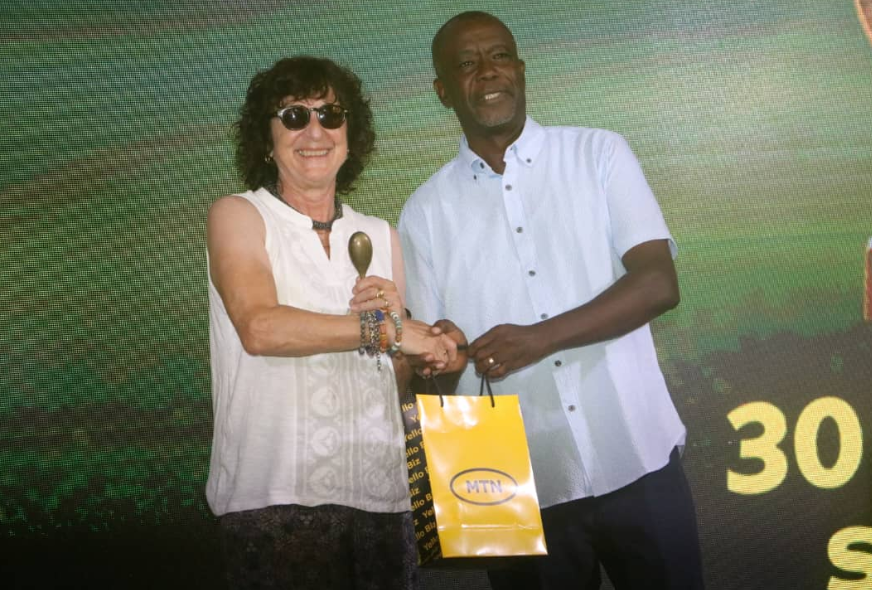
He drew a striking parallel between the game of golf and MTN Ghana’s three-decade journey, describing both as long games in which success depends less on one spectacular moment than on consistency, patience, judgment and the ability to recover from setbacks.
He said, golf had taught him a lesson that extended far beyond the fairways, thus, a round cannot be won on the first hole.

In golfing terms, he said, MTN Ghana had encountered its share of regulatory bunkers, competitive hazards and unexpected storms that had forced the company to pause, reassess and change its approach.
But those challenges, he suggested, were part of the journey rather than reasons to abandon it.
By Andrew Nortey
SKIP THE QUEUE, TAP THE NEWS
You can now read the Ghanaian Times and The Spectator newspapers from the comfort of your device via TimesNewsPlus.
Join our WhatsApp Channel: https://whatsapp.com/channel/0029VbBElzjInlqHhl1aTU27

 News1 week ago
48 Engineer Regiment to be major sub-contractor on Accra-Kumasi Expressway, $2bn ready- Prez Mahama
- Entertainment7 days ago
Rhythms On Da Runway returns November 28 with 16th edition themed ‘Unbound’
- Entertainment7 days ago
Ohemaa Mercy’s Tehillah Experience outfit was priestly regalia, not costume – Management clarifies