News
Parliamentary Committee on Chieftaincy, Cultural and Religious Affairs engages key institutions


- /home/u249204778/domains/spectator.com.gh/public_html/wp-content/plugins/mvp-social-buttons/mvp-social-buttons.php on line 27
https://spectator.com.gh/wp-content/uploads/2025/05/par4-1000x600.jpg&description=Parliamentary Committee on Chieftaincy, Cultural and Religious Affairs engages key institutions', 'pinterestShare', 'width=750,height=350'); return false;" title="Pin This Post">
- Share
- Tweet /home/u249204778/domains/spectator.com.gh/public_html/wp-content/plugins/mvp-social-buttons/mvp-social-buttons.php on line 72
https://spectator.com.gh/wp-content/uploads/2025/05/par4-1000x600.jpg&description=Parliamentary Committee on Chieftaincy, Cultural and Religious Affairs engages key institutions', 'pinterestShare', 'width=750,height=350'); return false;" title="Pin This Post">
The Parliamentary Select Committee on Chieftaincy, Cultural and Religious Affairs has embarked on a familiarisation visit to some key institutions.
The institutions are the Ministry of Local Government, the Christian Council, and the Ministry of Tourism, Culture, and Creative Arts.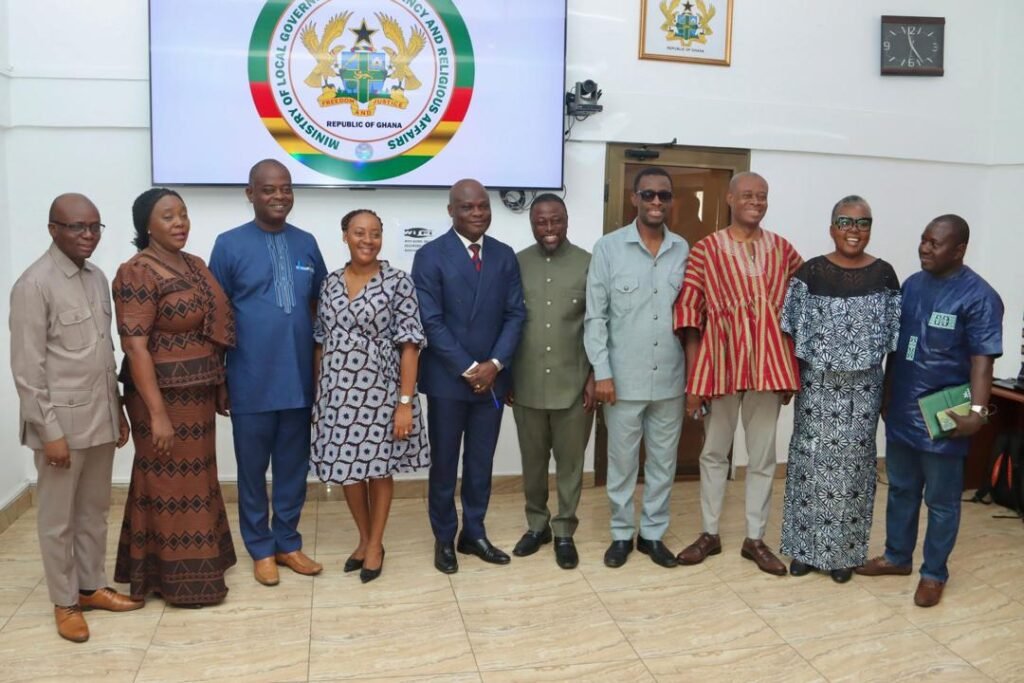
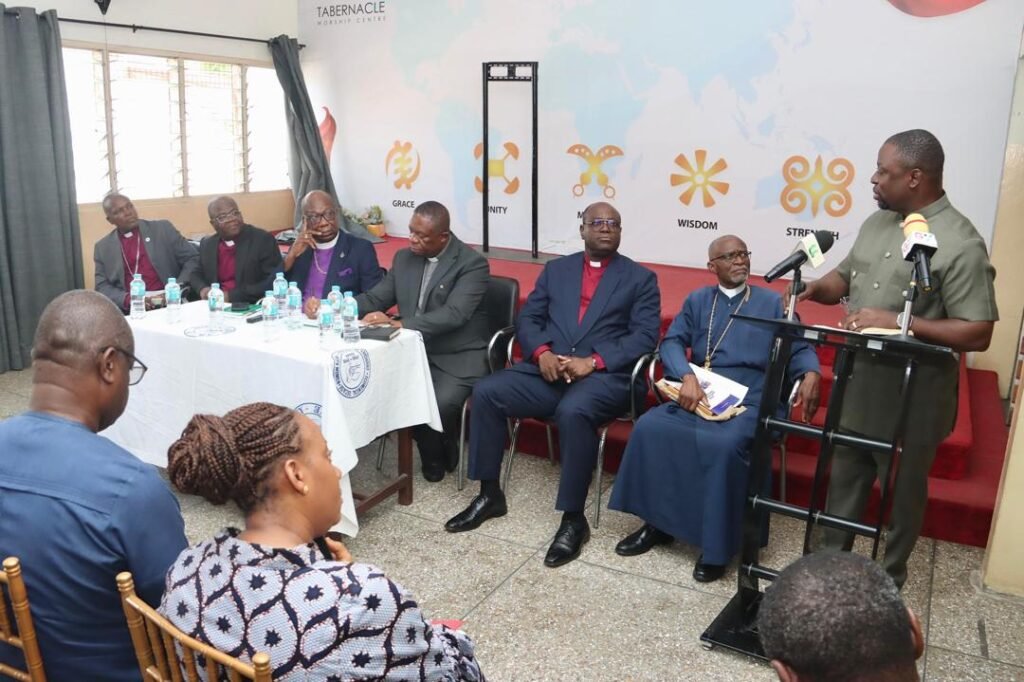
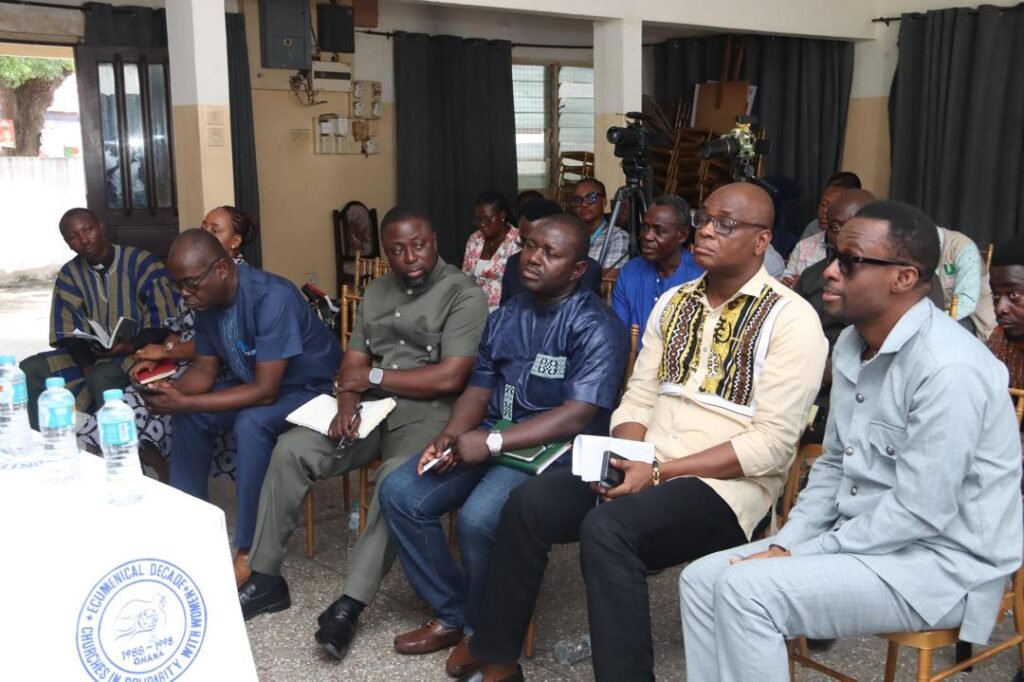
The purpose of the visit was to gain insight into their roles, challenges and to explore how the committee can best offer its support.
In his remarks, the Minister of Local Government, Chieftaincy, and Religious Affairs, Ahmed Ibrahim, emphasized that a major issue being addressed is the resolution of chieftaincy disputes. He highlighted that the government is treating this matter with the utmost seriousness.
A notable achievement, he noted, was the decision to ensure that a ruling party member does not chair the committee—a move aimed at avoiding partisan decisions and ensuring fairness in resolving chieftaincy disputes.
According to him, “Mr. Chairman, we will put our political affiliations aside to confront these matters in a neutral, impartial, and transparent manner; once we do that, we will be able to resolve most of our chieftaincy issues.”
He highlighted sanitation as one of the core municipal functions under his Ministry and urged the Committee to work closely with the Government to help sustain the National Sanitation Day exercise across the various MMDAs.
During the committee’s visit to the Christian Council of Ghana, the Chairman, Rt. Rev. Dr. Hillard D. Dogbe, stated that although the Council has established standards and entry requirements for membership, it does not have absolute control over rogue pastors, a major challenge that could bring the image of the institution into disrepute.
He therefore called for self-regulation within the religious community and urged parliamentarians to refrain from endorsing rogue pastors, as such endorsements give them the zeal to continue operating with the impression that they have official support.
The Minister of Tourism, Culture, and Creative Arts Dzifa Abla Gomashie, urged Ghanaians to celebrate, support and protect our culture, as it not only generates income but also sets us apart from the rest of the world, giving visitors a reason to return.
“Our uniqueness is reflected in our food, clothing, fashion, and heritage,”she noted.
The Minister expressed hope that the Ministry will be supported in its efforts to secure the recognition and resources it deserves to be able to do more.
The Chairman of the Committee, Fred Kyei Asamoah, commended the institutions for the good work done and gave the assurance that the committee would not be an armchair body, but rather an action-oriented one and would work closely to achieve results for the betterment of the country.



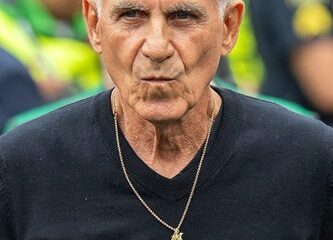

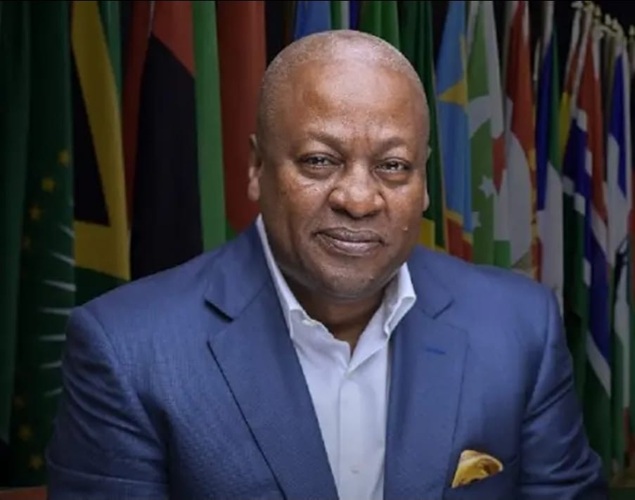
President John Dramani Mahama will be joining African heads of state, business leaders, investors and innovators shaping Africa’s next chapter, at the inaugural Alamein Africa Forum scheduled to take place from 2nd to 4th October 2026 in the historic city of Alamein on Egypt’s Mediterranean coast.
The three-day Alamein Africa Forum is established as a permanent African Business Forum to convene biennially in Egypt.
It is to become the continent’s premier gathering where political power meets entrepreneurial prowess, bridging the established engines of African growth with the new sectors defining its future.
Co-organised by the Government of Egypt, African Export – Import Bank (Afreximbank), the African Union and AUDA-NEPAD, it is expected to bring together more than twenty (20) heads of state and government representatives alongside business leaders, bankers and development institutions.
Ghana’s President, who on 23rd September 2026 declared Ghana is open for business in New York after ringing the ceremonial closing bell at the Nasdaq Stock Market will be leading the Ghanaian delegation, to include the Minister for Trade, Agribusiness, and Industry, Elizabeth Ofosu – Adjare, to the forum.
Other members of the Ghanaian delegation are the Head and Presidential Advisor for Ghana’s 24-Hour Economy and Accelerated Export Development Programme, Hon. Augustus Goosie Tanoh, Ghana’s Special Envoy to the Alliance of Sahel States, Colonel Larry Gbevlo – Lartey alongside key Ghanaian private sector players.
Bringing together leaders in politics, business and policy from across the continent, the Alamein Africa Forum will provide a unique opportunity to shape Africa’s growth agenda by aligning policy and investment priorities, mobilising partnerships for implementation and strengthening financing and investment pathways.
The private sector must become an integral part of Agenda 2063, the African Union’s strategic fifty-year masterplan to transform the continent. The private sector is the core economic engine required to turn the African 2063 from an aspirational government roadmap into realized infrastructure, jobs, and value-added trade.
By Chris KONEY
News
Contractors move to site to begin construction of 120-Bed Trauma Hospital at Bole – Felix Kwakye Ofosu

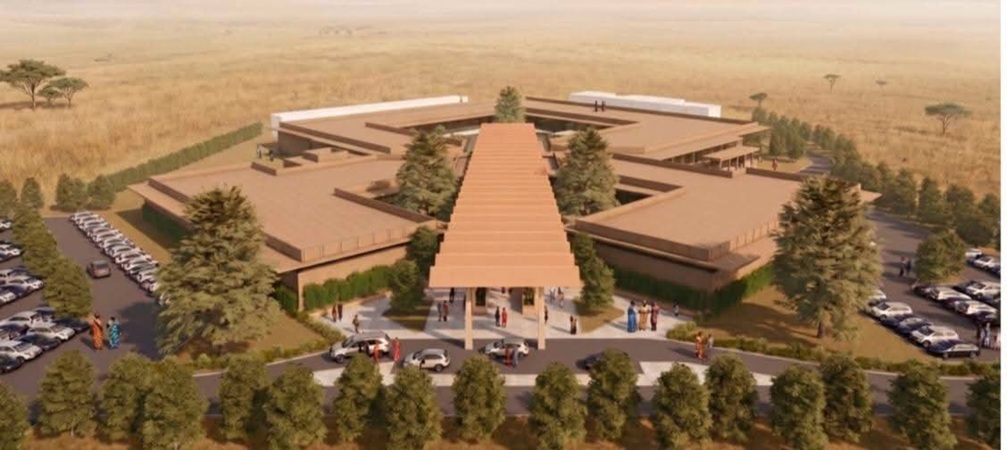
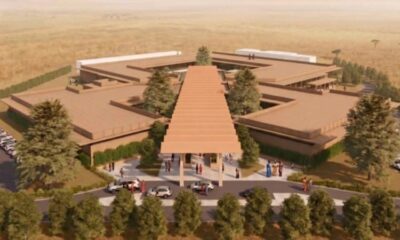
Minister for Government Communications, Felix Kwakye Ofosu, has revealed that contractors have moved to site to begin construction of a 120-bed Specialised Trauma and Emergency Hospital at Bole in the Savannah Region.
According to the Minister, the 16,000 square metre facility will be equipped with modern medical infrastructure to provide emergency and trauma care.
The hospital will have a 24-hour Accident and Emergency Unit, trauma resuscitation bays, emergency operating theatres, an Intensive Care Unit (ICU) and a High Dependency Unit (HDU).
It will also include specialised trauma wards, a burns treatment unit, orthopaedic and surgical units, as well as imaging and diagnostic facilities, among others.
By Edem Mensah-Tsotorme