Hot!
NGO rescues teenage mothers


LifeAgain, a local Non-Governmental Organisation (NGO) based in the Upper West Region of Ghana has come to the rescue of some out-of-school teenage mothers whose hope of continuing with their education would have been dashed because of early pregnancy.
As the name implies, LifeAgain, the NGO has taken upon itself to provide the necessary educational materials to these young mothers to get them back to school to continue with their education so that they do not become burden to their parents and society.

The Chief Executive Officer, Ms Saudatu Mohammed said that her organisation usually identified girls between 12 and 20 years who had given birth under economic hardship, and assisted them to either go back to school or learn a trade.
According to her, the activities of LifeAgain had made positive impact in the lives of some teenage mothers in the region who would have been liability rather than asset.
Addressing a conference of teenage mothers here recently, Ms. Saudatu Mohammed said that a lot of young girls endured maltreatment as a result of unplanned pregnancies, and called on donors to support her laudable project.
Some beneficiaries shared their experiences on what triggered their engagement in early sex leading to pregnancy.
The emotional flame was sparked by 19-year-old Ms. Saudatu who explained that growing up as a young girl with parents who cared less about her well-being, she had to wash bowls for food vendors at the Wa Central market to raise money to buy books and other school items.
“I did this job until junior high two when I met a young man who proposed to me and offered to assist me financially and I was excited that he gave me GH₵5.00 daily so that I didn’t have to go to the market anymore to wash bowls”, she said.
She stated that at some point, she felt obliged to meet the sexual needs of this “good Samaritan” who later became her boyfriend and got her pregnant.
She said she had to run away from her parents to her boyfriend who had moved to a different district because her parents wanted her to abort the pregnancy as a result of differences in religion between her and the boyfriend.
“Staying with a jobless man was real hell for a pregnant woman like me because sometimes I would wake up the whole day and not get food to eat; I didn’t want to go back to my parents because they would force me to undergo abortion”, she narrated.
Saudatu explained that luck shone on her after delivery, when LifeAgain visited her community and she was enrolled as an apprentice of a dressmaker in the area, saying even though things were still difficult for her, she was hopeful that if she passed out, she could make a living for herself and the child who was now two years old.
Also, a 17-year-old Hidaya through peer influence started an early sexual relation with a man who got her pregnant at age 15.
Apparently, she conceived at Junior High school form two and was advised by friends to either abort the pregnancy or run away from home in order to escape scorn and shame.
“I stuck to my guns because I really wanted to go to school and I actually did not do away with the pregnancy, amidst scorn, shame and mockery from friends; people mockedand shamed me publicly and pointed fingers at me but I still went to school till I delivered in form three and could no longer go to school”, she said.
She indicated that after delivery, she went back to school and registered for the Basic Education Certificate Examination (BECE) and scored aggregate 26 after the exam.
“My elder brother took care of me till delivery. I heard of LifeAgain through someone and contacted them to help me further my education at the senior high school (SHS)”, she said.
Hidaya said the NGO got her books, school uniforms and everything else she needed to go back to school and said her brother also helped in taking care of the child.
“Even at the new school, some of my old friends from JHS who knew I got pregnant have told the others that I had a child, so my mates still make mockery of me but I don’t care because I really want to utilise this opportunity to study hard and complete the school”.
“The father of my child tried to get me to abort the pregnancy and when she refused, he employed the help of friends to make fun of me and called me a school ‘drop-out’.
“Because of these people, I really want to do well in life; I want to show them that having a child does not mean I am useless so I don’t care whatever others say, I am determined to complete my education”, she said.
An 18-year-old mother of one narrating her ordeal also said she was forced into an early relationship as a result of marital problems at home.
“My mother was 19 years when she had me out of wedlock and when she finally got married, the husband made me his rival and did not want to have anything to do with me”, she said.
She said her step-father stopped her mother from providing for her needs so she had to fend for herself with the hope of completing at least JHS before she left her mother’s house.
She narrated that she endured days of intense hunger and had to use rags as sanitary pad, a situation she said made her stay out of school for days she had her menstrual period.
“I moved to our house in the village after JHS and worked at a drinking spot to save money for SHS, but I met a guy who used to give me money and ended up sleeping with me” she narrated and said she had to drop out after first term at the SHS when she discovered she was pregnant.
Since the man was not ready to help, she said she had to fend for herself and suffer days of hunger and poverty so much so that she could not even afford diapers for the baby.
“I met LifeAgain, the NGO that trained me on how to make liquid soap which I vend to take care of myself and my son but I am still hoping to get back to school”, she said.
Rounding up the discussion, a camerawoman in the region, Ms Martiuna Masoonoo Zabog encouraged the girls not to give up regardless of their circumstances.
The young lady who became a mother at age 17 and wrote her final exam at the SHS with six months old pregnancy said friends mocked her, family rejected her and she was called all sort of names but she was determined to weather the storm and make a life for herself and her son.
“Sometimes when these things happen, people call the girl all sort of names without understanding and addressing the root causes such as poverty, broken homes, lack of parental care and peer pressure”, she said and advised the girls to stay away from deceitful men.
Other women mentors at the programme charged the girls on to make use of the opportunity made available to them by LifeAgain to get a substantive living for themselves and their wards.
From Lydia Darlington Fordjour, Wa


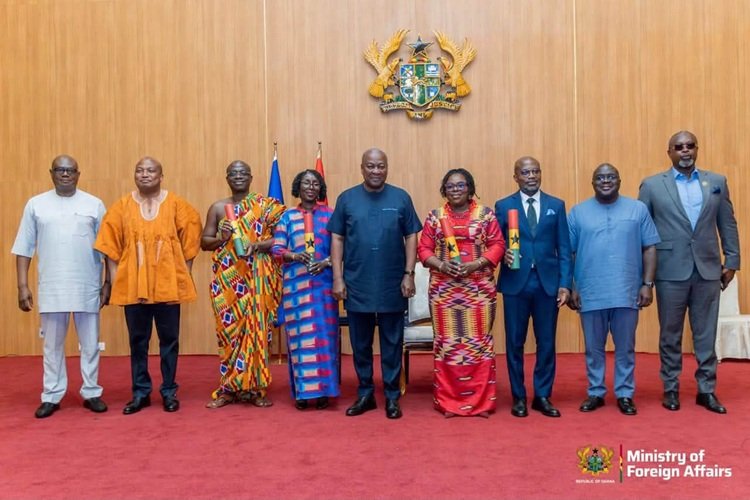
President John Dramani Mahama has commissioned four career diplomats as ambassador-designates to represent Ghana in four countries.
The commissioning ceremony took place on Friday, October 16, 2026.
The new envoys are Her Excellency Nana Antwiwaa Dodoo, Ambassador-Designate to Angola; His Excellency Louis Kwame Obeng, Ambassador-Designate to Qatar; Her Excellency Evelyn Korantemaa Ofosu-Amable, Ambassador-Designate to Israel; and His Excellency Jedidiah Reuben Adogla, Permanent Representative-Designate to Switzerland.
President Mahama charged them to advance Ghana’s national interests through strategic partnerships, economic diplomacy, investment mobilization, and expanded access to international markets.
He said Ghana’s diplomatic engagements must deliver tangible economic benefits, create jobs, and strengthen the country’s standing on the international stage.
The four envoys are career diplomats with over 27 years of experience.
On behalf of her colleagues, Her Excellency Nana Antwiwaa Dodoo thanked the President for the confidence reposed in them and pledged their commitment to emulate his leadership and deliver on the mandate given to them.
By Edem Mensah-Tsotorme
The professor who spends his days exploring the intricacies of African languages found himself at the centre of a different kind of lesson on Friday, October 2, 2026. 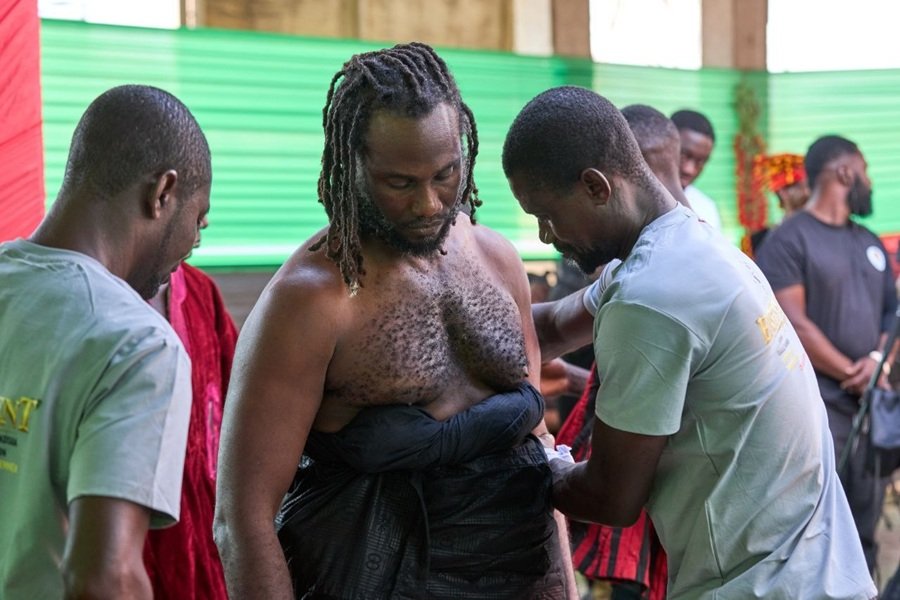
This time, there were no lecture notes, academic arguments or university classrooms. Instead, there was the weight of tradition, the rhythm of a community celebration and the solemnity of an oath at a royal palace.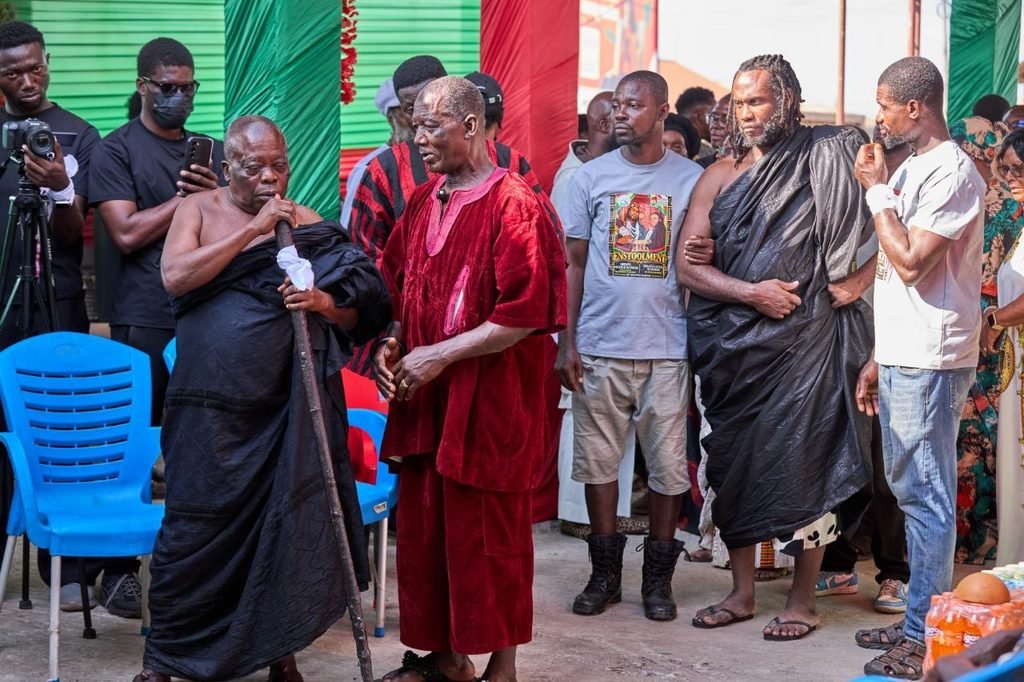
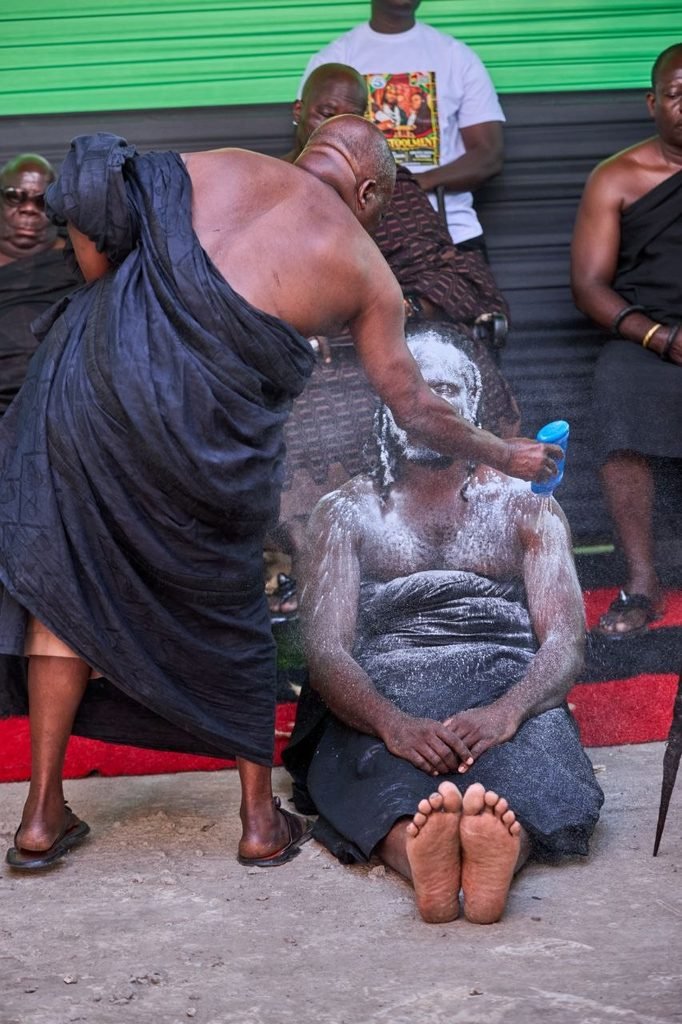
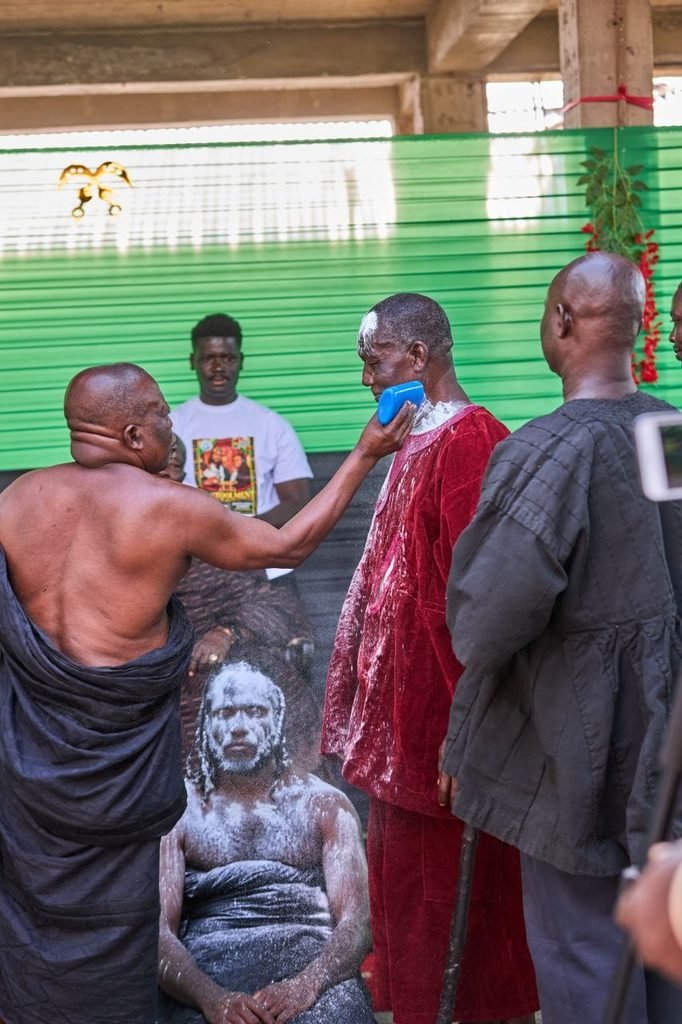
Professor Ọbádélé Kambon, a full Professor of African Linguistics at the University of Ghana, was enstooled as Apagyahene and Sunsum Ɔsahene of Akuapem Mampong in the Eastern Region in a ceremony that brought academia and traditional authority together.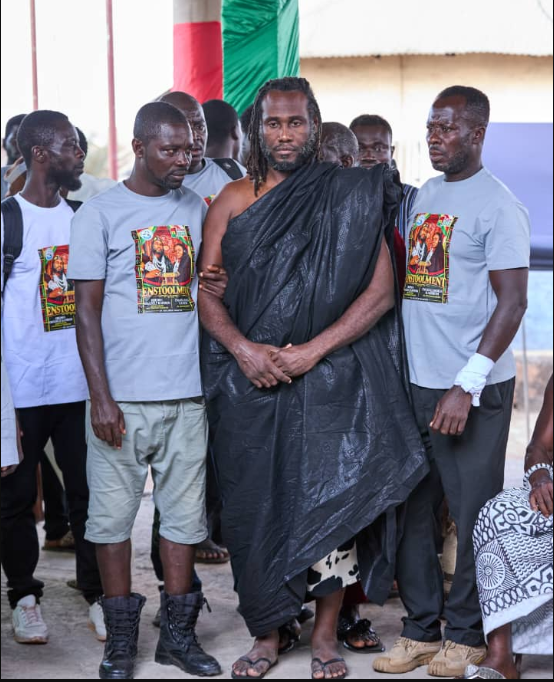
For the professor, the occasion was more than a new title. It was a moment that connected his academic interests in African languages and indigenous knowledge with the living traditions of an Akan community.
The day’s events unfolded through a series of customary observances. Kambon was first taken to the compounds of the Ɔkyeamehene and Gyasehene, where the preparations for his installation continued.
Then came the application of hyire, the white kaolin powder associated with traditional rites.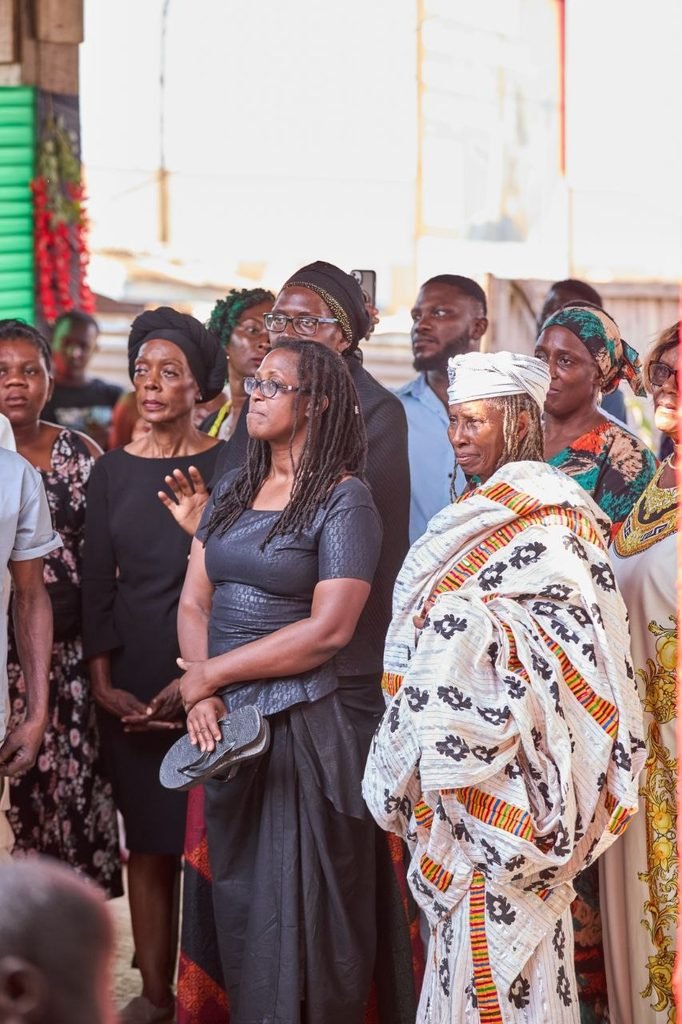
With the customary proceedings underway, the new chief was lifted onto the shoulders of celebrants and carried along the main thoroughfare of Akuapem Mampong.
The procession transformed the streets into a public stage for a ceremony rooted in the community’s traditional institutions.
There was something striking about the image, a university professor, accustomed to the measured language of academic discourse, being carried through the town in a display of traditional recognition.
Yet the celebration was not complete with the procession.
A ram was sacrificed at the Mamponghene’s compound before Kambon was taken to the palace, to swear the oath associated with his new offices.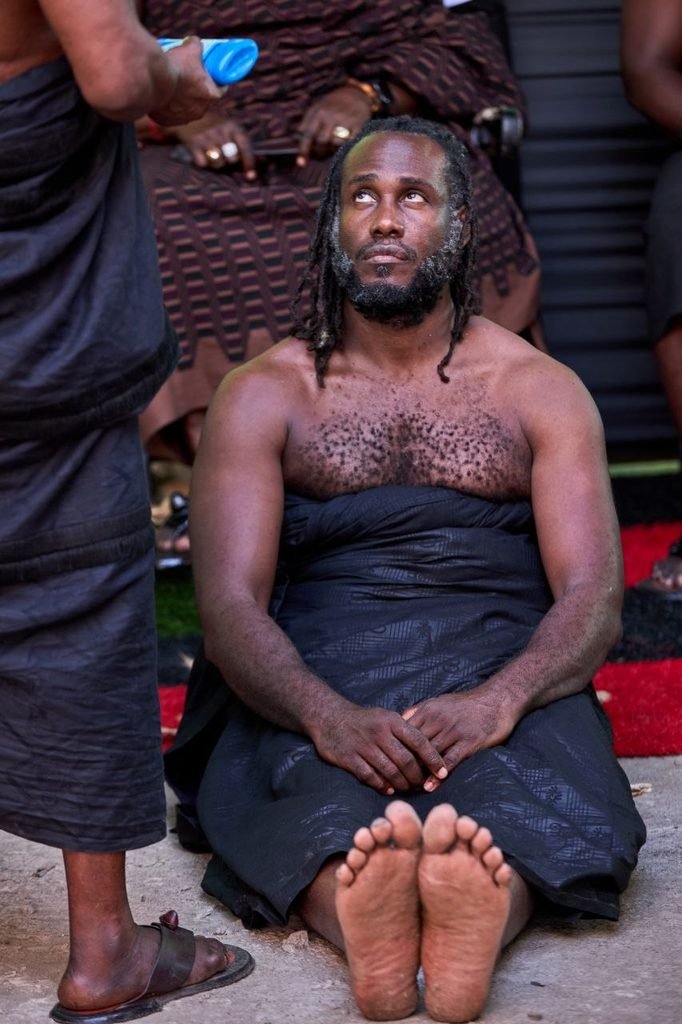

The ceremony brought him formally into his roles as Apagyahene and Sunsum Ɔsahene.
Beyond the colourful proceedings, the titles themselves carry layers of historical meaning.
Kambon in his research explores the historical connections between Apagya and Akan political and military organisation.
Accounts cited in his work linked Apagya to an asafo, or military company, while historical writing traces an Apagya stool in Asante to the reign of Opoku Ware I in the eighteenth century.
These historical associations offer a glimpse into the institutions that have shaped Akan society over generations, although they do not automatically define the precise responsibilities of the office in Akuapem Mampong.
Kambon’s own professional life reflects a similar interest in preserving and examining African knowledge.
His work encompasses Akan language structure, naming practices across the Black world, proverbs and indigenous intellectual traditions.
Through Abibitumi, the platform he founded, he also promotes language learning, scholarship and cultural engagement.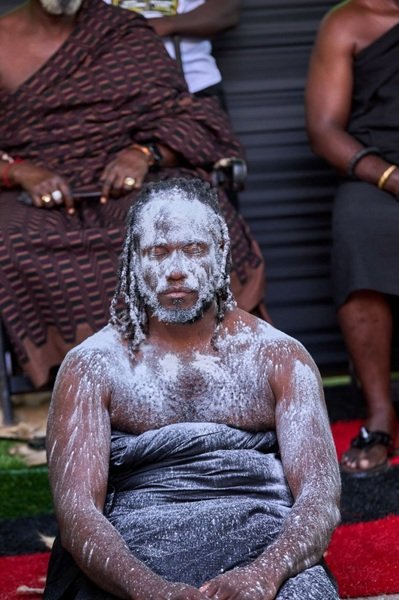
But tradition was only one part of the story that day.
When the formal ceremony gave way to a reception, the occasion expanded into a celebration of three milestones: Kambon’s enstoolment, his promotion to full professor and his daughter Ama’s admission to the University of Ghana.
The gathering therefore carried a personal significance that went beyond the honours bestowed on one man. 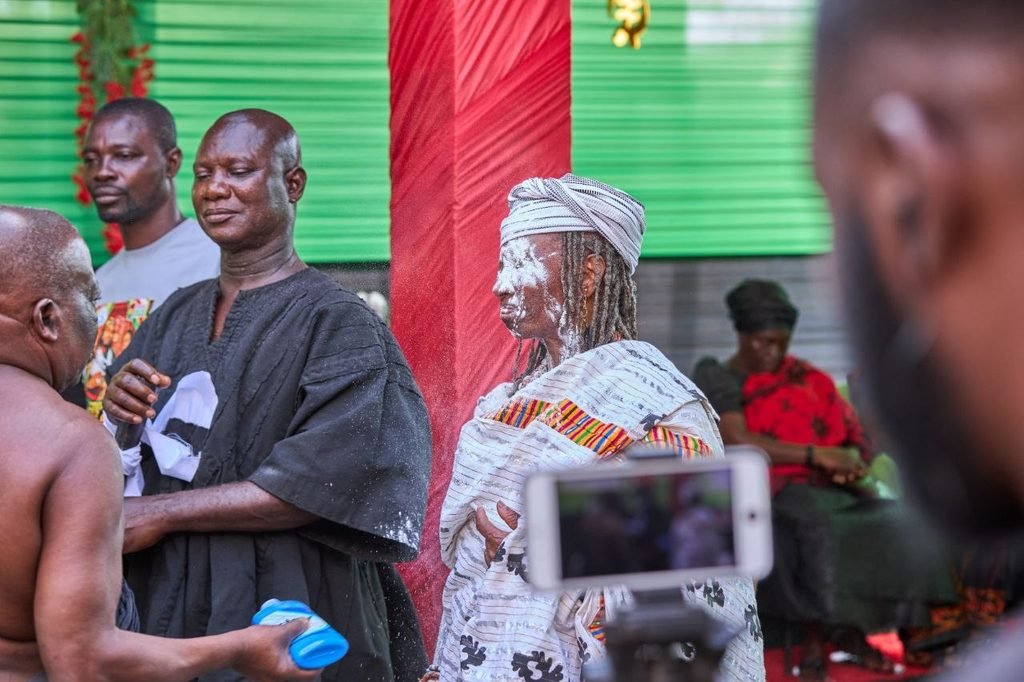
It celebrated professional advancement, the continuation of family aspirations and a connection to cultural heritage.
For a father, seeing a daughter gain admission to the same university where he holds a distinguished academic position offered another reason to celebrate.
For the professor, the moment placed family achievement alongside his own professional and traditional milestones.
Kambon had already established a place in the traditional life of Akuapem Mampɔn through an earlier installation as Banmuhene Kyidɔmhene, recorded in 2017.
His latest enstoolment adds another chapter to that relationship.
In Akuapem Mampɔn, the day brought together the university, the palace and the family table in one celebration. And for Kambon, the journey from the lecture room to the traditional procession showed how scholarship, cultural responsibility and family achievement could converge in a single memorable occasion.
By Enoch Ntiamoah Siaw
SKIP THE QUEUE, TAP THE NEWS
You can now read the Ghanaian Times and The Spectator newspapers from the comfort of your device via TimesNewsPlus.
Join our WhatsApp Channel: https://whatsapp.com/channel/0029VbBElzjInlqHhl1aTU27