News
MPEC organises three-day retreat to deepen capacities of CSOs in conflict prevention and resolution

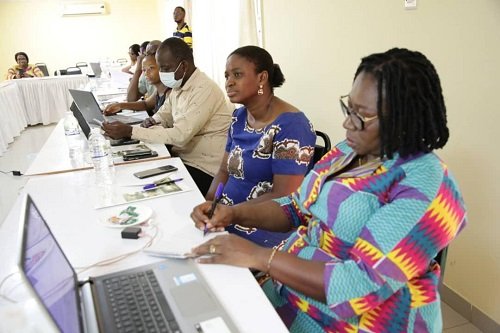
A picture of some participants
A three-day retreat to deepen the capacities of Civil Society Organisations(CSOs) and minority activists to contribute to conflict prevention and resolution has ended in Accra on Wednesday.
It was necessitated to address issues concerning exclusion and discrimination of minoritiesand indigenous communities, migrants, internally displaced persons.
The retreat was organised by the Media Platform on Environment and Climate Change(MPEC) with funding from the European Union(EU) under the implementation of ‘Engaging Media and Minorities to Act for Peacebuilding’ (EMMAP) programme.
The participants included disability right activists, youth activists, gender activists, child rights activists, migrants’ right activists and journalists.
Topics treated were ‘Overview of Conflict in Ghana’, ‘Conflict and Minority Communities and Groups in Ghana’, ‘Policy and Legal Frameworks on Conflicts’, ‘Community Tensions’, ‘Understanding Ethical’ and ‘Privacy Standards’ among others.
In a presentation, Ms. Charity ForiwaDwommoh,a legal practitioner, and Chief Executive Officer of Women Uplifting Women, said the position of minorities across the world was grave and it was getting worse with a rise in hate speech and hate crimes targeting minorities around the world.
She noted that root causes of most violent conflicts were linked to violations of the human rights of minorities and called for mainstreaming of minority issues in conflict prevention efforts.
To address the common root causes of most conflicts, Ms. Dwommoh explained that it was essential to deal with the grievances, real or perceived, before these could be instrumentalised by political forces or created explosive conditions that led to violence.
“Since most contemporary violent conflicts involve aggrieved minorities, strategies to prevent conflicts involving minorities should figure prominently in international, regional and national initiatives and address directly the root causes of exclusion and injustice” she stressed.
Dr Joana Larry-Afutu, Clinical Psychologist and Lecturer,indicated that minority group activists begin advocacy because of the passion they had to see others live a more fulfilling life however, at a point they seemed to break down.
That she explained,could be referred to as compassion fatigue which could be managed by havinga positive outlook, asking for help, making time for routine screening , discourage activities that may be hurtfulor destructive to stress management process, like substance abuse, revenge or isolation among others.
“Advocacy takes a lot from advocates and they is the need for such advocates to take care of themselves so they can be the voice for the voiceless,” Dr Afutu stated.
BY BENEDICTA GYIMAAH FOLLEY

News
GES directs Ashanti Regional, Obuasi Municipal Education Directors to step aside over Obuasi SHTS scandal


The Management of the Ghana Education Service (GES) has directed the Ashanti Regional Director of Education, Dr. William Amankrah Appiah, and the Obuasi Municipal Director of Education, Mr. Kwamena Owusu-Nketiah, to step aside with immediate effect.
The directive forms part of ongoing investigations into allegations of sexual misconduct involving the headmaster of Obuasi Senior High Technical School (SHTS), Mr. Zakaria Abdulai.
According to GES, the decision is intended to ensure that the investigations proceed without potential interference, nor the perception of it.
The two directors are to hand over their offices and all state property in their possession to the Deputy Ashanti Regional Director of Education, Mr. Thomas Kwame Boateng.
Management added that the headmaster, Mr. Zakaria Abdulai, also remains interdicted and therefore urged the public to ignore any news circulating that he has been cleared.
Management is calling for calm, support and cooperation as thorough investigations into the matter continue.
By Edem Mensah-Tsotorme
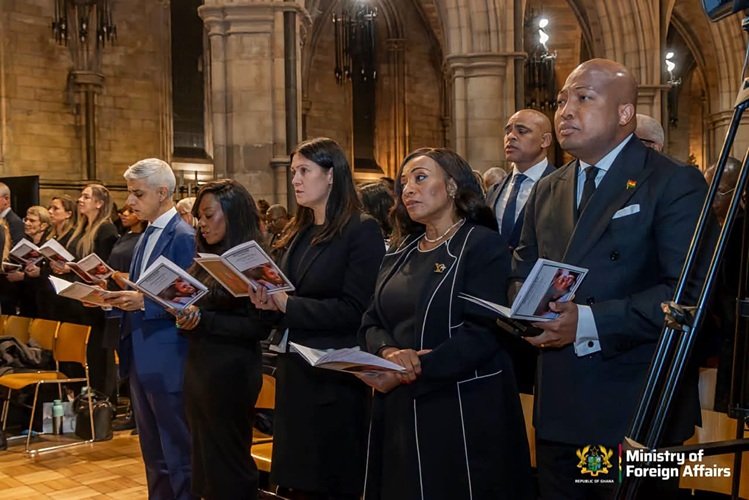
The Minister for Foreign Affairs, Samuel Okudzeto Ablakwa, has joined the family of the late Professor Jason Atta Kwei Arday, the Ghanaian community in the UK, and other dignitaries for a memorial service in Southwark, UK.
In a post, Mr. Ablakwa described the service as deeply moving and unforgettable, held in honour of the late professor’s memory.
According to him, in keeping with the government’s pledge, he joined the family, Ghana’s High Commissioner to London, British MPs, Ministers, the Mayor of London, Cambridge scholars, Prof. Arday’s students and loved ones to pay respects and honour his inspiring legacy.
Mr. Ablakwa noted that Prof. Arday’s accomplishments as the youngest Black professor appointed at the University of Cambridge and his widely appreciated charitable contributions will continue to inspire generations.
“The Government and People of Ghana will continue to stand by our compatriots everywhere they are in the world. As we do so, we profess our commitment to justice, equality and the creation of a new world,” he said.
He prayed for fortitude for the family in what he described as an extraordinarily difficult time.
“We shall always remember Prof. Arday for his response when asked what he will wish to do to change the world: ‘I would take a thread and a needle, and I’d interweave love into our society’,” Mr. Ablakwa added.
By Edem Mensah-Tsotorme