Hot!
Mental Health Authority urges parliament to fast-track repeal of attempted suicide law

- /home/u249204778/domains/spectator.com.gh/public_html/wp-content/plugins/mvp-social-buttons/mvp-social-buttons.php on line 27
https://spectator.com.gh/wp-content/uploads/2022/09/Dr.-Akwasi-Osei-CEO-Mental-Health-Authority-e1663324205248.jpg&description=Mental Health Authority urges parliament to fast-track repeal of attempted suicide law', 'pinterestShare', 'width=750,height=350'); return false;" title="Pin This Post">
- Share
- Tweet /home/u249204778/domains/spectator.com.gh/public_html/wp-content/plugins/mvp-social-buttons/mvp-social-buttons.php on line 72
https://spectator.com.gh/wp-content/uploads/2022/09/Dr.-Akwasi-Osei-CEO-Mental-Health-Authority-e1663324205248.jpg&description=Mental Health Authority urges parliament to fast-track repeal of attempted suicide law', 'pinterestShare', 'width=750,height=350'); return false;" title="Pin This Post">
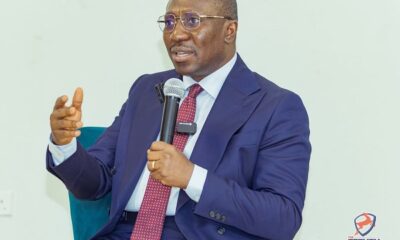
Dr. Akwasi Osei – CEO Mental Health Authority
In line with the advocacy against suicide, the Mental Health Authority has asked the Constitutional, Legal and Parliamentary Affairs Committee of Parliament to speed up processes to ensure the law criminalising attempted suicide is repealed from the country’s criminal code.
It said a private member’s bill sponsored by the chairman of the committee was yet to be discussed on the floor of the House hence the reminder to members on the need to take action on the bill.
In a statement to commemorate this year’s World Suicide Prevention Day which fell on September 10, 2022, the authority maintained that individuals who attempted suicide must not be punished by the law because such persons had “cried for help and we failed them.”
It said, in most cases, people who attempted suicide exhibited behaviours or expressed thoughts that were indicative of the action they intended to pursue and would have “appreciated some help to prevent them from killing themselves.”
“These individuals have cried to us for help, and we failed them. They took action to kill themselves and thank God they survived. Must we punish them when we rather failed them? Definitely not!” The authority argued.
Expressing concern over the “painful and far too high” incidence of suicide cases in the country, the statement urged the public to take note of warning signs of suicide and help provide the needed support to persons with suicide tendencies.
It highlighted some of the “major warning signs” which include openly expressing the intention to kill oneself, withdrawal from family, friends, and society, and “expression of no sense of purpose in life or in continuing to live.”
“They may engage in painting, writing, talking about death, expressing hopelessness and finding ways to kill themselves, they may look for poisonous substances, among others. These are simple notifiable warning signs that signify a cry for help, and we must promptly act to help.
“They may be seen sighing too often, suddenly arranging things in order or instructing how to take care of dependants or express a desire to travel without knowing when they will return,” it added.
According to the authority, “no one needs to die by suicide,” hence the need to take every opportunity to learn about suicide and seek professional help for people in distress.
“A visit to a psychologist, psychiatrist, counsellor and to a medical facility is a source of help. As a matter of fact, even in the last seconds, a conversation with the right person is able to convince the individual to rescind their decision,” it noted.
The authority again urged organisations to “protect their important human resource by promoting and integrating mental health interventions in their work culture because all workers are at risk of experiencing some mental health challenges at some point in time.”
The MHA commended telecommunication companies for providing support and encouraged individuals contemplating suicide to “kindly postpone such action” and get help or call any of the helplines available on the internet.
By Spectator Reporter


General Secretary of the New Patriotic Party (NPP), Justin Kodua Frimpong, has filed his nomination to contest the position of General Secretary again as the party begins its rebuilding efforts ahead of the 2028 general elections.
He was accompanied by party stalwarts and supporters who were in high spirits, expressing confidence that he is the right person to hold the position.
Speaking after filing his nomination, Mr Kodua Frimpong assured the rank and file of the party that he would not disappoint them.
“I can assure you that the faith the rank and file of the party have had in me, I will never disappoint them,” he said.
He also pledged to run a clean campaign devoid of personal attacks.
“I can assure you that our internal campaign will be devoid of personal attacks,” he told his fellow contestants and the rank and file of the party as he seeks to retain his position.
His tenure has seen the party through the 2024 general elections, where the NPP lost power to the National Democratic Congress (NDC) after eight years in government.
The party is currently in a rebuilding phase, with internal elections scheduled to elect new national executives to lead its reorganization towards the 2028 polls.
The General Secretary position is considered one of the most influential in the party’s administrative structure, responsible for the day-to-day running of the party secretariat and implementation of party decisions.
By Edem Mensah-Tsotorme

The University of Ghana Medical Centre (UGMC) has disputed claims made on social media by comedian Michael Blackson concerning the treatment given to his late mother, saying a review found that the allegations did not accurately reflect what happened during her stay at the hospital.
In a statement issued in Accra on August 5, 2026, the management of UGMC expressed condolences to Mr. Blackson and his family over the death of his 83-year-old mother, who died at the facility on July 16, 2026.
The hospital said it had taken the concerns raised by Mr. Blackson seriously and conducted a thorough review in line with its clinical and administrative procedures.
According to the statement, the facts presented by Mr. Blackson on social media contained “numerous inaccuracies” and did not accurately reflect the medical care provided to his mother.
UGMC explained that she was referred to the facility from another hospital and received treatment there from May 27 to July 16, 2026, a period of about eight weeks.
The hospital stated that it would not release details of her diagnosis, treatment, medical records or other aspects of her care because it had a duty to protect patient confidentiality, even after death.
It said the decision was intended to respect the dignity of the deceased and the privacy of her family.
UGMC further stated that all clinical decisions at the facility are made by qualified healthcare professionals based on medical judgment, established standards of care and the best interests of the patient.
The statement added that such decisions are made in consultation with authorised family representatives where necessary and that billing and financial procedures are governed by institutional policies and are separate from clinical decision-making.
The hospital noted that it values feedback from patients and their families and considers both positive and negative comments important for improving the quality of care.
Mr. Blackson had earlier used social media to criticise the care his mother received at UGMC, prompting the hospital’s response.
By: Jacob Aggrey