Editorial
Lip service can’t end adolescent pregnancy

The Ghana Health Service (GHS) has revealed that 53,415 adolescent pregnancies were reported in health facilities across the country between January and July 2026 alone. This is a startling revelation that should make our country uneasy.
The most distressing of these cases as carried in last week’s edition of The Spectator involved 1,501 young girls between the ages of 10 and 14.
Let’s refer to something as it actually is. A youngster who is 10 or 14 years old cannot lawfully give their consent for sexual conduct.
These 1,501 incidents are more than just “teenage pregnancy” numbers; they are documented instances of sexual exploitation, rape, and a disastrous breakdown of our social safety nets.
The foundation of our future human capital is under jeopardy due to the current national crises. Deep regional disparities are highlighted by the statistics provided by GHS Adolescent Health and Development Programme Manager Ms. Sharifa Mohammed.
The adolescent birth rate in the Savanna Region is higher than the norm for sub-Saharan Africa, at 117.5 per 1,000 young women.
That number soars to an astounding 230 births per 1,000 girls between the ages of 18 and 19 in the Bole District. In just five months, the Upper East Region recorded nearly 2,400 teenage pregnancies, with 520 of those cases occurring in Bongo District alone.
These are more than just figures; they stand for young girls whose educational paths have been abruptly cut off, ensnared in a cycle of vulnerability and poverty. The research demonstrates that this dilemma is most prevalent in areas with the fewest economic prospects, limited access to information, and inadequate social infrastructure.
The GHS correctly notes that the best form of contraception is education. The likelihood of pregnancy is considerably lower for girls who continue their formal education. Although the GHS should be commended for its “safety net” efforts since 2017, which include pathways back to the classroom, psychosocial support, and maternal care, the situation on the ground is still unfavourable.
Practical issues like unfriendly classroom environments and a lack of physical accommodations for pregnant students or nursing young mothers frequently force these girls out permanently, as Ms. Mohammed acknowledged.
Our re-entry plans are just lovely on paper if our schools are unable to meet the needs of these girls.
It is a positive step that MSI Reproductive Choices Ghana (MSIG) and UNFPA organised a national multi-sectoral conversation with the theme “Strengthening multi-sectoral action and accountability to prevent teenage pregnancy and protect adolescent futures in Ghana.”
Ghana does not, however, lack structures, policies, or dialogs. Targeted, well-funded implementation is what we lack. We need to change our strategy in three critical areas if we are to genuinely protect our teenagers.
International partners and stakeholders must cease dispersing resources unevenly around the nation. High-burden areas like the districts of Bole and Bongo need to be forcefully saturated with financial support, reproductive health education, and economic assistance.
The voices and needs of young people must be at the centre of our efforts, as Clara Nyarkoah Anim of MSIG so eloquently put it. Accra bureaucrats are unable to provide solutions for a young girl living in a rural village unless they are aware of her particular challenges and day-to-day struggles.
The practice of resolving child sexual abuse allegations at the local level needs to be dismantled. Prosecuting those who take advantage of young, defenseless girls is a necessary part of true responsibility.
If we watch helplessly while tens of thousands of our future female leaders, educators, and inventors have their childhoods cut short, we will not be able to create a thriving “Ghana Beyond Aid”
The Spectator strongly believes that it is time to turn our national outrage into a well-funded, fiercely protective barrier around every adolescent girl in Ghana.

Dear Editor,
I wish to draw the attention of the relevant authorities to the poor state of the railway crossing area of the Neoplan Station, near Kwame Nkrumah Circle in Accra, which is increasingly disrupting the smooth flow of traffic.
The damaged section of the road has become a major inconvenience to motorists, as vehicles are forced to slow down considerably when approaching the crossing to avoid damaging their tyres, wheels and suspension systems.
This situation causes unnecessary delays, particularly during peak hours when traffic volumes are high.
The crossing is an important route for commuters and commercial drivers who use the Circle area to connect to other parts of the capital.
The deteriorating road surface therefore affects not only individual motorists but also the general movement of vehicles through this busy transport hub.
Beyond the inconvenience, the situation could increase the risk of minor accidents as drivers brake suddenly or attempt to manoeuvre around damaged portions of the road.
I respectfully appeal to the Department of Urban Roads, the Accra Metropolitan Assembly and other relevant agencies to inspect the affected section and undertake urgent repairs to restore the smooth movement of traffic.
Timely intervention will reduce delays, improve road safety and make commuting through the Circle area more convenient.
Yours faithfully,
Concerned Citizen
SKIP THE QUEUE, TAP THE NEWS
You can now read the Ghanaian Times and The Spectator newspapers from the comfort of your device via TimesNewsPlus.
Join our WhatsApp Channel: https://whatsapp.com/channel/0029VbBElzjInlqHhl1aTU27
Dear Editor,
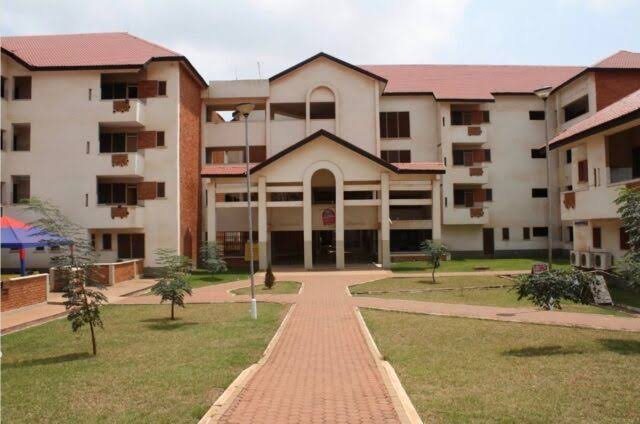
I wish to draw the attention of the authorities and the general public to the increasing cost of hostel accommodation, particularly for students in tertiary institutions.
The high cost of hostels has become a serious challenge for many students and their parents.
In some areas, hostel fees have increased significantly, making it difficult for students from low- and middle-income families to secure decent accommodation.
Apart from the hostel fees, students also have to pay for transportation, food, learning materials and other academic needs.
The rising cost of accommodation therefore puts additional financial pressure on families and, in some cases, forces students to live in overcrowded or poorly maintained facilities.
I believe hostel owners and relevant authorities must work together to ensure that accommodation remains affordable while maintaining acceptable standards.
Tertiary institutions should also consider expanding student accommodation and encouraging affordable private hostel projects.
The government and local authorities could further support the development of low-cost student accommodation through appropriate policies and incentives.
I therefore appeal to the Ministry of Education, tertiary institutions and other stakeholders to treat the issue as a matter of urgency.
Affordable and decent accommodation is essential to creating a conducive environment for students to study and succeed.
This has in a way also empowered the private people in the accommodation sector to take undue advantage of the situation to charge exorbitant rates for their services.
Kwame Ampiaw,
Accra
SKIP THE QUEUE, TAP THE NEWS
You can now read the Ghanaian Times and The Spectator newspapers from the comfort of your device via TimesNewsPlus.
Join our WhatsApp Channel: https://whatsapp.com/channel/0029VbBElzjInlqHhl1aTU27