News
LADIES IN MINING AND ALLIED PROFESSIONS HOLD INTERNATIONAL WOMEN’S DAY.


- /home/u249204778/domains/spectator.com.gh/public_html/wp-content/plugins/mvp-social-buttons/mvp-social-buttons.php on line 27
https://spectator.com.gh/wp-content/uploads/2022/03/DSC_2226.jpg&description=LADIES IN MINING AND ALLIED PROFESSIONS HOLD INTERNATIONAL WOMEN’S DAY.', 'pinterestShare', 'width=750,height=350'); return false;" title="Pin This Post">
- Share
- Tweet /home/u249204778/domains/spectator.com.gh/public_html/wp-content/plugins/mvp-social-buttons/mvp-social-buttons.php on line 72
https://spectator.com.gh/wp-content/uploads/2022/03/DSC_2226.jpg&description=LADIES IN MINING AND ALLIED PROFESSIONS HOLD INTERNATIONAL WOMEN’S DAY.', 'pinterestShare', 'width=750,height=350'); return false;" title="Pin This Post">
Ladies in Mining and Allied Professions in Ghana (LiMAP-Gh) in collaboration with the University of Mines and Technology (UMaT), AngloGold Ashanti (Iduapriem) Limited and Abosso Goldfields Limited at Damang has held the 3rd International Women’s Day 2022 at Tarkwa in the Western Region.

The theme for the one-day celebration was “BREAKTHEBIAS-GENDER EQUALITY TODAY FOR A SUSTAINABLE TOMORROW”.
The President of LiMAP-Gh, Prof. Grace Ofori-Sarpong said the organisation was formed to build the capacities of its members and beyond and to leave a legacy wherever it worked.
She said the international organisation was formed in 1910 but they decided to come together to form one within the Tarkwa-Nsuaem Municipality of the Western Region to break the biases by equipping themselves adequately at the workplace and transforming their generation by bringing valuable changes in society.
The Paramount Queen of Wassa Fiase Traditional Area, Nana Abena Kunadjoa 11 also said she did not want to believe that women were their own enemies because this belief would not bring any progress and promotion to the women wherever they found themselves.
She said time had come for women who were more than men to rally behind any woman who sought to stand for any public office with their money, love, energy and other resources in order to change the face of the world.
She advised those in school never to think that completing the Junior High School was the best for them to rush into marriage because statistics showed women were occupying very high positions and these came as a result of determination and hard work.
The Municipal Chief Executive of Tarkwa-Nsuaem, Mr. Benjamin Kesse said the assembly was considering giving about 70 per cent of the government appointees to women if the performance of women became very low in the next assembly elections.
He said this idea was to allow women in the assembly and communities contribute to the developmental agenda of the municipality because women were careful and very good at management.
The Community Relations Officer of Goldfields Ghana at Damang Mines, Mrs. Rahmat Yarig said those biases were being broken because many women were in the mining sector doing what was the preserve of men.
She said young women were operating dumpers, graders, caterpillars and other mining and construction machines which could not be done by women in the past.
She said notwithstanding the numerous challenges, women were up and doing and appealed to men to give them the necessary push and encouragement to go forward for the development of the family, the community and the nation at large.
The chairman of the occasion, Pro Vice Chancellor of UMaT, Prof. Anthony Simons said women were very unique and played very important role in all spheres of life.
He said right from the Old Testament to the New Testament up till date women had always been in very important positions which yielded good results.
He said the recognition of women in the various fields should be seen by their counterparts so that together they could push Ghana’s development forward.
He suggested women should be given more quota in all aspects of life adding “this job is not for women must be a thing of the past because there are many women Engineers, Miners, Pilots in all the male dominated occupations now”.
Girls from selected Senior and Basic Schools around Tarkwa and its environs attended the celebration.
FROM PETER GBAMBILA, TARKWA.


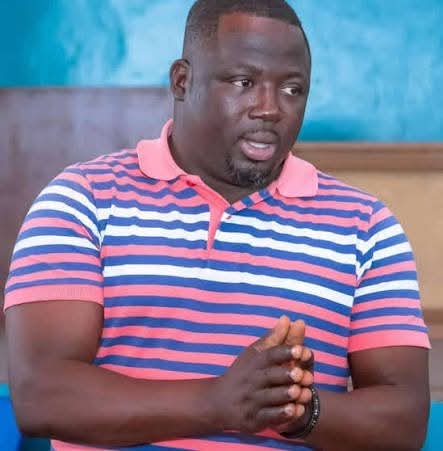
Deputy Director of Operations at the Presidency, Mustapha Gbande, has alleged that the New Patriotic Party (NPP) appears more concerned and emotionally invested in the imprisonment of its Ashanti Regional Chairman, Bernard Antwi Boasiako, popularly known as Chairman Wontumi, than the governing National Democratic Congress (NDC).
Speaking on Joy Prime on Wednesday, July 22, 2026, in Accra, Mr. Gbande argued that the NPP played a major role in the legal process that led to Wontumi’s conviction.
According to him, the law under which Wontumi was convicted originally carried a maximum prison sentence of three years but was later amended by the NPP administration to increase the maximum punishment to 15 years.
“The law that jailed Wontumi was three years. The NPP enhanced it to 15 years,” he stated.
Mr. Gbande further claimed that the evidence used to prosecute Wontumi was gathered during the previous NPP administration.
He maintained that the case against the NPP chairman did not begin under the current government but was built by officials who served in the former administration.
“The docket that jailed Wontumi was built by the NPP. The evidence that convicted him was built by the NPP,” he asserted.
To support his argument, Mr. Gbande referred to actions taken by the former Minister for Lands and Natural Resources in July 2022, when the minister declared activities linked to Wontumi in the Tano Nimiri Forest Reserve illegal.
He stressed that once an activity has been declared illegal, it remains a breach of the law regardless of who is involved.
By: Jacob Aggrey

The Bank of Ghana (BoG) has warned that traders, transport operators, businesses and individuals who refuse to accept Ghana cedi coins as payment for goods and services could face arrest, prosecution, fines or imprisonment.
In a public notice issued on Wednesday, July 22, 2026, the central bank expressed concern over the widespread refusal to accept 1 pesewa, 5 pesewa, 10 pesewa, 20 pesewa and 50 pesewa coins, as well as the GH¢1 and GH¢2 coins.
It explained that all coins issued by the Bank of Ghana remain legal tender and must be accepted for transactions across the country.
According to the BoG, none of the coins has been withdrawn from circulation or demonetised, and no trader, transport operator, business or individual has the right to reject them because they consider them inconvenient or of low value.
The bank cited the Bank of Ghana Act, 2002 (Act 612), as amended, and the Currency Act, 1964 (Act 242), as the laws governing the use of the country’s currency.
It noted that under the Currency Act, refusing to sell goods or provide services simply because a customer is paying with legal tender coins or banknotes is a criminal offence, unless the currency has been withdrawn from circulation.
The BoG stated that anyone convicted of the offence could face up to three years’ imprisonment, a fine, or both.
It added that people who encourage or instruct others to reject coins, including business owners who direct their employees to do so, are equally liable under the law.
The bank further indicated that a person caught committing the offence may be arrested without a warrant.
To ensure compliance, the BoG said it would work with the Ghana Police Service and other law enforcement agencies to enforce the law against offenders.
It encouraged members of the public to report cases of coin rejection to the nearest Bank of Ghana office, the Ghana Police Service or through the bank’s official communication channels.
The central bank called on individuals, businesses and institutions to accept and handle Ghana’s currency responsibly in all its denominations, saying this would help uphold confidence in the country’s legal tender.
By: Jacob Aggrey