Hot!
Joshua Opoku Agyemang – inspiring a new generation of tech-savvy youth

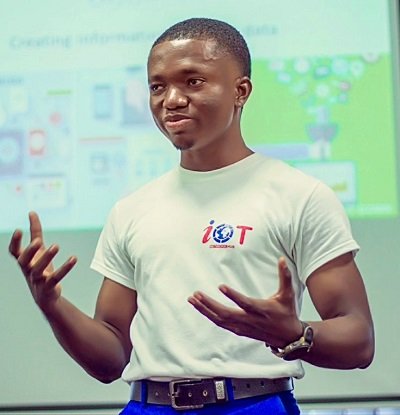
“The fourth industrial revolution would bring a lot of changes where everything would become faster and smarter therefore we need to prepare the younger generation for a future which is yet to be created.”
These are the words of Joshua Opoku Agyemang, a young Ghanaian ‘Techpreneur’ who, together with his team, is helping nurture a new generation of young people to acquire the necessary skills to enable them make valuable contributions in the technology space and beyond.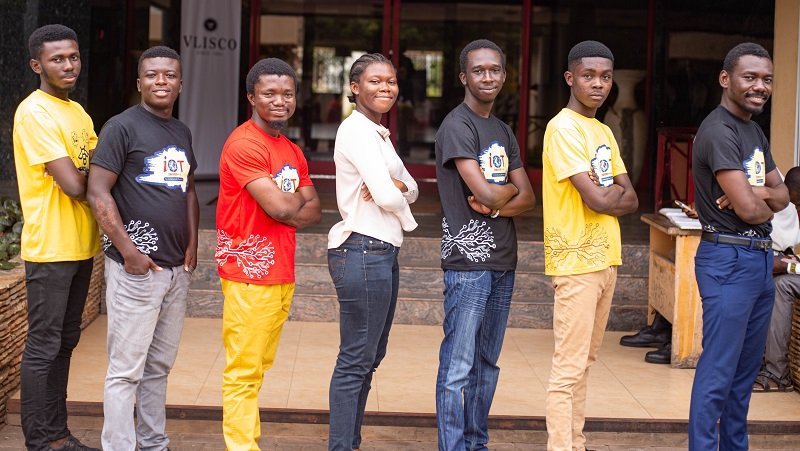
Joshua is the Co-Founder and President of Internet of Things (IoT) Network Hub Africa, a non-governmental organisation with over 20,000 members and chapters in 20 African countries. It comprises innovators, scientists, technologists, engineers, educators, entrepreneurs, college professors, who are helping solve Africa’s “nagging problems” through technology innovations.
The 29-year-old in an interview with The Spectator says the organization, among other things, is focused on making Science, Technology, Engineering and Mathematics (STEM) education “practical and accessible” to every student across the country while helping them tap into opportunities in the fast-expanding sector of emerging technologies.
Emerging technologies relates to subjects such as Robotics, Artificial Intelligence, Virtual Reality, Cryptocurrency, among others. The organisation has for the past six years been developing courses along these areas and continues to impact a number of the youth positively.
Background/Interest
Talking about his personal interest in technology, Joshua, described as a “Tech Progidy or IoT Evangelist,” said he was exposed to computers at a tender age while growing up at Kasapin in the Bono Region.
Born to well-educated parents, he started playing video games and doing other interesting activities with computers before entering Senior High School to study General Science.
“My first experience with computers felt magical so I developed an obsession for computers at the age of seven. My curiosity keep developing and I started doing a lot of things with computers.
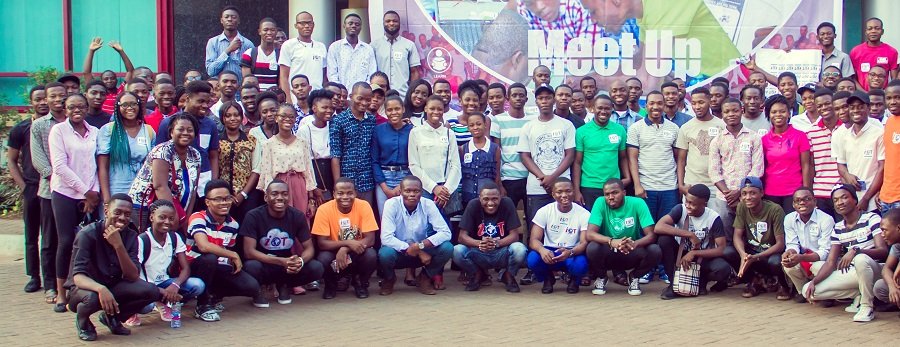
ecosystem in Africa
“I took this same obsession to Mim Senior High School and in my final year, I took a computer to the boarding house and that is how it all started,” he recalled.
He admitted that his passion for computer technology affected his performance in the final examination as he had stopped attending class and rather spent more time with his PC in the dormitory. For this reason, he was unable to make the required grades to enter the university.
Training
In 2012, he relocated to Accra to pursue Diploma in Business Computing (Computer Programming) at the Ghana-Indian Kofi Annan Centre of Excellence in ICT (AITI-KACE) after which he decided to start his own company, Pesonet, to provide solutions and services in software development, computer networking, among others.
Joshua said he was fascinated by the wonderful depiction of science and technology in the movies he watched and wondered if black people could do same. But as time went on, he realised all of that was possible in here in Africa also.
This awareness and the desire to explore the many possibilities of science and technology, he explained, gave birth to the ‘IoT Hub’ so people with similar interests could join.
“After investing in a lot in research and development, we realised IoT was just a tip of the iceberg and we have to delve into how new techonogies that were shaping the world,” he added.
Support
The organisation, since its inception, whips up the interest of the youth in STEM education and continues to gain recognition for its work. In spite of challenges, the Founder said IoT Hub Africa was thriving on a number of partnerships and the voluntary support of members.
“For the past six years, we had to find ways to survive and keep things running. Our human resource has been our greatest asset. One of our biggest partner is STEM AID and Implementers (Ghana) that are helping push STEM education across the country,” he said.
He noted IoT Hub Africa was partnering these organisations which are building sixteen ICT Labs in all regions of the country in addition to training and providing educational content on ICT devices.
“IoT Hub Africa is also in partnership with the Ministry of Communication under the Kofi Annan ICT Centre where we are provided a space to organize our monthly programmes.
“This year we got final support from the Government of Ghana under the U-Start programme to train more young people and create more opportunities for the youth in the technology space,” he added.
Nonetheless, he said the organisation needed more support and resources to deliver on its quest to empower the next generation of tech-savvy young people and help them acquire employable skills.
Achievement
Among other accomplishments, Joshua was named among top 30 entrepreneurs in 2018 at the African Entrepreneurship Award. In 2019 he won the Ghana Open Data Initiative Hackathon.
In 2020, he and his team invented a smart veronica bucket, a 3D printed reusable face mask, an automated ventilator for supplying oxygen to COVID-19 patients.
These works got featured in 50 Innovations from Africa combating COVID-19 by United Nation Development Programme UNPD and in the ‘100 Inventions and ideas’ for COVID-19 in Africa by Forbes Africa in 2021.
Joshua is also the president of the Ghana STEM Network where he is mandated to ensure every student in the country have access to practical ICT education.
Family support
The smart and eloquent fellow said his parents, who had wanted him to become a teacher, now appreciate and understand what he does despite their initial reservations.
He maintains that “the only way to prepare young people for the future is to empower them with 21st century skills so they will be able to survive in any other world,” stressing that “the future is unknown and we need to be ready and prepared for the unknown future.”
By Ernest Nutsugah


The professor who spends his days exploring the intricacies of African languages found himself at the centre of a different kind of lesson on Friday, October 2, 2026. 
This time, there were no lecture notes, academic arguments or university classrooms. Instead, there was the weight of tradition, the rhythm of a community celebration and the solemnity of an oath at a royal palace.
Professor Ọbádélé Kambon, a full Professor of African Linguistics at the University of Ghana, was enstooled as Apagyahene and Sunsum Ɔsahene of Akuapem Mampong in the Eastern Region in a ceremony that brought academia and traditional authority together.
For the professor, the occasion was more than a new title. It was a moment that connected his academic interests in African languages and indigenous knowledge with the living traditions of an Akan community.
The day’s events unfolded through a series of customary observances. Kambon was first taken to the compounds of the Ɔkyeamehene and Gyasehene, where the preparations for his installation continued.
Then came the application of hyire, the white kaolin powder associated with traditional rites.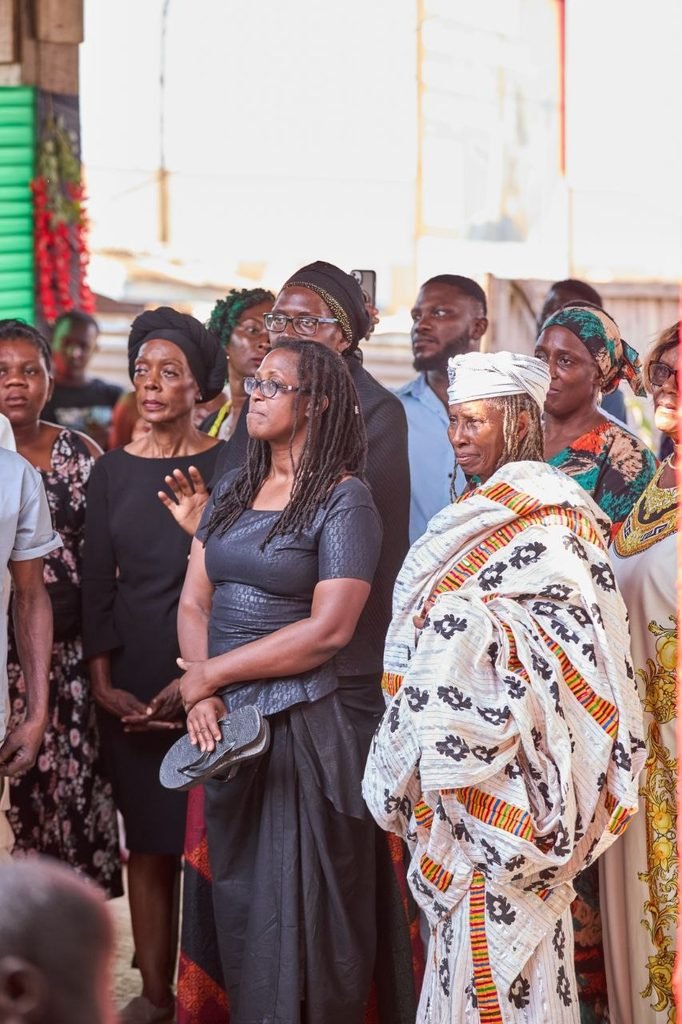
With the customary proceedings underway, the new chief was lifted onto the shoulders of celebrants and carried along the main thoroughfare of Akuapem Mampong.
The procession transformed the streets into a public stage for a ceremony rooted in the community’s traditional institutions.
There was something striking about the image, a university professor, accustomed to the measured language of academic discourse, being carried through the town in a display of traditional recognition.
Yet the celebration was not complete with the procession.
A ram was sacrificed at the Mamponghene’s compound before Kambon was taken to the palace, to swear the oath associated with his new offices.

The ceremony brought him formally into his roles as Apagyahene and Sunsum Ɔsahene.
Beyond the colourful proceedings, the titles themselves carry layers of historical meaning.
Kambon in his research explores the historical connections between Apagya and Akan political and military organisation.
Accounts cited in his work linked Apagya to an asafo, or military company, while historical writing traces an Apagya stool in Asante to the reign of Opoku Ware I in the eighteenth century.
These historical associations offer a glimpse into the institutions that have shaped Akan society over generations, although they do not automatically define the precise responsibilities of the office in Akuapem Mampong.
Kambon’s own professional life reflects a similar interest in preserving and examining African knowledge.
His work encompasses Akan language structure, naming practices across the Black world, proverbs and indigenous intellectual traditions.
Through Abibitumi, the platform he founded, he also promotes language learning, scholarship and cultural engagement.
But tradition was only one part of the story that day.
When the formal ceremony gave way to a reception, the occasion expanded into a celebration of three milestones: Kambon’s enstoolment, his promotion to full professor and his daughter Ama’s admission to the University of Ghana.
The gathering therefore carried a personal significance that went beyond the honours bestowed on one man. 
It celebrated professional advancement, the continuation of family aspirations and a connection to cultural heritage.
For a father, seeing a daughter gain admission to the same university where he holds a distinguished academic position offered another reason to celebrate.


For the professor, the moment placed family achievement alongside his own professional and traditional milestones.
Kambon had already established a place in the traditional life of Akuapem Mampɔn through an earlier installation as Banmuhene Kyidɔmhene, recorded in 2017.
His latest enstoolment adds another chapter to that relationship.
In Akuapem Mampɔn, the day brought together the university, the palace and the family table in one celebration. And for Kambon, the journey from the lecture room to the traditional procession showed how scholarship, cultural responsibility and family achievement could converge in a single memorable occasion.
By Enoch Ntiamoah Siaw
SKIP THE QUEUE, TAP THE NEWS
You can now read the Ghanaian Times and The Spectator newspapers from the comfort of your device via TimesNewsPlus.
Join our WhatsApp Channel: https://whatsapp.com/channel/0029VbBElzjInlqHhl1aTU27

Intercity STC Coaches Limited has interdicted a driver captured in a viral video allegedly hitting a Sprinter bus during an overtaking manoeuvre at Pokuase before driving away from the scene.
In a public notice, the company described the driver’s conduct as unacceptable, stressing that it did not reflect the safety standards and professionalism it upholds.
Management said it had commenced an immediate investigation into the incident and identified the driver, who has been interdicted pending the outcome of the disciplinary process.
The company added that it was awaiting an official report from the Pokuase Police Command to help establish the facts surrounding the incident.
STC reaffirmed its commitment to passenger safety and responsible road use, while thanking members of the public for bringing the incident to its attention.
Management assured the public that appropriate action would be taken following the investigation.
By: Jacob Aggrey