Hot!
Israeli Ambassador’s visit


- /home/u249204778/domains/spectator.com.gh/public_html/wp-content/plugins/mvp-social-buttons/mvp-social-buttons.php on line 27
https://spectator.com.gh/wp-content/uploads/2022/02/Madam-Shlomit-Sufa-third-left-with-Mr-Martin-Adu-Owusu-and-NTC-management.jpg&description=Israeli Ambassador’s visit', 'pinterestShare', 'width=750,height=350'); return false;" title="Pin This Post">
- Share
- Tweet /home/u249204778/domains/spectator.com.gh/public_html/wp-content/plugins/mvp-social-buttons/mvp-social-buttons.php on line 72
https://spectator.com.gh/wp-content/uploads/2022/02/Madam-Shlomit-Sufa-third-left-with-Mr-Martin-Adu-Owusu-and-NTC-management.jpg&description=Israeli Ambassador’s visit', 'pinterestShare', 'width=750,height=350'); return false;" title="Pin This Post">
Israeli Ambassador to Ghana, Liberia and Sierra Leone, Amb. Shlomit Sufa, on Thursday, February 17, 2022, called on the management of the New Times Corporation.

The visit of the ambassador who has been in the country for six months, was to franternise with one of the state-owned media houses in Ghana for close collaboration.
Madam Shlomit Sufa who has been in the diplomatic mission for 21 years
said, it was important for them to engage the media on interviews, events, and provide the needed information on issues relating to Israel.
According to her, adding that “we may not agree on everything but it is important for us to present our perspective on how we want to tell our story.”
Sharing her thoughts on Ghana, she noted that even though there was a mixture of cultures, the Ghanaian heritage was of outstanding universal value and expressed her appreciation to management of NTC for the cordial reception.
The Managing Director of the Corporation, Mr.Martin Adu-Owusu in his address touched on the activities of the state institution and its readiness to assist the Israeli Embassy any time the need arose.
He said that NTC was always ready to assist her outfit to put out information concerning Israel “through our two papers, Ghanaian Times and The Spectator”.
He added that the call on NTC was a testament that the relationship between both institutions would be stronger henceforth.
The Editor of Ghanaian Times, Mr. Dave Agbenu, also said the relationship between NTC and the Israeli Embassy had long existed and been cordial in the areas of agriculture, and sports among others.
He was of the view that the relationship would be well cemented, and suggested some exchange programmes for the media in both countries to learn from each other.
Editor of The Spectator, Mr.Emmanuel Amponsah stated that he had been following Israel closely and loved how they had been addressing issues on security and politics, as well as the rate at which the media held government for transparency and accountability.
The Marketing Manager, Mr. Alfred Koomson, also touched on the country’s relationship with Israel over the years, saying “for Ghanaians to better appreciate the history of Israel, it would be more appropriate to have a special pullout on days earmarked for special moments in the country’s history.
By Edem Mensah-Tsotorme



The Tema Regional Police Command has arrested a 32-year-old man for allegedly posing as a soldier and extorting money from unsuspecting members of the public at Ashaiman.
The suspect, identified as Bright Atsu Kudiabor, was arrested by the Ashaiman Police on Wednesday, September 16, 2026, at about 7:00 a.m.
According to the Police, he was arrested at an area known as “I Shall Return”, where he was allegedly parading himself as a soldier and demanding money from people.
The Police said Kudiabor, who is an ex-convict, was initially arrested by personnel of the Ghana National Fire Service in Ashaiman with assistance from other members of the public.
A search conducted on him after he was handed over to the Police reportedly led to the recovery of a set of military camouflage uniform.
The suspect is currently in Police custody and assisting with investigations.
The Tema Regional Police Command said he would be processed for court after investigations are completed.
The Police urged the public to remain vigilant and report anyone who falsely presents themselves as a soldier or a member of another security agency to deceive or extort money from the public.
By: Jacob Aggrey
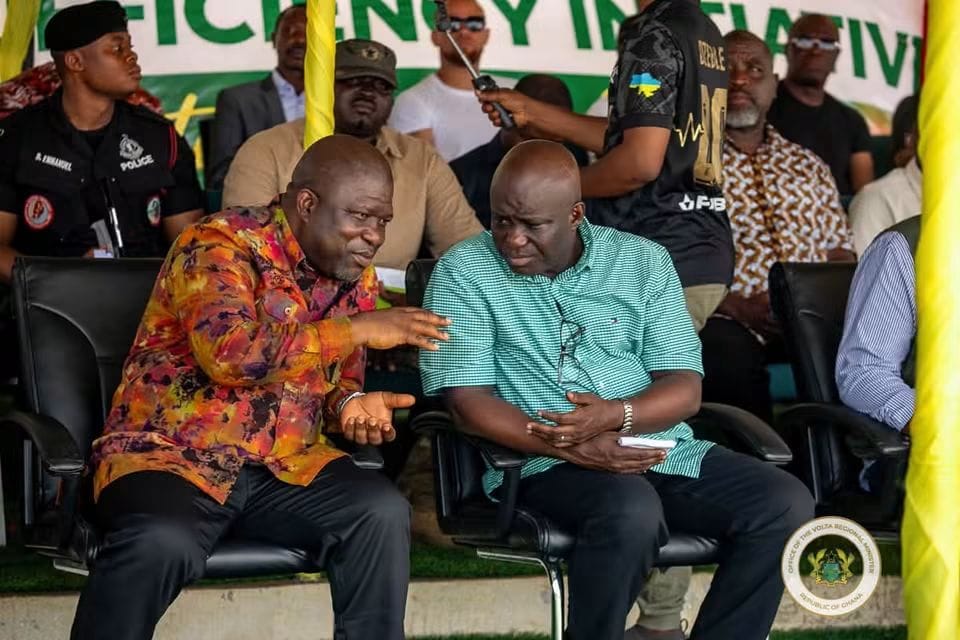
Volta Regional Minister, James Gunu, says the Volta Region holds enormous agricultural potential and efforts must be geared towards connecting farmers to the needed resources to unlock that potential.
He said focus must be on linking farmers to resources, technology, financing and markets to increase production, create jobs and build sustainable livelihoods.
Hon. Gunu made the remarks at the national launch of the Ghana Tomato Self-Sufficiency Initiative (GHATSI) held at Anloga in the Volta Region on Tuesday, September 15.
The initiative, under the theme “Produce at Home. Feed the Nation. Export the Surplus,” seeks to boost local tomato production, processing and marketing while reducing Ghana’s heavy reliance on imported tomatoes.
The launch was attended by the Minister for Food and Agriculture, Eric Opoku, his Deputy, John Setor Dumelo, Feed Ghana Coordinator, Bright Demordzi, Members of Parliament, traditional leaders, MMDCEs, farmers and other stakeholders.
Mr.Gunu expressed appreciation to the Minister for Food and Agriculture for the support announced for the region, including two excavators, 200 cartons of organic fertiliser, and GH¢200,000 for Ms. Kuatudzo Esther Dela, a tomato farmer and processor from Ziope.
He described the initiative as an important step towards making agriculture a stronger driver of food security, job creation and economic growth in the Volta Region.
By Edem Mensah-Tsotorme

 Entertainment1 week ago
Rhythms On Da Runway returns November 28 with 16th edition themed ‘Unbound’
- Entertainment1 week ago
Ohemaa Mercy’s Tehillah Experience outfit was priestly regalia, not costume – Management clarifies
 News1 week ago
Janet Asana Nabla criticises Mahama over China curriculum controversy involving Haruna Iddrisu