News
GREL creates strong relationship with stakeholders


- /home/u249204778/domains/spectator.com.gh/public_html/wp-content/plugins/mvp-social-buttons/mvp-social-buttons.php on line 27
https://spectator.com.gh/wp-content/uploads/2022/03/Mr.-Perry-Acheampong-Copy.jpg&description=GREL creates strong relationship with stakeholders', 'pinterestShare', 'width=750,height=350'); return false;" title="Pin This Post">
- Share
- Tweet /home/u249204778/domains/spectator.com.gh/public_html/wp-content/plugins/mvp-social-buttons/mvp-social-buttons.php on line 72
https://spectator.com.gh/wp-content/uploads/2022/03/Mr.-Perry-Acheampong-Copy.jpg&description=GREL creates strong relationship with stakeholders', 'pinterestShare', 'width=750,height=350'); return false;" title="Pin This Post">
The Corporate Affairs Manager of the Ghana Rubber Estates Limited (GREL), Mr. Perry Acheampong has stated that the company was creating a very conducive atmosphere to maintain a strong relationship with their stakeholders. GREL produces latex or raw rubber for export.
He said this collaboration between GREL and all the communities would allow the company to assist in the improvement of livelihoods of residents in the operational communities.
Mr. Acheampong was speaking in an exclusive interview with this reporter on GREL’s Sustainability Policy of Respect for Human Rights, Responsible Development of their Operations and Best Management Practices in line with National and International Laws, Regulations and Conventions.
He said the company recognised the importance of the communities in its operational areas and so worked in a very responsible manner to obtain the Social Licence from these communities which GREL has invested over four miillion Euros in the last 10 years on Corporate Social Responsibility Projects in the areas of Health, Electricity, Water, Education, Sanitation among others aimed at improving the livelihood of these communities.
He said GREL was “Latex, and so much more” as their new slogan was evidenced in what they championed over the years in the operational areas.
Mr. Acheampong said GREL had empowered the people by offering very sustainable jobs and income to over 4,000 staff, through the implementation of national and international policies of biodiversity, the protection of water bodies and the ecosystem. T
He said the company gave life to the communities through the provision of quality, safe, potable and reliable water, the construction of schools, provision of desks, allowances to teachers, vacation classes to improve the educational standard of the areas.
He said in collaboration with the Association of Chiefs on whose Lands GREL Operates (ACLANGO) GREL had provided water systems for 14 communities serving over 20,000 people, built six health facilities which included 4 community health centres serving over 15,000 people and 16 communities have been provided with Community Centres for their social events.
On education, he said that 36 infrastructure have been provided which included 17 school buildings, libraries and teachers’ bungalows, annual vacation classes for over 4,500 Primary and Junior High Schools where the company paid for the tuition, learning materials and feeding for the students.
He disclosed that by the end of June 2021 the company had provided scholarships to 283 students in secondary and tertiary in the operational areas adding “GREL supports the traditional festival of Kundum of all the communities within its operational areas through ACLANGO”.
FROM PETER GBAMBILA, TAKORADI.


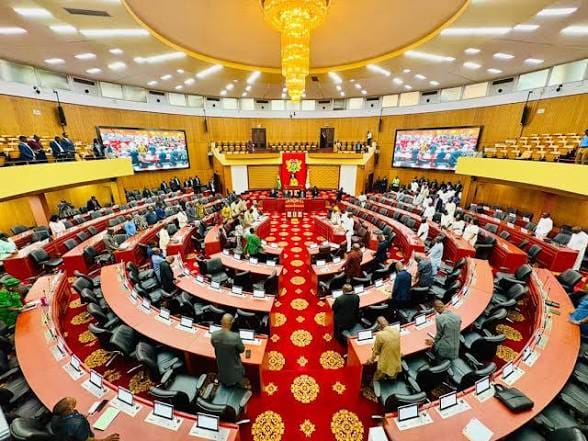
Parliament has clarified public commentary on social media regarding a notice on its notice board that read “No Vacancy for National Service Personnel 2026/2027. Kindly go for reposting.”
In a statement, signed by the Director of Media Relations, David Sebastian Damoah, Parliament said the notice has been misconstrued and was not a policy statement, a freeze on national service placements, or a change in its support for the National Service Scheme.
According to Parliament, the notice was a routine administrative message to prospective personnel who reported to the House, informing them that it has received more personnel than it can accommodate for the 2026/2027 service year and that they should seek reposting to other institutions.
It said it remains committed to the National Service Scheme and values the contribution of service personnel to its work, and regrets any confusion or inconvenience the wording may have caused.
By Edem Mensah-Tsotorme
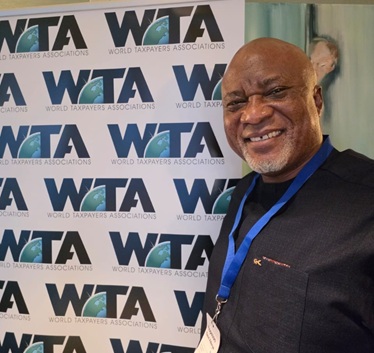
Ghanaian public advocate Hopeson Yaovi Adorye has been elected to the Board of Directors of the World Taxpayers Association (WTA).
The election took place on Sunday, October 5, 2026, during the Association’s conference in Kraków, Poland.
His election marks a significant addition to his international leadership portfolio and provides a platform for Ghanaian and African perspectives to contribute to global discussions on taxpayer rights, responsible taxation, transparency and prudent management of public resources.
Reacting to his election, Mr. Adorye expressed appreciation to the leadership and members of the WTA for the confidence reposed in him.
“I am deeply honoured by this confidence and conscious of the responsibility that comes with it. Taxpayers are at the heart of every economy, and they deserve fairness, transparency, accountability and value for the taxes they pay. I look forward to working with colleagues from across the world to strengthen the voice of taxpayers and promote responsible fiscal governance,” he said.
According to him, taxation should not be viewed solely as a mechanism for raising government revenue, but also as an important component of the social contract between citizens and the state.
Mr. Adorye said governments have a responsibility to ensure taxes are collected fairly and public resources are utilised efficiently to deliver quality infrastructure, healthcare, education, security and other essential services.
His election also creates an opportunity to bring African experiences into international conversations on taxation and public expenditure.
Mr. Adorye, who is Executive Director of Taxpayers League Ghana, has previously served as Global Board Chairman of the International Youth Network for UN Security Council Resolution 2250, an NGO associated with the United Nations Economic and Social Council (ECOSOC).
He is expected to use his new role to champion fiscal accountability, taxpayer education, good governance and stronger citizen participation in public financial management.