News
Govt commended for revoking L.I. 2462,

- /home/u249204778/domains/spectator.com.gh/public_html/wp-content/plugins/mvp-social-buttons/mvp-social-buttons.php on line 27
Warning: Trying to access array offset on false in /home/u249204778/domains/spectator.com.gh/public_html/wp-content/plugins/mvp-social-buttons/mvp-social-buttons.php on line 27
&description=Govt commended for revoking L.I. 2462,', 'pinterestShare', 'width=750,height=350'); return false;" title="Pin This Post">
- Share
- Tweet /home/u249204778/domains/spectator.com.gh/public_html/wp-content/plugins/mvp-social-buttons/mvp-social-buttons.php on line 72
Warning: Trying to access array offset on false in /home/u249204778/domains/spectator.com.gh/public_html/wp-content/plugins/mvp-social-buttons/mvp-social-buttons.php on line 72
&description=Govt commended for revoking L.I. 2462,', 'pinterestShare', 'width=750,height=350'); return false;" title="Pin This Post">
A broad coalition of civil society organisations has commended the Government and Parliament for the successful revocation of Legislative Instrument (L.I.) 2462, describing the move as a landmark decision that restores hope for the protection and sustainable management of Ghana’s forest reserves.
In a joint statement issued in Accra yesterday, the groups said the revocation of the regulation, which previously allowed mining activities in forest reserves, marked one of the most significant environmental policy reversals in Ghana’s recent history.
They noted that L.I. 2462 had exposed forest reserves, including Globally Significant Biodiversity Areas, to severe risks from mining and had undermined decades of progress in sustainable forest management.
The coalition credited the repeal to the intervention of the Acting Minister for Environment, Science and Technology and Minister for Lands and Natural Resources, Mr Emmanuel Armah-Kofi Buah, who on October 31 laid a new Legislative Instrument before Parliament to annul L.I. 2462.
With Parliament completing the constitutionally required 21 sitting days without objection, the groups said the regulation had now effectively been revoked.
“We express our profound gratitude to the Government of Ghana and Parliament for listening to the voices of citizens and acting decisively to protect our forests and future generations,” the statement said.
The groups also applauded the media and members of the public who supported the advocacy campaign, including Ghanaians who signed petitions calling for the repeal. “Together, we have given our forests and future generations a chance. Ayekoo!” the statement added.
According to the coalition, L.I. 2462, introduced in 2022, contradicted the Forest Development Master Plan (2016–2036), which seeks to phase out mining in forest reserves by 2036, weakened forest governance, and undermined Ghana’s commitments under international agreements such as the Paris Agreement and the Convention on Biological Diversity.
They cited data indicating that before 2022, only about two per cent of gazetted production forest areas were opened to mining, with 98 per cent fully protected. Under L.I. 2462, however, about 80 per cent of forest reserves were exposed to mining pressures, leaving more than 50 out of 250 reserves under serious threat.
While welcoming the repeal, the coalition cautioned that Ghana’s forests continued to face significant threats, including illegal mining, artisanal mining and logging.
They therefore called on President John Dramani Mahama to fulfil his pledge to explicitly prohibit mining in forest reserves and to champion environmentally responsible mining practices that do not degrade forest ecosystems.
The groups further urged government to prioritise and implement a comprehensive National Forest Protection Strategy, intensify efforts to curb illegal activities in forest reserves, and ensure the effective implementation of the “Tree for Life” programme to restore degraded areas.
They also appealed to government to act on recent recommendations by the Forestry Commission, including proposals to strengthen the Commission’s capacity to respond to emerging threats to forest sustainability.
“The repeal of L.I. 2462 marks a pivotal turning point. To secure Ghana’s natural heritage and a sustainable future, commitment must now be matched with concrete action,” the statement said.
The statement was signed by 14 organisations and individuals, including the Coalition Against Galamsey–Ghana, A Rocha Ghana, Civic Response, Kasa Initiative Ghana, Ghana Institute of Foresters, Peasant Farmers Association, and the SDG Civil Platform Ghana.
By Esinam Jemima Kuatsinu

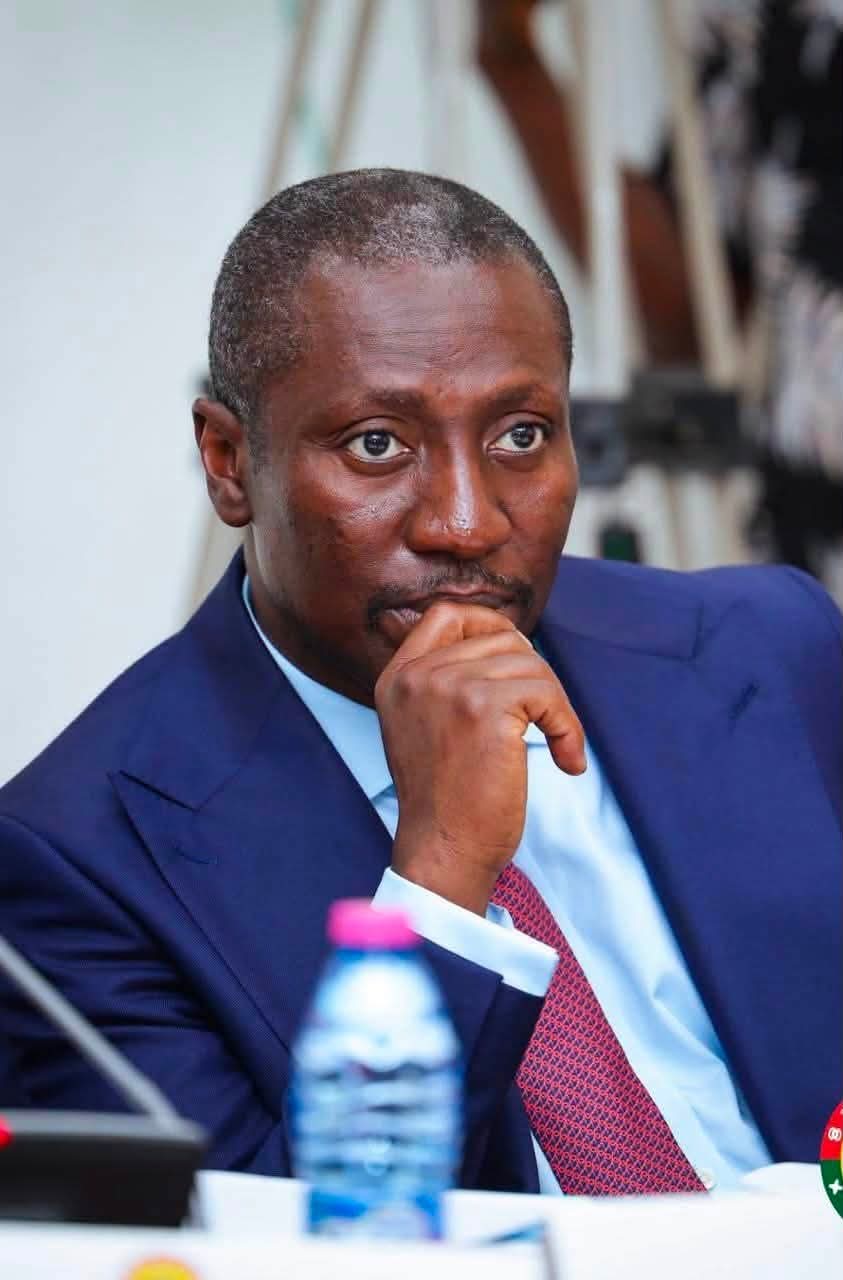
Minority Leader in Parliament, Alexander Afenyo Markin, says he has discharged his duties with the dignity and responsibility demanded by the office, stressing that he does not take the New Patriotic Party (NPP) for granted.
He made the remarks during a media briefing, where he also dismissed claims that there are compromising videos or audio recordings of him that could embarrass him, his family or the party.
Mr Afenyo Markin acknowledged that he is not perfect but insisted that he would not act recklessly, particularly given the responsibility attached to his position as Minority Leader.
“I have discharged my duty as a Minority Leader with all the dignity that must go with the office. I’m not a perfect guy, but I won’t be reckless,” he stated.
He said he was conscious of the history of the position he occupies, noting that it had previously been held by senior members of the NPP, including J.B. Danquah, J.H. Mensah and Busia, Dumbo.
According to him, the party’s elders did not entrust him with the leadership of the parliamentary caucus without considering the responsibility involved.
“I don’t take NPP for granted. It’s a tradition I respect. The elders of this party, they don’t just get up to say, ‘Our son, lead the caucus.’ From day one, they entrusted me with this position,” he stated.
Mr Afenyo Markin said he has always recognised the weight of the party’s history and the need to conduct himself in a manner that protects the image of the NPP.
He rejected claims that individuals have videos or audio recordings of him engaging in activities that could be used to embarrass him.
“Nobody has any video of me doing anything. Nobody has any audio of me doing anything to embarrass myself, my family and the party,” he insisted.
He described the claims as part of the challenges politicians face in the era of social media, where allegations and rumours can spread quickly.
Mr Afenyo Markin maintained that despite such claims, he would continue to carry out his responsibilities with caution and respect for the office he occupies.
By: Jacob Aggrey
Minority Leader in Parliament, Alexander Afenyo Markin, has denied that his concerns over the GoldBod and the Domestic Gold Purchase Programme are aimed at any particular individual.
He explained that his criticism has always been directed at the institution and the way the programme is being implemented, rather than at any person.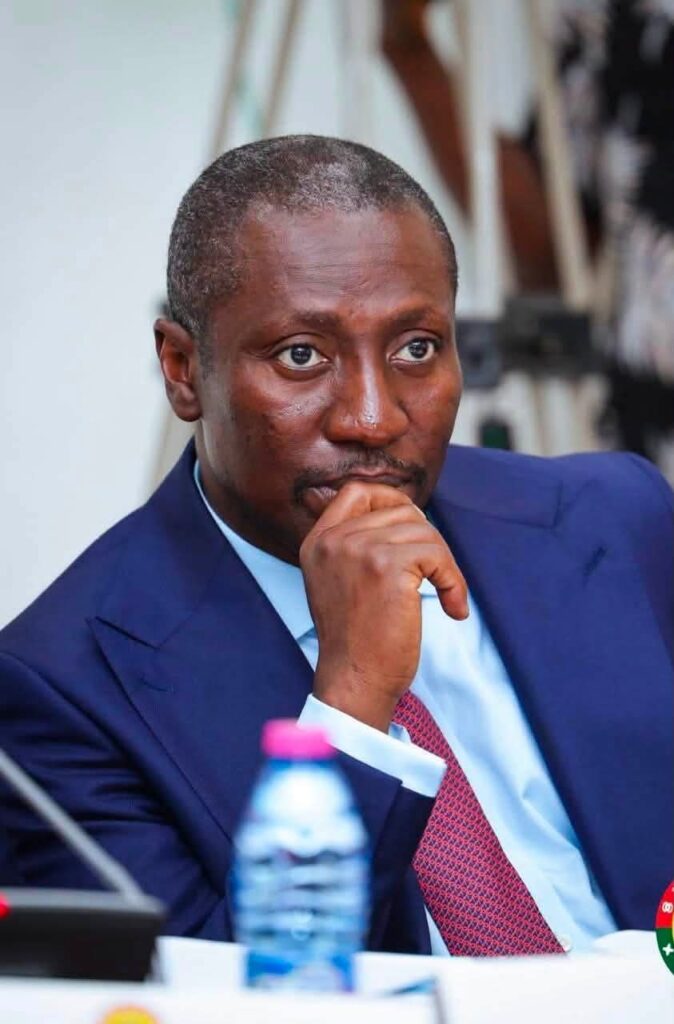
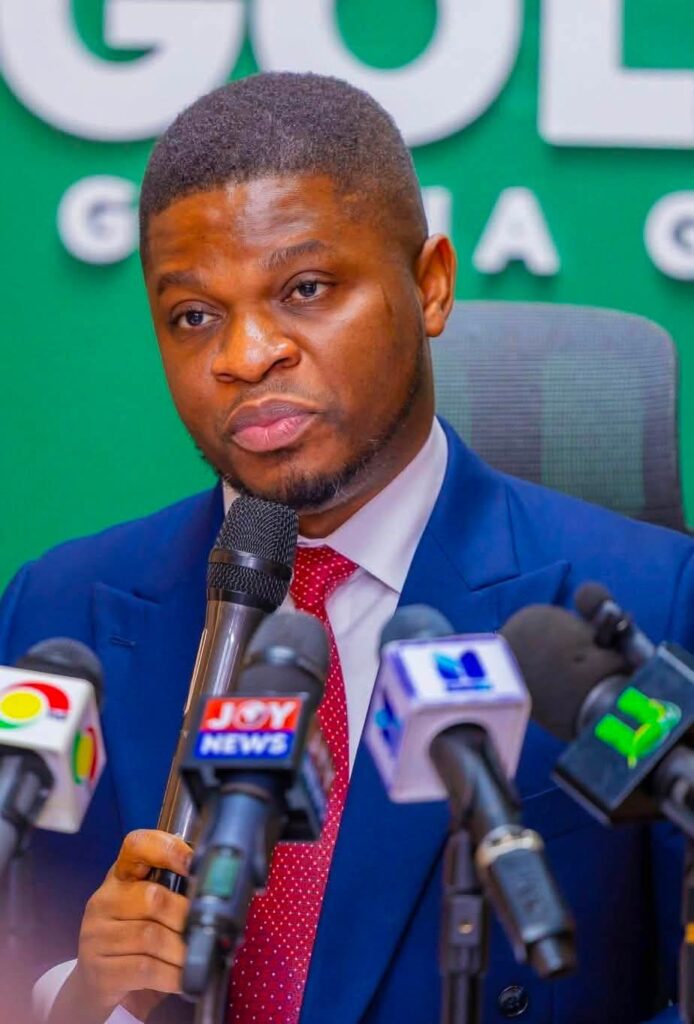
“I have never, on any occasion, mentioned anyone’s name. I have always been talking about the GoldBod institution,” Mr Afenyo Markin stated.
He made these remarks today during a press briefing August 31, 2026,Speaking to when cultural troupes from Winneba visited his residence in Accra
the Minority’s position is that although the Domestic Gold Purchase Programme is a good initiative, its implementation has created challenges that need to be examined.
He described the programme as an initiative introduced under former Vice President Dr Mahamudu Bawumia to use Ghana’s gold resources to help stabilise the economy.
Mr Afenyo Markin maintained that the Minority supports the idea but is concerned about what he described as losses arising from its implementation.
He referenced concerns raised by the International Monetary Fund (IMF) regarding losses associated with the programme, arguing that such issues should be properly investigated.
He therefore rejected suggestions that the matter had become a personal attack.
“We need to elevate the conversation so that it doesn’t become a personality contest,” he added.
Responding to arguments that the reported losses could instead be exchange rate losses on the Bank of Ghana’s own accounts and that the central bank was following international best practices, Mr Afenyo Markin called for patience.
He indicated that the planned parliamentary probe would provide an opportunity for all sides to present their positions and establish the facts.
“When October comes and we start the discussion, wherever the truth is, we will all get to know,” he stated.
By: Jacob Aggrey