Editorial
GFA must listen to Ghanaian fans

Dear Editor,
The manner issues about our national teams are handled in this country must be revised for us to move forward as a nation.
Characteristically, Black Stars coach Chris Hughton faced the axe after the team’s disastrous run at the AFCON 2023 in Cote d’Ivoire.
As if that was not enough, the rest of the technical team members were all dismissed following the announcement of the dissolution of the team by the Ghana Football Association Executive Committee.
Interestingly, the major architects of the disappointment, the players and decision makers have been left to stay in office to continue with the rot.
And when the team is reassembled, these heartbreakers will find their way into it.
It is very difficult to blame government for some of these procedures because of a perceived FIFA ‘covering’ on them but the time has come for Ghanaians to find a way to get them to also face some of the sanctions.
This is because they make inputs in the selection of players and have favourites among them.
Clearly, it also appears the FA has no regard for Ghanaians so calls to sideline some of the players are usually ignored and they expect the same people with little regard to buy tickets to the stadium to watch the team. How can fans pay to watch players they don’t want to see? That’s impossible.
It is time some of these footballers become more accountable to Ghanaians else we must leave their football for them.
Antoinette Quarcoo
Ablekuma


Dear Editor,
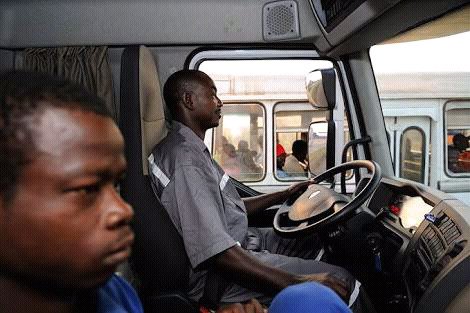
Over the past few months, the ages of some drivers of commercial vehicles continue to baffle me.
This is common during weekends when one boards any of the commercial vehicles – be it trotros and okada.
I remember, I boarded a taxi from the Accra Central area towards the Kwame Nkrumah Circle area. When I sat in the vehicle, I realised the driver was a young boy. Specifically, he said he was 18.
I know our laws do not permit youth under the age of 21 to be driving; that is clearly against Ghana’s Road Traffic laws for operating commercial vehicles.
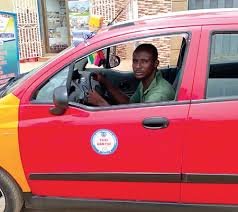
Some commuters have even had confrontations with station masters over the issue and have refused to board vehicles driven by underage individuals, despite the risk of arriving late for work.
This situation is deeply disturbing because it puts the lives of passengers and other road users at risk.
No matter how skilled such drivers may be, allowing underage persons to operate commercial vehicles is wrong and unlawful. Laws governing road safety are meant to protect lives, and ignoring them only increases the chances of accidents and loss of lives.
I therefore urge the relevant authorities, especially the National Road Safety Authority (NRSA) and the Driver and Vehicle Licensing Authority, to strictly enforce the age requirements for commercial driving in the country.
Baba
Labadi
The advantages of focusing on girls have been evident over the years. However, current research indicates that the statistics pertaining to boys are still declining.
Approximately 69 percent of boys and 73 percent of girls finish primary school. While Senior High School (SHS) enrollment trends have lately changed, with females significantly outnumbering males (about 110 girls to every 100 boys), Junior High School (JHS) gender parity remains stable, with the Gender Parity Index (GPI) remaining between 1.00 and 1.03.
The Gender Parity Index (GPI) indicates parity between girls and boys.
Although encouraging education for girls is essential for Ghana’s development, the strong emphasis has unintentionally led to inequalities for boys.
Many stakeholders worry that affirmative action and unequal resource distribution put males at risk, which can occasionally lead to increased dropout rates and behavioural issues in specific neighbourhoods.
There has been a lot of discussion among Ghanaian sociologists and educators about the disproportionate support given to girls and how it affects boys.
They claim that the majority of scholarships and special facilities are frequently disproportionately given to girls, which boy child advocates contend makes young men feel ignored or disadvantaged.
Due to these differences, Apostle Professor Kwabena Agyapong-Kodua, Vice Chancellor of Pentecost University, has voiced serious concerns and is pushing for a deliberate discussion about the education and development of boys in order to build stronger families and societies.
The statement was made by Apostle Prof. Agyapong-Kodua during a seminar hosted by the Church of Pentecost Schools Outreach Ministry in Accra on May 16, which is International Day of the Boy Child.
It was organised in association with the Pentecost Men’s Ministry and the Ghana Education Service (GES) under the theme “Flourish and Thrive: Investing and Unleashing Boys for Strong Families and Communities.”
Apostle Prof. Agyapong-Kodua revealed that many young males are vulnerable due to inadequate mentoring, a decline in schooling, negative social media influences, and emotional neglect.
Additionally, he stated that the boy child faced numerous difficulties, including aggression, substance addiction, academic decline, emotional neglect, and the lack of strong role models, as a result of the focus shifting to the girl child.
He worries that since boys are essential to the development of the country, they should not be overlooked in discussions about leadership, education, family stability, and national reform.
The Spectator agrees with Apostle Prof. Agyapong-Kodua and believes that while it is important to train girls, neglecting boys can impede social advancement by causing differences in behaviour and education between young men and women.
“If we don’t make an effort social media will train our children for us. We’re not saying they shouldn’t use social media, but we should help them get the information they need to succeed in life,” he said.
The Spectator believes that the GES would adopt gender-responsive education in order to guarantee that classroom instruction meets the requirements of both boys and girls equally.
Let’s continue to be dedicated to making sure that no child is left behind.