News
GEXIM signs agreement with Saudi EXIM Bank

- /home/u249204778/domains/spectator.com.gh/public_html/wp-content/plugins/mvp-social-buttons/mvp-social-buttons.php on line 27
https://spectator.com.gh/wp-content/uploads/2025/05/1001953972.jpg&description=GEXIM signs agreement with Saudi EXIM Bank', 'pinterestShare', 'width=750,height=350'); return false;" title="Pin This Post">
- Share
- Tweet /home/u249204778/domains/spectator.com.gh/public_html/wp-content/plugins/mvp-social-buttons/mvp-social-buttons.php on line 72
https://spectator.com.gh/wp-content/uploads/2025/05/1001953972.jpg&description=GEXIM signs agreement with Saudi EXIM Bank', 'pinterestShare', 'width=750,height=350'); return false;" title="Pin This Post">
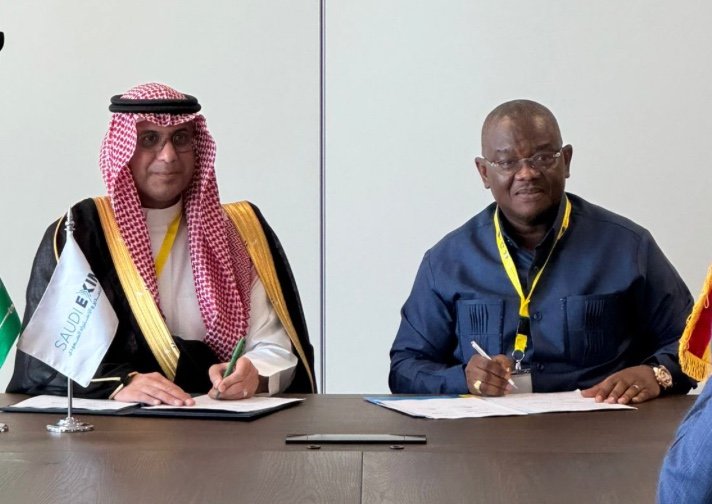
As part of efforts to champion Ghana’s economic transformation through the facilitation of international trade and export development, the Ghana Export – Import Bank (GEXIM) on Monday signed a Memorandum of Understanding (MoU) with the Saudi EXIM Bank.
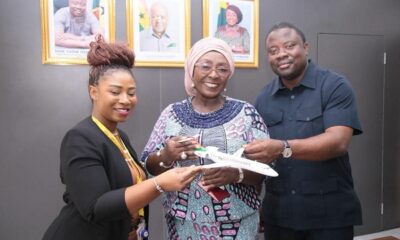
Chief Executive of GEXIM, Hon. Sylvester A. Mensah and Chief Executive Officer of Saudi EXIM Bank, His Excellency Saad Alkhalb signed the MoU, in Côte d’Ivoire on the sidelines of the 2025 African Development Bank (AfDB) Annual Meetings taking place from 26th to 30th May 2025.
The agreement stipulates the cooperation between the two banks to promote the export of goods and services from their respective countries, exchange of information and best practices, capacity building, as well as exploring further opportunities including extension of credit lines, project financing, funding for on-lending and issuance of transactional guarantees.
Mr Mensah later stated that in pursuit of GEXIM’s mission to drive Ghana’s economic transformation through international trade and export development, he was “pleased to announce that Ghana EXIM Bank (GEXIM) has signed a Memorandum of Understanding (MoU) with the Saudi EXIM Bank. I had the honour of signing on behalf of GEXIM, alongside His Excellency Saad Alkhalb, CEO of Saudi EXIM Bank.”
The agreement, he said was strategic and “lays the foundation for deepened cooperation between our two institutions — spanning export promotion, Knowledge sharing, capacity building, project financing, credit lines for Saudi equipment imports, and transactional guarantees.”
The GEXIM Chief Executive stated that the strategic focus for the bank over the next four years will be to prioritize increased food production and strengthen agro processing, and investments for job creation — especially in agriculture and the garment and apparel sub-sector. This, according to him, aligns with President John Mahama’s broader vision to build a resilient, export-led economy and job creation.
He welcomed “this new chapter of collaboration and looked forward to unlocking opportunities for Ghanaian and Saudi businesses alike.”
On his part, His Excellency Saad Alkhalb indicated the importance of deepening relations between Saudi Arabia and Ghana and becoming strategic partners. He further expressed his management’s commitment to fully implementing the MoU to benefit Ghanaian and Saudi businesses.
The GEXIM team included the General Manager, Finance and Strategy, Isaac Amissah – Aidoo, Head of International Cooperation, Jonathan Christopher Koney and Manager, Corporate Affairs, Marcus Garvey Adampah.






Construction of a major underground stormwater drain along the Dr. Busia Highway within the Kaneshie enclave will commence on September 7, 2026.
The Project Coordinator for the Greater Accra Resilient and Integrated Development (GARID) Project, Dr. Kwadwo Ohene Sarfo, announced this at a special media briefing on Wednesday.
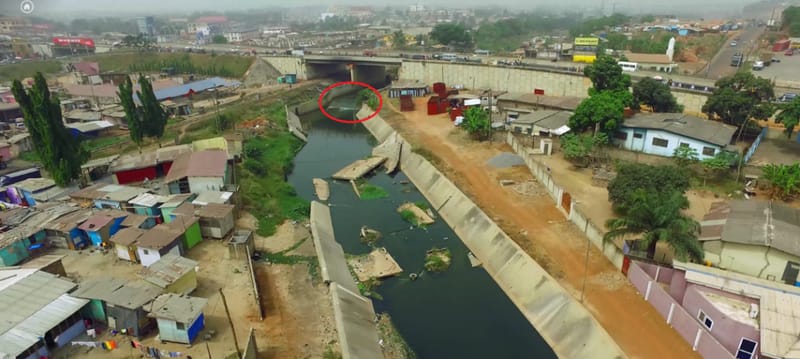
According to him, the works will involve the construction of a double-cell underground rectangular drain measuring approximately 10 metres wide and 1.95 kilometres long, stretching from Pamprom Junction to First Light Junction.
The new drain will replace the existing two 1.2-metre diameter pipes, which are inadequate to carry the volume of stormwater in the area.
Dr. Sarfo said the drain will connect at one end to the recently completed section within the Accra Academy campus and at the other end to the existing drain at Pamprom Junction.
He said the construction is expected to run from September 2026 to October 2027.
The project forms part of government’s broader flood prevention and mitigation programme aimed at addressing perennial flooding in Accra.
By Edem Mensah-Tsotorme
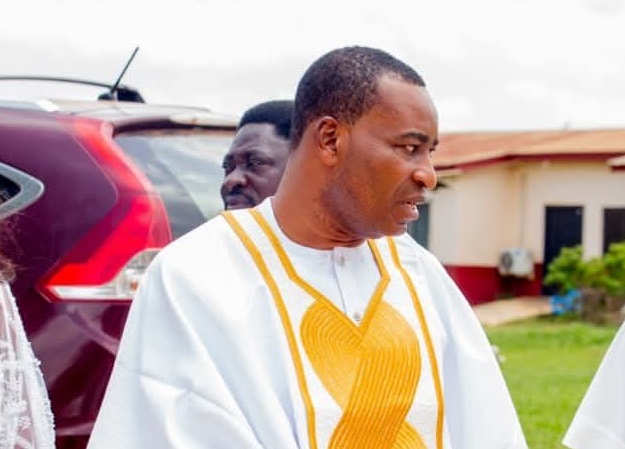
The former Ashanti Regional Chairman of the New Patriotic Party (NPP), Bernard Antwi Boasiako, popularly known as Chairman Wontumi, has withdrawn from the party’s National Chairmanship race.
In a statement issued yesterday, Chairman Wontumi who is currently serving a 20-year jail term said his decision was driven by his love for the party and his unwillingness to let his personal circumstances distract the NPP from its rebuilding efforts.
“There are moments in the life of a man when the heart wants to continue, but duty demands sacrifice. Moments when one must quietly set aside personal ambition, not because the dream has died, but because the family he loves must not be made to carry his burden. Today, I find myself at such a painful moment,” he wrote.
He disclosed that after many nights of prayer, sober reflection and consultations with his family, legal team, party elders, campaign team and trusted supporters, he concluded that his present situation must not become an additional burden on the NPP.
“This is not the decision my heart desired, but sometimes, true love requires us to release what we deeply want in order to protect what we love even more,” he added.
Recounting his years of service, Chairman Wontumi said he had served the party with everything within him, walking through heat and rain, travelling to remote communities and standing with the grassroots in both victory and defeat.
“For many years, I have served the NPP with everything within me… The NPP is not merely a political party to me. It is my family. It is my home. It is a cause to which I have dedicated a significant part of my life,” he stated.
He explained that the party, already carrying the pain of electoral defeat and the huge responsibility of preparing for the future, should not be made to carry his personal weight.
“That is why I cannot allow my present situation or personal ambition to distract the party from the difficult work of rebuilding. I cannot ask the party to carry my weight when it is already carrying the pain of defeat and the enormous responsibility of preparing for the battle ahead. I would rather carry this pain quietly than allow the party I love to suffer because of me,” he said.
He further sympathized with his supporters across the 16 regions, acknowledging that the decision would be painful for many who had sacrificed for his campaign.
“To my teeming supporters across all sixteen regions, I know this message will hurt. I know many of you will read it with tears in your eyes because I understand the sacrifices you have made for this journey,” he said.
By Edem Mensah-Tsotorme