News
Gambling: Politically unwise (Part 2)

- /home/u249204778/domains/spectator.com.gh/public_html/wp-content/plugins/mvp-social-buttons/mvp-social-buttons.php on line 27
https://spectator.com.gh/wp-content/uploads/2021/11/Gambling-Pix.jpg&description=Gambling: Politically unwise (Part 2)', 'pinterestShare', 'width=750,height=350'); return false;" title="Pin This Post">
- Share
- Tweet /home/u249204778/domains/spectator.com.gh/public_html/wp-content/plugins/mvp-social-buttons/mvp-social-buttons.php on line 72
https://spectator.com.gh/wp-content/uploads/2021/11/Gambling-Pix.jpg&description=Gambling: Politically unwise (Part 2)', 'pinterestShare', 'width=750,height=350'); return false;" title="Pin This Post">
Gambling is also bad political policy. Solely in terms of its effects on society and government, a law that permits gambling is hard to justify, and a law that sponsors or promotes gambling is a sure loser.
It should not be surprising that many of the public policy arguments against gambling are mirror images of the moral and religious considerations reviewed last week. The moral codes of religion are rooted in our Creator’s teachings of how his children should live to be happy, prosperous, and at peace. A religious and moral person is generally a good neighbour and a good citizen. The encouragement of moral behaviour by citizens is generally good public policy.
Columnist George F. Will explained it this way:“Gambling is debased speculation, a lust for sudden wealth that is not connected with the process of making society more productive of goods and services. Government support of gambling gives a legitimsing imprimatur to the pursuit of wealth without work.”In the words of Former Governor of Florida Bob Graham, “What the lottery says about success is the wrong message. What it says is that you don’t have to work hard, you don’t have to try to improve yourself. All you have to do is just take your roll of the dice.”
A Catholic priest, Monsignor Joseph Dunne, deplores what the lottery teaches children: “Why should they get an education when with a little bit of luck they can win a bundle of money for life? That’s what lotteries are doing to our youth.”The philosophy of something for nothing or something for far less than it is worth is at the root of a multitude of crimes: theft, robbery, looting, embezzlement, fraud, and many other kinds of plunder. By nourishing and legitimating that philosophy, gambling is a threat to the prosperity and peace of any nation.
Gambling is especially wicked when it is administered by government or when government relies on it as a substantial source of public revenue. In times when a government’s appetite for taxes seems insatiable, government officials who depend on gambling to finance a share of the public budget have a strong temptation to promote gambling and to protect it from opposition.
You can’t run a successful lottery by telling the whole truth. You need hard-sell promotion, often vague and misleading about the odds and the prizes. That enterprise of parting the gullible from his hard earn money is questionable enough in the free marketplace; it’s no business for a nation or government whose purpose is to serve and protect the people.
As a Newsweek business section writer noted: “The strongest case against lotteries may simply be that they are inefficient.”Most methods of taxation cost only one to two cents to bring in each dollar of revenue. In contrast, between 60 and 75 cents of every dollar spent on a lottery ticket goes to operating expenses and prizes.
Lottery is the worst form of taxation ever invented when operated by the government. This is because the poor pay a higher proportion of their income than the rich. Economists describe this kind of tax as highly regressive. Writing in the National Tax Journal,one economist stated that most forms of gambling, including lotteries and numbers games, turn out to be “two to three times more regressive than sales taxes.”
An official with a firm that markets lottery products told a trade audience that the typical player of a numbers game is a labourer or service worker who is male with less than a high school education. Scholarly studies confirm that lotteries draw their revenues from the poor and disadvantaged.
A national lottery encourages many non-gamblers to take up gambling. Its goal, as explained by an official of the Public Gaming Research Institute, “is to get lots of people to play a little bit.” That is what happens. Like a virus, official sponsorship spreads gambling like an epidemic.
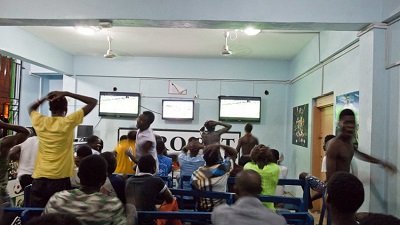
Advocates of legalised gambling argue that their games will eliminate illegal gambling, but there is no evidence that this has occurred. Instead, legalised gambling wins new participants, which expands the market and the potential revenues of illegal gambling. Just by example see the number of young people flocking betting dens all day of the week take a chance on sport betting.
The only beneficiaries of a national lottery are the businesses that sell the specialised products and services used in lotteries. Those businesses are behind the campaigns to adopt them. National sponsored lotteries are a good news/bad news proposition. The good news is for a handful of businesses that are sure to profit by it, and for professional gamblers and the crime syndicate that will benefit from having their most profitable enterprise promoted and legitimised by the state. It is also good news for a tiny number of winners who cannot be predicted in advance but who are sure to be fewer than one in a thousand of those who participate.
The bad news is for the hundreds of thousands of losers and for the citizens at large. As a method of raising revenue to support any worthy object, a national lottery is the most unfair and expensive form of taxation, and its victims require increased state expenditures for social welfare and law enforcement. In short, the national lottery is costly, ineffective, and unfair.
I conclude this discussion of public policy arguments against gambling with several moral objections. Law is concerned about morality, and there are serious legal-moral objections to lotteries and gambling. I quote five of these objections from a publication of the Southern Baptist Convention’s Christian Life Commission:
“It is a moral issue when the state decides to derive income from an activity which is a highly regressive form of taxation that affects poor people more extensively than affluent people. It is a moral issue when a state decides not only to tolerate gambling but to get in the business of planning games, engaging in promotional activities … and targeting its citizens through extensive marketing analyses in the hopes of creating new gamblers.
“It is a moral issue when a state adopts a form of gambling which in all probability will increase the extent and the amount of illegal gambling. It is a moral issue when a state adopts a form of gambling that will draw off large amounts of money, especially from the poor people for whom the state supposedly has a responsibility to provide assistance.
“It is a moral issue when a state engages in naive projections and adopts financial planning that amounts to putting a shoddy patch on a state’s long-term financial problems.”
To summarise: that governments would tolerate gambling is regrettable; that governments would promote gambling is reprehensible.So what should we do about gambling a people? We should not participate in any way, and should encourage others, especially our family members, not to participate.
If as Christians, Moslems and high minded people in the society members do not oppose immoral and pernicious practices, who will? If not now, when? We can make a difference! May God help us to do so.
By Samuel Enos Eghan


Construction of a major underground stormwater drain along the Dr. Busia Highway within the Kaneshie enclave will commence on September 7, 2026.
The Project Coordinator for the Greater Accra Resilient and Integrated Development (GARID) Project, Dr. Kwadwo Ohene Sarfo, announced this at a special media briefing on Wednesday.
According to him, the works will involve the construction of a double-cell underground rectangular drain measuring approximately 10 metres wide and 1.95 kilometres long, stretching from Pamprom Junction to First Light Junction.
The new drain will replace the existing two 1.2-metre diameter pipes, which are inadequate to carry the volume of stormwater in the area.
Dr. Sarfo said the drain will connect at one end to the recently completed section within the Accra Academy campus and at the other end to the existing drain at Pamprom Junction.
He said the construction is expected to run from September 2026 to October 2027.
The project forms part of government’s broader flood prevention and mitigation programme aimed at addressing perennial flooding in Accra.
By Edem Mensah-Tsotorme
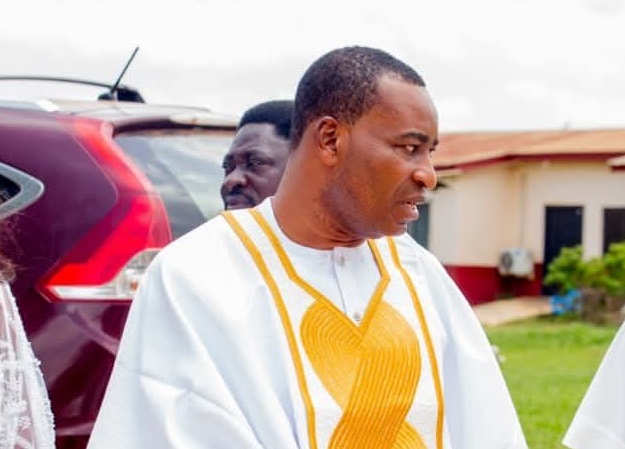
The former Ashanti Regional Chairman of the New Patriotic Party (NPP), Bernard Antwi Boasiako, popularly known as Chairman Wontumi, has withdrawn from the party’s National Chairmanship race.
In a statement issued yesterday, Chairman Wontumi who is currently serving a 20-year jail term said his decision was driven by his love for the party and his unwillingness to let his personal circumstances distract the NPP from its rebuilding efforts.
“There are moments in the life of a man when the heart wants to continue, but duty demands sacrifice. Moments when one must quietly set aside personal ambition, not because the dream has died, but because the family he loves must not be made to carry his burden. Today, I find myself at such a painful moment,” he wrote.
He disclosed that after many nights of prayer, sober reflection and consultations with his family, legal team, party elders, campaign team and trusted supporters, he concluded that his present situation must not become an additional burden on the NPP.
“This is not the decision my heart desired, but sometimes, true love requires us to release what we deeply want in order to protect what we love even more,” he added.
Recounting his years of service, Chairman Wontumi said he had served the party with everything within him, walking through heat and rain, travelling to remote communities and standing with the grassroots in both victory and defeat.
“For many years, I have served the NPP with everything within me… The NPP is not merely a political party to me. It is my family. It is my home. It is a cause to which I have dedicated a significant part of my life,” he stated.
He explained that the party, already carrying the pain of electoral defeat and the huge responsibility of preparing for the future, should not be made to carry his personal weight.
“That is why I cannot allow my present situation or personal ambition to distract the party from the difficult work of rebuilding. I cannot ask the party to carry my weight when it is already carrying the pain of defeat and the enormous responsibility of preparing for the battle ahead. I would rather carry this pain quietly than allow the party I love to suffer because of me,” he said.
He further sympathized with his supporters across the 16 regions, acknowledging that the decision would be painful for many who had sacrificed for his campaign.
“To my teeming supporters across all sixteen regions, I know this message will hurt. I know many of you will read it with tears in your eyes because I understand the sacrifices you have made for this journey,” he said.
By Edem Mensah-Tsotorme