News
Ellembelle chief calls for sustainable livelihoods for repatriated refugees


Chief of Ampain in the Ellembelle District of the Western Region, Nana Nyameke Fofole II, has called on United Nations (UN) Systems to ensure that repatriated Ivorian refugees get sustainable livelihoods back home.
“Yes, we now have voluntary repatriation but people are going home, how do we safeguard their stay? Government and the Ghana Refugee Board (GRB) must provide some package for say six to one year for them to become self-sufficient. This is also to assure of their safety.” he pleaded.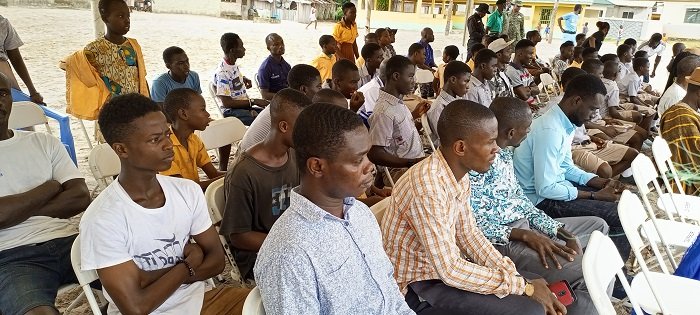
Nana Fofole made the call in a solidarity message at this year’s World Refugee Day which was marked at the Ampain Camp on Monday, on the theme ‘Whoever they are, wherever they come from, whenever they are forced to flee. Everyone has a right to seek safety.’
He noted that the day was dedicated to displaced people around the globe fleeing from conflicts, adding that such people needed attention no matter their race, colour, citizenship or ethnicity.
“Care for refugees is a global responsibility and so we need not leave anyone behind. Shelter underscores everything including security and dignity and it’s not just a roof and so the theme is appropriate. But, the question is, who should provide the safety? Safety is important and it’s a worry for refugees”, Nana Fofole said.
He said, to neglect refugees meant that , they would turn to the street for survival by engaging in social vices, saying “ The good news is that, our neighbours in the Ampain camp have been law-abiding, friendly, God fearing and disciplined, and co-existed perfectly with us.”
Recalling the creation of the camp, he said that in 2011, and being aware of the plight of the Ivorian friends and also having families in Cote d’ Ivoire, he contacted the Ellembelle District Assembly to see to the welfare of the displaced at the Ampain camp.
“I was touched by people being killed by animals on the streets and so decided to act with the council of elders. We sacrificed our land to save humanity”, Nana Fofole stressed.
He told the gathering that, the palace strategised with the camp management to provide foodstuffs and fish to the Ivorian refugees, which “we have never, ever regretted to host our neighbours at the Ampain camp.”
The Ampain chief commended the United Nations High Commissioner for Refugees (UNHCR), Esther Kiragu, for her efforts and particularly, the pioneer camp manager, Kelly Forson and team for their dedication and service to humanity.
The Chairman of GRB, Prof. Ken Attafuah, said, the camp which was set up in 2011 at the peak of the influx of distressed neighbours from La Cote d’Ivoire became one of three camps established to host Ivorians who were facing generalised violence in their home country.
He said: “Nana Fofole and the people of Ampain have lived in harmony with their guests from Abidjan for the past 11 years. You have continuously and willingly shared your valuable resources with them. We are proud that Ampain and other communities welcomed the refugees with love and open arms and stood by them.
“That is what the theme of the World Refugees Day is about. It is also important to acknowledge the role the UNHCR has played in our system of government to ensure that refugees live in our country in dignity and respect.”
From Clement Adzei Boye, Ampain

News
GES directs Ashanti Regional, Obuasi Municipal Education Directors to step aside over Obuasi SHTS scandal


The Management of the Ghana Education Service (GES) has directed the Ashanti Regional Director of Education, Dr. William Amankrah Appiah, and the Obuasi Municipal Director of Education, Mr. Kwamena Owusu-Nketiah, to step aside with immediate effect.
The directive forms part of ongoing investigations into allegations of sexual misconduct involving the headmaster of Obuasi Senior High Technical School (SHTS), Mr. Zakaria Abdulai.
According to GES, the decision is intended to ensure that the investigations proceed without potential interference, nor the perception of it.
The two directors are to hand over their offices and all state property in their possession to the Deputy Ashanti Regional Director of Education, Mr. Thomas Kwame Boateng.
Management added that the headmaster, Mr. Zakaria Abdulai, also remains interdicted and therefore urged the public to ignore any news circulating that he has been cleared.
Management is calling for calm, support and cooperation as thorough investigations into the matter continue.
By Edem Mensah-Tsotorme
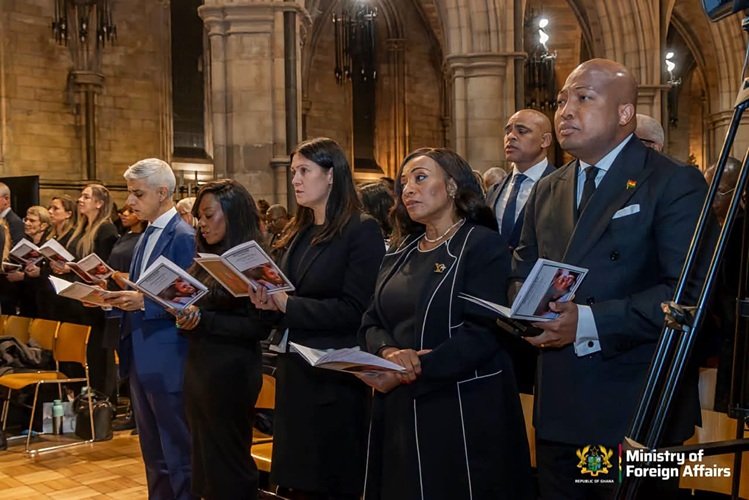
The Minister for Foreign Affairs, Samuel Okudzeto Ablakwa, has joined the family of the late Professor Jason Atta Kwei Arday, the Ghanaian community in the UK, and other dignitaries for a memorial service in Southwark, UK.
In a post, Mr. Ablakwa described the service as deeply moving and unforgettable, held in honour of the late professor’s memory.
According to him, in keeping with the government’s pledge, he joined the family, Ghana’s High Commissioner to London, British MPs, Ministers, the Mayor of London, Cambridge scholars, Prof. Arday’s students and loved ones to pay respects and honour his inspiring legacy.
Mr. Ablakwa noted that Prof. Arday’s accomplishments as the youngest Black professor appointed at the University of Cambridge and his widely appreciated charitable contributions will continue to inspire generations.
“The Government and People of Ghana will continue to stand by our compatriots everywhere they are in the world. As we do so, we profess our commitment to justice, equality and the creation of a new world,” he said.
He prayed for fortitude for the family in what he described as an extraordinarily difficult time.
“We shall always remember Prof. Arday for his response when asked what he will wish to do to change the world: ‘I would take a thread and a needle, and I’d interweave love into our society’,” Mr. Ablakwa added.
By Edem Mensah-Tsotorme