Features
ECG outages: Paying for destroyed appliances through the ‘nostrils’

- /home/u249204778/domains/spectator.com.gh/public_html/wp-content/plugins/mvp-social-buttons/mvp-social-buttons.php on line 27
https://spectator.com.gh/wp-content/uploads/2021/12/Kwame-Agyeman-Budu-Pix-1.jpg&description=ECG outages: Paying for destroyed appliances through the ‘nostrils’', 'pinterestShare', 'width=750,height=350'); return false;" title="Pin This Post">
- Share
- Tweet /home/u249204778/domains/spectator.com.gh/public_html/wp-content/plugins/mvp-social-buttons/mvp-social-buttons.php on line 72
https://spectator.com.gh/wp-content/uploads/2021/12/Kwame-Agyeman-Budu-Pix-1.jpg&description=ECG outages: Paying for destroyed appliances through the ‘nostrils’', 'pinterestShare', 'width=750,height=350'); return false;" title="Pin This Post">
The ‘proper dumsor years’ are gone. And during those ‘debilitating years’, power outages ‘engineered’ by the Electricity Company of Ghana (ECG), somersaulted straight to the ‘dogs’.
And the ‘dogs’ ‘ensnared’ by consistent darkness and restlessness, barked consistently, to apparently ‘scare’ ‘dumsor’ but ‘dumsor’ was not perturbed at all.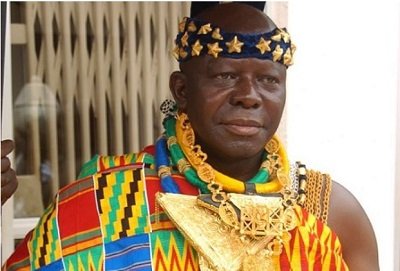
‘Dumsor’ kept on wreak horror and havoc on humans, homes, houses, schools, companies, factories and many other businesses in the Republic of Ghana.
Eventually, when ‘dumsor’ was ‘arrested’, it was unable to fulfill the ‘difficult’ bail conditions, so it was kept at the Ankaful Maximum Security Prison.
And occasionally, when ‘dumsor’ is provoked ‘by the powers that be’, ‘dumsor’ will break jail and rush into ‘selected towns and cities’ of the country , to continue its action on any ‘innocent’ thing that stands in its way; including expensive electrical appliances.
And so it came to pass that, just recently, ‘dumsor’ escaped again from the Ankaful Maximum Security Prison and ‘rushed’ to the Ashanti Region, with ‘fury’.
And without any regard to His Majesty, Otumfuo Osei Tutu II, ‘dumsor’ ‘nakedly’ ‘stormed’ the Manhyia Royal Palace and turned it upside-down; destroying all the expensive electrical appliances of the Great Asante King.
Apparently having ‘researched’ into ‘Ashanti war-history’, ‘dumsor’ first conquered the ‘vassal states’ of Ashanti before eventually ‘laying siege’ on Manhyia Royal Palace, thus, ‘attacking’ and ‘wrecking’ Otumfuo’s expensive electrical appliances with ‘venom’ and ‘vengeance’.
Indeed, Otumfuo has not been a happy man at all. He has expressed his dissatisfaction about the recent power outages in his kingdom.
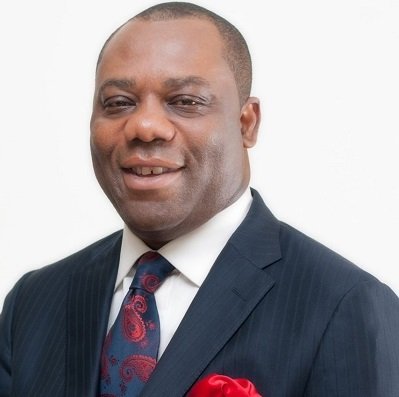
Speaking during a recent courtesy call on him by the Energy Minister, Dr Matthew Opoku Prempeh, the Asantehene announced that the intermittent power outages had destroyed his electrical appliances.
“I have been experiencing power outages recently. The light goes off and comes back without caution” , Otumfuo told the Energy Minister, stressing that, “all my appliances have been damaged because of the outages.”
Responding, Dr Prempeh attributed the recent power outages in the region to a fallen telecommunication mast that destroyed two towers belonging to the Ghana Grid Company earlier in November.
He, however, assured residents that the Energy Ministry was working hard to resolve the problem.
Apart from the Ashanti Region, there have been power outages in some parts of the country, too. They included the Central and the Greater Accra regions. And the outages affected many companies and residential homes.
Reportedly, the effects of the ‘dumsor war’ on Ashanti , were remarkably ‘devastating’, as indigenes and residents in the region also complained loudly.
Akwasi Boadi, 45, a resident of Suame in the vicinity of Kumasi says: “It is not only the Asantehene whose electrical appliances are damaged by the ‘dumsor’ that hit the Ashanti Region.
“I, myself, and many others have lost a lot. All the sophisticated electrical equipment I recently received from my brother based in Sweden, have been damaged by the ‘dumsor’.
“And the ECG is not telling us anything. They keep on destroying our things without paying for them. And such things are very expensive to repair.”
Sixty-two-year-old Mercy Konadu and a resident of Asafo in Kumasi also says all the electrical appliances in her entire household are damaged by the ‘dumsor’.
According to Mercy Konadu: “I hear the ECG has compensated the Asantehene for the damage caused by the ‘dumsor’ to his properties.
“If that is true, then for once, they have been a very responsible institution in Ghana. Always, ECG allows ‘dumsor’ to destroy our things without paying for them.
“People like us, who are nobodies, how can ECG or Ministry of Energy identify us, so as pay us compensation for the damage caused by ‘dumsor’ to our properties? “
Mercy Konadu says, ‘dumsor’ has been inflicting hardship on her household, “because anytime it happens, we have to pay through our nostrils to repair some of our gadgets, as we throw away the others, that cannot be repaired.”
Eugene Opoku Mensah is 52 years old. He is a resident of Bantama in Kumasi now. He says he has lived in Germany for over 20 years and during his stay there, no part of Germany experienced ‘dumsor’ for even one day.
“So, in Ghana, what are the real causes of ‘dumsor’ ? And for God’s sake, for how long can this preventable situation be resolved once and for all?
“And what pains me is that ‘dumsor’ destroys people’s properties and ECG and the Ministry of Energy pretend that they are deaf and dumb.”
Opoku Mensah asks:”And so, ECG and Ministry of Energy; if it is true that you have compensated the Asantehene, what should the others do to claim their compensation?”
Contact email/ WhatsApp of author: asmahfrankg@gmail.com (0505556179)
BY G. FRANK ASMAH

On Sunday, August 13, 2026, the Church of Pentecost (COP) International, Finland, held an impressive church service in Helsinki in honour of and to welcome Prophet Benjamin Arthur as the new National Head.
The well-attended service formally ushered in Prophet Arthur who takes over from Apostle Francis Owusu Kwaah, who has been the National Head since November 2020 and whose tenure as the National Head ended last month.
Prophet Arthur arrived in Finland from the UK where he has held many positions in the church to replace Apostle Owusu Kwaah who moves back to the UK.
A touching welcome and powerful ministration
The church service was officiated by Apostle Seth Samuel Asante, the National Head of the Church of Pentecost, USA.
It was a touching welcome church service and ministration at a well-attended event. In attendance were many religious leaders from other churches or missions, as well as dignitaries.
Apostle Asante had the honour to introduce Prophet Arthur to the whole congregation as the new National Head in Finland. He was joined by other church leaders and officers from UK, USA, and Finland to pray for Prophet Arthur and handed him over to COP Finland as their new National Head to a huge applause.
Earlier, Apostle Asante delivered a powerful and touching sermon that highlighted a message of salvation and the importance of knowing, loving and serving God with one’s whole heart. He entreated the audience to love God and do His work to glorify his name.
Stirring up understandings from the hymns: “My faith has found a resting place…” and “Guide me O Thou great Jehovah…,” as well as a number of quotations from the Bible, the Apostle gave a powerful preaching on the need to build one’s faith in God.
Response from the new National Head
In response, Prophet Benjamin Arthur preached the power of prophecies and God’s plan for redemption. He entreated all to believe in God’s power especially through prophecies to save mankind. The glory of the Lord shall be revealed, he noted and add: “The blood of Jesus is not shed in vain”.
Surrounded by his beloved wife, Mrs Eugenia Arthur, and their three children, Prophet Arthur expressed gratitude to the members of the church for the resounding welcome they have accorded him as he starts to embark on his role and duty as the National Head.
He recognised the exploits and excellent leadership roles of his predecessors, Apostle Edmund Appiah (who was the first National Head) and Apostle Francis Owusu Kwaah.
COP’s future and growth in Finland
The Church of Pentecost in Finland was established over 25 years ago. It started in September 2000 as a prayer group with a small number of devoted persons in Helsinki (see www.copfinland.fi).
The group grew fast and there was the need to secure a new place of worship in the Helsinki area. The Church has grown and spread to other towns and cities in Finland.
Today, in Helsinki alone there are two branches of the Church. There is the Akan Assembly where worship is done mostly in the Twi language. The other branch is the English Assembly (or the PIWC) which is attended by other nationalities and African immigrants aside Ghanaian immigrants.
The COP Finland has become very formidable in the religious space in the Ghanaian community in Finland.
It has thus played a prominent role in the religious or spiritual existence of its members, as well as in people’s social lives as a key aspect of integration into the Finnish society.
The church continues to grow and, for example, it has been one of the major channels through which the Ghana Union Finland (GUF), an association for Ghanaian immigrants in Finland, has made more contacts with members of the Ghanaian immigrant community.
With Dr Perpetual Crentsil
SKIP THE QUEUE, TAP THE NEWS
You can now read the Ghanaian Times and The Spectator newspapers from the comfort of your device via TimesNewsPlus.
Join our WhatsApp Channel: https://whatsapp.com/channel/0029VbBElzjInlqHhl1aTU27
Features
Responding to religious insults with faith, wisdom and restraint …The Prophetic Model for Muslim–Christian Peace and Coexistence(Part 1)

All praise belongs to Allah, Lord of the worlds. We praise Him, seek His help and forgiveness, and seek refuge in Him from the evil within ourselves and from our evil deeds.
May His Peace and Blessings be Upon the Noble Prophet Mohammed, his household, companions and all righteous people till the Last Day. Ameen
GHANA, WE MUST NOT ALLOW A MOMENT OF ANGER TO DESTROY DECADES OF PEACE
My dear brothers and sisters in Ghana.
Today I speak about something that should concern every Muslim, every Christian and every responsible Ghanaian.
Recent events involving controversial statements about Prophet Muhammad (pbuh), the arrest of an Islamic cleric accused of making statements advocating violence, and the arrest of a Christian preacher over alleged derogatory comments concerning the Prophet (pbuh) have generated considerable national concern. The Ghana Police Service has said the matters are under investigation and that due process will apply.
And now, reports of an alleged assault on a detained pastor have added another troubling dimension to the matter.
Let us be very clear:
Ghana is not at war.
Muslims are not at war with Christians.
2 | P a g e
Christians are not at war with Muslims.
For generations, we have lived together, traded together, worked together, attended the same schools, built communities together and, in many Ghanaian families, even married across religious lines.
Therefore, we must not allow the reckless words or actions of a few individuals to destroy the peace built by generations.
WHEN SOMEONE INSULTS THE PROPHET (PBUH), WHAT DOES ISLAM EXPECT
FROM ME?
This is the question we must answer.
Not: “How angry am I?”
But: “What does Allah require from me?”
Not: “What can I do to my enemy?”
But: “What did Prophet Muhammad (pbuh) do when his enemies hurt him?”
This distinction is crucial.
Islam does not teach us to abandon our faith when we are provoked.
Islam teaches us how to behave because we have faith.
Allah says:
“Do not let the hatred of a people cause you to depart from justice. Be just; that is nearer to righteousness.” (Qur’an 5:8).
Notice the greatness of Islam.
Allah does not say, “Be just when people respect you.”
He says, be just even when you hate what they have done.
Therefore: An insult does not give me permission to become unjust.
The author is the Chief Imam of Katamanso Municipal and Certified Counsellor and Governance Expert
By Imam Alhaji Saeed Abdulai