Hot!
DRC, Rwanda agree to de-escalate tensions at a mini-summit in Luanda


- /home/u249204778/domains/spectator.com.gh/public_html/wp-content/plugins/mvp-social-buttons/mvp-social-buttons.php on line 27
https://spectator.com.gh/wp-content/uploads/2022/07/135375_AGO_1657142524045.jpg&description=DRC, Rwanda agree to de-escalate tensions at a mini-summit in Luanda', 'pinterestShare', 'width=750,height=350'); return false;" title="Pin This Post">
- Share
- Tweet /home/u249204778/domains/spectator.com.gh/public_html/wp-content/plugins/mvp-social-buttons/mvp-social-buttons.php on line 72
https://spectator.com.gh/wp-content/uploads/2022/07/135375_AGO_1657142524045.jpg&description=DRC, Rwanda agree to de-escalate tensions at a mini-summit in Luanda', 'pinterestShare', 'width=750,height=350'); return false;" title="Pin This Post">
The Democratic Republic of Congo and Rwanda have agreed to a “de-escalation process” following weeks of rising tensions over rebel fighting in eastern DRC, the Congolese presidency said Wednesday after mediated talks.
But the talks mediator, Angolan President Joao Lourenco, went further announcing a “ceasefire” — although giving no details.
Violence has flared between is the Congolese army and the M23 rebels and is ongoing.
The DRC has repeatedly accused Rwanda of backing the M23, a charge the small central African country always denied.
“I am pleased to announce that we have had positive results, in our view, in that we have agreed on a ceasefire, among other measures,” Lourenco said in remarks at the end of the mini-summit attended by Rwanda’s Paul Kagame and Congo’s Felix Tshisekedi in the Angolan capital Luanda.
Tshisekedi’s office said a “roadmap” had been established towards normalising diplomatic ties, including through ending hostilities involving the M23 militia in eastern DRC.
The announcements came after day-long talks which the Rwandan state broadcaster reported had “concluded with an agreed upon roadmap to deescalate hostilities”.
But the Rwanda Broadcasting Agency stressed that it was agreed that the issue of M23 “be dealt with domestically within the framework of the Nairobi process.”
A mostly Congolese Tutsi rebel group, the M23 — or “March 23 Movement” — first leapt to prominence when it briefly captured the eastern Congolese city of Goma in 2012 before it was driven out in a joint UN-Congolese offensive.
After lying mostly dormant for years, the M23 resumed fighting last November after accusing the Congolese government of failing to honour an agreement to incorporate its fighters into the army.
Fierce fighting has seen the rebels make significant advances in eastern Congo. Last month, M23 fighters captured the strategic town of Bunagana on the Congolese-Ugandan border, for example.
At the end Wednesday’s talks, the Congolese presidency said the three presidents had decided upon a “de-escalation process between the DRC and Rwanda”.
This involves setting up a joint DRC-Rwanda committee, which is due to hold its first meeting in Luanda on July 12, as well as a roadmap for normalising relations.
The M23 must cease hostilities under the roadmap, according to the Congolese presidency, and the “exploitation of natural resources in the region must be done in strict respect of the sovereignty of states”.
Lourenco, who is also the chairman of the International Conference for the Great Lakes Region (ICGLR), mediated the talks at the request of the Africa Union after the violence grew into a diplomatic faceoff between the two neighbours.
source: www.africanews.com

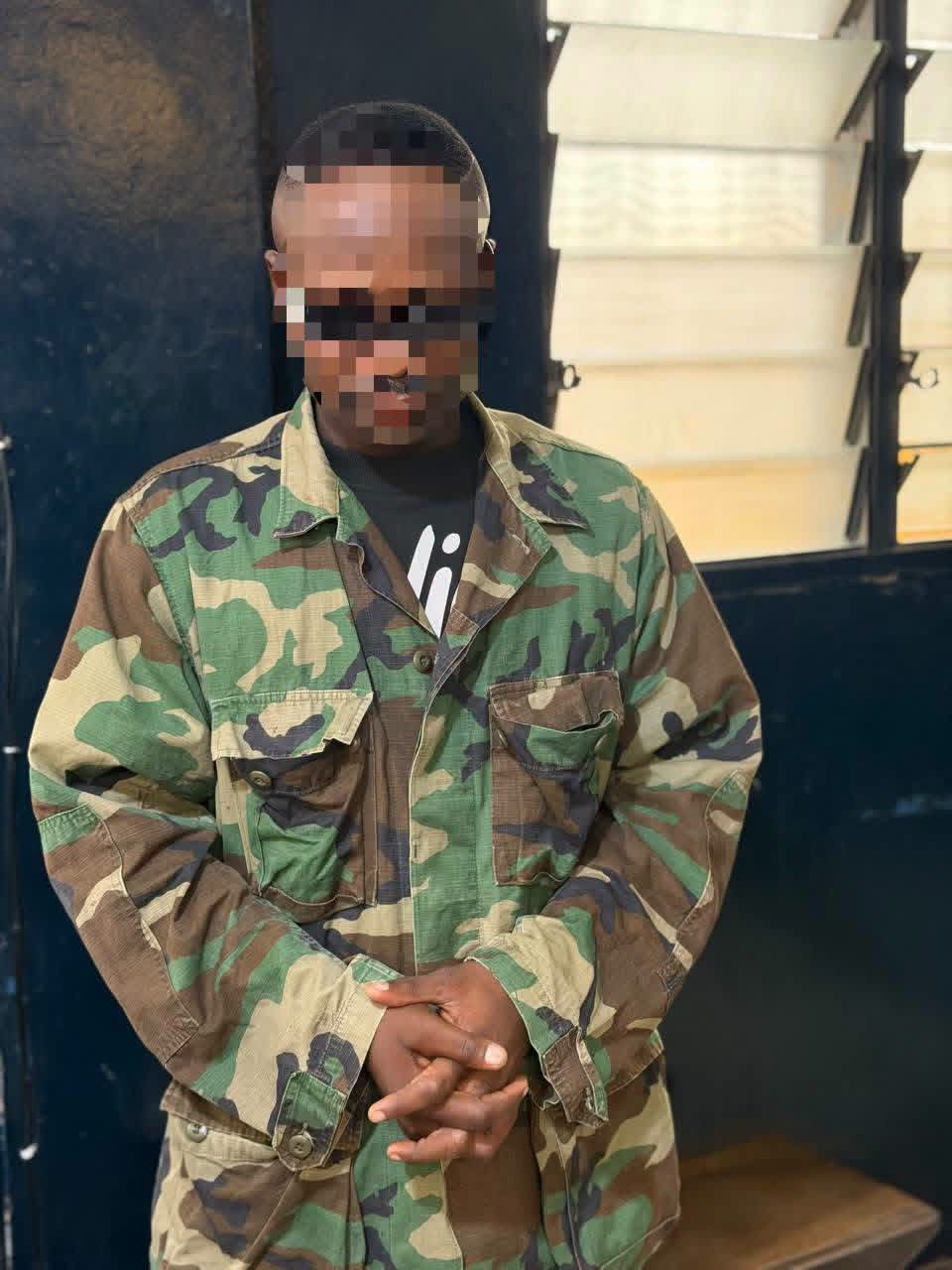
The Tema Regional Police Command has arrested a 32-year-old man for allegedly posing as a soldier and extorting money from unsuspecting members of the public at Ashaiman.
The suspect, identified as Bright Atsu Kudiabor, was arrested by the Ashaiman Police on Wednesday, September 16, 2026, at about 7:00 a.m.
According to the Police, he was arrested at an area known as “I Shall Return”, where he was allegedly parading himself as a soldier and demanding money from people.
The Police said Kudiabor, who is an ex-convict, was initially arrested by personnel of the Ghana National Fire Service in Ashaiman with assistance from other members of the public.
A search conducted on him after he was handed over to the Police reportedly led to the recovery of a set of military camouflage uniform.
The suspect is currently in Police custody and assisting with investigations.
The Tema Regional Police Command said he would be processed for court after investigations are completed.
The Police urged the public to remain vigilant and report anyone who falsely presents themselves as a soldier or a member of another security agency to deceive or extort money from the public.
By: Jacob Aggrey
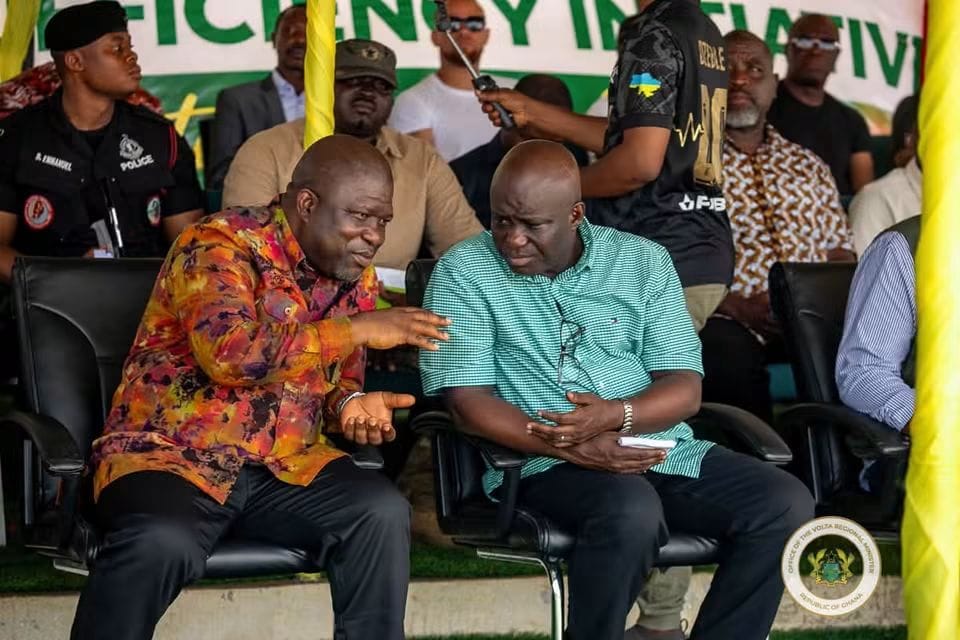
Volta Regional Minister, James Gunu, says the Volta Region holds enormous agricultural potential and efforts must be geared towards connecting farmers to the needed resources to unlock that potential.
He said focus must be on linking farmers to resources, technology, financing and markets to increase production, create jobs and build sustainable livelihoods.
Hon. Gunu made the remarks at the national launch of the Ghana Tomato Self-Sufficiency Initiative (GHATSI) held at Anloga in the Volta Region on Tuesday, September 15.
The initiative, under the theme “Produce at Home. Feed the Nation. Export the Surplus,” seeks to boost local tomato production, processing and marketing while reducing Ghana’s heavy reliance on imported tomatoes.
The launch was attended by the Minister for Food and Agriculture, Eric Opoku, his Deputy, John Setor Dumelo, Feed Ghana Coordinator, Bright Demordzi, Members of Parliament, traditional leaders, MMDCEs, farmers and other stakeholders.
Mr.Gunu expressed appreciation to the Minister for Food and Agriculture for the support announced for the region, including two excavators, 200 cartons of organic fertiliser, and GH¢200,000 for Ms. Kuatudzo Esther Dela, a tomato farmer and processor from Ziope.
He described the initiative as an important step towards making agriculture a stronger driver of food security, job creation and economic growth in the Volta Region.
By Edem Mensah-Tsotorme