Features
Black Stars, go for the ultimate …to calm nerves of Ghanaians

Barring last minute hitch or unforeseen circumstances, which I doubt will happen, the much anticipated global soccer fiesta (World Cup), will kick-start tomorrow, November 20, 2022 in the gulf region of Qatar, which is noted to be one of the 10 top richest countries in the world. The opening ceremony of this great tournament on the world football calendar, will take place at Al Bayt, located in Al Khorin the northeast coast of Qatar amidst pomp and pageantry. This tournament will attract a large crowd of spectators from across the world, some of whom will be visiting the oil rich nation for the first time in their lives.
PARTICIPATING COUNTRIES
Thirty- two countries including Ghana are expected to battle it out for the prestigious 18-karat solid gold trophy weighing a total of 4,970 grammes. The participating countries are, GROUP A: Qatar, Ecuador, Senegal and the Netherlands; GROUP B: England, Iran, USA, and Wales; GROUP C: Argentina, Saudi Arabia, Mexico and Poland; GROUP D: France, Australia, Denmark and Tunisia; GROUP E: Spain, Costa Rica, Germany and Japan; GROUP F: Belgium, Canada, Morocco and Croatia; GROUP G: Brazil, Serbia, Switzerland and Cameroon; GROUP H: Portugal, Ghana, Uruguay and South Korea.
This tournament from all intents and purposes, is going to be very tough, hectic and interesting, judging from the pairings of the countries involved. Almost all the countries, have most of their players plying their trade in world class football teams in Europe, Asia, Americas, Africa among others. Connoisseurs of world football, have predicted that the top favourites to win this crucial tournament, will as usual be from either Brazil, Argentina, Germany, France, Spain and England. Countries in Africa, have not been given any ‘dog’ chance in winning the cup. However, this is the time for Africa to prove to the entire world that it has come of age and now ready to lift the golden trophy by hook or crook.
AFRICA TO SHOW CLASS
All eyes are on the participating African countries – Ghana, Senegal, Cameroon, Morocco and Tunisia to prove the doubting Thomases wrong by showing the highest quality in their various groupings, so that they can advance from the group stages to the quarter final stage of the competition. Nothing on this earth is impossible, and we expect Africa to show class in the tournament. We have to prove to the whole world that despite our limited resources including financial problems, which are hampering the smooth growth of football on the continent, we have what it takes to win the world cup, this time round. Players like Thomas Partey of Ghana, Sadio Mane of Senegal, Karl Toko Ekambi of Cameroon, Hakim Ziyech of Morocco and Youssef Msakni of Tunisia, are expected to be at the forefront, to lift high the national flags of their respective countries.
Ghanaians are expecting nothing but a total, swift and fluent football from the Black Stars, headed by one of the most acclaimed Ghanaian football coaches in the world, Coach Otto Addo, who was instrumental for Ghana’s qualification to the world cup tournament in Qatar. His tactical approach in handling the team, enabled Ghana to qualify at the expense of the Super Eagles of Nigeria and Ghanaians will expect more from him as we battle it out in the group stages of the competition.
TIME TO REVISIT 2010 WORLD CUP ACHIEVEMENT
This is the time for Ghana, to revisit its achievement in the 2010 World Cup tournament in South Africa in which certain Suarez of Uruguay, denied us our qualification to the semi-final stages of the competition. The Black Stars progressed beyond the group stages and reached the quarter finals, only to be eliminated. It was the wicked hands of Suarez, which prevented the ball from entering the net of which resultant penalty was wasted by our debutant and prolific striker, Asamoah Gyan. Had it not been that misfortune, Ghana would surely have progressed to the semi-finals and, indeed, the ultimate finals of the world cup in 2010. It was unfortunate that during that time, there was nothing like Video Assistant Referee (VAR) to determine whether the ball crossed the goal line before Suarez applied his hand on the ball because, judging from what transpired at that time,the general observation by people who saw the action was that, it was a perfect goal.Thank God, this time round, FIFA, the world football governing body has put in place all the various mechanisms including the almighty VAR, which has been tried and tested in various international football games across the world and is working effectively.
COACH OTTO ADDO MUST SHOW CLASS
The die is cast and, indeed, we expect the Black Stars and their charges to prove to the millions of football lovers in Ghana that, their presence is not just a fluke nor to add to the numbers at the tournament, but more importantly, to participate fully with the mindset that they will strive to ensure that the necessary impact is felt in the competition.We expect Coach Otto Addo and his various assistants to do well to condition our players to ‘die a little’ for Ghana. Steps should be taken to ensure that money and other investments that have been sunk into our preparation and participation in this tournament, are utilised for their intended purposes to prevent any unpalatable and nasty scenes and behaviours in camp.
LET’S AVOID PAST NASTY INCIDENTS
The government and for that matter, the Ghana Football Association (GFA), needs to ensure that money meant for the players and the technical handlers are readily available, while at the same time, instilling a total discipline among the rank and file of the players and their handlers. We are going to this tournament as ambassadors to represent our nation and, therefore, we must be seen to be maintaining the highest standard of discipline as we converge on Qatar to showcase our talents. The nasty incident we witnessed in a similar tournament some years back, in which because of winning bonuses, players had to fight with coaches and other handlers, that necessitated the banning of some skillful players from featuring in the national team should be a thing of the past and be consigned to history.
UNITING THE COUNTRY THROUGH WORLD CUP
Football is, indeed, a passion in Ghana, the people love their football with all the funfairs, it brings about total unity of purpose and heals certain wounds especially, political upheavals and antagonisms. No wonder, Parliament had to reschedule the date for the presentation of the 2023 Budget Statement in order not to disrupt the attention of the House and Ghanaians in general to the Black Stars opening match against Portugal. The game of football, especially when it involves our national teams, wears no party colours- no NPP, no NDC. Imagine, the Black Stars have conquered major teams such as Brazil, Argentina, Germany, France, Portugal, England and the likes and have reached the finals or let say the team has won this world cup, what will be the general feeling or reaction in this country? Your guess is as good as mine. We will definitely forget about the present economic challenges and hardships of our country and go into frenzy and ecstatic mood, as well as uncontrolled excitement. Indeed, we have to use this particular World Cup tournament to calm the nerves of Ghanaians in view of the unstable nature of our economy that has led to a total anger and disaffection among the citizenry and the government.
Come Thursday, November 24, 2022, Ghana will square off with Portugal in their Group H hectic opening match in Doha at 4: 00 pm and we expect fireworks. The Black Stars will then meet South Korea on November 28, 2022, at 1: pm, then the final group match against Uruguay on December 2, 2022, at 3: pm.
All is not lost on Africa yet and it has to prove to the world that it is a force to reckon with when it comes to global football tournaments. We also have the men to rub shoulders with the likes of Cristiano Ronaldo of Portugal, Lionel Messi of Argentina, Robert Lawandawski of Poland, Kylian Mbappe of France and Harry Kane of England. Forward ever, backward never!
Contact email/WhatsApp of author:
ataani2000@yahoo.com 0277753946/0248933366
By Charles Neequaye


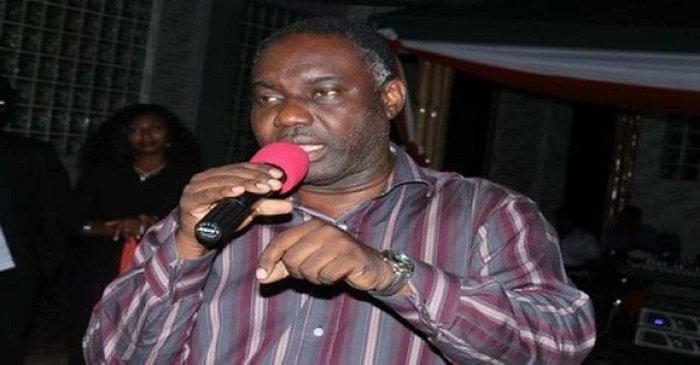
I have often been saddened by the condition of Sikaman musicians. Of course, some are not musicians. They are jokers who think anybody who can sing a hymn is a musician. And why wouldn’t they think so when people think that every man wearing a rasta hair is a reggae musician?
Well, these days, almost everybody is dreaming of becoming a musician, even some ministers and parliamentarians. And it is never too late for them to begin learning the solfas and composing songs like “If You Do Good You Do For Yourself,” after all, life begins at 60 these days. If you die three years later, that’s your luck.
For the jobless, becoming a musical star is an everyday dream. They think when you are a music maker, you automatically break alliance with poverty. They are often mistaken.
I know people who claim they are musicians but are always fasting not because they are devout moslems or are on a hunger strike, but because even one square meal a day is a perpetual wahala. And the only drink they can afford is the poor man’s holy whisky which has a thousand names including ‘Nyame Bekyere’.
Even most of the popular musicians we see in town claiming they are foreign-based stars are more of hustlers than musicians. When they tell you they are going on tour abroad, it is a careful way of saying they are going overseas to scrub the whiteman’s toilet or pick tomato or apples to save their neck from musical poverty.
When they are back to Sikaman, they appear quite flamboyant with chains hanging all over them. They change the few dollars they have scraped, spread it around and promptly get broke. Then they can organise another ‘tour’. In between tours, they struggle to release an album and that levels them up a bit on the financial balance.
It all points to the fact that the life of the average musician isn’t quite organised. He has no calendar, no programme and no concentration on the job. He has to wash plates, become a waiter, janitor and toilet scrubber while finding time to make music. No musician succeeds in life that way.
One musician I’ll always respect, who thinks deeper than the ordinary Sikaman musicians is Carlos Sakyi. He is not like the Kokoase guitar musicians who see the world just in terms of bitters, a willing girlfriend, constant supply of kokonte and jot.
Carlos, often loved for his percussive overtones in gospel music, and once a gospel-rock star, has studied the life of Sikaman musicians and has evolved a blue-print for a great improvement in their lives work, finances and comfort.
In short, he has simulated a Motown-style environment for musicians and his formula is working with accuracy with the five musicians he has started with. The blue-print is what has brought MEGASTAR into being. It was launched on September 15, 1995 at the National Theatre.
When it got launched, many probably thought Carlos was “too know or was dreaming more than he should and won’t think about himself. Anyhow, the MEGASTAR is now an institution musicians can look up to, a big phenomenon with lots of promise for struggling musicians.
Music business in the developed world is not the way we regard it cheaply here. A musician is never distracted by how his finances go; his contracts are entered, his engagements made, his interviews arranged, his personal security guaranteed.
Music is his business and that is where his mind is and his attention focuses. Other aspects of his life are programmed for him by his managers. They hire who has to light his cigarettes, massage him, drive his car and the one who will say “Good Luck” when he sneezes.
A bodyguard whose face is exactly like that of the devil is hired to scare off muggers, psychopaths and criminals in general. Sometimes his girls are organised for him.
So the only thing the musician does apart from sleeping and snoring is to concentrate on making music, and true to it, no one can succeed in any venture when he is distracted.
This is how the Michael Jacksons, Lionel Richies, Dolly Patons and Whitney Houstons have made it with dollars packed and over-flowing. They aren’t any better than Sikaman musicians. The only difference is that they know how to organise their lives.
I managed to corner Carlos Sakyi and asked him to tell me how MEGASTAR was doing. He is the Managing Director of Megastar Limited, a music company that has a board of directors and a chairman. Carlos Sakyi shares the proprietorship with a partner. Carlos himself was one great musician who played for a band that beat Eddy Grant on the charts.
“Megastar is in fact a concept born out of the idea that the future security of the Ghanaian musician which has always been in jeopardy can now be guaranteed. Artistes spend too much of their time doing things on their own, chasing money and not concentrating on music. So their full potential is never realised. Some are in fact producing at quarter-rate. That is why they aren’t making much headway,” he told me.
“Megastar is now giving them the chance of the lives. We handle the interviews of Megastar artiste, their press releases, costume, engagements and everything they hitherto used to do themselves. We get them exposed on M-Net and we have contacted BB to get on their programmes. We handle their finances pay them salaries and bonuses, so they only have to concentrate on music
“Most importantly,” he continued, “we do not make all the decisions. Management always meet with the musicians to take the decisions that affect them.”
But who are the Megastar musicians? One is the great Amakye Dede, a star from birth delivered onto the earth with music on his lips; he is the man who feeds hungry ears with musical salad and harmonic sausages. He is the recipient of many national awards.
Next is Naana Frimpong, a latter-day Carlos-groomed songbird with the voice of an angel. She sings to kill. Her beauty has charmed her audience and they stare and stare at her.
The sensational and fantalising Tagoe Sisters are the next. The twin music machine is one that has produced the cream, arguably the very best, of gospel music all these years. I hear they are inseparable; not even their better-halves can keep them apart. Are they Siamese? They dance, and when on stage, they move the crowd.
Then comes Reverend Yawson who is a known songwriter. He is imbued with the Holy Spirit, speaks in tongues and of course sings in tongues. He is God’s representative on the group.
What about my good friend and super-heavyweight, Jewel Ackah? He is a star figure. His appearance is awe-inspiring, his voice golden. A great delight to be-hold when at his best in stage-craftsmanship, he has beaten his contemporaries to it both on land and on sea.
They are the pioneers of the Motown idea. They are all releasing new albums this year. Let’s see how it all goes.
In recent years, the term “female rage” has gained significant traction, symbolising a collective shift in how women’s emotions are perceived and addressed.
This phenomenon is not merely a fleeting trend but a profound movement rooted in centuries of systemic injustices, personal betrayals, and societal expectations.
As women increasingly reclaim their anger, it is imperative to understand the multifaceted nature of female rage, its causes, and its implications for individuals and society at large.
The historical context of female anger
Historically, women’s emotions have been subject to dismissal, ridicule, and pathologisation. The term “hysteria,” originating from the Greek word for uterus, was used to describe women’s emotional states as irrational and uncontrollable.
This legacy of silencing and shaming has contributed to a culture where women’s anger is often suppressed or stigmatised.
However, with the rise of feminist movements, women are challenging these narratives, asserting their right to express anger and demand change.
The anatomy of female rage
Female rage is not a monolith; it is a complex and multifaceted emotion driven by various factors, including:
1. Societal expectations: The pressure to conform to traditional roles of passivity, politeness, and emotional labour.
2. Gender inequality and pay gaps: Frustration stemming from systemic discrimination in the workplace and beyond.
3. Sexual harassment and abuse: Trauma and anger resulting from pervasive violence and objectification.
4. Emotional labour and burnout: The unsustainable burden of managing emotions and responsibilities in personal and professional spheres.
5. Hormonal fluctuations: The impact of hormonal changes on emotional states, often overlooked or dismissed.
The power of anger: Reclaiming female rage
Far from being a destructive force, female rage can be a catalyst for change. When acknowledged and channelled constructively, anger can drive advocacy, policy reform, and resistance against inequality.
The #MeToo movement, women’s marches, and increased representation in politics are testaments to the power of collective female anger.
Addressing the Stigma: Towards a more inclusive dialogue
To fully harness the potential of female rage, society must address the stigma surrounding women’s anger. This involves:
1. Validation and recognition: Acknowledging women’s emotions as legitimate and worthy of attention.
2. Creating safe spaces: Providing platforms for women to express anger without fear of backlash.
3. Education and awareness: Challenging stereotypes and promoting understanding of women’s experiences.
4. Support systems: Offering resources and support for women dealing with trauma and systemic injustices.
Conclusion
The age of female rage is a moment of profound transformation, where women’s anger is no longer silenced but celebrated as a force for justice.
By understanding the roots of female rage and addressing the societal structures that fuel it, we can move towards a more equitable and compassionate world.
The journey is complex, but the destination-a society where women’s emotions are respected and their voices are heard is worth the struggle.
References:
[1] Chemudupati, P. (2022). _The Rage of Women: A Historical Perspective_.
[2] Traister, R. (2018). _Good and Mad:
By Robert Ekow Grimond-Thompson