News
Biotechnology scientists converge in Ghana to deliberate on genetically modified organisms


Scientists behind biotechnology have gathered in Ghana, Accra to deliberate on how genome editing and genetically modified organism technologies can be applied appropriately to benefit African farmers and the world at large.
Genome editing technology is a tool that enables genetic engineering where DNA is replaced, deleted or inserted in the genome of a living organism while a Genetically Modified Organism (GMO) is an animal, plant, or microbe whose DNA has been altered using genetic engineering techniques.
The International Symposium held on the theme: Increasing Access to New Tools, Technologies and Methods in Africa’s Agriculture on Friday among other issues discussed the future of biotech crops in Africa from the perspectives of scientists, government, officials and regulators.
Speaking at the conference, Dr Leena Tripathi, Eastern Africa Director of the International Institute of Tropical Agriculture and Leader of Biotechnology, said farmers at most times lose about 80 per cent of their crops to pests and other diseases leaving many in abject poverty.
In addition, he explained that due to the pests, farmers sometimes sprayed pesticides eight times in a season, pointing out that such constant spraying cost farmers a lot of money.
Dr Tripathi indicated that scientists had developed the pod borer-resistant (PBR) varieties to help fight pests that destroyed the crop at all stages of its development and was hopeful that regulators would work with them to help alleviate poverty among farmers and also ensure the country’s food security.
The Deputy Minister of Food and Agriculture, Yaw Frimpong Addo, lamented that agriculture and food production remained a major priority of the country however, successive governments had made relentless efforts to make investments, guided by policies and strategies to ensure sustainable agriculture.
Mr Addo noted that food remained indispensable for the survival of humans and that science had established that there was limited time beyond which mankind could not survive without food adding that “investment in agriculture, with support from education and health, will guarantee sustainable food production and nutrition for citizens globally.
“The government is not relenting in its efforts to transform agriculture as the sector is the driving force behind the economy, presenting the best opportunity for accelerated industrialisation, job creation and poverty reduction,” he underscored.
Professor Eric Yirenkyi Danquah, Founding Director, West Africa Centre for Crop Improvement, observed that smallholder farmers in Africa needed access to biotech crops more than farmers anywhere else in the world.
According to him, the time had come for African governments to use available data on biotech solutions to take decisions that would improve livelihoods and lift millions out of extreme hunger and poverty in Africa.
By Benedicta Gyimaah Folley


The Ghana High Commission in Abuja, Nigeria, is appealing to the public to help trace the relatives or next of kin of Apia Solomon, a Ghanaian national believed to be from Osu, Accra.
According to a public announcement by the High Commission, Mr. Solomon, born on March 6, 1960, in Accra, died on July 5, 2021, from cardiopulmonary failure.
He worked as a temporary civilian staff member at the National Defence College in Nigeria. His remains are currently being kept at the Nigerian Air Force Hospital morgue in Abuja, pending burial arrangements.
The High Commission says efforts to locate his relatives have so far been unsuccessful and is urging anyone with information about his family, friends or next of kin to come forward.
Anyone with relevant information is encouraged to contact the Ghana High Commission in Abuja.
By: Jacob Aggrey
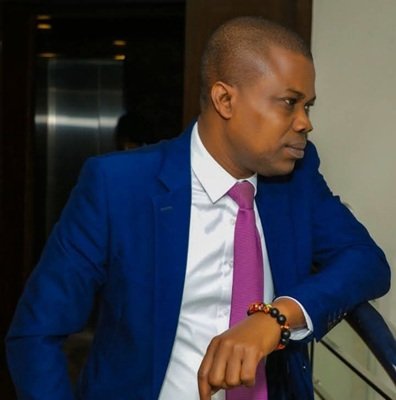
Security consultant Richard Kumadoe has blamed what he describes as flawed recruitment and incomplete background checks for some of the problems facing the Bureau of National Intelligence (BNI).
He has called on the leadership of the BNI to review the backgrounds of officers recruited during specific periods, particularly those who entered the agency under recent recruitment processes.
Speaking on the issue on TV3 yesterday, Mr Kumadoe alleged that some individuals were recruited into the intelligence agency without proper background checks and completed vetting.
“Certain categories of persons were dumped into the BNI, whose backgrounds were not checked, and whose vettings were not completed,” he stated.
He said some of the officers linked to the concerns appeared to have been recruited within the same period, making it necessary for the agency to examine the recruitment records and backgrounds of those who joined during that time.
Mr Kumadoe argued that the problems could be addressed by ensuring that recruitment procedures were properly followed and that all applicants underwent the required checks before being employed.
According to him, when the selection process is flawed, it can lead to problems within the institution.
He blamed the politicisation of security institutions, arguing that appointing people without the necessary intelligence experience and allowing political interests to influence recruitment could undermine their operations.
“When you have a selection procedure that was flawed because you politicised the place, brought in people to come and head the place when they have no business being there, they don’t know anything about being a BNI officer, they are not intelligence officers, and you flood the place with politicians and political artists, then you circumvent the standard procedure and you are going to have some of these problems,” he said.
Mr Kumadoe, however, defended the current leadership of the BNI, arguing that efforts to address longstanding problems within security institutions could bring such issues to light.
He said the leadership should be assessed in the context of the steps it is taking to improve the agency’s operations and uphold professional standards.
Drawing on his own experience in the intelligence field, he said the opportunity to serve under experienced officers had helped him develop the skills and integrity needed to contribute to national security.
By: Jacob Aggrey