Features
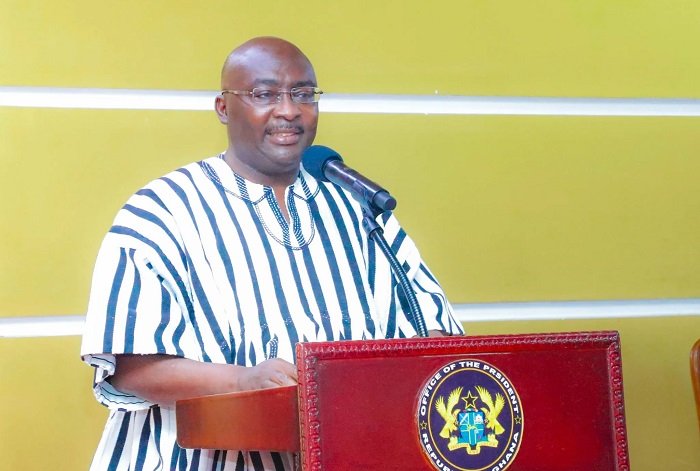
Bawumia and Ghana economy

- /home/u249204778/domains/spectator.com.gh/public_html/wp-content/plugins/mvp-social-buttons/mvp-social-buttons.php on line 27
https://spectator.com.gh/wp-content/uploads/2022/04/Dr.-Mahamudu-Bawumia-Pix.jpg&description=Bawumia and Ghana economy', 'pinterestShare', 'width=750,height=350'); return false;" title="Pin This Post">
- Share
- Tweet /home/u249204778/domains/spectator.com.gh/public_html/wp-content/plugins/mvp-social-buttons/mvp-social-buttons.php on line 72
https://spectator.com.gh/wp-content/uploads/2022/04/Dr.-Mahamudu-Bawumia-Pix.jpg&description=Bawumia and Ghana economy', 'pinterestShare', 'width=750,height=350'); return false;" title="Pin This Post">
Before the recent lecture on the economy of Ghana Dr Bawumia delivered, some people, including senior lecturers and professors, had expressed various views (positively and negatively) on the state of country’s economy.
Since the lecture given by the Vice President of the Republic, Dr. Mahamadu Bawumia, various opinions have been expressed on his presentation, some of them praising him for a good work done while others, as usual, saw nothing good about what he said or the issues discussed on that day.
PUBLIC REACTIONS
The reaction of the general public, however, showed that in spite of the difficulties the country faced, the Vice President and Head of Ghana’s economic team did well and dealt with all the relevant issues the country is facing.
He began by stating that he was going to deal with the state of the economy, pointing out that there were problems or difficulties but measures had been put in place to ensure that the economy of Ghana was cushioned soundly from collapse.
In talking about the state of the economy, Dr. Bawumia referred to the economic problems Ghana as a country faced prior to the swearing-in of President Akufo-Addo. He went on to explain that in spite of the difficulties, measures were in place to ensure reduction in inflation, elimination of a number of taxes, developing the economy along internally induced growth, among others.
ECONOMIC PROBLEMS
The economy of Ghana today faces a number of problems including rising prices of goods and services. The rising prices have come about because of the COVID-19 pandemic which has affected every part of the world. Indeed, goods cannot be easily transported from different parts of the world to other places where they are needed thereby bringing about shortages in some cases.
Generally, the supply of goods and services have been in short supply but even in situations where such goods and services are not in short supply, it can be seen that the cost of transportation alone has shot up tremendously.
COST PUSH AND DEMAMD PULL INFLATION
This high cost of transportation accounts for rising prices, that is, cost push inflation. In cost push inflation, rising prices of transportation when added to the prices of goods and services further push up prices.
Similarly, in situations where the supply of goods and services are less than expected or fall below general demand, what happens is that demand exceeds supply and pushes up prices. This comes under what is known as “demand pull inflation.”
Both demand pull and cost push inflation are responsible for the rising prices in the country. From this observation, one can say that the unfavourable economic situation in the country, in the form of rising prices, is not the making of the Akufo-Addo administration. The situation has come about because of factors beyond the reach of all Ghanaians.
All countries in the world are going through difficult economic times so this is the period for all analysts to be objective and fair in their discussion of issues in Ghana today. We should be very grateful that the economic management style of the government has not thrown things overboard but rather made it possible for the people of Ghana to go about their normal duties, even in the midst of some difficulties.
COVID-19 PANDEMIC
Until the world, including Ghana, was hit by the COVID-19 pandemic, things were moving on smoothly in Ghana. Inflation, which was initially at 15.4 per cent or thereabout was reduced to about seven per cent. Similarly, agricultural output also increased tremendously from negative levels to appreciable levels even though there was still room for improvement.
With the arrival of COVID-19,everything was thrown overboard and countries that did not have resilient economies fell onto great trouble and experienced food shortages. Fortunately, due to Ghana’s laudable programmes such as Planting for Food and Jobs (PFJs), the country became self-sufficient and even exported food items to neighbouring countries like Burkina Faso, Togo, Benin and Côte d’ivoire among other countries. Had it not been for this programme, things would’ve been worse than we see today.
We have food stuffs all over the country but there is room for improvement in the sense that we need to construct more roads to link up with communities that are producing food for the country. Without this, not much can be achieved in terms of food production. A network of good roads is, therefore, needed in all parts of the country to enhance agricultural production.
At the same time, we need to regulate the supply and export of our food stuffs to neighbouring countries so that Ghanaians will also not run out of food supplies. Fortunately, the Government of Ghana had realised this and banned the export of maize and soya to neighbouring countries until the situation improves in Ghana. It is equally important to note that the economic problems experienced in the world today have come about because of the conflict between Russia and Ukraine. Many finished products come from that part of the world. The products are fertilisers and other important products needed in the agricultural sector.
ADVERSE CONFLICT
The conflict has, therefore, contributed adversely to other parts of the world including Ghana.
We are happy that the economy of Ghana is able to support itself today and is far from collapse.
With the pandemic moving away, it is strongly believed that all the economic programmes and measures put in place would begin to yield results needed and make the economy a strong one. This means that there will be reduced inflation and more income can be generated from various sectors of the economy to finance its expenditure. Similarly, we can also reduce the rate of exchange with other foreign currencies to make the economy a strong one. Individuals should have confidence in the economy of Ghana and believe in what was presented by Dr. Bawumia
From all indications, the measures taken by Ghana are good and that is why the developed countries of the world have expressed confidence in the economy of Ghana.
DIGITALISATION
Digitalisation is good if for nothing at all, it helps to eradicate corruption and make it easy for goods and services to be accessed without difficulty. For this reason, digitisation coupled with the relevant economic policies will go a long way to enhance rapid growth in all parts of the country so that the ultimate result will be improved upon in the interest of everyone.
Ghana is a great nation so we all need to work hard and support the government to make it possible for economic activities to flourish and improve upon the welfare of everyone in this noble country.
Contact email/whatsApp address of author:
Pradmat2013@gmail.com (0553318911)
By Dr Kofi Amponsah-Bediako


There is a culture that permeates all aspects of leadership in the advanced countries which I believe has contributed to the success in all aspects of their national lives. Citizens strive to excel so that they will not find themselves in a situation where they would have failed, to necessitate a decision to resign.
Countries where failure is frowned upon, it pushes the citizens to strive for success. In our part of the world, failure and mediocrity has become an accepted norm and therefore, there is no shame in failing in a particular position of leadership.
A head of an organisation mismanages the place and he does not see the need for him to resign. The appointing authority does not also see the need to sack him and so the merry go round continues.
It becomes friends and family as usual and if care is not taken, the rest of the world will leave us far, far behind.
The practice of resignation in parts of the world for failure in some parts of the world has to be institutionalised in our country too. It encourages the principle of accountability which is good for any organisation, sector of an economy or a country.
It promotes good governance, a necessary ingredient in the growth of the economy of any country.
When this practice becomes a culture, every individual, privileged to hold a position of trust, gives his or her full attention to the job assigned him or her, to ensure that objectives are achieved.
This trickles down to every individual down the chain of command and there are no rooms for errors.
That is how efficient systems are built over time and this is the difference between advanced nations and third world countries.
Where systems are designed such that people take responsibility for things that go wrong under their supervision or ultimate responsibility, there is evidence of development.
There are a few people that I admire in Ghana as far as this culture of resignation based on principled stance. One of them is the late Mrs Emma Mitchell. She was a cabinet member but chose to resign after the confrontation between late President Jerry Rawlings and late Vice President Kow Akaah.
She was not prepared to be part of a cabinet which was lying to the general public that Rawlings did not assault Akaah.
She was of the conviction that telling the truth is more honourable than telling lies and that if she was bound by confidentiality oaths to tell a lie, then she would resign and she did exactly that.
That is how we build a culture of truth and accountability. We have people in positions who have not lived up to expectation but are still holding on to their positions not prepared to let go of it.
This is a clear case of display of selfishness, trying to be a Boss instead of a Servant to serve the people, which leadership is all about.
The ineffectiveness of some leaders, often result in waste of resources which could have been channeled to other sectors of the economy which could have been more productive. A culture of voluntary resignation must be advocated for by all stakeholders, especially the CSOs, traditional leaders and the clergy.
This is the only way the needed growth in every sector of our national life would manifest.
Presidents, Prime Ministers, heads of reputable organisations have voluntarily resigned by taking ultimate responsibility and it is about time, we started seeing it manifest in our country.
The people in charge of our sports especially our soccer, can initiate this long desired culture and resign in view of the embarrassment witnessed from the defeat of the Black Stars by Gambia. God bless.
BY LAUD KISS-MENSAH
SKIP THE QUEUE, TAP THE NEWS
You can now read the Ghanaian Times and The Spectator newspapers from the comfort of your device via TimesNewsPlus.
Join our WhatsApp Channel: https://whatsapp.com/channel/0029VbBElzjInlqHhl1aTU27
THE QUR’AN FORBIDS RELIGIOUS PROVOCATION
There is a remarkable verse in the Qur’an which every Muslim preacher should memorise.
Allah says:
“And do not insult those they invoke besides Allah, lest they insult Allah in hostility without knowledge.” (Qur’an 6:108).
Think about this carefully.
Allah knows that the unbelievers worship false gods.
Yet Allah tells Muslims: Do not insult their objects of worship.
Why?
Because your speech may provoke an even greater offence.
This establishes a profound principle:
A Muslim must not fight religious provocation with religious provocation.
If someone insults what we hold sacred, we do not respond by insulting what they hold sacred.
If someone attacks Islam, we defend Islam with knowledge.
If someone misrepresents Muhammad (pbuh), we explain who is Muhammad to him.
If someone lies about Islam, we answer with truth and knowledge.
We do not allow another person’s bad behaviour to dictate our own morality.
LOOK AT MUHAMMAD (PBUH) — HE WAS INSULTED BEFORE WE WERE
Servant of Allah,
Sometimes we speak as though the Prophet (pbuh) lived in a world where everyone respected him.
No.
He was mocked and insulted. Quran 37:36, Quran 15:6
He was called a liar, magician, and a mad man. Quran 51:52, Quran 17:47
He was ridiculed. Quran 6:10
His followers were tortured, and some were killed. Quran 85:8-10
He himself was persecuted, leading to his migration to Madina.
Yet he remained the Messenger of Allah.
Allah said:
“Indeed, we know that your heart is distressed by what they say.” (Qur’an 15:97)
Allah acknowledged the Prophet’s pain.
Islam does not say that insults do not hurt. They hurt.
But the question is: What do you do with the pain?
THE DAY OF TA’IF: WHEN THE PROPHET (PBUH) COULD HAVE CHOSEN
REVENGE
One of the most powerful examples is the journey of the Prophet (pbuh) to Ta’if.
He went seeking support for his message.
Instead, the people rejected him and incited their children and others against him.
He was chased.
He was insulted.
He was struck with stones until his feet bled.
He was physically and emotionally exhausted.
Then the Angel of the Mountains came to him.
The two angels offered to crush the people of Ta’if between the mountains.
The Prophet (pbuh) could have said: “Do it.”
But he did not.
Instead, he hoped that Allah would bring from their descendants people who would worship Him.
This account is recorded in the authentic hadith literature, including Sahih Muslim (Muslim, 1795).
What a lesson!
The Prophet (pbuh) had suffered injustice.
But he did not turn his pain into indiscriminate revenge.
He saw beyond the offender.
He saw the possibility of tomorrow.
And this is one of the greatest characteristics of prophetic leadership:
The Prophet (pbuh) did not merely ask, “What punishment does this person deserve?”
He also asked, in effect: “What can this person become?”
THE PROPHET IN MADINAH: LEADER OF A DIVERSE SOCIETY
When Muhammad (pbuh) migrated to Madinah, he did not enter an empty city.
Madinah contained different communities, including Muslims and Jews, and there were also Christians who interacted with the Muslim community.
The Prophet became the political and communal leader of Madinah.
The Sahifah (A Covenant) of Madinah, preserved in the early sīrah (Prophet’s biography) tradition, established arrangements concerning mutual obligations, security, justice and relations among the communities of the city.
This is important:
The Prophet did not build Madinah by teaching Muslims to hate everyone who was not Muslim.
He built a society governed by covenant, responsibility and justice.
Allah says:
“Allah does not forbid you from being kind and just to those who have neither fought you because of your religion nor driven you from your homes. Indeed, Allah loves those who act justly.” (Qur’an 60:8)
This is not weakness.
This is Islam.
THE PROPHET DEALT WITH JEWS IN MADINAH
‘A’ishah (Wife of the Prophet) narrated that the Prophet (pbuh) bought food from a Jewish man on credit and gave him his iron armour as collateral.
“The Prophet purchased food from a Jew on credit and mortgaged his iron armour to him.” (Sahih al-Bukhari, 2068)
Think about it.
This was Muhammad.
The Messenger of Allah.
Yet he conducted lawful commercial dealings with a Jewish citizen.
He did not say: “He is not a Muslim, therefore I cannot deal with him.”
No.
Islam gave him a relationship governed by justice and trust.
Jabir رضيهللاعنه narrated:
“A funeral procession passed before us and the Prophet (pbuh) stood up, and we stood with him. We said, ‘O Messenger of Allah, it is the funeral of a Jew.’ He said: ‘When you see a funeral procession, stand.’” (Sahih al-Bukhari, 1311)
Another narration records his response: “Is it not a soul?” (Sahih al-Bukhari, 1312–1313)
What kind of heart did Muhammad (pbuh) possess?
A heart that recognised human dignity even in death.
THE PROPHET AND THE CHRISTIANS OF NAJRAN
The Prophet also received the Christian delegation of Najran.
They disagreed with him theologically.
Yet when they requested a trustworthy person, he did not choose someone because of hatred.
He selected Abu ‘Ubaydah ibn al-Jarrah.
The Prophet said:
“I shall send with you a man who is truly trustworthy.”
He then appointed Abu ‘Ubaydah.
This is authentically reported in Sahih al-Bukhari 4380–4381.
Notice something profound:
The Prophet could disagree with people without becoming dishonest toward them.
That is the standard we need today.
The author is the chief Imam of Katamanso Municipal and Certified Counsellor and Governance Expert.