Sports
Another World Cup failure unacceptable

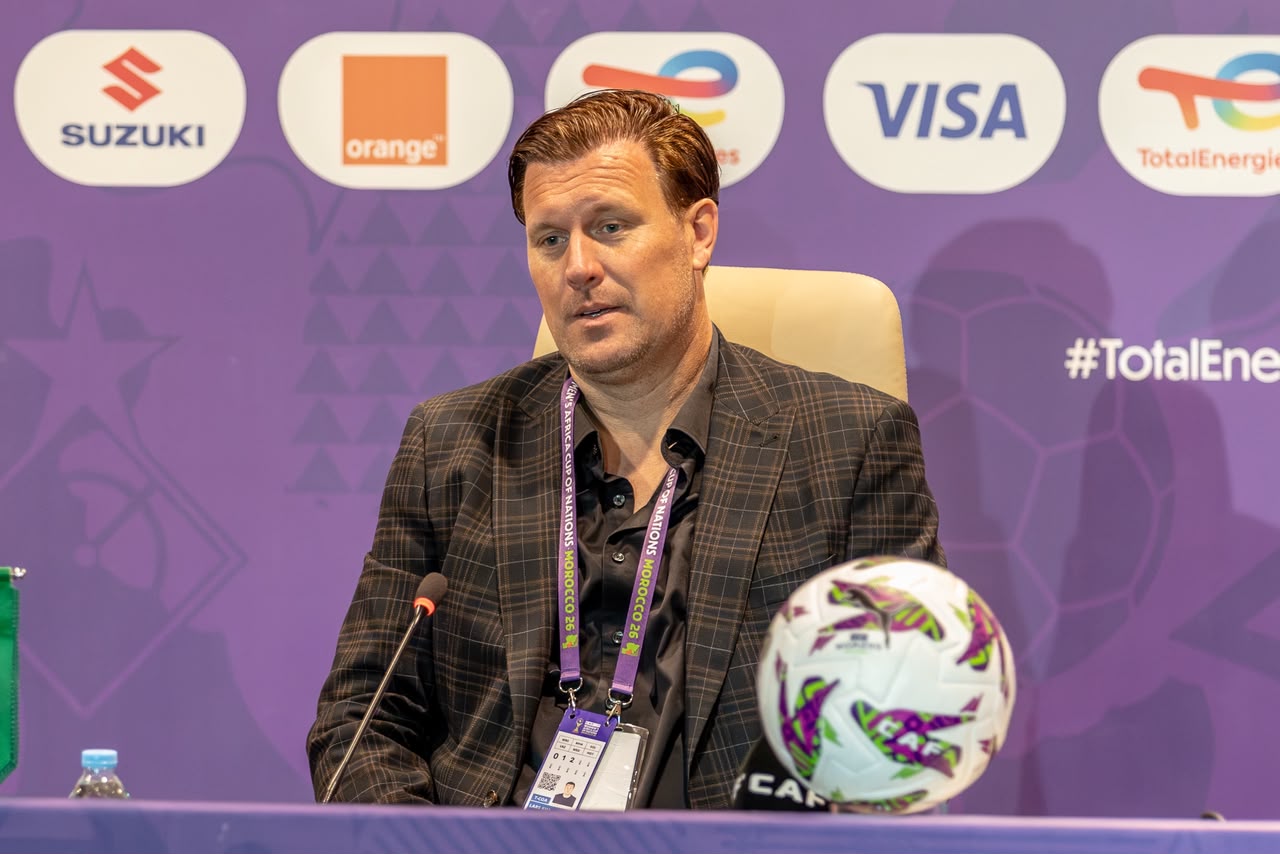
In another disappointing fashion, keen followers of the Black Queens, Ghana’s senior female national team, watched the quest for a FIFA World Cup return disappeared into thin air.
A 2-0 match day one victory over Cape Verde got confidence soaring. Hit woman Doris Boaduwaa scored a brilliant goal to snatch the leader before Cape Verde conceded an own goal midway through the second half to secure the feat.
The Queens were, however, pegged back by a more purposeful Cameroon side that defeated the Ghanaians in their second match.
That left them with a difficult mountain in Mali to climb. It was a make-or-break affair since a slip could prematurely end the World Cup campaign.
Although the team never played like a side needing the points to survive, they were able to share the spoils to progress to the quarter final stage with a date against Malawi.
Malawi was not a force at the continental level until the last few years when the rise of the Chawinga sisters – Tabitha and Temwa, sparked a fast period of growth of women football in the country.
So despite the Black Queens unconvincing displays, they were massive favourites in that tie.
On the match day, they proved the bookmakers right, establishing a pattern that saw them dominate the exchanges and deservingly got the leader through Chantelle Boye-Hlorkah.
But that dominance was short-lived by a group of young but physical Malawian girls inspired by the Chawingas – and managed to get an equaliser via a deflection from a Temwa strike.
Rose Smith Kadzere grabbed the winner in the 79th minute after a period Black Queens coach, Kim Lars Björkegren, felt his side lost control of the game.
As of the time of writing this piece, the Malawians were not just celebrating their semifinal win over Algeria which grants them the chance to vie for the ultimate continental trophy but a maiden FIFA World Cup appearance.
Ghana’s hopes is now pinned on a long and tortuous play-off that saw them engage Cote d’Ivoire while Nigeria battles South Africa in a similar clash.
But from where I stand, the earlier we forget about the so-called African and inter-continental play-offs that offers a more difficult route to the FIFA women Mundial, the better it would be.
May be, honouring it is only for academic purpose and also, to avoid a sanction.
What this means is that Ghana, previously a superpower in the female game in Africa; second only to Nigeria-perennial winners of the Women African Cup of Nations (WAFCON), would have to wait for another four years to launch another campaign.
This is a very poignant picture every football loving fan and the Ghana Football Association (GFA) must be worried about.
Had this been their male counterparts, the Black Stars, every discussion would have centred on the team, its coaches and the GFA.
By now, debates would be dissecting which players played poorly and should not have been featured; the competence of the coaches and which roles some GFA officials played to affect the team negatively.
But maybe, because of our love and respect for our women, we have in a way gagged ourselves from analysing the Black Queens and constructively criticize the team.
In this era where equal rights for both men and women have been propounded, leading to calls for equal pay to players, the Black Queens must face the same backlash as their male counterparts in periods of failures like this.
Gone were the days where the Black Queens were noted for scoring freely in their games. Anytime they win a game by a single of a two-goal margin, then it is assumed something went wrong.
But currently, the team has moved so far from that reality in the face of the emerging challengers like South Africa, Cote d’Ivoire, Cameroon, Mali, Equatorial Guinea, Morocco and others.
The reason for this fast decline must be identified and addressed before the start of a new WAFCON and World Cup cycles.
A lot has been told about the player selection which has resulted in some half-baked players getting the chance to play ahead of others who were mysteriously dropped from the Nora Huptle side.
Although the team is not as poor as others want it to been seen, it appears something is fundamentally wrong with it.
This was clearly exposed in the game against Malawi as the team lacked ideas, especially in the attacking area; resorting to long balls that never found the targets.
That reduced the work of the striker, Doris Boaduwaa to chasing those balls and wasting her energy on slugging it out with the stronger and physically endowed Malawian girls.
How the coach spoke about this in his post-match conference but was never seen conjecturing to the players on any of those circumstances when the match was ongoing left many in awe.
Secondly, player positioning in his setup also appears to be something he must take a second look at. Clearly, the freedom Boye-Hlorkah used to enjoy in the middle of the park appears to have been curtailed.
Hovering at the left and right sides of attack has reduced her creative abilities, reflecting the lack of passes to Boaduwaa upfront.
Björkegren has been quite lucky. He has enjoyed the favour and goodwill of Ghanaians. The usual sack him campaign has not been heard. Quickly, he must be seen to be getting his acts right before fans lose their patience with him and the team.
Like he stated, watching the Black Queens break down after the exit was his most painful experience in his 20-year old career as a coach. Within that same period, the Black Queens have failed in their bid to make a World Cup appearance.
That is something every stakeholder must be concerned about.
By Andrew Nortey

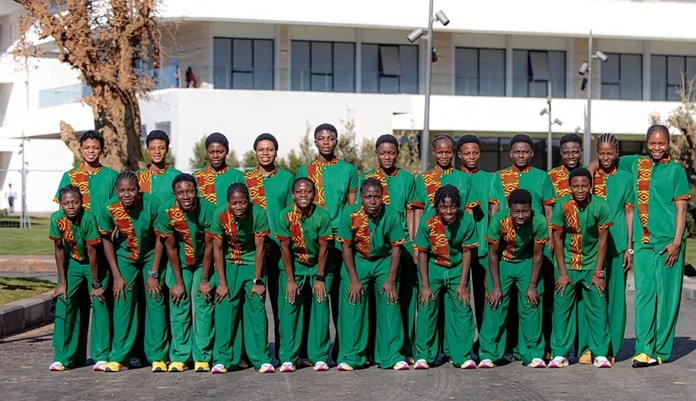
The national U-17 female team, the Black Maidens, have arrived in Rabat from their pre-camp base in Casablanca to begin their campaign at the 2026 FIFA U-17 Women’s World Cup.
The team will open their Group C fixtures against Norway on Sunday, October 18, at the Mohammed VI Football Complex. They will then face Brazil on Thursday, October 22, before wrapping up the group stage against Canada on Saturday, October 24.
During their two-week training camp in Casablanca, the technical team tested the squad’s readiness with two international friendlies against China and Kenya.
The Black Maidens are returning to the global showpiece after missing the last edition, aiming to build on a proud record that includes a bronze medal in 2012 and three quarter-final appearances.
The team is expected to hold its first training session in Rabat on Wednesday as it puts finishing touches to preparations for the opener against Norway.
By Edem Mensah-Tsotorme
IN modern football, the final whistle doesn’t signal the end of the show; it signals the intermission.
The Top five European Leagues (Premier League, La Liga, Bundesliga, Serie A, and Ligue 1) have mastered a brutal truth of the digital age: you don’t just sell the match; you sell the marathon.
By weaponising transfer window tension, season reviews, and microscopic highlight reels, they’ve turned 90 minutes of sport into a 24/7/365 content vortex.
Meanwhile, back home, the Ghana Premier League (GPL) is haemorrhaging relevance not because the talent isn’t there but because the storytelling is dead.
The Football Association’s apathy is only rivalled by its hypocrisy.
The European Blueprint: Selling the ‘Appetite’
Why do fans tune into a random mid-table La Liga clash on a Friday night? Because they’ve been primed. Across the summer, broadcasters and clubs drip-feed ‘transfer sagas’ like high-stakes soap operas.
Will the star leave? Who is the mystery medical? This tension creates a parasocial investment that transcends the pitch.
Paired with this are season-review documentaries and hyper-curated game highlights tailored for TikTok, Instagram, and YouTube. These aren’t just goal clips; they are tactical breakdowns, sideline theatrics, and VAR controversies packaged into digestible and emotional bites.
This strategy has inflated broadcasting rights to astronomical sums (the Premier League’s recent domestic deal hit £6.7 billion).
They know that if you feed the audience year-round, they will binge-watch when it matters.
The GPL Vacuum: No Sponsor, No Story
Now, overlay this blueprint onto the Ghana Premier League. It is a stark, barren contrast.
The league is poorly run, lacking a headline sponsor to give it financial muscle or marketing prestige. Without that corporate backing, the media machine grinds to a halt.
The transfer market, which should be the peak of offseason intrigue, is a ghost town. We hear about signings, but the transfer fee is universally undisclosed.” We only get the contract length.
This kills the narrative. In Europe, a €100 million move generates weeks of debate; in Ghana, a move generates a one-line social media post, devoid of gravity. Fans cannot gauge ambition, nor can they measure a club’s financial muscle.
Most damningly, there are no reviews from the broadcasting rights holders. No glossy season-compilation DVDs. No weekly magazine shows dissecting past campaigns to build hype for the next.
The Broadcasting Right Holders (BRHs) treat the GPL as an obligation to air live, not as an IP to monetize through content. The league goes dormant the moment the trophy is lifted.
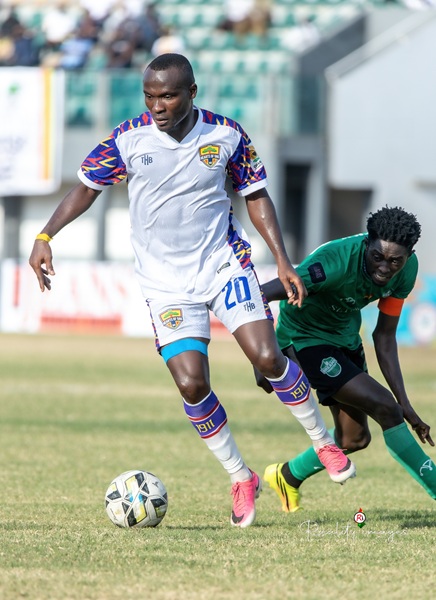
And the FA? They seem unconcerned. There is no strategic blue • A scene from the Ghana Premier League print to pump these ‘stuffs’ into the digital ecosystem. They treat the league’s media output like an afterthought, ignoring that a lack of online noise equals a lack of bums on seats.
The Black Stars Paradox: The Hypocrisy of Production
Here is the crushing irony that exposes the FA’s priorities. When the Black Stars assemble for a World Cup qualifier or an AFCON match, the narrative flips overnight.
Suddenly, the budget for proper camera operators and videographers appears from thin air. We get cinematic drone shots, multi-angle slow-motion replays, tunnel cams, and emotional post-match interviews.
Every moment, every tackle, every save, every passionate fan in the stands is captured in vivid, broadcast-ready quality. The national team gets the full ‘European treatment.’
This reveals a devastating double standard. The FA treats the Black Stars as the sole marketable asset, forgetting that the GPL is the engine room that produces these stars.
By diverting all production value to the national team while starving the domestic league of visual prestige, they are cannibalizing their own foundation.
The Verdict
You cannot build a football culture on national team fixtures alone.
Europe thrives because they understand that content is the currency of fandom.
Until the Ghana FA secures a headline sponsor, enforces transparent transfer disclosures (to fuel debate), and mandates that broadcasting partners produce engaging season reviews and highlight packages, the GPL will remain a hidden gem rather than a sparkling crown.
The players are there. The passion is there. But if the FA continues to save its best camera angles for the Black Stars while leaving the Premier League in the dark, they aren’t just failing the clubs; they are starving the very appetite they desperately need to feed
By Leslie Agyemang