Editorial
Add other regions to the training for “pre-hospital emergency care”

- /home/u249204778/domains/spectator.com.gh/public_html/wp-content/plugins/mvp-social-buttons/mvp-social-buttons.php on line 27
Warning: Trying to access array offset on false in /home/u249204778/domains/spectator.com.gh/public_html/wp-content/plugins/mvp-social-buttons/mvp-social-buttons.php on line 27
&description=Add other regions to the training for “pre-hospital emergency care”', 'pinterestShare', 'width=750,height=350'); return false;" title="Pin This Post">
- Share
- Tweet /home/u249204778/domains/spectator.com.gh/public_html/wp-content/plugins/mvp-social-buttons/mvp-social-buttons.php on line 72
Warning: Trying to access array offset on false in /home/u249204778/domains/spectator.com.gh/public_html/wp-content/plugins/mvp-social-buttons/mvp-social-buttons.php on line 72
&description=Add other regions to the training for “pre-hospital emergency care”', 'pinterestShare', 'width=750,height=350'); return false;" title="Pin This Post">
Pre-hospital emergency care is essential for enhancing the health of patients with both acute and chronic illnesses, as well as in the event of an emergency accident.
Therefore, enabling medical staff to respond quickly to patients in urgent situations can help save lives before they are sent to the hospital for additional care.
Pre-hospital care refers to situations where the sick, injured, or critically ill patient receives first aid before being transported to a medical facility.
Sometimes the situation is so serious that quick action is required to save the injured person’s life before even an ambulance arrives, since any delay will have an adverse effect on the patient.
It is heartwarming that a Non-Governmental Organisation (NGO), Elijeko Foundation, has organised a training workshop on pre-hospital emergency care and cardiovascular diseases in the Ashanti Region in partnership with the National Ambulance Service (NAS) to assist healthcare professionals in managing emergencies like cardiac arrest before the victim is taken to the hospital.
The Foundation’s founder, Mr. Andrews Nyantakyi, explained that the programme was set up to save lives that were frequently lost due to cardiac arrest because bystanders were unable to administer life-saving resuscitation in a timely manner.
“We hope to use this programme to create a platform to promote direct community engagement and equip Ghanaians with the knowledge of what, when and how to respond to emergencies,” he explained.
The Spectator applauds the NGO’s initiative and hopes that the training would be made available to the general public and other regions of Ghana, to better prepare people to manage emergency situations and save lives.
This is due to the fact that families are frequently so bewildered during emergencies that they are unable to control the situation in a way that would save a life or instantly consider which hospital to transport the ill person to.
The problem is made worse when there isn’t enough transportation to take a patient to the hospital right away.
People end up dying as a result of this, which could have been prevented if a home cure for first aid had been used.
In an emergency, whether at home or in a public setting, one must act immediately to stabilise a patient who is in critical condition.
The majority of the time, a life has already been lost by the time the patient is taken to the hospital since a medical professional may not have arrived in time to provide first aid.
The Spectator calls on the government to intervene by giving the necessary resources, particularly money, to support the work of the NAS and the NGO to extend the training to other healthcare organisations and even private citizens.
We also hope that the government will heed the plea of Dr Joseph Bonney, an Emergency Medicine Specialist at the Komfo Anokye Teaching Hospital at Kumasi in the Ashanti Region to “enact a law for every public facility to have a first aid box and automated external defibrillator.”
Let us work to lead healthy lifestyles by keeping an eye on our diets, getting regular exercise, being socially engaged, visiting a doctor for routine exams, taking our medications as prescribed, getting enough sleep, avoiding excessive alcohol consumption, and quitting smoking.
Additionally, you should get medical help right away if you see any symptoms of a chronic disease to prevent any emergencies.


Dear Editor,
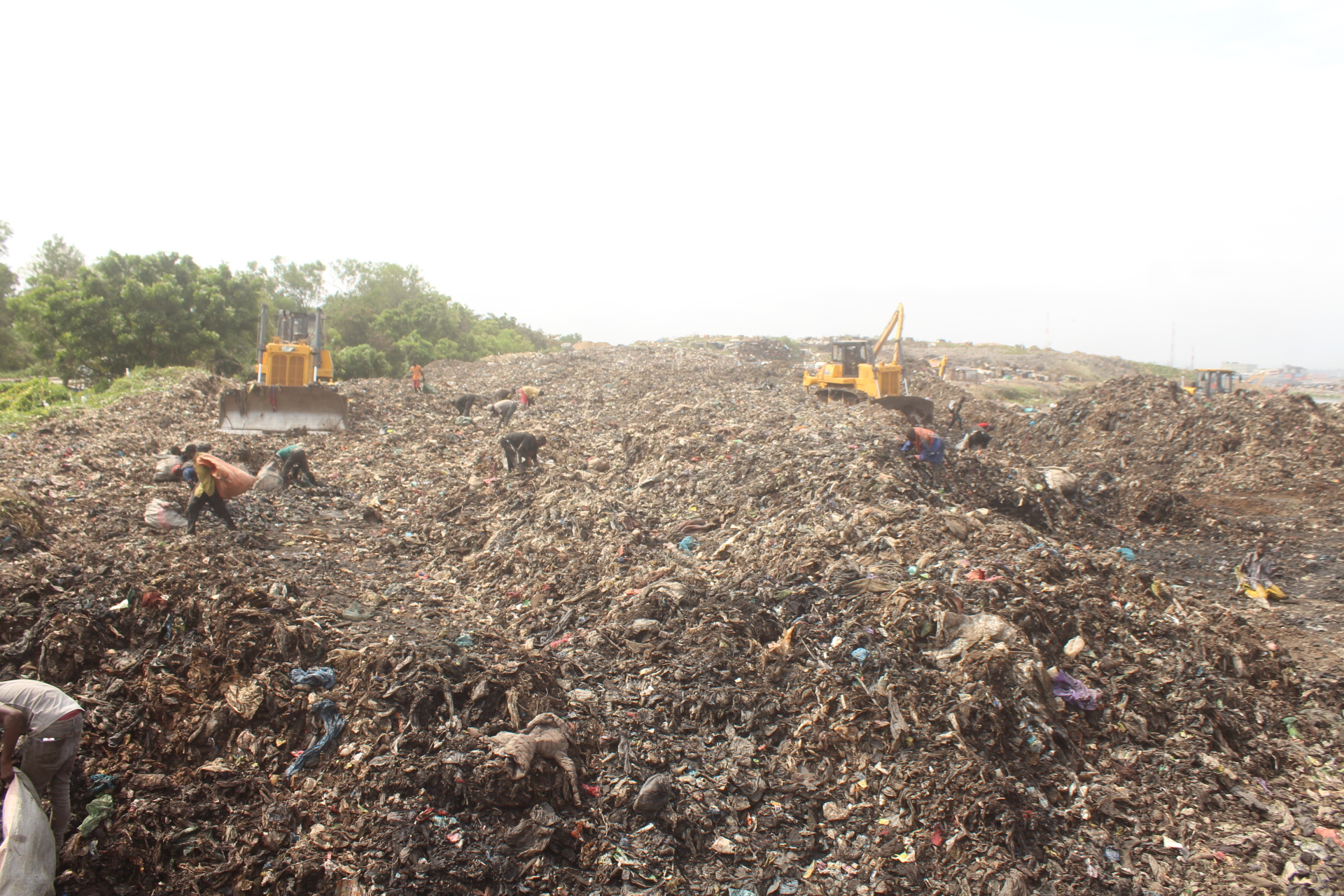
I write to commend government effort to clear the filth around the Agbogbloshie area of the capital to a new location for recycling.
As a Ghanaian, I feel very bad when I drive along the Kaneshie-Korle bu stretch (Mortuary road) and see the heap of waste piled at the area for many years.
It raises serious concerns about our ability to deal with the waste issue because of the volumes of waste generated every single day.
My happiness about the removal of the waste is due to its proximity to the Agbogbloshie market which serves people from all walks of life.
With that closeness, it could be a breeding ground for all manner of diseases when flies from this rubbish site feeds on the same foodstuff people would buy.
Much as we are happy about the removal of the waste, we must also be equally concerned about the new place which I’m sure may be closer to a community.
It is my prayer that a chunk of the waste would be recycled as we have been told. If there are others that cannot be recycled, there must be a way to handle it so that it would not become another problem for the nearby communities.
Government under President Mahama has done extremely well with this move. The clearance and subsequent of the area would surely give that area of the capital a new look.
Osei Mark,
Korle-Bu
The Ghana Health Service (GHS) has revealed that 53,415 adolescent pregnancies were reported in health facilities across the country between January and July 2026 alone. This is a startling revelation that should make our country uneasy.
The most distressing of these cases as carried in last week’s edition of The Spectator involved 1,501 young girls between the ages of 10 and 14.
Let’s refer to something as it actually is. A youngster who is 10 or 14 years old cannot lawfully give their consent for sexual conduct.
These 1,501 incidents are more than just “teenage pregnancy” numbers; they are documented instances of sexual exploitation, rape, and a disastrous breakdown of our social safety nets.
The foundation of our future human capital is under jeopardy due to the current national crises. Deep regional disparities are highlighted by the statistics provided by GHS Adolescent Health and Development Programme Manager Ms. Sharifa Mohammed.
The adolescent birth rate in the Savanna Region is higher than the norm for sub-Saharan Africa, at 117.5 per 1,000 young women.
That number soars to an astounding 230 births per 1,000 girls between the ages of 18 and 19 in the Bole District. In just five months, the Upper East Region recorded nearly 2,400 teenage pregnancies, with 520 of those cases occurring in Bongo District alone.
These are more than just figures; they stand for young girls whose educational paths have been abruptly cut off, ensnared in a cycle of vulnerability and poverty. The research demonstrates that this dilemma is most prevalent in areas with the fewest economic prospects, limited access to information, and inadequate social infrastructure.
The GHS correctly notes that the best form of contraception is education. The likelihood of pregnancy is considerably lower for girls who continue their formal education. Although the GHS should be commended for its “safety net” efforts since 2017, which include pathways back to the classroom, psychosocial support, and maternal care, the situation on the ground is still unfavourable.
Practical issues like unfriendly classroom environments and a lack of physical accommodations for pregnant students or nursing young mothers frequently force these girls out permanently, as Ms. Mohammed acknowledged.
Our re-entry plans are just lovely on paper if our schools are unable to meet the needs of these girls.
It is a positive step that MSI Reproductive Choices Ghana (MSIG) and UNFPA organised a national multi-sectoral conversation with the theme “Strengthening multi-sectoral action and accountability to prevent teenage pregnancy and protect adolescent futures in Ghana.”
Ghana does not, however, lack structures, policies, or dialogs. Targeted, well-funded implementation is what we lack. We need to change our strategy in three critical areas if we are to genuinely protect our teenagers.
International partners and stakeholders must cease dispersing resources unevenly around the nation. High-burden areas like the districts of Bole and Bongo need to be forcefully saturated with financial support, reproductive health education, and economic assistance.
The voices and needs of young people must be at the centre of our efforts, as Clara Nyarkoah Anim of MSIG so eloquently put it. Accra bureaucrats are unable to provide solutions for a young girl living in a rural village unless they are aware of her particular challenges and day-to-day struggles.
The practice of resolving child sexual abuse allegations at the local level needs to be dismantled. Prosecuting those who take advantage of young, defenseless girls is a necessary part of true responsibility.
If we watch helplessly while tens of thousands of our future female leaders, educators, and inventors have their childhoods cut short, we will not be able to create a thriving “Ghana Beyond Aid”
The Spectator strongly believes that it is time to turn our national outrage into a well-funded, fiercely protective barrier around every adolescent girl in Ghana.