News
Action Aid Ghana organises training for Headteachers, PTA, others in Sissala East

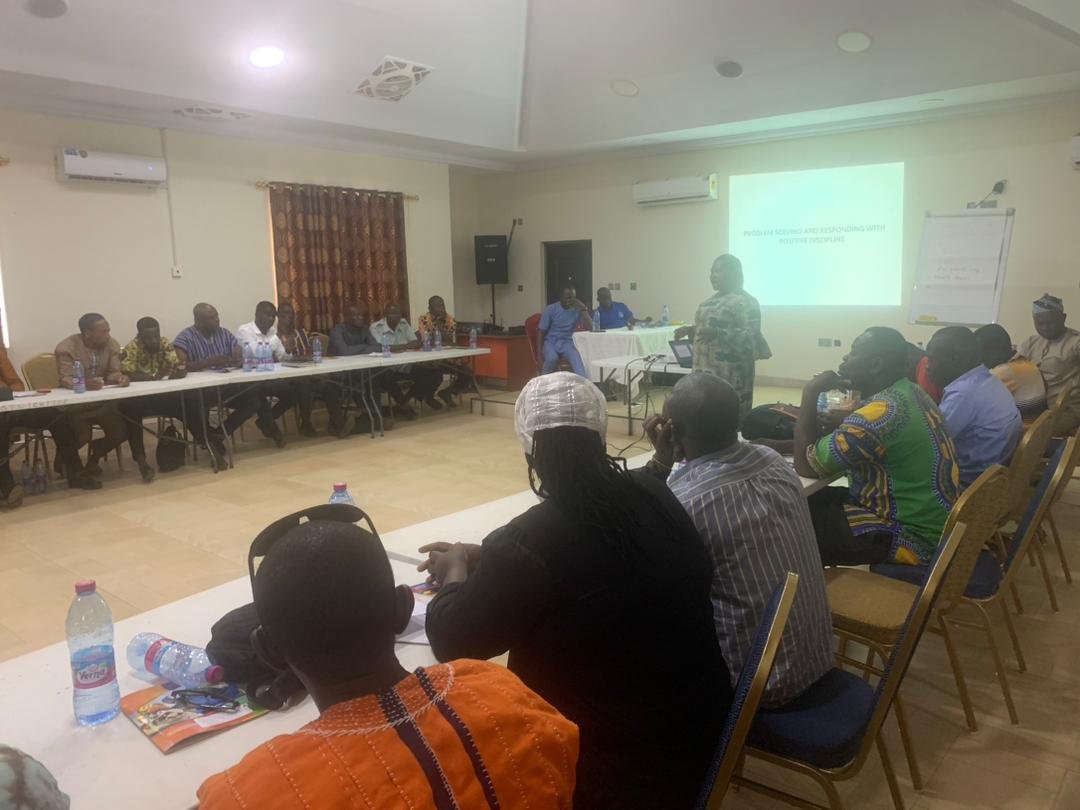
Action Aid Ghana (AAG), a non-governmental organization has organized a 2-day training for Headteachers of Basic Schools, leaders of the Parent-Teacher Association, circuit supervisors, and officers at the education directorate in the Sissala East Municipality of the Upper West Region to equip them with knowledge on alternative correctional measures to pupils’ misconduct at the Basic School level.
The training which covered 110 participants was aimed at equipping them with knowledge on “Positive Discipline” and making them allies for the campaign against corporal punishment in schools and at home.
Addressing participants at the training, the Acting Regional Programmes Manager of the AAG, Madam Abiba Nibaradun said corporal punishment continued to affect students’ learning and stressed that it was about time teachers adopted the positive discipline approach to correcting students’ misbehaviour as the concept promoted thinking and problem-solving skills and mutual respect among children.
She added that positive discipline enhanced Child Rights and Pedagogical Principles and among other things, guided children to be of their best behaviour, built self-confidence and respected their rights to healthy development and protection from violence.
“The fact that we grew up witnessing regular use of corporal punishment at school and in some homes does not make it an acceptable correctional tool; the measure rather contributes to aggression in children and affects their creativity and as custodians of children’s hopes and aspirations, we must create an environment that will help children thrive. If a child misbehaves, your first challenge is to ensure you understand the reason for that behaviour and evaluate whether the behaviour deserves a disciplinary response”, she said.
In her conclusion, she indicated that corporal punishment left children with emotional scars like fear, trauma, and timidity and encouraged teachers to comply with the directive by the Ghana Education Service (GES) on the abolishment of corporal punishment.
Mr. Osman Luriwie Kanton, the Executive Director for Action for Sustainable Development (ASUDEV), an NGO partner of ActionAid in the region said corporal punishment was not a way of correcting students but rather a risk factor for increased school dropout cases.
He encouraged teachers to create a friendly environment for children so that they would develop an interest in going to school to learn instead of creating fear in them and giving the impression that corporal punishment was part of education.
He advised teachers to use other correctional means to correct children and make them understand why they are corrected rather than abuse them in the name of ‘Discipline’.
The Deputy Director In Charge of Administration at the Municipal Directorate of the GES, Mr. Godfred Baveru Kanton added that although corporal punishment was banned, it was still an issue of concern in some schools in the area and called for an end to it since its disadvantages far outweighed its positives.
The Head Teacher of the Wallembelle Junior High School, Mr Ahmed Issahaku who spoke on behalf of the participants commended Action Aid Ghana for the initiative and called on other organizations to emulate same.
Similar training was also conducted in Jirapa and Lambussie districts for some 82 and 60 participants respectively.
FROM RAFIA ABDUL RAZAK, TUMU



Organisers of the One Humanity International Beach Soccer Cup Ghana 2026 have announced the postponement of the tournament originally scheduled to take place from May 8 to May 10, 2026.
In a statement, the organisers explained that the decision was taken after recent tidal activity and coastal erosion affected the section of Laboma Beach designated for the competition venue.
According to them, the affected area no longer meets the technical and safety standards required for hosting an international beach soccer tournament.
They noted that the damaged section was intended for the construction of the tournament arena and other event infrastructure.
The organisers said extensive consultations were held and alternative options explored, but it was not possible within the available timeframe to secure another venue that met the operational, logistical and compliance requirements for the event.
The tournament is aligned with the United Nations Alliance of Civilizations One Humanity Campaign and is supported by Beach Soccer Worldwide and the National Sports Authority.
According to the organisers, postponing the competition is in the best interest of all stakeholders and consistent with the standards and values of its international partners.
They stressed that although the development is unfortunate, they remain committed to promoting beach soccer and international sporting events in Ghana.
The organisers disclosed that efforts are currently underway to reschedule the tournament for October 2026.
They added that further details regarding the new dates and arrangements will be announced later after plans have been finalised.
By: Jacob Aggrey
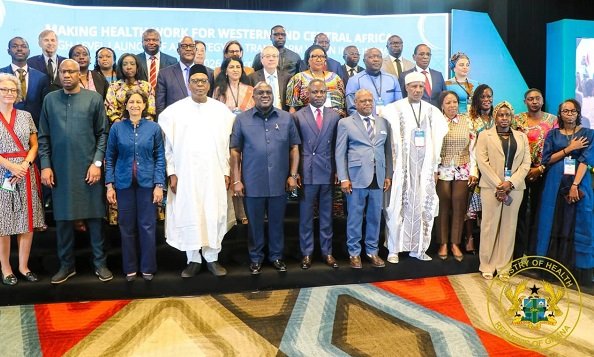
The Ministry of Health, in partnership with the World Bank Group, has launched a Regional Health, Nutrition and Population Strategy to drive a new era of stronger, more resilient healthcare systems across West and Central Africa.
Unveiled under the theme “Fit to Prosper,” the initiative targets critical challenges including infectious diseases, malnutrition, and the rising burden of non-communicable diseases, while positioning health as a key engine of economic growth.
At the launch, Minister for Health Kwabena Mintah Akandoh called for urgent and coordinated action across the region, stressing that health challenges are interconnected and demand collective solutions.
He noted that no country can achieve meaningful development without a strong and reliable health system.
Mr.Akandoh highlighted Ghana’s ongoing efforts to expand primary healthcare, reduce financial barriers, and strengthen infrastructure, workforce capacity, and disease prevention systems, measures aimed at improving access and building resilience against future shocks.
The President of the Republic of Ghana, John Dramani Mahama, noted that health remains central to Ghana’s economic transformation agenda, stressing that investments in healthcare are not merely social spending but a critical foundation for productivity, innovation, and national prosperity.
Addressing participants on behalf of the President, the Chief of Staff, Julius Debrah, highlighted key reforms including the Free Primary Health Care Initiative and ongoing efforts to strengthen the National Health Insurance Scheme.
He noted that these measures are aimed at expanding access, improving the quality of care, and ensuring the long-term sustainability of healthcare financing.
World Bank Division Director Robert R Taliercio commended Ghana’s leadership and longstanding partnership with the Bank, noting that the country’s progress in improving health outcomes demonstrates what sustained investment and strong policy direction can achieve.
The one-day event brought together Ministers of Health from across West and Central Africa, senior government officials, representatives of the World Bank Group, development partners, health experts, academics, civil society organisations, and stakeholders from the private health sector to deliberate on strategies for strengthening regional health systems and improving population wellbeing.