News
AABRYT Foundation promotes menstrual health among WBM Zion SHS students


- /home/u249204778/domains/spectator.com.gh/public_html/wp-content/plugins/mvp-social-buttons/mvp-social-buttons.php on line 27
https://spectator.com.gh/wp-content/uploads/2026/06/Mrs-Debra-sapeaking-to-the-students.jpg&description=AABRYT Foundation promotes menstrual health among WBM Zion SHS students', 'pinterestShare', 'width=750,height=350'); return false;" title="Pin This Post">
- Share
- Tweet /home/u249204778/domains/spectator.com.gh/public_html/wp-content/plugins/mvp-social-buttons/mvp-social-buttons.php on line 72
https://spectator.com.gh/wp-content/uploads/2026/06/Mrs-Debra-sapeaking-to-the-students.jpg&description=AABRYT Foundation promotes menstrual health among WBM Zion SHS students', 'pinterestShare', 'width=750,height=350'); return false;" title="Pin This Post">
The AABRYT Foundation has intensified efforts to promote menstrual health awareness among adolescents with a sensitisation and mentorship programme for students of WBM Zion Senior High School (SHS).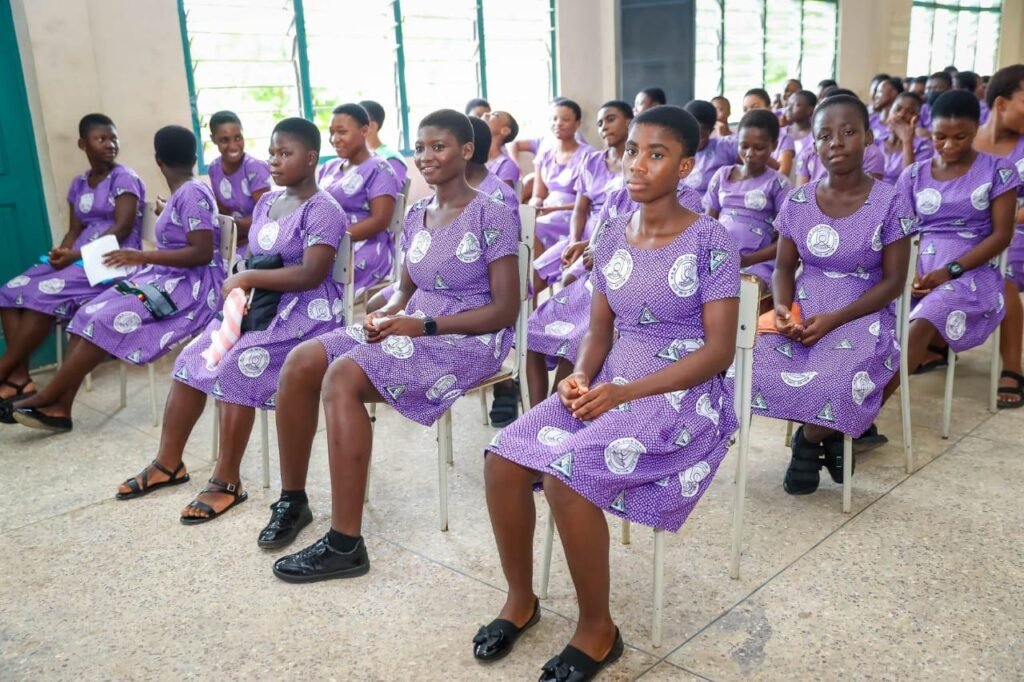
The initiative, held under the theme “From Cycle to Career: Empowering Girls for Healthy Living and Future Success,” sought to educate students on menstrual hygiene, break stigma surrounding menstruation and empower girls to manage their menstrual health with confidence and dignity.
Speaking at the programme, the Founder and Executive Director of the AABRYT Foundation, Ms Diana Akosua Adutwumwaa Britwum, said menstrual health remained a critical issue affecting the well-being, confidence and academic performance of many girls.
She noted that inadequate knowledge, limited access to sanitary products and persistent misconceptions about menstruation often prevented girls from fully participating in school activities.
“Menstrual health is not just a girls’ issue; it is a societal issue that requires collective understanding and support,” she said.
According to her, the Foundation was committed to ensuring that young girls, particularly those in underserved communities, received the education and support needed to manage their menstrual health safely and confidently.
Ms Britwum stressed the importance of involving boys in conversations about menstruation to help eliminate stigma and foster respect and empathy among students.
“When one part of society lacks understanding, the entire society suffers from silence, stigma and misinformation,” she stated.
She explained that creating supportive environments for girls was essential to promoting their physical, emotional and academic development.
Ms Britwum disclosed that the Foundation had distributed more than 20,000 sanitary pads to over 5,000 girls across the Eastern, Ashanti, Greater Accra, Central, Oti and Volta regions as part of its menstrual health intervention programmes.
The headmistress of WBM Zion SHS, Mrs Abena Owarewaa Debrah, commended the foundation for the initiative, describing it as timely and beneficial to the students.
She said the menstrual health education sessions would equip girls with practical knowledge on proper hygiene practices and help them develop confidence during their menstrual cycles.
Mrs Debrah noted that many girls still faced challenges discussing menstrual issues openly due to cultural misconceptions and social stigma, making such educational programmes necessary.
She expressed optimism that the knowledge gained would encourage students to adopt healthy menstrual practices and support one another.
The workshop formed part of the Foundation’s “Glow, Grow and Bold Futures” initiative and brought together health professionals, mentors and security personnel to educate students on menstrual health, personal development and future opportunities.
By Esinam Jemima Kuatsinu


The Office of the Special Prosecutor (OSP) has taken note of public allegations of extortion and related conduct made against the Minority Leader of Parliament, Alexander Afenyo-Markin.
The allegations were made by the Chief Executive of the Ghana Gold Board (GoldBod), Sammy Gyamfi.
In a brief statement, the OSP said it has also received a joint petition submitted by two persons, as well as two separate petitions from other persons, in relation to the same allegations.
“Given the nature of the allegations, the OSP will assess the case and determine whether it falls within its statutory mandate and whether further investigative action is warranted,” the statement said.
The development comes amid a heated public feud between the Minority in Parliament and the leadership of GoldBod over the operations of the Domestic Gold Purchase Programme.
The Minority, led by Afenyo-Markin, has accused GoldBod and the Bank of Ghana of causing a loss of over $1.7 billion, citing the International Monetary Fund’s August 2026 report. The Minority has vowed to pursue the matter as Parliament has reconvened for an emergency sitting.
GoldBod, on the other hand, has rejected claims by some NPP MPs, including Tano South MP Dr Gideon Boako, that it owes the Bank of Ghana GH¢1 billion in overdrafts, describing the claim as “false and malicious.”
In the latest twist, GoldBod CEO Sammy Gyamfi has accused the Minority Leader of extortion and related conduct, an allegation that has triggered petitions to the OSP.
The OSP is mandated under Act 959 to investigate and prosecute specific cases of alleged or suspected corruption and corruption-related offences involving public officers and politically exposed persons.
By Edem Mensah-Tsotorme

General Secretary of the New Patriotic Party (NPP), Justin Kodua Frimpong, has filed his nomination to contest the position of General Secretary again as the party begins its rebuilding efforts ahead of the 2028 general elections.
He was accompanied by party stalwarts and supporters who were in high spirits, expressing confidence that he is the right person to hold the position.
Speaking after filing his nomination, Mr Kodua Frimpong assured the rank and file of the party that he would not disappoint them.
“I can assure you that the faith the rank and file of the party have had in me, I will never disappoint them,” he said.
He also pledged to run a clean campaign devoid of personal attacks.
“I can assure you that our internal campaign will be devoid of personal attacks,” he told his fellow contestants and the rank and file of the party as he seeks to retain his position.
His tenure has seen the party through the 2024 general elections, where the NPP lost power to the National Democratic Congress (NDC) after eight years in government.
The party is currently in a rebuilding phase, with internal elections scheduled to elect new national executives to lead its reorganization towards the 2028 polls.
The General Secretary position is considered one of the most influential in the party’s administrative structure, responsible for the day-to-day running of the party secretariat and implementation of party decisions.
By Edem Mensah-Tsotorme