Features
A dilemma called Ghana (Final Part)

- /home/u249204778/domains/spectator.com.gh/public_html/wp-content/plugins/mvp-social-buttons/mvp-social-buttons.php on line 27
https://spectator.com.gh/wp-content/uploads/2023/07/Independence-Arch-Pix.jpg&description=A dilemma called Ghana (Final Part)', 'pinterestShare', 'width=750,height=350'); return false;" title="Pin This Post">
- Share
- Tweet /home/u249204778/domains/spectator.com.gh/public_html/wp-content/plugins/mvp-social-buttons/mvp-social-buttons.php on line 72
https://spectator.com.gh/wp-content/uploads/2023/07/Independence-Arch-Pix.jpg&description=A dilemma called Ghana (Final Part)', 'pinterestShare', 'width=750,height=350'); return false;" title="Pin This Post">
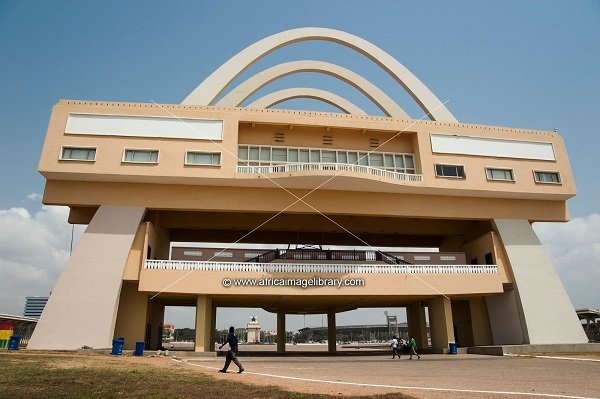
The Independence Arch
So, in the evening of July 24, 2012, John Dramani Mahama was sworn in as President of Ghana to complete the term of Prof. Atta Mills according to constitutional provisions. This was barely five months until Election 2012.
John Mahama was declared elected president by the Electoral Commission in that election, but Nana Addo Dankwa Akufo-Addo and the NPP would have none of it and marched to the Supreme Court to contest the results. Governance almost stalled for the next eight months till the Supreme Court ruled John Mahama as duly elected.
In my estimation, Akufo-Addo lost the election and, I believe, he and his party knew it. The recourse to the Court was a needless waste of time even if some of us got educated on some legal jargon and expressions.
To me, these were just ego trips to court public sympathy for the bruises inflicted by their electoral loss, nothing more.
After his victory in 2012, John Mahama embarked on a massive infrastructure development in health facilities, the energy sector, schools, roads, the airport, housing, markets and others as if to compensate for the eight lost months of litigation at the Supreme Court. But the opposition did not let up. Mahama’s administration was accused of corruption by the opposition.
Issues like the purchase of an aircraft from Brazil, GYEDA and a gift of a Ford vehicle to the President were played in the media space as acts of corruption. There was this laughable one of a flock of Guinea fowls flying from farms in the North across our frontier into Burkina Faso. One thing I know from people close to Mahama was that he caused rumours of corruption against his appointees investigated. Indeed, an appointee was imprisoned as a result.
One positive act of Mahama’s administration was the setting up of the Heritage Fund in which millions of dollars from a percentage of the oil sector was deposited for the future. Teacher education was increased with the withdrawal of trainee allowances and replaced with a students loan regime to enable more teachers to be trained. This was met with opposition from the NPP which promised to reverse it if they regained power.
Our Presidents come to office with certain personal traits. Unlike President Atta Mills, who was a stickler for punctuality, John Mahama hardly is on time for any public event. Nana Addo is also noted for being very punctual with his time. Noted for his reliance on his fan base, President Rawlings would rather be late so as to receive adulation from his fans. President Kufuor was respected in this regard.
Election 2016 was quite as toxic as the previous ones before it. Accusations and counter accusations of corruption were thrown into the fray from every angle imaginable. Nana Addo had mouthwatering promises the electorate were hardput to ignore. He would reduce the cost of buying fuel. One village, one dam. A million dollars for each constituency each year. Free Senior High School education and many more.
Any dispassionate observer of the political scene was clear in their minds that it would take more than his massive development agenda to retain John Mahama as President. Of course, Mahama campaigned on this record of achievement.Truth be told, Mahama did everything but appeal to the grassroots. He seemed to keep a distance from the ordinary people.
As it turned out, Nana Addo Dankwa Akufo-Addo was elected president and was sworn in on January 7, 2017. Almost every project initiated by the Mahama administration that was yet to be completed was abandoned. What came to be known as E-Block Senior High School buildings were left to rot. An affordable housing project at Saglemi was left to deteriorate.
In order to be seen to fulfill his campaign promises, Akufo-Addo began to implement the Free SHS programme, very much against advice from stakeholders and professionals to go gradually with its implementation.
Dugouts were presented as dams, many existing businesses were touted as his one district one factory project, but not even one constituency saw the million dollars. Fuel prices rather kept rising at the pumps to the chagrin of his own supporters. Comparisons started as to whether Mahama was a better leader.
Vice President Mahamudu Bawumia became the poster boy of the government, touting the administration’s economic management. The very statements he made about government economic policy while he was in opposition stared him in the face at every turn.
Teacher trainee allowances were restored, but admissions were drastically curtailed as were nursing trainees. SHS and basic school timetables were so jumbled up that guardians did not know when their wards would be in or out of school.
Nana Addo appointed the highest number of Ministers in the country’s political history. Issues of massive corrupt practices surfaced against his administration as well. Family, friends and cronies became beneficiaries of political patronage.
Then COVID 19 was upon the world. Purported to have originated in China, the virus took the world by storm, infecting millions on a killing spree. As at the beginning of this week, Ghana has recorded only 1,462 deaths with only 34 active cases. It must be admitted that Ghana under Akufo-Addo managed the pandemic better than many other nations of the world. However, COVID and the war in Ukraine have become the excuses government spokespersons give for the economic dilemma the country is in today.
Ghanaians went to the polls on December 7, 2020, to elect a new government. John Mahama was once again the flagbearer of the NDC. His record was pitted against Nana Addo’s. For the first time since 1992 Ghana’s Electoral Commission could not make up their minds on the true figures to announce for the presidential poll. Eventually, they announced Nana Addo as winner though the NDC almost won more seats in Parliament.
Methinks this was why John Mahama also headed for the Supreme Court. My information has been that there were people close to Mahama who worked against him. Their beef was that John had lost touch with the base of the Party. He was running the campaign like a celebrity superstar, they said. So they botched the setting up of a credible collation centre. My astrological predictions for Election 2020 was published in this column on December 4, 2020. Another concern for these people, which has been expressed by many media friends is what they describe as Mahama’s rabid desire to keep Mr. Stan Dogbe as his closest confidant. My information is that Mahama is aware of this concern but seems unwilling to do anything about it.
Many journalists feel that Stan denied them access to Mahama. Many big shots in the Party are worried about this and fear the Stan Dogbe factor could affect the electoral fortunes of the former President.
Now, my take: Ghana is not in a dilemma; Ghana is the dilemma.
Nothing seems to be working in the land. Food prices have hit the roof. The dollar is difficult for our currency to match. Government refused to heed advice to go to the IMF. It refused to even review the Free SHS programme. A tin of mackerel is fed a soup for a dozen students.
Today, Ghana is with the IMF. We are ready to review the Free SHS programme. If this country were not a dilemma, why do we elect people who are impervious to sound advice? Why do we elect people who listen only to themselves? Over 80 members of Parliament demand the President should expel the Minister of Finance, but get ignored.
By Dr. Akofa K. Segbefia
Writer’s email address: akofa45@yahoo.com


THE relationship between New Times Corporation (NTC) and African Concrete Productions (ACP) is based entirely on matters of the stomach. Each depends on the other in a dietary symbiosis, reinforced by the close proximity of each other
At lunchtime, you’d see a particular set of Times workers marching regimentally to ACP to face the wall. You’d think they are soldiers. It has long been declared that the company manufactures the best kokonte in the Greater Accra Region. ACP is, therefore, a culinary haven for those NTC kokonte fans, both male and female.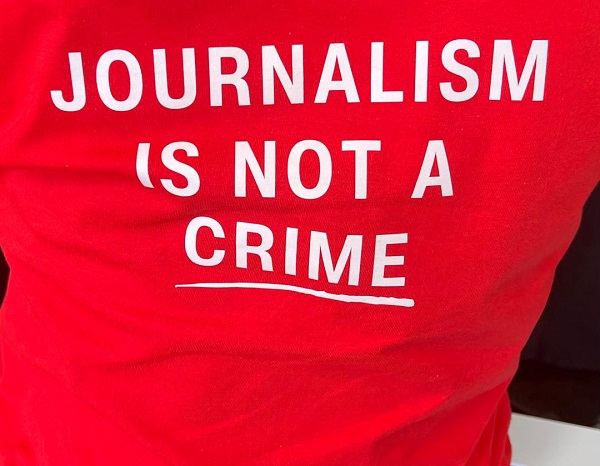
As the NTC kokonte warriors cross the border to ACP, you’d see some ACP banku fanatics dancing joyously to NTC. They are lucky folks because they do not have to obtain visa to enter into ‘Times’ to attack the balls of banku with precision and accuracy. They also claim that the lightsoup at ‘Times’ is arguably the best in West Africa.
So the relationship between the two entities was quite cordial and based practically on stomach palaver, until ACP workers staged an industrial revolution, whereupon the managing director, accountant and estate manager were allegedly stripped naked and locked up in a room. An insurgency had began in earnest.
An ACP worker came to ‘Times’, this time not to eat banku and okro. He had come to inform newsmen that juicy stuff awaited them at ACP. It could make a front page lead story.
A camerawoman and a female reporter were accordingly dispatched to go and bring back news, juicy news as juicy as kokonte and groundnut soup.
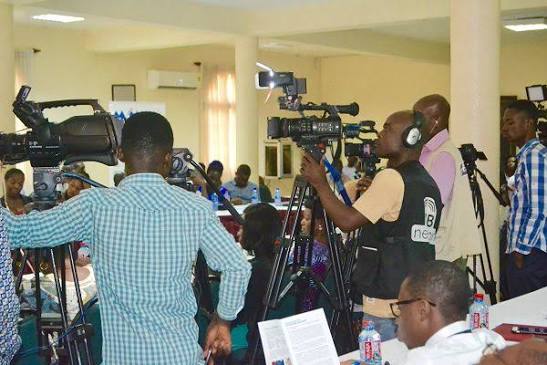
I was driving to work when I espied the familiar camerawoman clicking away outside the ACP premises. I didn’t see any ‘Times’ reporter but angry workers who were on the verge of getting violent. I slowed down and the driver behind blew his horn at me like a lunatic. I drove on.
Later, I heard the reporter and camerawoman were harassed and brutalised. The report came,. “The camerawoman, Mrs Salome Adonu-Agbottah and reporter Mrs Doreen Allotey, in an attempt to retrieve the camera which the workers had seized from them were severely beaten. They were manhandled and almost pushed into a big gutter opposite the company’s premises.
BRUISES
“….The camerawoman had bruises on her body, her hand bag was destroyed and the money in it stolen. Mrs Allotey’s watch was also snatched and her feet stamped on.”
Luckily, it was not her nose that was trampled upon. She has a beautiful nose.
The bad news was received with extreme sorrow. If the victims had been men, it would not have seemed too bad. But to brutalise women is just unacceptable. The New Times Corporation has not stopped mourning the incident which has been condemned in many circles.
Some people keep asking me why Times sent females to cover a potentially violent demonstration. I tell them they might as well ask why CNN’s amazon, Christina Amanpour, is assigned to cover the carnage in Bosnia-Herzegovina and Rwanda. She is always on the frontline in jeans and jacket.
Journalism is a potentially hazardous profession, and once you accept to study and practise the trade, you might as well bone up to face any assignment as long as your superiors feel you are capable of handling it or you have demonstrated the capacity to handle it. Both males and females can be assigned anywhere, anytime just like policemen and women are assigned.
The only difference between cops and pressmen is that the latter are armed only with a pen and the former with a gun. The question is should newsmen also arm themselves so that in any event of an assault they would not be found wanting in self-defence? They can’t adequately defend themselves with a pen and a jotter. A pen cannot even disfigure an opponent’s upper lip.
Photo-journalists have particularly suffered violence. Spectator ace-cameraman Vincent Dzatse was severely assaulted by AMA men when he attempted to take pictures of their indiscretions.
Sports cameraman, P. K. Arthur has been beaten more than once at the sports stadium when riots errupted and he wanted to capture it on his lenses.
Some sports journalists have been banned from entering the Accra Sports Stadium by supporters because in their comments, they didn’t write “sense”. Some supporters once nearly lynched Christian Abbew, Spectator Sports Editor, near a courtroom. He was stoned like the biblical Stephen. He had gone to defend a contempt charge.
I think it is time journalists met and discussed how best to defend themselves in any event of an attack by individuals or mobs. In the pursuance of their duty, they must be free from harassment and assault.
Some journalists go to work and return home with a black-eye or a double fore-head. It is just not right. Something has to be done about it. I think journalists should be armed. But first we must be trained in the use of firearms so that our warning shot do not hit below the belt. What about training in Kung Fu?
This article was first published on Saturday, October 17, 1998.
Have you noticed how many young, seemingly healthy people both in Ghana and all over the world are suddenly falling seriously ill or dying young?
When news breaks of a young person suffering a sudden stroke, a heart attack, or a total physical collapse, people are often shocked and confused. They ask, “How could this happen? They were so young!”
Medical science often blames specific diseases, but if you look deeper at how the modern world treats the human body, a much bigger picture emerges. The real killer is not just a sudden illness it is a massive, ongoing wave of chronic stress, burnout, and modern pressure.
Here is a clear, step-by-step look at why this crisis is happening, explained simply.
1. The trap of endless pressure and “hustle culture”
What is happening: Today’s youth face an overwhelming amount of pressure. Whether it is trying to find a stable job, survive tough economic times, or meet high expectations from society and family, young people are told they must constantly work harder, push further, and never stop.
Why it is dangerous: The human body can handle short bursts of intense pressure, but it was never designed to be stuck in “survival mode” 24/7. When a young person spends months and years worrying about money, the future, and survival, their brain stays convinced they are in constant danger. This keeps stress hormones flooding their system day and night.
2. The slow poison of stress chemicals on young hearts
What is happening: When your body is flooded with stress hormones like cortisol and adrenaline for years, it takes a heavy toll.
Why it’s dangerous: In the past, severe heart and blood pressure problems were things older adults dealt with. Today, because of constant stress, young people are developing stiff blood vessels, high blood pressure, and overworked hearts early in life. When a young body is pushed past its absolute limit without rest, the heart can suddenly give out.
3. Smartphone overload and brain exhaustion
What is happening: Unlike past generations, today’s youth carry a 24/7 stress machine in their pockets: their smartphones. They are constantly bombarded with bad news, financial worries, and the pressure to look successful compared to everyone else online.
Why it’s dangerous: The brain never gets a moment of true peace. Because young people check their phones late into the night, their nervous systems never get to shift into “rest-and-repair” mode. They are burning fuel faster than their bodies can replace it, leading to deep neurological and physical burnout.
4. The dangerous habit of pushing through pain
What is happening: In many cultures-especially in vibrant, hard-working communities like those in Ghana-endurance is praised as a badge of honor. Young people are taught to “hustle hard,” hide their pain, and never complain.
Why it is dangerous: When you force yourself to ignore physical exhaustion, headaches, and chest tightness because you feel you have to “keep going,” your body pays the price. Unexpressed stress turns into physical tension and hidden inflammation. Over time, ignoring what your body is screaming for breaks the biological vessel down from the inside out.
Time for a wake-up call
The rising loss of young lives globally and locally is a tragic warning sign. It proves that our modern way of living-which values endless productivity and hustle over human health-is literally killing people.
To save the youth, we have to stop treating burnout like a joke and stop glorifying dangerous overwork. We need to teach young people how to protect their health, give their nervous systems a break, and realise that true success should not cost them their lives.