News
One help at a time

- /home/u249204778/domains/spectator.com.gh/public_html/wp-content/plugins/mvp-social-buttons/mvp-social-buttons.php on line 27
Warning: Trying to access array offset on false in /home/u249204778/domains/spectator.com.gh/public_html/wp-content/plugins/mvp-social-buttons/mvp-social-buttons.php on line 27
&description=One help at a time', 'pinterestShare', 'width=750,height=350'); return false;" title="Pin This Post">
- Share
- Tweet /home/u249204778/domains/spectator.com.gh/public_html/wp-content/plugins/mvp-social-buttons/mvp-social-buttons.php on line 72
Warning: Trying to access array offset on false in /home/u249204778/domains/spectator.com.gh/public_html/wp-content/plugins/mvp-social-buttons/mvp-social-buttons.php on line 72
&description=One help at a time', 'pinterestShare', 'width=750,height=350'); return false;" title="Pin This Post">
The story is told of a devout young man whose car broke down, forcing him to make his way to his place of worship on foot. As he walked, he passed an area of startling poverty, where destitute people lined the streets, struggling to fi nd shelter; troubled and angry individuals wandered the streets. The depressing scene fi lled him with a sense of hopelessness. In his despair, he offered a prayer to God. In a voice both pleading and questioning, he said, “How can You allow all this suffering and do nothing?”
Then someone behind him whispered, “He didn’t do nothing. He made you.” At once the young man realised that he could be God’s hands. He could help a troubled world or at least a troubled individual. At times it can be easy to relate to the helplessness this young man felt, because we certainly do live in a world of turmoil. Society’s problems seem so immense, and we seem so small. Too often, we conclude that there is nothing we can do and we consequently do nothing. What we need is the gentle reminder this young man received: that we can be the instruments of constructive change. As one infl uential leader put it: “God does
notice us, and He watches over us. But it is usually through another person that He meets our needs. Therefore, it is vital that we serve each other.” Think for a moment of someone who made a difference in your life. Maybe it was a family member, a friend, a coach, a teacher, a neighbour.
It may even have happened a long time ago, but you still remember and cherish that person’s infl uence upon you. A young teenage boy thinks of a football coach who saw his potential, cared about him, and told him not to quit. A girl thinks of a teacher who helped her believe she was smart and could succeed in school.
A new father thinks of a brother who encouraged him through the challenges of parenthood. A middle-aged woman thinks of a neighbour who reached out to her during a heartbreaking time of loss. A thousand other examples could be given of simple moments when the right person at the right time made a big difference in someone else’s life. A song from the Lerner and Loewe musical Brigadoon pays tribute to the influence one person can have on the life of another: I saw a man with his head bowed low.
His heart had no place to go. I looked and I thought to myself with a sigh: There but for you go I. . . . Lonely men around me, trying not to cry, Till the day you found me, there among them was I.
It’s humbling to think what our lives might be like without those earthly angels who spread goodness and kindness along life’s pathway. They come into our lives at crucial times to set an example, to give us counsel or encouragement, or simply to be a loyal friend when we need one the most. Without them, we know we would not be quite the same. All around us are people who need that kind of friend, people “with their heads bowed low,” whose people with a highly developed sense of responsibility. While pessimists and optimists argue whether a glass is half-empty or half-full, the volunteer sees a glass of water and starts looking for someone who might be thirsty.”
Each of us can try to do something. We can volunteer our time in our communities, at a school or library, a hospital or care centre. In a hundred ways, small and not so small, we can open our hearts to whose hearts have “no place to go.” Now could be someone’s crucial moment, when just the right words or even just the right warmth of friendship might make a difference. To them, you can be the right person at the right time. We recognise and give thanks to those among us who are willing to help others, those who volunteer their time and talents, those who sacrifice in some way for the betterment of the human family.
One insightful observer noted, “In a world continually ripped by massive calamities, we … need an auxiliary corps of volunteers, ordinary citizens who willingly undergo discomfort and danger to help fellow humans. Volunteers are special others, down the street or around the world. Volunteering and helping build love and relationships, renew our faith in the goodness of people, and change our attitude and sense of well-being.
We were made with a purpose, and that purpose is to do something for others, to help and bless those in need, and thereby to make a difference in the world. Most often it doesn’t take much change of perspective that can lead to a change of heart, a willingness to accept our part in making things better, a simple desire to help others and look for the good. That positive energy and action can truly change the world in the way most real change happens: one person at a time.
By Samuel Enos Eghan


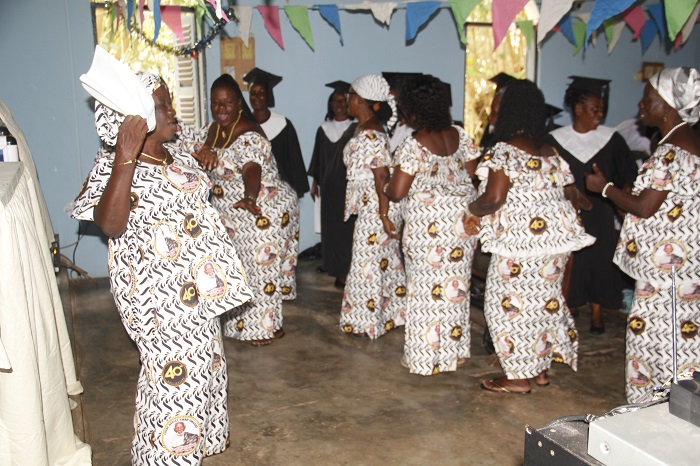
Christians have been urged to demonstrate a living faith in Jesus Christ by allowing their confession of Him as Lord and Saviour to reflect in their daily lives.
According to the Kaneshie District Pastor of the Evangelical Presbyterian Church, Ghana (EPCG), Rev. Dzidzor Nathaniel Affram, a genuine Christian’s confession should go beyond words and be demonstrated through obedience to God, love for others and service to the Church.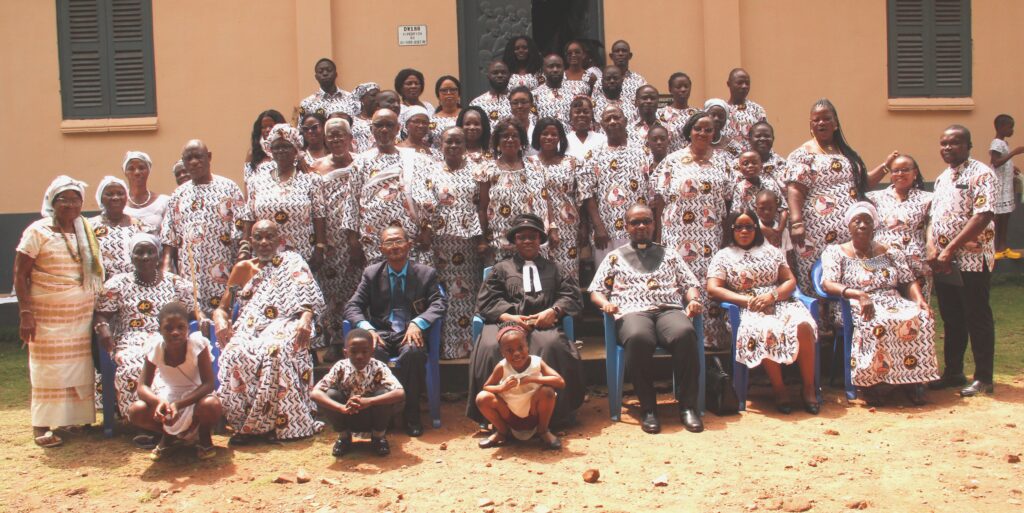
He made the call at the 40th anniversary remembrance service for the late Wesley Kwasi Kwadzo at the Evangelical Presbyterian Church, Ghana, Maranatha Congregation at Awudome Avenui in the Volta Region.
Speaking on the theme, “The Church Built on a Living Confession,” Rev. Affram said life would continually present challenges capable of testing Christians’ faith, making it necessary for believers to hold firmly to their confession that Jesus Christ is Lord.
He explained that accepting Jesus Christ as Lord and Saviour required Christians to live according to His teachings, stressing that their faith must be evident in their conduct.
“A living confession listens to God and not man,” he said, urging Christians to remain obedient to God even when faced with difficulties and pressures.
Rev. Affram further encouraged the congregation to care for vulnerable people and demonstrate concern for others, adding that such acts were practical expressions of Christian faith.
He also urged Christians to identify and use their God-given gifts to build the Church.
He said every member of the Church had a role to play and cautioned Christians against looking down on others because of their status or abilities.
The remembrance service brought together family members, friends, members of the congregation and sympathisers to commemorate the 40th anniversary of the late Wesley Kwasi Kwadzo.
By Lizzy Okai
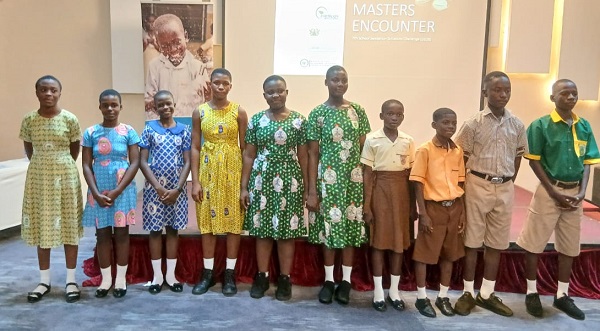
Two female students from the Eastern and Upper West regions of Ghana have booked their qualifications for the finals of this year’s World Vision Ghana School Sanitation Solutions Challenge slated for September 21, at the National Theatre in Accra.
The girls are Dede Nyarko from the Nkawkaw St Anthony RC JHS in the Eastern Region and Dasanah Candi Mwine Maalo from the Star of God RC JHS in the Upper West Region.
In all, 10 schools reached the semifinal stage held in Sunyani in the Bono Region.
The School Sanitation Solution Challenge by the World Vision Ghana instituted in 2019 is an annual national competition for Ghanaian pupils from primary six to Junior High School students up to form two.
The programme aims to foster environmental consciousness and empower children to concrete sustainable water, Sanitation and hygiene (WASH) Solution
The annual event is supported by the Ministry of Local Government, Chieftaincy and Religious Affairs, Ghana Education Service and Zoomlion Foundation among other partners.
The girls won their respective contest from SHELP and COCOA zones and are expected to face other competitors from the southern zones for the ultimate prize at the National Theatre next month.
Dasanah Candi Mwine Maalo had an aggregate score of 77 points to pick the Shelp zone slot while Dede Nyarko also had an aggregate score of 89 to win from the Cocoa zone.
The Bono Regional Minister, Joseph Addae Akwaboah, in a speech read on his behalf commended World Vision Ghana and its partners for instituting the competition to highlight sanitation issues in the country.
“Placing young people at the centre of the conversation on sanitation is highly commendable,” he said.
According to him under the government’s reset agenda, sanitation has received renewed attention as a critical component of effective local governance and service delivery
Mr Akwaboah said sanitation issues is a national responsibility and which everybody must play a role in ensuring clean, safer and sustainable environment devoid of diseases.
The WASH Technical Specialist- World Vision Ghana Atta Arhin in an address highlighted that while Ghana has achieved high basic access rates to safe drinking water approximately 87 per cent nationally, environmental sanitation and elimination of open defections lag critically behind.
He said the winner of the seventh edition would embark on a fully sponsored educational trip abroad and other prices.
From Daniel Dzirasah, Sunyani
SKIP THE QUEUE, TAP THE NEWS
You can now read the Ghanaian Times and The Spectator newspapers from the comfort of your device via TimesNewsPlus.
Join our WhatsApp Channel: https://whatsapp.com/channel/0029VbBElzjInlqHhl1aTU27