News
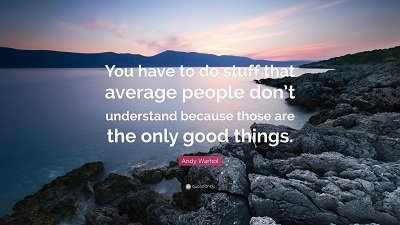
Be serious with serious things; don’t be an average person

- /home/u249204778/domains/spectator.com.gh/public_html/wp-content/plugins/mvp-social-buttons/mvp-social-buttons.php on line 27
https://spectator.com.gh/wp-content/uploads/2021/10/Serious-things-Pix-1.jpg&description=Be serious with serious things; don’t be an average person', 'pinterestShare', 'width=750,height=350'); return false;" title="Pin This Post">
- Share
- Tweet /home/u249204778/domains/spectator.com.gh/public_html/wp-content/plugins/mvp-social-buttons/mvp-social-buttons.php on line 72
https://spectator.com.gh/wp-content/uploads/2021/10/Serious-things-Pix-1.jpg&description=Be serious with serious things; don’t be an average person', 'pinterestShare', 'width=750,height=350'); return false;" title="Pin This Post">
Perhaps it is an opportune time to pay our respects again to the fallacy of figures. We are sometimes inclined to look with considerable satisfaction upon columns of assorted figures which seem to indicate that all is well with the average. But statistical columns seldom take all of the facts into account, and this elusive individual known as “the average” is rarely found. The fallacy of averages appears when we begin to look at what lies above and below the average.
The fact that the average man isn’t starving doesn’t tell us anything about the man who is starving. The fact that the average man may try to meet his honest obligations doesn’t prove anything about the people who don’t make much effort to meet their obligations. The fact that the average rainfall is adequate doesn’t give much comfort to a farmer who has to face floods at one time and burning drought at another. The fact that the average temperature in a certain city is twenty degrees doesn’t take into account that it may be unbearably cold in the rainy season and unbearably hot in the dry season.
The Savior of the world once preached a sermon on the fallacy of averages. You won’t find these very words in holy writ. But you will remember the parable of the ninety and nine sheep who were safe, and of the one who was lost. If the Good Shepherd had been deceived by the fallacy of averages, he would perhaps have failed to go forth to find the one who was lost. Averages may not mean much when we are speaking of your children or of mine, or of ourselves or even of other men. “You may prove anything by figures, ” wrote Thomas Carlyle. But every man, woman, and child who walks the earth is an individual with his own immortal identity, and the personal problems of people are not frequently solved by figures or by fixed formulas from far places. We must look at people and their problems individually and with open eyes. Figures can be made to fool us if we will let them.
Sometimes because we think averagely we bear someone shoulder shrugging off a puzzling or disappointing situation with the comment, “What will it matter a hundred years from now?” This may be just a casual way of by-passing facts that we don’t want to face, but it’s a good question if we will ask it seriously: “What will it matter a hundred years from now or fifty, or ten, or tomorrow?” In many ways our lives would be very different if we would stop thinking in average terms and ask this question before we do some of the things we do, before we say some of the things we say, and before we pursue some of the objectives we pursue.
We are disposed to devote much time and energy to things that won’t matter much next year, or even tomorrow, to say nothing of a hundred years from now. We are often given to driving ourselves toward goals that aren’t worth arriving at when we get there. We are given to eating our hearts out for things our neighbors have, or that we think they have, which we pay a high price to acquire, and which, with the passing of many days, often count for little. Perhaps it is a good time to ask the question: “Where shall we be a hundred years from now?” Specifically, no man knows; but inasmuch as men are immortal, we shall still be ourselves, and we shall still think our own thoughts. And it isn’t likely that it will be any easier to run away from ourselves than it is now. But the passing of time will put its own appraisal on the record of the past. And the trivial things for which we have given much, the small talk in which we overindulge, and some of the things some have sold themselves for, will all be known, for their worthlessness.
Some things we thought were important, we shall know were exceedingly unimportant, and some of’ the things to which we didn’t give much attention, we shall come to learn mattered muchand our neglect will accuse us. But many of the things which clutter our lives and confuse bur thoughts now, won’t forever stand in our way so long as we keep faith and honestly do the best we can.
If we can learn to live a day at a time and keep moving in the right direction, the future will find that time will have sifted out much of the chaff and disposed of many problems, healed many wounds, quieted many sorrows, and dissolved many of our little fears; and time will have written the real values on many things on which we have now fixed false price tags.
By Samuel Enos Eghan


Over 20 structures built within the 50-metre buffer zone of the Kpeshie Lagoon at the Laboma Beach Resort in the La Dade-Kotopon Municipality were on Sunday demolished by the Greater Accra Regional Coordinating Council (GARCC).
Buildings such as single-unit semi-detached under construction and completed chalets at the resort were pulled down while portions of a newly constructed perimeter wall were also demolished. Read More
SKIP THE QUEUE, TAP THE NEWS
You can now read the Ghanaian Times and The Spectator newspapers from the comfort of your device via TimesNewsPlus.
Join our WhatsApp Channel: https://whatsapp.com/channel/0029VbBElzjInlqHhl1aTU27

About 120 golfers from clubs across Ghana participated in an 18-hole competition, dubbed ‘MTN 30th Anniversary CEO Invitational Golf Tournament’ held at the Achimota Golf Club on Saturday.
At the end of the hectic day, Frederick Semenu Duvor won the Men’s Group A event with 39 points, while Julienne Afi claimed the Ladies’ Group A title with the same score.
Yaw Mireku Jnr. won the Men’s Group B with an impressive 45 points, while Kous Louanges Mang took the Ladies’ Group B title with 38 points.
Kofi Mangesi won Men’s Group C with 40 points while Elorm R. Akuash Bonney claimed the Ladies’ version with 42 points.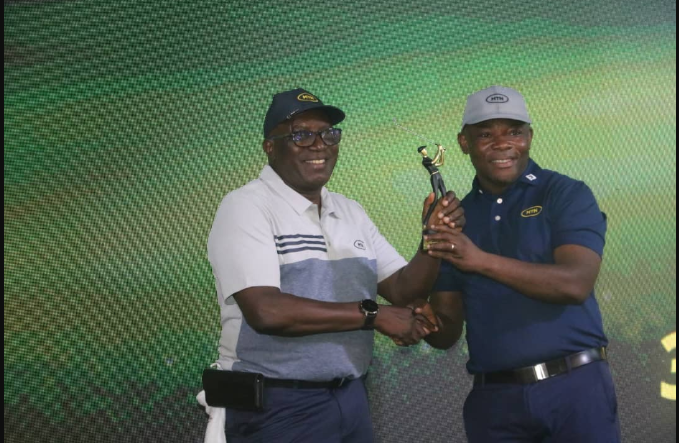
In the Seniors Division, Jan Vogel emerged winner of the men’s category with 39 gross, while Helen Appah topped the ladies’ category with 44 gross.
Addressing participants, the company’s Board Chairman, Mr Ishmael Yamson, urged the company to approach its next phase with the same resilience, discipline and determination that have defined its success over the past three decades.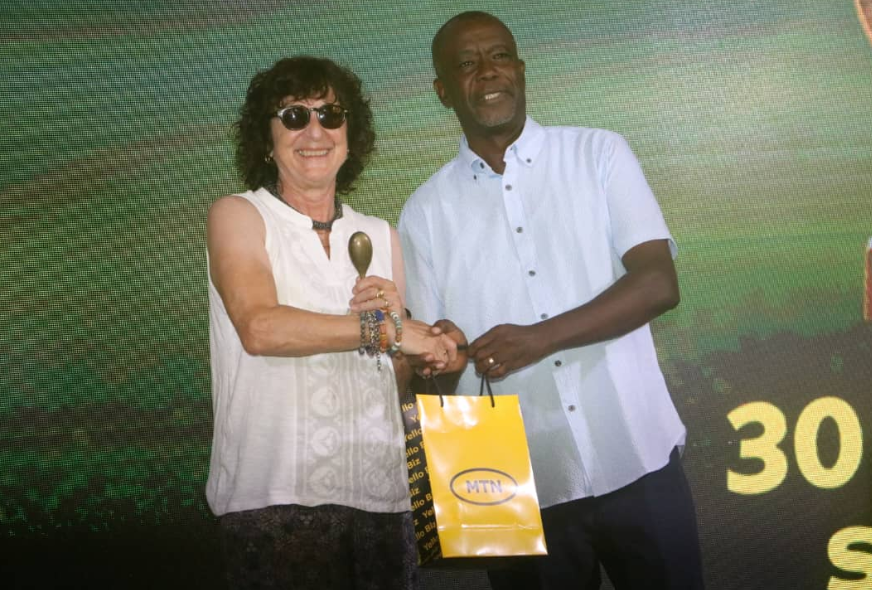
He drew a striking parallel between the game of golf and MTN Ghana’s three-decade journey, describing both as long games in which success depends less on one spectacular moment than on consistency, patience, judgment and the ability to recover from setbacks.
He said, golf had taught him a lesson that extended far beyond the fairways, thus, a round cannot be won on the first hole.

In golfing terms, he said, MTN Ghana had encountered its share of regulatory bunkers, competitive hazards and unexpected storms that had forced the company to pause, reassess and change its approach.
But those challenges, he suggested, were part of the journey rather than reasons to abandon it.
By Andrew Nortey
SKIP THE QUEUE, TAP THE NEWS
You can now read the Ghanaian Times and The Spectator newspapers from the comfort of your device via TimesNewsPlus.
Join our WhatsApp Channel: https://whatsapp.com/channel/0029VbBElzjInlqHhl1aTU27

 Entertainment1 week ago
Fiifi Coleman Productions adapt ‘I Told You So’ stage play into feature film
- News6 days ago
48 Engineer Regiment to be major sub-contractor on Accra-Kumasi Expressway, $2bn ready- Prez Mahama
- Entertainment5 days ago
Rhythms On Da Runway returns November 28 with 16th edition themed ‘Unbound’