Features
Why we must deploy local forces against Somalia now

- /home/u249204778/domains/spectator.com.gh/public_html/wp-content/plugins/mvp-social-buttons/mvp-social-buttons.php on line 27
https://spectator.com.gh/wp-content/uploads/2026/10/WhatsApp-Image-2026-10-12-at-14.05.58.jpeg&description=Why we must deploy local forces against Somalia now', 'pinterestShare', 'width=750,height=350'); return false;" title="Pin This Post">
- Share
- Tweet /home/u249204778/domains/spectator.com.gh/public_html/wp-content/plugins/mvp-social-buttons/mvp-social-buttons.php on line 72
https://spectator.com.gh/wp-content/uploads/2026/10/WhatsApp-Image-2026-10-12-at-14.05.58.jpeg&description=Why we must deploy local forces against Somalia now', 'pinterestShare', 'width=750,height=350'); return false;" title="Pin This Post">
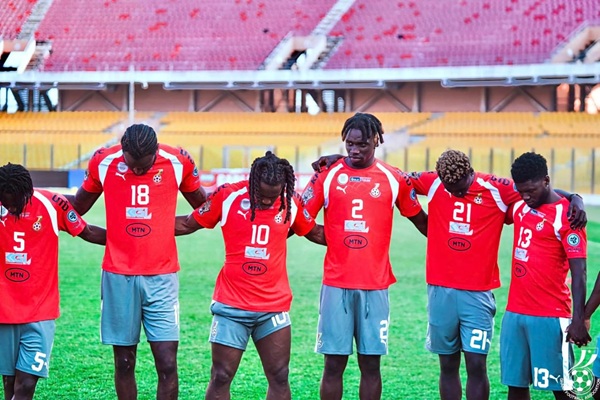
In a move that has sent shockwaves through the plush, air-conditioned corridors of the Ghana Football Association (GFA), a veteran Ghanaian football administrator and former Ghana League Clubs Association (GHALCA) Chairman Kudjoe Fianoo has dropped a radical, borderline heretical proposal. He wants the Black Stars to—brace yourselves—consider selecting home-based players for the upcoming World Cup qualifiers against Somalia.
Yes, you read that correctly. Actual footballers who currently breathe Ghanaian oxygen, navigate Accra traffic, and get paid in Cedis (when they get paid at all).
It is a terrifying suggestion. For years, the established, sacred ritual of assembling the Black Stars has been beautifully consistent. First, a coach—usually a glamorous European expatriate residing in a five-star suite—scours the remote, frost-bitten benches of Europe’s third divisions to find anyone who once ate jollof or has a grandmother from Kumasi. Then, we spend millions flying them down in business class, only for them to treat the pitch at our national stadiums like a fragile runway, carefully avoiding any sudden movements that might jeopardise their European club bonuses.
But now, after consecutive disasters against Côte d’Ivoire and The Gambia left Ghana sitting at the absolute bottom of Group C with zero points, Uncle Kudjoe is trying to ruin the entire tourism economy of the national team.
The Logistics of Common Sense
Think of the sheer administrative chaos Fianoo is proposing. If we select home-based players, how will the GFA justify the massive per-diem budgets? Where is the thrill of tracking a player’s flight from London or Frankfurt on FlightRadar? If a player is already in Dormaa or Bechem, you can’t even buy them an international ticket. You can only buy them a ticket on a VIP bus, and frankly, that lacks the geopolitical prestige we have come to expect from our footballing elite.
Furthermore, introducing local players to the senior national team poses a severe cultural risk. These boys play on pitches that closely resemble freshly ploughed cassava farms. They are rugged. If you throw them onto a pitch against Somalia, they might actually run. They might chase the ball. They might tackle with the desperation of men whose next meal depends on a winning bonus. This would deeply embarrass our European-based superstars, who prefer the highly sophisticated, minimalist art style of “jogging elegantly while pointing at open spaces.”
A Desperate Times Measure
To be fair to Fianoo, his timing is logical. Following the unceremonious exit of the latest coach, Ghana football is currently in what experts call “a state of premium premium tears”. We have fallen so far that former GFA bosses are openly mourning the system on sports radio, and fans are treating matchdays like national days of fasting and prayer.
Playing Somalia in November is supposed to be a standard corporate formality. Instead, it has been elevated to a high-stakes geopolitical thriller. Somalia is looking at Ghana’s recent form and thinking, “Hey, there’s a free three points over there.”
By suggesting we deploy local players, Fianoo is tapping into a profound truth: the local boys have nothing left to lose. They are already immune to the power outages (dumsor), they know how to survive without headline league sponsors, and they won’t complain that the hotel food doesn’t taste like London brunch. They are structurally built for warfare.
The Ultimate Sacrifice
Of course, the GFA leadership will likely meet this proposal with their trademark look of polite disgust. They are far too busy hunting for the next diaspora talent who turned us down three times but might consider us now that their European national team options have dried up.
But if Kurt Okraku and his newly formed search committee want to save their jobs—especially since Fianoo has already publicly told them to pack their bags if things go south—they might want to listen.
Let us call up the local boys. Let us fill the squad with the energetic youth of the Ghana Premier League before they, too, inevitably sign contracts with clubs in Tanzania, Congo, or the third tier of the Maltese league. At least, if we lose to Somalia with local players, we can comfortably blame it on the domestic economy. If we lose with our European superstars, we have to face the painful reality that we spent millions of taxpayers’ cash just to watch a group of tourists look confused in matching jerseys.
The ball is in your court, GFA. Choose the VIP bus. Choose the home-based warriors.
By Emmanuel Amponsah
The writer is a former Editor of The Spectator

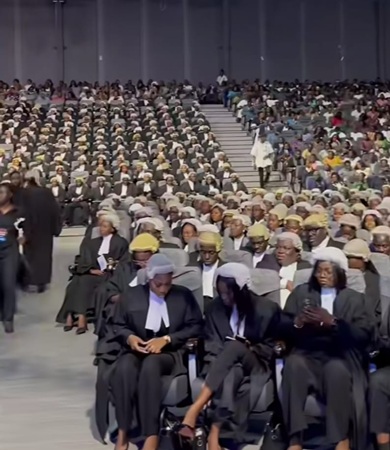
Every year, like clockwork, a deeply moving national ritual takes place in Ghana. No, I am not talking about the budgeting for a new national cathedral, nor am I referring to the periodic resurrection of stable electricity. I am talking about the annual call to the Bar, a solemn occasion when hundreds of enthusiastic citizens finally earn the right to wear itchy 18th-century horsehair on their heads in 32-degree tropical heat.
And right on cue, as soon as the first camera flashes hit Instagram and TikTok, the familiar chorus of national grief begins.
If social media commentary is to be believed, the legal profession is the single greatest threat to Ghana’s development since the invention of the mosquito. Suddenly, everyone becomes a certified demographic expert and an economic planner. From the comfort of their keyboards, critics launch into the annual tradition of predicting our imminent doom under the crushing weight of too many advocates.
Let us, for a moment, dissect this seasonal performance of economic anxiety with the gravity it truly deserves.
The Myth of the Overcrowded Courtro
The most common lamentation echoing through our digital streets is a simple one: “There are too many lawyers!”
It is a fascinating observation. We look around our country, see land guards terrorising homeowners, contract breaches treated as a standard business practice, public funds vanishing into thin air, and citizens spending decades trying to resolve basic inheritance disputes. Yet, the logical conclusion we arrive at is: “Ah, yes. The real problem here is that we have an oversupply of people who understand the law.”
If you truly believe we have too many lawyers, I challenge you to test that theory the next time life hands you a crisis. When your landlord decides to lock you out of your apartment because his cousin needs a place to stay, or when you find yourself in a messy divorce court, whom do you intend to bring along as your shield? Your quantity surveyor? Your favorite structural engineer? Perhaps you can bring your plumber to argue the finer points of contractual estoppel.
The reality is that we only complain about the number of lawyers until we desperately need one to rescue us from the consequences of our own spectacular lapses in judgment.
The Zero-Sum Beauty Contest
Then comes the classic pivot to the sciences: “The country needs more engineers and doctors, not people who read big books!”
This is undoubtedly true. We do need more doctors. We need more engineers to fix our roads and build our bridges. But nation-building is not a zero-sum beauty contest where one profession must starve so another can thrive. It is not an either-or proposition.
More importantly, let us look at how these professions interact in the wild. When that brilliant engineer builds a bridge that collapses due to a poorly negotiated, inflated state contract, or when a medical professional commits a tragic act of malpractice, who steps into the arena? The local pastor? A team of herbalists?
No. We call the lawyers. We call them to interpret the building codes, to enforce regulations, and to hold institutions accountable. A society with brilliant engineers but no functioning legal framework to enforce standards is simply a society waiting for its infrastructure to collapse with absolute impunity.
The “Arts Student” Delusion
There remains a lingering, highly amusing arrogance among some science enthusiasts who believe that studying law is merely a default setting for arts students who “couldn’t hack it” in chemistry or physics.
It is a comforting myth, usually whispered by people who think legal practice consists entirely of standing up in court and shouting “I object!” in a dramatic voice. They conveniently overlook the reality of the modern world. Interpreting constitutional crises, untangling complex financial regulations, navigating intellectual property theft, prosecuting medical negligence, and drafting frameworks for the law of artificial intelligence apparently require zero cognitive effort.
Some people consistently confuse choosing a different discipline with failing at their own. Rest assured, analysing a complex web of corporate fraud requires just as much brainpower as balancing a chemical equation—only the lawyer’s equation can land someone in Nsawam prison if they misplace a decimal point.
Wigs, Gowns, and Colonial Wardrobes
Now, to be completely fair, the critics do get one thing absolutely right. The wigs and gowns are, without question, an absurd colonial relic.
On this specific point, I agree paaah. There is something profoundly surreal about watching a Ghanaian lawyer, sitting in a courtroom with a failing air conditioner, sweating profusely under a heavy black gown and a white horsehair wig designed for the chilly autumn mornings of London. We can easily modernise the wardrobe without abolishing the profession. The British left us the legal system, but they also left us the keys to our own tailors. Surely, we can improve the uniform to reflect a sovereign nation that experiences actual sunshine.
The Real National Challenge
The true problem facing Ghana is not that we have too many lawyers. In a country of over 30 million people, where legal services remain an inaccessible luxury for the vast majority of the population outside Accra and Kumasi, we actually need more.
The real question we should be asking every October is not about quantity, but about utility and competence. Are we producing professionals—be they doctors, engineers, teachers, entrepreneurs, or lawyers—who are highly competent and driven by integrity? And more importantly, are we building a system that puts them to good use?
So, let the new lawyers take their pictures. Let them post their scrolls. Even if, by some miracle of mass enrollment, everybody in Ghana eventually becomes a lawyer, you can sleep soundly tonight. At the very least, it means somebody will finally be available to obey the law.
By Emmanuel Amponsah
The writer is a former Editor of The Spectator
Public awareness campaigns have successfully cast breast cancer into the global spotlight, typically framed through a uniform lens of pink ribbons, early detection drives and triumphant stories of survival. While these initiatives have driven vital mammography compliance and research funding, they often perpetuate a sanitised narrative. Beneath the polished public messaging lie complex, less-discussed clinical realities and emotional burdens that patients, families and healthcare providers must navigate long after the initial medical milestones have passed.
Moving towards an honest discourse
Acknowledging these untold truths does not diminish the incredible advancements achieved in modern oncology; rather, it humanises the patient experience. Expanding our cultural understanding beyond the simplistic “warrior” trope allows for deeper institutional support, better long-term medical management and genuine empathy for the lifelong journey of survivorship.
When people see breast cancer in movies or awareness campaigns, they usually see a neat story: someone gets diagnosed, goes through treatment, rings a celebration bell and goes right back to normal.
In real life, the journey is much more complicated. Let us break down five “hidden truths” about breast cancer using everyday examples.
Truth 1: The “Post-Treatment Cliff” (Life after treatment)
What it means: Everyone thinks that once medical treatments, such as surgery or chemotherapy, are over, the patient instantly returns to their old self. In reality, that is when a whole new set of challenges begins.
The example: Imagine finishing a gruelling uphill marathon. You cross the finish line, but your legs are still shaking, you are exhausted, and everyone else goes home while you are left trying to recover. Many survivors deal with long-term side effects, such as constant tiredness, numbness in their fingers or swelling, called lymphoedema, for years.
Truth 2: Catching it early is great, but not a magic shield
What it means: Early detection saves lives, but some types of cancer are so aggressive that even a small tumour can behave like a runaway train.
The example: Think of weeds in a garden. If you spot a weed early, you can usually pull it right out. But certain aggressive “weeds” spread seeds everywhere or grow roots so fast that even finding them early does not stop them from trying to pop up somewhere else later.
Truth 3: The long, hard marathon of daily pills
What it means: For many survivors whose cancer is hormone-receptor-positive, treatment does not stop when surgery ends. They may have to take hormone-blocking pills every day for five to ten years.
The example: These daily pills act like security guards keeping the enemy away, but they can also bring troublesome side effects, such as joint stiffness, sudden hot flashes or weakened bones. Because of this, taking the medication can feel like a daily chore that reminds patients of the cancer for a decade.
Truth 4: People we forget about (Men and young adults)
What it means: Public campaigns often focus on older women. Because of this, other groups affected by breast cancer may be caught off guard.
The example: Men can develop breast cancer, too, because they are born with a small amount of breast tissue. However, because some men think it is a “women’s disease”, they may ignore an unusual lump in their chest for months, resulting in a later diagnosis. Young adults under 40 face a different shock, having to worry about fertility, having children and career interruptions right in the middle of building their lives.
Truth 5: The hidden price tag (Financial stress)
What it means: A medical diagnosis brings a heavy second burden: financial strain.
The example: Even with good health insurance, additional costs can pile up quickly, including specialised scans, genetic testing, expensive prescription drugs and taking weeks or months off work to recover. It can feel like dealing with two crises at the same time: trying to heal the body while worrying about bills.
Talking about these harder truths does not mean we should not celebrate survivors. It simply means we need to understand the real, full picture of what people go through.
By Robert Ekow Grimmond-Thompson
SKIP THE QUEUE, TAP THE NEWS
You can now read the Ghanaian Times and The Spectator newspapers from the comfort of your device via TimesNewsPlus.
Join our WhatsApp Channel: https://whatsapp.com/channel/0029VbBElzjInlqHhl1aTU27