Editorial
Clearing Agbogbloshie waste a plus to govt

- /home/u249204778/domains/spectator.com.gh/public_html/wp-content/plugins/mvp-social-buttons/mvp-social-buttons.php on line 27
https://spectator.com.gh/wp-content/uploads/2026/09/A-heap-of-waste-being-cleared-at-Agbogbloshie-in-Accra-1000x600.jpg&description=Clearing Agbogbloshie waste a plus to govt', 'pinterestShare', 'width=750,height=350'); return false;" title="Pin This Post">
- Share
- Tweet /home/u249204778/domains/spectator.com.gh/public_html/wp-content/plugins/mvp-social-buttons/mvp-social-buttons.php on line 72
https://spectator.com.gh/wp-content/uploads/2026/09/A-heap-of-waste-being-cleared-at-Agbogbloshie-in-Accra-1000x600.jpg&description=Clearing Agbogbloshie waste a plus to govt', 'pinterestShare', 'width=750,height=350'); return false;" title="Pin This Post">
Dear Editor,
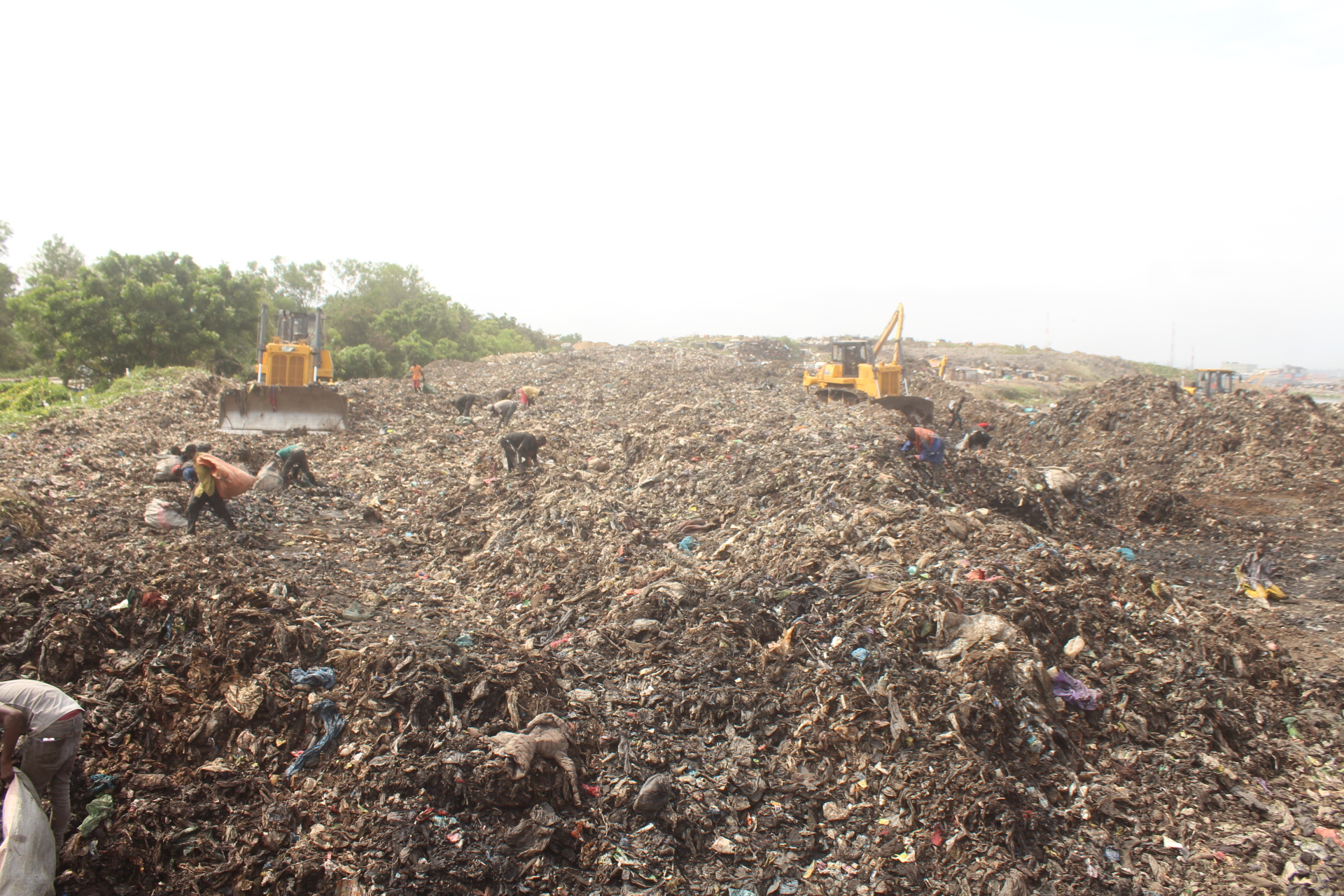
I write to commend government effort to clear the filth around the Agbogbloshie area of the capital to a new location for recycling.
As a Ghanaian, I feel very bad when I drive along the Kaneshie-Korle bu stretch (Mortuary road) and see the heap of waste piled at the area for many years.
It raises serious concerns about our ability to deal with the waste issue because of the volumes of waste generated every single day.
My happiness about the removal of the waste is due to its proximity to the Agbogbloshie market which serves people from all walks of life.
With that closeness, it could be a breeding ground for all manner of diseases when flies from this rubbish site feeds on the same foodstuff people would buy.
Much as we are happy about the removal of the waste, we must also be equally concerned about the new place which I’m sure may be closer to a community.
It is my prayer that a chunk of the waste would be recycled as we have been told. If there are others that cannot be recycled, there must be a way to handle it so that it would not become another problem for the nearby communities.
Government under President Mahama has done extremely well with this move. The clearance and subsequent of the area would surely give that area of the capital a new look.
Osei Mark,
Korle-Bu

The Ghana Health Service (GHS) has revealed that 53,415 adolescent pregnancies were reported in health facilities across the country between January and July 2026 alone. This is a startling revelation that should make our country uneasy.
The most distressing of these cases as carried in last week’s edition of The Spectator involved 1,501 young girls between the ages of 10 and 14.
Let’s refer to something as it actually is. A youngster who is 10 or 14 years old cannot lawfully give their consent for sexual conduct.
These 1,501 incidents are more than just “teenage pregnancy” numbers; they are documented instances of sexual exploitation, rape, and a disastrous breakdown of our social safety nets.
The foundation of our future human capital is under jeopardy due to the current national crises. Deep regional disparities are highlighted by the statistics provided by GHS Adolescent Health and Development Programme Manager Ms. Sharifa Mohammed.
The adolescent birth rate in the Savanna Region is higher than the norm for sub-Saharan Africa, at 117.5 per 1,000 young women.
That number soars to an astounding 230 births per 1,000 girls between the ages of 18 and 19 in the Bole District. In just five months, the Upper East Region recorded nearly 2,400 teenage pregnancies, with 520 of those cases occurring in Bongo District alone.
These are more than just figures; they stand for young girls whose educational paths have been abruptly cut off, ensnared in a cycle of vulnerability and poverty. The research demonstrates that this dilemma is most prevalent in areas with the fewest economic prospects, limited access to information, and inadequate social infrastructure.
The GHS correctly notes that the best form of contraception is education. The likelihood of pregnancy is considerably lower for girls who continue their formal education. Although the GHS should be commended for its “safety net” efforts since 2017, which include pathways back to the classroom, psychosocial support, and maternal care, the situation on the ground is still unfavourable.
Practical issues like unfriendly classroom environments and a lack of physical accommodations for pregnant students or nursing young mothers frequently force these girls out permanently, as Ms. Mohammed acknowledged.
Our re-entry plans are just lovely on paper if our schools are unable to meet the needs of these girls.
It is a positive step that MSI Reproductive Choices Ghana (MSIG) and UNFPA organised a national multi-sectoral conversation with the theme “Strengthening multi-sectoral action and accountability to prevent teenage pregnancy and protect adolescent futures in Ghana.”
Ghana does not, however, lack structures, policies, or dialogs. Targeted, well-funded implementation is what we lack. We need to change our strategy in three critical areas if we are to genuinely protect our teenagers.
International partners and stakeholders must cease dispersing resources unevenly around the nation. High-burden areas like the districts of Bole and Bongo need to be forcefully saturated with financial support, reproductive health education, and economic assistance.
The voices and needs of young people must be at the centre of our efforts, as Clara Nyarkoah Anim of MSIG so eloquently put it. Accra bureaucrats are unable to provide solutions for a young girl living in a rural village unless they are aware of her particular challenges and day-to-day struggles.
The practice of resolving child sexual abuse allegations at the local level needs to be dismantled. Prosecuting those who take advantage of young, defenseless girls is a necessary part of true responsibility.
If we watch helplessly while tens of thousands of our future female leaders, educators, and inventors have their childhoods cut short, we will not be able to create a thriving “Ghana Beyond Aid”
The Spectator strongly believes that it is time to turn our national outrage into a well-funded, fiercely protective barrier around every adolescent girl in Ghana.
Dear Editor,
The announcement that commercial transport fares will increase by 8 per cent from September 26 deserves more than a passing mention because transportation is not a luxury for the ordinary Ghanaian; it is a daily necessity.
For workers, students, traders and other commuters who depend on commercial vehicles every day, another increase means another adjustment to already stretched household budgets. Even a seemingly small increase becomes significant when multiplied across several journeys every week.
What concerns me most is the need for transparency around how the new fares will affect different routes and how passengers will be protected from arbitrary charges. Earlier this month, transport unions said no fare adjustment had been approved and warned drivers against unilateral increases while consultations were ongoing.
Now that an eight per cent increase has been announced, passengers deserve clear information and enforcement. The public should know the approved fares for their respective routes, and drivers who charge beyond the authorised rates should be held accountable.
I therefore urge the Ministry of Transport and the relevant transport unions to communicate the new fares clearly and ensure that the implementation does not become an opportunity for exploitation. The commuter must not be treated as an afterthought in the transport-fare conversation
From
Nana Yaw Frimpong
Sowutuom
The root causes: It is never just one reason
My years of counselling at CPAC show me abandonment is rarely an act of malice. It is the tragic endpoint of seven overwhelming distresses:
Psychology
1. Severe maternal mental illness —The hidden emergency
a) Clinical Postpartum Depression (PPD): This is far beyond “baby blues.” It is a severe mood disorder that can appear weeks to months after birth. Due to a massive drop in hormones, extreme sleep deprivation, and emotional exhaustion, the mother feels deep sadness, worthlessness, and complete emotional numbness towards her baby. Picture: A new mother sits by her bed all day, staring blankly. Her baby cries for hours, but she cannot lift her hands to carry the baby. She whispers, “This baby would be better off without me.” She does not hate the baby; she feels she has completely failed as a mother.
Advertisement
b) Peripartum Psychosis (Postpartum Psychosis): This is a psychiatric emergency. Rare but extremely dangerous, appearing suddenly within the first 2-3 weeks after delivery. The mother completely loses touch with reality. She hears commanding voices telling her to abandon the baby, or believes the baby is possessed by an evil spirit or is a “spirit child” who will bring a curse. Picture: A mother genuinely believes she heard a voice saying, “Leave this child at the crossroads at midnight or your family will die.” She abandons the baby not out of hatred, but because her broken mind believes she is obeying a higher spiritual order to save her family.
c) Pre-existing untreated Schizophrenia: This is a chronic, severe mental disorder that existed before the pregnancy. The stress of pregnancy and labour shatters her fragile coping. She suffers from paranoid delusions — believing people want to poison her and the baby — flat affect (zero facial expression), and grossly disorganised thinking, making it impossible to plan how to feed or clean a baby. Picture: A young woman whose family called her illness “spiritual attack” instead of taking her for medication wanders away after delivery, completely forgetting she even gave birth, leaving the infant behind.
2. Extreme socio-economic deprivation: For many girls in some parts of Ghana such as Kasoa, Madina, or Bekwai, poverty is not a statistic; it is a daily panic. No money for antenatal care, no money for hospital delivery, no money for baby diapers or formula. When a mother cannot feed herself, the thought of feeding another mouth feels impossible. Some mothers say, “I left her where someone richer would find her, because I could not watch her starve to death in my hands.” It is a distorted act of survival.
Geographic Reference
3. Intense societal stigma and shame: In Ghana, pregnancy outside marriage, teenage pregnancy, or pregnancy from rape can bring extreme family rejection. The girl is called “spoilt,” beaten, banned from church, or sacked from school. The fear of bringing shame to the family name is heavier than the fear of police. So she hides the pregnancy for 9 months, delivers alone, and abandons in secret to protect her family’s “honour.”
Advertisement
4. Paternal abandonment — The Man Who Ran Away: Behind almost every abandoned baby is a man who vanished. He says, “It is not mine,” or “Abort it,” and switches off his phone. The mother is left utterly isolated — no emotional, financial, or social support. She is criminalised alone, but the abandonment started with him. Psychological research shows paternal denial is one of the strongest predictors of maternal panic and newborn abandonment.
5. Substance abuse disorders: Alcohol, tramadol, and other drug addiction impair the brain’s executive functioning — the ability to plan, judge consequences, and process emotions. A mother struggling with addiction may give birth in a highly intoxicated or withdrawal state, unable to comprehend the needs of the newborn, leading to neglect and eventual abandonment.
6. The spirit child cultural phenomenon and superstition: In some remote pockets of Northern Ghana and even in few parts of Central and Ashanti regions, public health research shows babies born with congenital deformities, severe disabilities, or whose mothers die in childbirth are branded as “spirit children” or cursed. In extreme instances, families, under cultural pressure, mandate that such babies be exposed or abandoned at shrines or bushes. This is not mental illness, but a harmful cultural belief system that still kills.
The invisible wounds
Advertisement
On the baby: Risk of death from hypothermia, sepsis, and infection. Survivors suffer Anaclitic Depression and Failure to Thrive due to lack of touch. As adults, they battle Reactive Attachment Disorder, chronic mistrust, and identity crisis — “Why did my mother leave me in a dustbin?”
Babies & Toddlers
On the mother: Lifelong hidden grief, intense guilt, chronic PTSD, depression, and elevated suicide risk. A prison cell does not heal this.
On the nation: Overburdened orphanages like Osu Children’s Home, draining health budgets, and overworked Social Welfare officers.
SKIP THE QUEUE, TAP THE NEWS
Advertisement
Discover more
Africans & Diaspora
pregnancy
Trash Cans
You can now read the Ghanaian Times and The Spectator newspapers from the comfort of your device via TimesNewsPlus.
Join our WhatsApp Channel: https://whatsapp.com/channel/0029VbBElzjInlqHhl1aTU27