News
Merck Foundation reaffirms commitment to girls’ education, scholarships, medical training programmes


- /home/u249204778/domains/spectator.com.gh/public_html/wp-content/plugins/mvp-social-buttons/mvp-social-buttons.php on line 27
https://spectator.com.gh/wp-content/uploads/2026/06/Senator-Dr-Rasha-Kelej.jpg&description=Merck Foundation reaffirms commitment to girls’ education, scholarships, medical training programmes', 'pinterestShare', 'width=750,height=350'); return false;" title="Pin This Post">
- Share
- Tweet /home/u249204778/domains/spectator.com.gh/public_html/wp-content/plugins/mvp-social-buttons/mvp-social-buttons.php on line 72
https://spectator.com.gh/wp-content/uploads/2026/06/Senator-Dr-Rasha-Kelej.jpg&description=Merck Foundation reaffirms commitment to girls’ education, scholarships, medical training programmes', 'pinterestShare', 'width=750,height=350'); return false;" title="Pin This Post">
The Chief Executive Officer of Merck Foundation, Dr Rasha Kelej, has reaffirmed the Foundation’s commitment to supporting girls’ education and strengthening healthcare systems across Africa and Asia through scholarships and medical training programmes.
Speaking at the 13th Edition of the Merck Foundation Africa Asia Luminary 2026, held virtually, Dr Kelej said educating girls remains one of the Foundation’s key priorities because it empowers them to achieve their dreams and contribute meaningfully to society.
The virtual meeting brought together First Ladies from about 13 African countries including policymakers, health experts and development partners to discuss solutions for strengthening healthcare systems and improving patient outcomes across Africa and Asia.
She disclosed that 50 per cent of all scholarships awarded by the Foundation were reserved for female healthcare professionals as part of efforts to promote women’s empowerment and gender equity in the health sector.
According to her, Merck Foundation has awarded more than 2,000 scholarships to healthcare providers in critical underserved specialties, including oncology, family medicine, paediatrics and child health, while also supporting efforts to improve mental healthcare and reduce stigma associated with mental illness.
Dr Kelej noted that many African countries continue to face challenges such as inadequate financial resources and shortages of trained healthcare professionals, making investment in medical education essential for improving healthcare delivery.
Meanwhile, the Director of Tata Memorial Centre (TMC), India, Prof. Dr Sudeep Gupta, praised the partnership between Merck Foundation and Tata Memorial Centre, describing it as a successful model for healthcare capacity building.
Prof. Gupta said the collaboration, which began in 2016, has supported 141 scholarships for healthcare professionals from 27 African countries.
He explained that the initiative aims to improve access to quality and equitable cancer care, particularly in underserved communities, while addressing the shortage of trained oncology specialists across the continent.
According to him, Tata Memorial Centre, one of India’s leading cancer institutions, currently operates 11 hospitals across seven states and treats thousands of cancer patients annually, many from disadvantaged backgrounds.
The scholarship programme has provided training in several oncology specialties, including medical oncology, surgical oncology, radiation oncology, paediatric oncology, gynecologic oncology and palliative care. It has also supported training for nurses, laboratory technologists, radiation technologists and oncology researchers.
Prof. Gupta stressed that cancer care requires a multidisciplinary approach involving different healthcare professionals working together to deliver quality care.
He expressed gratitude to Merck Foundation, African and Asian First Ladies, and participating governments for supporting the initiative.
He reaffirmed Tata Memorial Centre’s commitment to expanding the partnership through education, research and institutional collaboration to ensure that every patient, regardless of financial status, has access to timely, affordable and high-quality cancer care.
By Esinam Jemima Kuatsinu








Deputy National Women Organiser of the New Patriotic Party (NPP), Mimi Duah, has openly declared her support for Mavis Hawa Koomson as the next National Women’s Organiser of the party.
In a statement endorsing Hawa Koomson’s candidature, Ms Duah outlined four key reasons why she believes the former MP and Minister of State is best placed to lead the party’s women’s wing.
According to her, Hawa Koomson is a motherly figure who rose from the grassroots and is widely noted for her forgiving nature and ability to foster unity.
“She is a true grassroots mother who easily forgives, fosters unity, provides guidance and arbitrates to ensure all aggrieved party women are brought on board to ensure a unified women’s wing,” she stated.
Ms Duah also pointed to Hawa Koomson’s vast experience, having served as a Constituency Women’s Organiser, Member of Parliament and Minister of State, noting that the experience positions her to provide effective leadership as National Women’s Organiser.
She further described Hawa Koomson as capable of making the women’s wing resourceful, through her extensive network and business contacts, to lobby for logistics, training and financial support for women organisers at all levels.
Lastly, she said the NPP as an opposition party needs fearless, bold and assertive leadership at the women’s front to inspire regional, constituency and polling station women organisers as the party reorganises towards the 2028 elections.
“We need a Women’s Organiser who has been tested, who is bold, who understands grassroots women, and who can lead us to victory in 2028. Hon. Mavis Hawa Koomson is that leader,” she stressed.
By Edem Mensah-Tsotorme
News
Tourism, Culture and Creative Arts Minister inaugurates Ghana-Korea Heritage Project Steering Committee
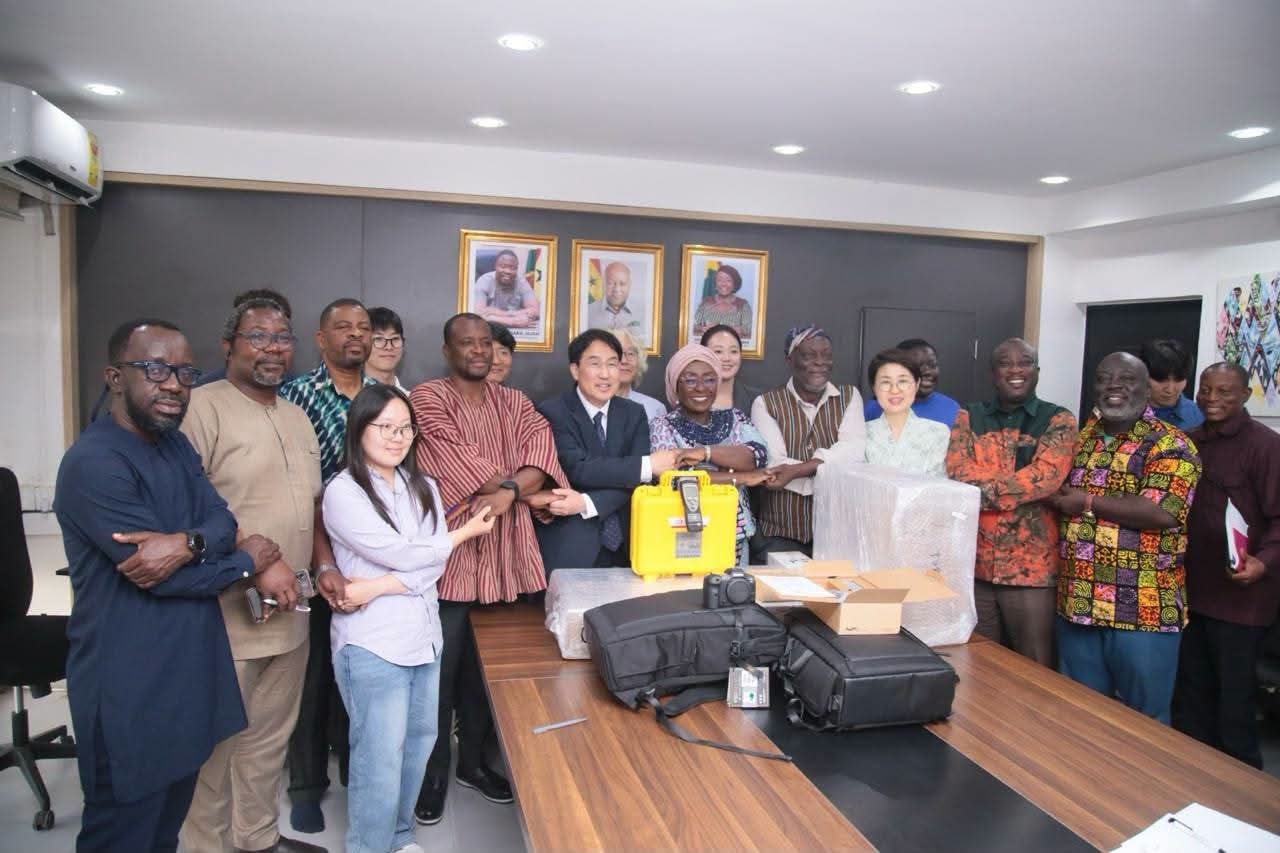
Tourism, Culture and Creative Arts Minister, Abla Dzifa Gomashie, has inaugurated the Ghana-Korea Heritage Project Steering Committee to provide strategic oversight for a five-year programme focused on preserving Ghana’s heritage sites and strengthening their resilience to climate change.
The project will support climate-risk mapping, digital surveying and 3D modelling, joint research, capacity building, community engagement and modern monitoring technologies.
Korea is also providing specialised equipment, including drones, 3D scanners, digital microscopes, thermal imaging cameras and GPS survey instruments, to enhance Ghana’s capacity to scientifically assess, document and conserve heritage structures.
The partnership, which will run through 2030 and beyond, is expected to deepen Ghana-Korea cultural ties while promoting sustainable, technology-driven and climate-adaptive heritage management for future generations.
By Edem Mensah-Tsotorme