News
1.1 billion children exposed to climate threats – UNICEF report

- /home/u249204778/domains/spectator.com.gh/public_html/wp-content/plugins/mvp-social-buttons/mvp-social-buttons.php on line 27
Warning: Trying to access array offset on false in /home/u249204778/domains/spectator.com.gh/public_html/wp-content/plugins/mvp-social-buttons/mvp-social-buttons.php on line 27
&description=1.1 billion children exposed to climate threats – UNICEF report', 'pinterestShare', 'width=750,height=350'); return false;" title="Pin This Post">
- Share
- Tweet /home/u249204778/domains/spectator.com.gh/public_html/wp-content/plugins/mvp-social-buttons/mvp-social-buttons.php on line 72
Warning: Trying to access array offset on false in /home/u249204778/domains/spectator.com.gh/public_html/wp-content/plugins/mvp-social-buttons/mvp-social-buttons.php on line 72
&description=1.1 billion children exposed to climate threats – UNICEF report', 'pinterestShare', 'width=750,height=350'); return false;" title="Pin This Post">
Nearly half of the world’s children – or 1.1 billion – are exposed to at least three overlapping climate hazards, threatening their health, education, and survival, a new United Nations Children’s Fund (UNICEF) report released on Tuesday, has said.
According to the report, almost every child in the world faces at least one climate hazard, while more than 4 million could face as many as six overlapping threats.
Christened ‘The Children’s Climate Risk Report 2026’,it uses the latest available data to map children’s exposure to the eight most frequent climate threats, including coastal floods, droughts, extreme heat, fires, heat waves, riverine floods, sand and dust storms, and tropical storms.
The report stated that drought, extreme heat, and heat waves were the most widespread combination of climate hazards, with over 296 million children living in areas exposed to all three conditions.
The second most common combination – drought, extreme heat, and tropical storms – leaves more than 115 million children worldwide exposed to these overlapping threats.
In addition to the eight most frequent climate hazards, the report analyses children’s exposure to air pollution and malaria; two risks that are highly sensitive to the effects of climate change.
Data shows that air pollution affects nearly every child globally, while one billion children are exposed to malaria, adding another layer of danger for children already facing multiple climate hazards.
And without urgent efforts to reduce greenhouse gas emissions, climate hazards, according to the report, will grow more frequent and severe, placing even greater strain on government budgets and systems, threatening children’s well-being, the report warns.
To protect children’s rights from these threats, UNICEF is calling on governments, businesses and relevant actors to work towards the reduction ofemissions and take ambitious action to fulfil existing international commitments, grounded in the best available science, including the urgent phasing-out of fossil fuels and a just transition towards renewable energy.
With that, children can be protected through inclusive climate adaptation, disaster risk reduction, and responses to loss and damage that prioritise the resilience of social services, ensuring that children and child-critical services were included in the national sector strategies, disaster risk governance, preparedness and response plans.
Moreover, the report also stated that it was important toempower children and young people to meaningfully participate in climate action by investing in climate education, knowledge and skills, and by strengthening the capacity of decision makers and experts to respect children’s rights to be heard.


Deputy National Women Organiser of the New Patriotic Party (NPP), Mimi Duah, has openly declared her support for Mavis Hawa Koomson as the next National Women’s Organiser of the party.
In a statement endorsing Hawa Koomson’s candidature, Ms Duah outlined four key reasons why she believes the former MP and Minister of State is best placed to lead the party’s women’s wing.
According to her, Hawa Koomson is a motherly figure who rose from the grassroots and is widely noted for her forgiving nature and ability to foster unity.
“She is a true grassroots mother who easily forgives, fosters unity, provides guidance and arbitrates to ensure all aggrieved party women are brought on board to ensure a unified women’s wing,” she stated.
Ms Duah also pointed to Hawa Koomson’s vast experience, having served as a Constituency Women’s Organiser, Member of Parliament and Minister of State, noting that the experience positions her to provide effective leadership as National Women’s Organiser.
She further described Hawa Koomson as capable of making the women’s wing resourceful, through her extensive network and business contacts, to lobby for logistics, training and financial support for women organisers at all levels.
Lastly, she said the NPP as an opposition party needs fearless, bold and assertive leadership at the women’s front to inspire regional, constituency and polling station women organisers as the party reorganises towards the 2028 elections.
“We need a Women’s Organiser who has been tested, who is bold, who understands grassroots women, and who can lead us to victory in 2028. Hon. Mavis Hawa Koomson is that leader,” she stressed.
By Edem Mensah-Tsotorme
News
Tourism, Culture and Creative Arts Minister inaugurates Ghana-Korea Heritage Project Steering Committee
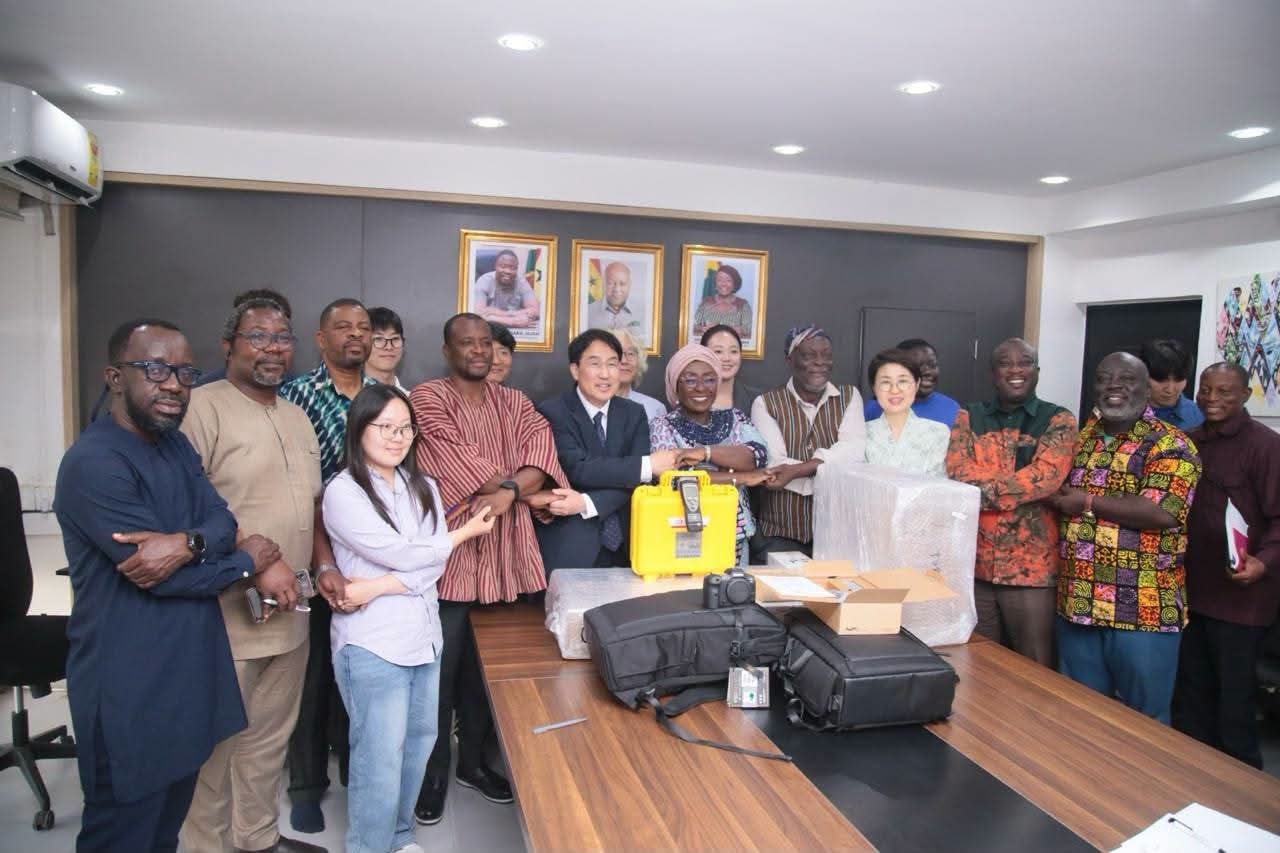
Tourism, Culture and Creative Arts Minister, Abla Dzifa Gomashie, has inaugurated the Ghana-Korea Heritage Project Steering Committee to provide strategic oversight for a five-year programme focused on preserving Ghana’s heritage sites and strengthening their resilience to climate change.
The project will support climate-risk mapping, digital surveying and 3D modelling, joint research, capacity building, community engagement and modern monitoring technologies.
Korea is also providing specialised equipment, including drones, 3D scanners, digital microscopes, thermal imaging cameras and GPS survey instruments, to enhance Ghana’s capacity to scientifically assess, document and conserve heritage structures.
The partnership, which will run through 2030 and beyond, is expected to deepen Ghana-Korea cultural ties while promoting sustainable, technology-driven and climate-adaptive heritage management for future generations.
By Edem Mensah-Tsotorme