Editorial
Create enabling environment for families to live in peace

Yesterday was the International Day of Families (IDF), a global celebration of families and their significance that aims to increase awareness of social and economic challenges.
Every year on May 15, the United Nations observes IDF, a day that emphasises the value of families in social development and advocates for family-friendly legislation.
The UN General Assembly created the Day in 1993 to bring attention to economic, demographic, and social issues that impact families, such as urbanization, digital transformation, and climate change.
Because of this, the government, local communities, and non-governmental organisations (NGOs) utilise this day to advocate for family-oriented policies like childcare and financial assistance to strengthen communities and advance health and education.
Children must live in a positive home setting that offers affection, love, care, support, pleasant relationships, discipline, and fairness since they are vulnerable and require assistance in a variety of ways.
In support of this year’s theme, “Families, Inequalities and Child Wellbeing,” The Spectator thinks that providing this supportive atmosphere for children will help advance their wellbeing.
In the meantime, today, May 16, is the “International Day of Living Together in Peace,” which aims to uphold the desire to live and act together, united in variety and differences, in order to create a sustainable world of harmony, solidarity, and peace.
This year’s theme, “Living Together in Peace: Building Trust through Dialogue, Inclusion and Reconciliation,” is appropriate since the day serves as a reminder of how crucial it is to promote compassion, understanding, and connection despite differences.
“Living together in peace is all about accepting differences and having the ability to listen to, recognise, respect, and appreciate others, as well as living in a peaceful and united way,” according to UNESCO.
In order for peace to prevail, individuals must choose to listen to and uphold the dignity of those whose experiences, opinions, and histories may differ from their own. We must recognize that coexisting peacefully is a practical endeavour rather than an abstract one. And in order for peace to prevail, individuals must decide to pay attention and uphold the dignity of those whose backgrounds, experiences, and opinions may differ from their own.
Respecting people’s opinions is important because it fosters trust and improves relationships. After a quarrel, most people find it hard to make amends, but The Spectator encourages people to talk, which is one approach to mend broken relationships. Tensions are reduced and the circumstances for peace are established through dialogue.
Each of us has a part to play in creating peaceful environments therefore as the theme draws attention to the daily work of peace in diplomacy, in institutions, families, schools, workplaces, communities, places of worship, and public life, let us uphold peace in high regard.

Dear Editor,
I write to express concern about the uncertainty facing many National Service personnel after completing their mandatory service.
Every year thousands of young graduates are posted to various institutions across the country where they contribute significantly to productivity and service delivery.
Unfortunately, after their service period, many are left unemployed despite demonstrating competence, dedication, and commitment to duty.
In many offices, National Service personnel perform the same responsibilities as permanent staff and in some cases help reduce workload pressures.
It is therefore discouraging that after gaining practical experience and contributing to national development, they are often asked to leave without any opportunity for permanent employment.
This situation has contributed to rising unemployment and frustration among the youth.
I would like to appeal to the government, public institutions, and private organisations to consider retaining hardworking National Service personnel whenever vacancies arise.
Creating a clear pathway for permanent employment after service would motivate young graduates to give off their best and also help reduce graduate unemployment in the country.
Eugene Ampiaw
Mamprobi-Camara.
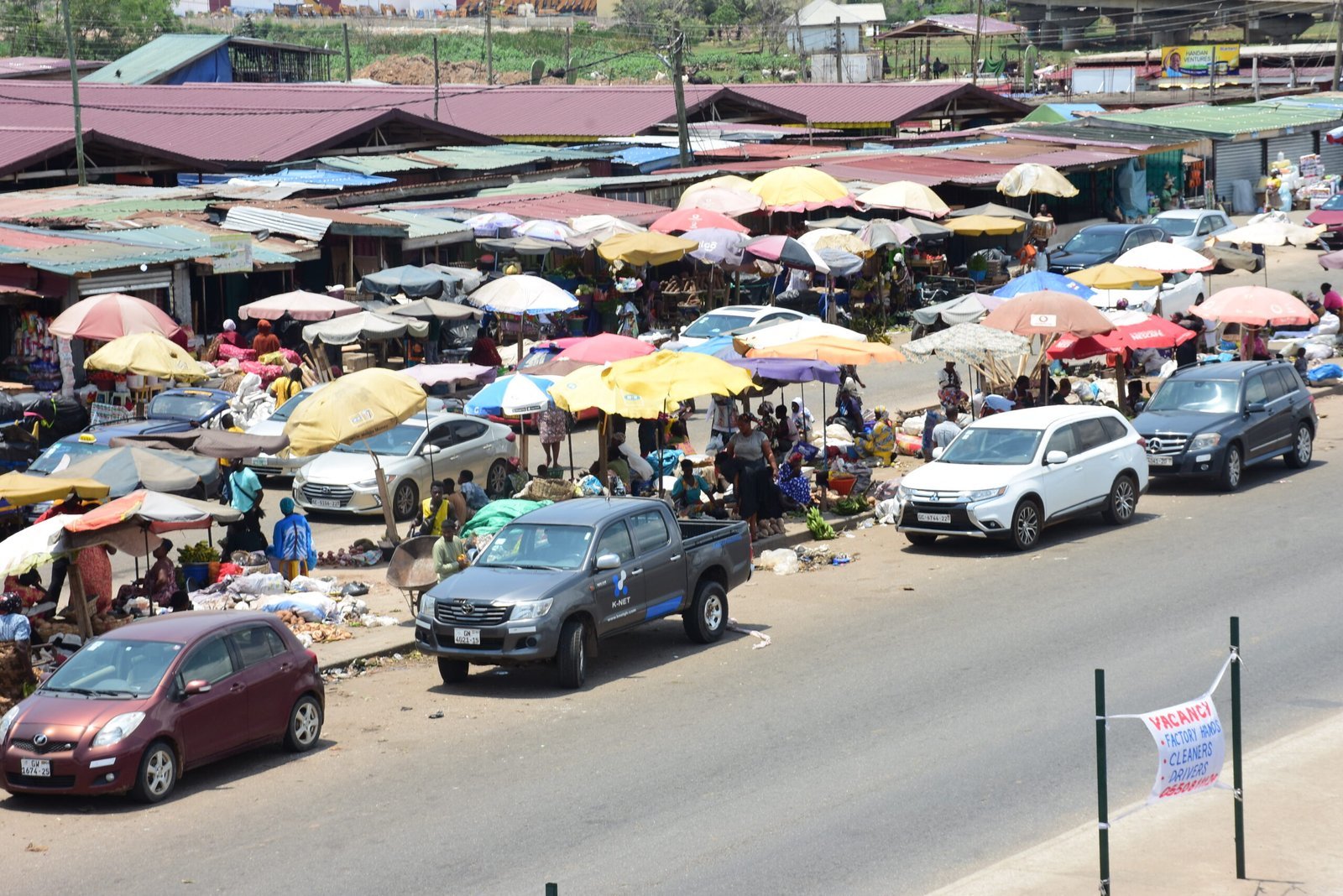
Dear Editor,
Walking along roads in some parts of the capital has become increasingly challenging.
While trading on pedestrian walkways remains a concern in certain areas, the parking of vehicles on road shoulders also poses a serious risk to pedestrians.
Often, pedestrians are forced to walk dangerously close to these parked vehicles or even step into the middle of the road to make way for oncoming traffic.
This situation is not only frustrating but also highly unsafe.
I recall an incident when I alighted at a lorry station and was walking home. A Tata bus was approaching, and due to vehicles parked on both sides of the road, I had nowhere to walk safely.
The situation became so dangerous that I had to quickly jump into a nearby shop to avoid being knocked down by the oncoming Tata bus.
That experience was frightening and could have easily resulted in an accident.
In my view, it is time for authorities in the road sector, such as the National Road Safety Authority and the Motor Traffic and Transport Department (MTTD) of the Ghana Police Service, to take urgent action to address this issue and prevent possible loss of life.
Strict enforcement measures, including towing improperly parked vehicles and imposing substantial fines, would serve as a deterrent to offenders.
From Ray
Adabraka

 News3 days ago
Ghana’s Chris Koney participates in high-level dialogue at Africa Forward Summit 2026
- News1 week ago
Isaac Adongo defends BOG Governor, says Ghana “in safe hands”
- Features3 days ago
Fix It Fast or Lose Them Forever: The Ever-Rising Importance of Service Recovery in Competitive Industries