Nutrition
From donor dependence to national ownership: Ghana’s path to sustainable child nutrition

- /home/u249204778/domains/spectator.com.gh/public_html/wp-content/plugins/mvp-social-buttons/mvp-social-buttons.php on line 27
Warning: Trying to access array offset on false in /home/u249204778/domains/spectator.com.gh/public_html/wp-content/plugins/mvp-social-buttons/mvp-social-buttons.php on line 27
&description=From donor dependence to national ownership: Ghana’s path to sustainable child nutrition', 'pinterestShare', 'width=750,height=350'); return false;" title="Pin This Post">
- Share
- Tweet /home/u249204778/domains/spectator.com.gh/public_html/wp-content/plugins/mvp-social-buttons/mvp-social-buttons.php on line 72
Warning: Trying to access array offset on false in /home/u249204778/domains/spectator.com.gh/public_html/wp-content/plugins/mvp-social-buttons/mvp-social-buttons.php on line 72
&description=From donor dependence to national ownership: Ghana’s path to sustainable child nutrition', 'pinterestShare', 'width=750,height=350'); return false;" title="Pin This Post">
An estimated 68,517 children in Ghana currently suffer from Severe Acute Malnutrition, yet only about 15 percent receive treatment. This gap is not due to a lack of effective solutions, but to limited and unstable access driven by fragmented, donor-dependent financing. As Ghana advances toward universal health coverage and economic self-reliance, ensuring sustainable and equitable child nutrition services requires urgent policy action.
Ready-to-Use Therapeutic Food (RUTF) and Multiple Micronutrient Supplements (MMS) are proven, cost-effective interventions. RUTF achieves recovery rates of 75–90 percent among children with severe acute malnutrition, while MMS reduces low birth weight and preterm birth. Both interventions are included in Ghana’s Essential Medicines List and Standard Treatment Guidelines. National protocols are finalised and disseminated, and over 600 health workers have been trained. In short, Ghana has laid the policy and technical groundwork.
Despite this readiness, access remains constrained by reliance on donor funding. Time-bound financing leads to supply disruptions, uneven geographic coverage, and weak long-term planning. Service availability often reflects donor priorities rather than population need.
Most critically, national ownership is undermined when lifesaving child nutrition interventions depend on external support. Donor dependence also limits system integration. Nutrition services delivered through projects remain peripheral to routine care. Health facilities cannot fully integrate RUTF and MMS into standard maternal and child health services without predictable supply. Data systems, quality assurance, and accountability mechanisms remain fragmented, preventing these interventions from reaching scale and impact.
Integrating RUTF and MMS into the National Health Insurance Scheme (NHIS) offers a clear pathway to sustainable national ownership. With 84 percent of mothers of children under five already enrolled, NHIS provides an existing platform for rapid and equitable scale-up. The 2025 uncapping of the National Health Insurance Levy further strengthens the financing base. NHIS inclusion would remove out-of-pocket costs for vulnerable families, standardise service delivery nationwide, and embed nutrition care within routine health services.
The cost implications are manageable. MMS costs approximately USD 2.50 per pregnancy for a full course, representing a small fraction of current undernutrition spending. Timely community-based RUTF treatment also reduces costly hospital admissions for complicated and severe malnutrition. Ongoing Health Technology Assessments will provide Ghana-specific evidence to guide reimbursement decisions.
Domestic financing brings broader benefits. It ensures stronger government accountability, improved data reporting, better quality assurance, and long-term planning beyond donor cycles. Most importantly, it affirms that the survival and wellbeing of Ghanaian children are national responsibilities.
The policy decision before Ghana’s leadership is clear. The clinical evidence supports RUTF and MMS. The regulatory framework is established. The implementation capacity exists through trained health workers and operational guidelines. The financing mechanism is available through NHIS with its recently expanded revenue base. What remains is the political committment to prioritise sustainable nutrition financing as part of Ghana’s Universal Health Coverage roadmap and broader development agenda.
Donor support has been valuable in establishing these interventions and building implementation capacity. The transition to domestic financing should be viewed not as disengagement but as graduating to full national ownership. Development partners can continue supporting technical assistance, capacity building, and innovation while Ghana secures sustaining coverage at scale.
The gap between 15 percent coverage and the 80 to 90 percent achievable with adequate financing represents thousands of preventable child deaths and compromised maternal health outcomes annually. Closing this gap through NHIS integration of RUTF and MMS is not merely a technical health financing decision. It is a statement of national values and priorities, affirming that every Ghanaian child deserves access to lifesaving nutrition treatment regardless of circumstance. It is a foundation for sustainable human capital development.
Feature article by Women, Media and Change under its Nourish Ghana: Advocating for Increased Leadership to Combat Malnutrition project.
Join our WhatsApp Channel now!
https://whatsapp.com/channel/0029VbBElzjInlqHhl1aTU27


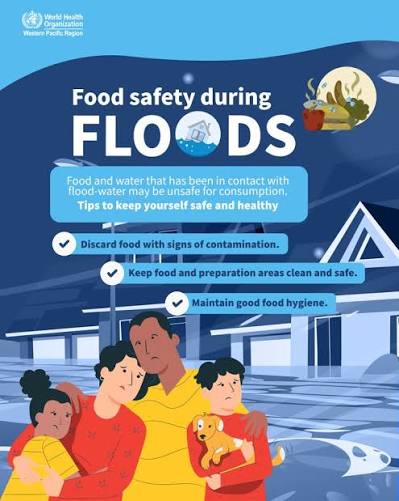
The recent floods across parts of Ghana have disrupted lives, displaced families, and damaged homes and livelihoods. While rescue efforts and rebuilding understandably take centre stage, another urgent issue deserves equal attention, nutrition and food safety, both during the flood and long after the water recedes.
Floods contaminate water sources, destroy crops, interrupt food supplies, and increase the spread of foodborne disease. These challenges place young children, pregnant and breastfeeding women, older adults, and people living with chronic illness at far greater risk of malnutrition. The scale of this threat is not hypothetical: in June 2025 alone, floods displaced nearly 90,000 people across seven regions, according to Ghana’s National Disaster Management Organisation (NADMO). Past flood-drought cycles show why displacement of this kind matters for nutrition following a similar disaster in Ghana’s three northern regions, the World Food Programme documented chronic malnutrition among children ranging from 34 to 48 per cent, alongside acute malnutrition of 8 to 12 percent, in the hardest-hit areas. As Ghana faces more frequent extreme weather events, protecting nutrition must become a core part of disaster preparedness, not an afterthought.
Floods affect more than food availability
Floodwaters wash away farms, destroy stored food, and make it difficult for farmers and traders to move produce to market. As supplies shrink, prices of nutritious foods such as fruits, vegetables, fish, and eggs increase. For households already stretched by the rising cost of living, that often means choosing cheaper, less nutritious food just to feel full. Over time, diets narrow, and the risk of vitamin and mineral deficiencies grows.
The hidden danger: unsafe food
Floodwater is rarely clean. It carries sewage, chemicals, animal waste, and other contaminants into homes, farms, and food stores. Eating food that has touched floodwater, or drinking unsafe water, can trigger diarrhoea, cholera, typhoid, and other infections, illnesses that block nutrient absorption and cause rapid weight loss, especially in children. The danger doesn’t end when the water goes down; improperly stored or damaged food can still make people sick weeks later.
What every household can do
- Drink only safe or treated water where supplies have been affected.
- Wash fruits and vegetables thoroughly with clean water.
- Discard any food that has been exposed to floodwater, even if it looks fine.
- Cook food thoroughly and never eat spoiled food.
- Keep breastfeeding infants: breast milk remains the safest source of nutrition in an emergency.
- Seek medical care promptly if a child develops persistent diarrhoea or shows signs of dehydration.
Recovery needs more than a full stomach
Emergency food aid tends to focus on energy-dense staples like rice and maize. Important, yes but not enough on their own. Recovering families also need protein, healthy fats, vitamins, and minerals, especially the most vulnerable groups. A nutrition-smart response includes fortified foods, beans and other legumes, safe drinking water and fresh produce where possible.
Recovery shouldn’t stop at food distribution, either. Communities need help rebuilding farms, markets, and livelihoods so families can go back to sourcing diverse, nutritious food on their own, not depending indefinitely on aid.
A call for leadership
Floods will keep testing Ghana’s resilience. The first call is to find innovative ways to reduce the impact of the floods. The response, however, has to go beyond emergency relief to actively protect nutrition and food safety through safe water provision, food safety education, trained health workers who can spot malnutrition early, and recovery programmes that help farmers get growing again quickly.
When communities are protected from hunger, disease, and poor nutrition at every stage of a disaster, they don’t just survive floods, they recover from them faster and stronger.
Feature article by Women, Media and Change under its Nourish Ghana: Advocating for Increased Leadership to Combat Malnutrition project
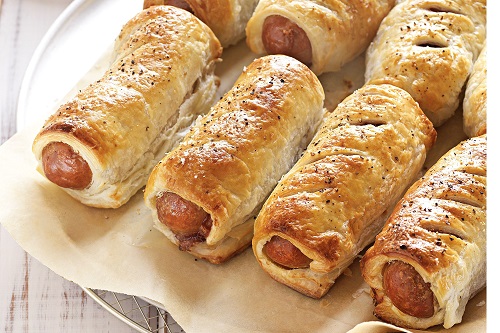
Ingredients
-2 onion sliced
– One pack of sausage
– 2 tablespoonful of salt
-1 tablespoonful of nutmeg
-One tin of milk
– 2 large eggs
– 2 kilograms of flour
Method
-Pre-heat oven to keep it warm
-Put saucepan on the fire and heat oil
-Add onions and cook until soft and golden brown and spread out on a plate to cool
-Add onions, nutmeg and sausage and mix together
– Roll the pastry out into a big rectangle as thick as a pound coin and cut it length ways into two long, even rectangles
-Roll mixture into sausage shapes with your hands and lay along the centre of each rectangle
-Mix the egg and milk and brush the pastry with the mixture, then fold one side of the pastry over, wrapping the filling inside. Press down with your fingers or the edge of a spoon to seal the joint
Cut the long rolls into the sizes you want and space them out on a baking tray. Brush with the rest of the egg wash and bake in the pre-heated oven for 25 minutes or until puffed, golden and cooked through
By Linda Abrefi Wadie