News
Selling one’s country

- /home/u249204778/domains/spectator.com.gh/public_html/wp-content/plugins/mvp-social-buttons/mvp-social-buttons.php on line 27
https://spectator.com.gh/wp-content/uploads/2021/05/Galamsey-Pix.jpg&description=Selling one’s country', 'pinterestShare', 'width=750,height=350'); return false;" title="Pin This Post">
- Share
- Tweet /home/u249204778/domains/spectator.com.gh/public_html/wp-content/plugins/mvp-social-buttons/mvp-social-buttons.php on line 72
https://spectator.com.gh/wp-content/uploads/2021/05/Galamsey-Pix.jpg&description=Selling one’s country', 'pinterestShare', 'width=750,height=350'); return false;" title="Pin This Post">
There’s an Akan proverb that translates to mean “when an insect bites you, it is already in your cloth”. A similar one in Ewe says “it’s the snake in your home that betrays you and hands you over to the foreign snake”. For an outsider to invade your territory, the betrayal comes from within.
The very first time I encountered Chinese, it was sometime in 1971 when I was on an excursion to the Tema Harbour with schoolmates. A ship had docked at the port and there were hordes of these Orientals milling all over a huge vessel. We were allowed aboard the ship to interact with the Chinese sailors and take a tour of the vessel. Let me confess that we could not differentiate one Chinese from the other; they looked like they were all born of the same parents.
They had slant eyes that seemed to squint all the time, round faces and strands of hair that seemed to stand on their scalp. Their skin looked a shade more yellow than the American Peace Corps volunteers that taught us in school and some British that I had known prior. It was on this ship that I first saw oranges in red, green, blue and red colours, and frozen.
I later got to understand these Orientals better from the novels of James Clavels. I know the story of the Japanese colonisation of China and the heroics of Chairman Mao Dze Dung who revolutionised the country. I know also of the Dynasties that ruled this vast country long before Christ. One thing I have never understood is the Chinese invasion of Tibet, no matter what their motivation was. Tibet was then a peaceful, spiritualised mountain nation governed by a Dalai Lama. The people were largely vegetarian. Then the Chinese invaded the place and feasted on any living animal in sight.
In the past two decades or so, the Chinese started coming to Ghana. We normally saw them at construction sites, textile and steel factories and also as crew on fishing trawlers. A few Koreans, Filipinos and Japanese were also visible occasionally. Then the torrent of Chinese pouring in became alarming to some of us. Chinese Restaurants sprang up in Accra, Tema and other big towns. Chinese herbal clinics opened businesses. Others had ideas of going into mining.
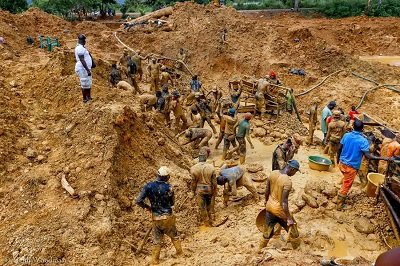
With the connivance of prominent Ghanaians, chiefs and some political actors these Chinese obtained licences and concessions to go into our forests to prospect and mine gold. Many, if not all of them, were into the illegal sector christened Galamsey. Cocoa trees were felled to give way to mining. Mercury, a rather toxic chemical used in the process was released into rivers and other water bodies, thus polluting the environment to the extent that aquatic life has been destroyed.
Foodstuffs from those areas now have cyanide and mercury contamination higher than the tolerable levels for human consumption. The rivers are now more than muddy waters from an avalanche of mudslide from monsoon rains. How they manage to take the gold away is anybody’s guess. They arrive at our ports of entry with barely a duffel bag over their shoulders and before you know it, they have excavators all over our forest floor, turning our rich, fertile agricultural soil upside down.
It is heartwarming to learn that the Minister of the sector, Mr. Samuel Abu Jinapor, has asked mining by the small scale operators to be put on hold. Good as that sounds, we must begin to find a way to reverse the pollution of our water bodies. These Galamsey operators must first be made to bear the cost of cleansing these rivers of the pollutants. The pollution of any river must be classified a felony, especially since the very existence of the people in the catchment areas depends on the water resource. The Presidency must lend utmost support to Mr. Jinapor in this regard.
I will not be surprised if pressure has already started mounting on the President to allow the Galamsey business to continue. Should people die because others want to make money at all costs? South Africa’s gold reserves have depleted by over 60 per cent. I hope Ghana is not racing to go down the same path.
What the Chinese do to our land attracts the death penalty in their country. They dare not degrade the Chinese environment, so why do they do that here? The answer is simple: we have allowed them to. They have friends high up in the Immigration Service. They have friends high up in government. They have collaborators high up in the Security Services. Simply put, they have become untouchable. Some have become kingpins in their own right. A military detachment was seen in news video, camped at a Galamsey site giving safe conduct to these Chinese activities.
The chiefs in the affected areas are complicit; they cannot pretend not to know what is going on in their backyard. They have been paid to acquiesce. The Chinese Leader is right when he says his citizens do not know their way around and it is only a local who could lead the way. How very profound and true.
Now, there is something new and more frightening. China has begun to export cocoa. While destroying our cocoa farms, the Chinese had the presence of mind to take some cocoa seeds back home to ‘experiment’ with. Voila, they have succeeded in cultivating the crop and are exporting it. Not only are they cultivating cocoa; they are using very innovative methods in the drying process. The good thing with the Chinese is that when they set their minds on something, they go at it with a passion. It is as if their very lives depend on it.
I have read claims by a cocoa farmer described as an expert in the produce, that China’s foray into cocoa production is no threat to Ghana. I wish this expert had adduced empirical scientific evidence of his assertion. The Chinese export earned that country $3,600 per tonne while Ghana’s own fetches $2,400 for the same weight. Does it mean China has a better bargaining power or their cocoa beans are of a more superior quality? Which is the case, if I may ask the experts.
It took Malaysia only five palm seedlings from Ghana to become the largest world producer and exporter of palm fruits and palm oil. See? I recollect some years ago when driving from Adawso in Akuapem towards Koforidua, there was a large palm plantation around Kwamoso that stretched for kilometres on end. Today, the place is bare, thanks to the African appetite for frothy palm-wine.
And how has the Malaysian success spurred us on to do better or even improve on our production, if the expert is to be believed? Let us tickle ourselves and enjoy the laughter while other countries are busy taking their chances. We pride ourselves as the first in gaining independence and other firsts, only to be overtaken by the realities of the times.
I hear China has started bagging gari for export. Give China between five and 10 years from today; that country will be the biggest exporter of cocoa beans on the world market. This is not my wish. It is the sad truth. Can our COCOBOD drive the agenda for drying cocoa beans the way the Chinese have done? I have my doubt. Our cocoa farmers are so impoverished they cannot afford the Chinese method of drying their beans.
What the biggest cocoa farmer earns from the crop in a whole season comes nowhere near one month’s salary of the Chief Executive of the Ghana COCOBOD who, in all probability, does not own a cocoa farm. Is it any wonder the youth are not interested in farming? As a cocoa farmer myself, I am aware of the situation on the ground. I know the type of cocoa that was on our soil before Tetteh Quarshie brought the Fernando Po variety. I know the variety that came from Brazil and I know the hybrid.
If what is in the news about Ghana’s cocoa beans having high mercury content is true, I am afraid this country is done for. I call on our scientists in the standards sector to collaborate with our Ministry of Agriculture to investigate this as quickly as possible so that Ghana’s record of having the best cocoa beans is not dented. If it turns out to be true, we can only blame our leaders, not the Chinese.
As for the Chinese, they must be free to undertake legitimate business wherever they want. However, they must not be allowed to do what they cannot do in their own country. After all, we all belong to one human race and every land or space must provide genuine opportunity for everyone, irrespective of race, colour or creed.
Once upon a time, Ghana was the leading producer of cocoa in the world. Today, Ghana is chasing Cote D’Ivoire which produces more than double our annual production. Very soon, we are likely to chase both China and Cote D’Ivoire for a place on the table. How would our leaders in the Cocoa Sector explain that?
Writer’s email address:
akofa45@yahoo.com


Dr Mahamudu Bawumia has become the new leader of the New Patriotic Party (NPP) after delegates approved a constitutional amendment making the party’s flagbearer its leader.
The amendment was approved on Saturday, October 3, 2026, at the NPP’s National Delegates Conference held at the Baba Yara Sports Stadium in Kumasi.
The decision makes Dr Bawumia the leader of the NPP as the party prepares for the 2028 general elections, having earlier been elected as its presidential candidate.
The change was contained in one of 14 constitutional amendments presented to delegates by the party’s Constitution Amendment Committee.
The amendments were approved through a voice vote, with delegates responding in favour of the motions.
The latest amendment reverses a provision approved at the party’s January 31, 2026 conference, which made the National Chairman the leader of the party at all material times.
The approved amendment provides for the flagbearer to assume the leadership of the party when the NPP wins an election and the flagbearer becomes President.
The amendment also reinstates the President as a member of the National Executive Committee when the party is in government.
The Chairman of the NPP Constitution Amendment Committee, Frank Davies, explained that the amendments were necessary to address gaps identified in the party’s previous constitutional review.
The constitutional amendments formed the first part of the conference before delegates proceeded to elect new national executives.
A total of 7,163 delegates from all 16 regions participated in the conference, with voting conducted at 31 polling stations for nine national executive positions.
The Electoral Commission supervised the elections and verified delegates.
Other approved amendments include changes to the election of Vice Chairpersons, allowing candidates to contest specific Vice Chairperson positions instead of being ranked according to the number of votes they receive.
Delegates approved the appointment of three additional Vice Chairpersons, the creation of Deputy Communications Officer positions and the elevation of the Information Technology Officer to an executive position.
Addressing delegates after the constitutional amendments and as the party prepared for the national executive elections, Dr Bawumia called for unity and peaceful voting.
He urged the 47 aspirants contesting nine national positions to accept the outcome of the elections and continue working together for the party.
“Let us vote in peace, accept the results in good faith and leave Kumasi as one family,” he told the delegates.
Dr Bawumia congratulated all the aspirants for putting themselves forward to serve the party and urged those who won to reach out to their fellow contestants.
He assured those who lost that the party would still need their experience and contribution.
The NPP flagbearer further reflected on the party’s reorganisation since the December 2024 general elections, saying the party had listened to its grassroots members and learnt lessons about its organisation, communication and engagement with supporters.
He noted that the party had elected its structures from the polling station to the regional level and had also begun preparations towards its next programme for government.
Dr Bawumia said his early election as the party’s presidential candidate had allowed him and the party to begin work on policy development ahead of the 2028 campaign.
He said various policy committees had been established and engagements with different groups and stakeholders were ongoing.
Turning to national issues, Dr Bawumia used his address to criticise the government over what he described as failures to fulfil several campaign promises.
He specifically questioned the progress of the NDC government’s proposed 24-hour economy, the women’s development bank, electricity tariffs, the cost of transportation and other economic challenges facing households and businesses.
On the economy, he defended the Domestic Gold Purchase Programme, arguing that the programme introduced under the previous NPP administration had contributed to stability in the Ghanaian currency.
Dr Bawumia further criticised the government over the stalled implementation of projects including Agenda 111 and raised concerns about the management of the Free Senior High School programme.
He addressed recent drug seizures involving consignments traced to Ghana, calling for a bipartisan parliamentary committee to investigate how such shipments were able to leave the country.
On the fight against illegal mining, popularly known as galamsey, he accused the government of failing to deliver on its promises to tackle the problem and restore polluted water bodies.
He criticised the government over promises relating to cocoa prices, teacher and nurse postings, the teacher licensure examination and payments to customers of collapsed financial institutions.
These claims formed part of Dr Bawumia’s political assessment of the NDC government’s performance and were presented by him as reasons why the NPP should return to government.
He accused the government of what he described as the “weaponization of state power” and alleged that different standards of justice were being applied to government supporters and opposition figures.
Dr Bawumia said the NPP would, if returned to power, pursue what he described as one standard of justice for all citizens regardless of political affiliation.
He ended his address by urging the incoming national executives to build a strong party organisation, focus on holding the government to account and communicate the party’s policies to Ghanaians.
The NPP’s new leadership structure and national executive team will now oversee the party’s reorganisation and preparations towards the 2028 general elections.
By: Jacob Aggrey

Newly elected National Organiser of the New Patriotic Party (NPP), Daniel Nii Kwartei Titus Glover, has pledged to work to ensure peace, unity and respect within the party as it prepares for the 2028 general elections.
Mr Glover said he would work to strengthen the party and help actualise the vision of its flagbearer, Dr Mahamudu Bawumia, becoming President of Ghana in 2028.
He made the remarks in his victory speech at the Baba Yara Sports Stadium in Kumasi after winning the NPP National Organiser position at the party’s National Delegates Conference on Saturday, October 3, 2026.
Mr Glover polled 2,964 votes to win the election, defeating his closest contender, Ali Maiga Halidu, who obtained 2,231 votes.
Emmanuel Korsi Bodja polled 145 votes in the contest.
Mr Glover thanked delegates for electing him and promised to work hard to justify the confidence they had placed in him.
“I will work very hard. What I’ll bring is peace, unity, respect, and that we use for governance,” he said.
He explained that peace, unity and respect were necessary for the party to effectively organise and prepare for the elections.
“If you are doing governance and you don’t bring peace and unity and respect, the work will be hard,” he added.
Mr Glover acknowledged the task ahead of the newly elected national executives, describing it as a major responsibility that would require commitment from members.
“The job is big. There’s a lot of work ahead of us. We need love. We need peace. We need unity,” he said.
He urged members of the NPP to remain united and work together beyond the internal elections.
According to him, his focus would be to contribute to the party’s efforts to win the 2028 general elections, with Dr Bawumia’s presidential bid forming a central part of that objective.
“Dr Bawumia has to become the President of this country. That’s the vision for NPP, that we have to work hard for Dr Bawumia to become the President of the Republic,” Mr Glover stated.
He said he was determined to use his new position to contribute to the development of the NPP and Ghana.
Mr Glover’s election forms part of the new national executive team elected by delegates at the conference to lead the affairs of the party.
The newly elected executives are expected to oversee the party’s reorganisation and strengthen its structures as the NPP prepares for the 2028 general elections.
By: Jacob Aggrey