News
Let’s revive defunct, ailing SoEs under 1D1F

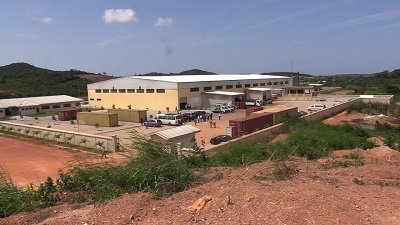
One of the major campaign promises of the ruling government in the 2016 general election was to create a factory in every district of the country.
Perhaps, the afore-mentioned campaign promise by President Nana Addo Dankwa Akufo-Addo, accounted for the overwhelming victory of the party in the 2016 elections, given the growing unemployment challenge facing the country.
Dubbed “One District, One Factory,” the policy was “designed to decentralise industrial development to ensure an even and spatial spread of industries.”
The policy aimed to establish “at least, one factory or enterprise in each district of Ghana as a means of creating economic growth poles that would accelerate the development of the various local areas and create jobs for the teeming youth.”
Under the private sector-led initiative, government was to “create the necessary conducive environment for the businesses to access funding from financial institutions and other support services from government agencies to establish factories.”
Among others, the IDIF, was to transform the country from the import of raw commodities to export of value-added materials to attract more value for the country’s natural resources.
It was to also to transform the local economies by harnessing the huge mineral and natural resources that abound in various parts of the country.
Furthermore, the programme was to create strategic enterprises at the local level and create employment to address the growing unemployment conundrum facing the country.
As of July 2020, about 170 factories had been established under the IDIF initiative of 28 were said to have been completed and 31 were under various stages of completion.
The World Bank indicated that the country’s youthful population, accounting for 36 per cent of the population, presents both opportunities and challenges.
Creating factories in each district of the country, would go a long way to help, harness this demographic dividend to propel national development and not become a curse for the country.
It must be indicated that the 1D1F initiative formed part of several initiatives, outlined by the government to industrialise the nation and move the country from import dependent to export led of value-added products.
For instance, the government recently launched Ghana COVID-19 Alleviation Revitalisation Enterprise Support (GHANA CARES) initiative to support and help prop up companies devastated by the coronavirus disease.
With a GH¢100 billion seed fund, the programme is designed to mitigate the economic challenges brought on businesses due to COVID-19 pandemic.
It must be emphasised that previous governments had made various attempts to industrialise the country and thereby initiated programmes to that effect.
Particularly, under Dr Kwame Nkrumah’s industrialisation agenda, many companies were established in the country.
Thus, in the early period of independence the country was awash with industries in areas of agriculture, mining, manufacturing and services, creating all the country needed without importation.
Interestingly, in the 60s, the country could produce items such as lorry tyres, glass products, radio and sugar, just to mention but a few, locally.
In view of this, there was no need to spend millions of dollars to import the afore-mentioned productions. The government was able to save a lot of foreign exchange and this put less pressure on the Cedi by its international peers such as the dollar.
Unfortunately, most of the industries created by Ghana’s first President had collapsed and others privatised following the formation of the Divestiture Implementation Committee, and the others that had not been privatised have been left to rot.
Mention can be made of some of the defunct state-owned enterprises such as the Aboso Glass Factory, Bonsa Tyre Factory, Ghana Airways, State Construction Company, State Fishing Corporation, National Savings Banks and the Black Star Line.
The companies mentioned provided a lot of employment to the citizens. It is said that in the early independence era, jobs were in abundance. Graduates had jobs before completing school because companies were scouting for them.
Sadly, the story is different today. The country currently imports everything including tooth pick, when bamboo can be found in most parts of the country. Producing took pick does not require any sophisticated technology, for which the country should be importing tooth pick.
The state does not have foothold of the economy and it appears Ghana’s economy is in the hands of foreigners. All the strategic national assets, from mining to telecommunication, have been privatised and now in the hands of private investors.
For example, until recently when the government announced the takeover of the AirtelTigo, the country did not have a strong position in the telecommunication sector.
I am not by the above argument suggesting that the country should not work to attract Foreign Direct Investment. Far from that, but the country can equally invest in critical sectors of the economy so as to create jobs, attract more foreign exchange and shore up the economy.
The country, and for that matter, the government by now, has learnt a lot of lessons from the factors which caused the collapse of the ailing state-owned enterprises. Such weaknesses, whether managerial or governance, will serve useful lessons for government. There are more prospects for government to succeed if it decides to partner the private sector to revive the defunct industries, because history will be there to guide us.
Implementing the IDIF programme to industrialise the Ghanaian economy offers the government opportunity to partner the private sector to revive and resuscitate the defunct and ailing state-owned enterprises.
There is no need re-inventing the wheel in the effort by government to industrialise the country. The template, to help to revive and prop up ailing state enterprise and bring back those which have gone down, is available and what is needed is for government to look for strategic investors to partner to bring the defunct state-owned industries back to life.
These can serve as low hanging fruits in the government’s attempt to industrialise the country. Some of the defunct companies, have vast lands, which is a critical factor of production, and for that matter there would be no need to spend so much resources to acquire a land.
With land available for most of the defunct companies, it should not be difficult for the state to look for private investors to revive those companies.
The Food Distribution Corporation silos and adjoining lands in the North Industrial Area in Accra is a critical example to cite. The area has been occupied by squatters, who are doing brisk business .
Such national assets going waste abound across the country. The Kade Match Factory in the Kwaebibirem District in the Eastern Region, is an example.
When the then Ambassador Hotel was transformed to what is now known as Movenpick Ambassador Hotel through a private investor, many were those who hailed the government. The assumption was that government would continue the exercise to revive other defunct state-owned enterprises, but that was not to be.
For nothing at all, the outbreak of the coronavirus disease, has taught great lessons for countries to look within and position themselves to produce and consume what they need locally.
The COVID-19 pandemic presents a great opportunity for the government to revive and bring back the state enterprises which have gone down so as to be able to produce what the country needs locally.
Not only will the country generate enough foreign exchange to shore up the cedi, but also create enough jobs for the teeming unemployed youth. The country’s demographic bulge should not be a ticking time bomb, but an asset to develop the economy.
It behoves on the State Interest and Governance Authority, the Ministry of Finance and the appropriate state organisations to begin to initiate strategies to revive the defunct state-owned enterprises.
By Kingsley Asare


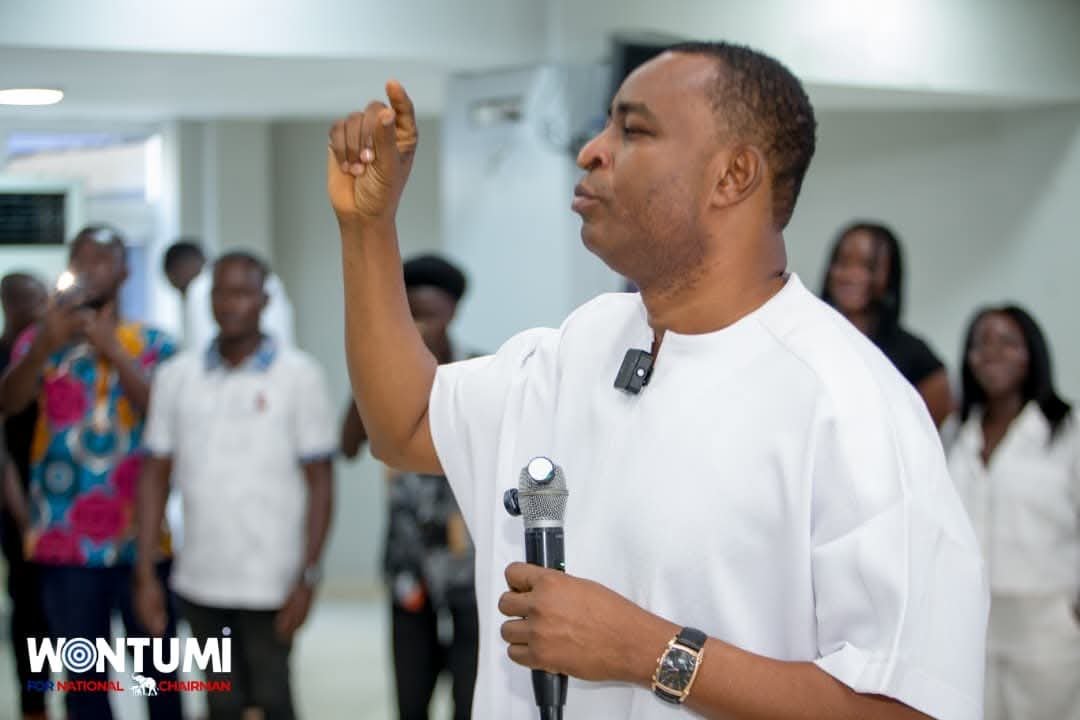
The state has closed its case in the Republic v Akonta Mining and two others.
The case was heard earlier today at the Accra Criminal Court, where state prosecutors and CID investigators from the Ghana Police Service closed the Republic’s case.
In all, the prosecution called three witnesses to prove its case, two former employees of Akonta Mining Company Limited and a detective from the Ghana Police Service.
According to an update on the case, the two former employees testified to Mr Bernard Antwi-Boasiako’s deep involvement in Akonta Mining Company’s alleged illegal mining activities in the Tano-Nimiri Forest Reserve.
The police detective tendered in evidence drone footage and other audio-visual materials and official communications in support of the testimonies of the two former Akonta Mining employees.
The accused persons, through cross-examination of the witnesses, sought to dissociate themselves from every mining activity in the Tano-Nimiri Forest Reserve.
At the close of the prosecution’s case, counsel for the accused persons asked the court to allow him to call the first prosecution witness back into the witness box for further cross-examination.
The court gave him up to Friday, October 30, to file a formal motion to recall the witnesses.
The case has been adjourned to November 4 for the motion to be heard.
By Edem Mensah-Tsotorme
Dr Palgrave Boakye-Danquah, spokesperson to NPP Ashanti Regional Chairman Bernard Antwi Boasiako, popularly known as Chairman Wontumi, has called on the government and Parliament to undertake major reforms in Ghana’s prison system, including the construction of a dedicated prison hospital and the introduction of regulated conjugal visits.
In a press statement issued on Tuesday, October 27, 2026, Dr Boakye-Danquah shared Chairman Wontumi’s observations and recommendations following his remand on July 20, 2026.
According to the statement, Chairman Wontumi’s experience in prison has given him the opportunity to interact with prison officers and inmates and observe the challenges facing the Ghana Prisons Service.
The statement noted that the NPP chairman believes the correctional system must move beyond punishment to focus on rehabilitation, welfare and productivity.
One of his major concerns is the lack of dedicated, well-equipped prison hospitals, ambulances and standby generators in several prison facilities.
Dr Boakye-Danquah said Chairman Wontumi had raised concerns about the difficulties in providing medical care to seriously ill inmates, including those suffering from tuberculosis.
He is therefore calling for the construction of a modern prison hospital to serve facilities across the country. In the interim, he has proposed emergency arrangements with the 37 Military Hospital and the Police Hospital.
On the welfare of prison officers, Chairman Wontumi has urged the government to review their salaries, accommodation and conditions of service.
He has also called for proper classification of inmates, arguing that minor offenders should not be housed alongside armed robbery convicts and that persons facing trial for serious offences, including treason and terrorism, should be appropriately separated from other inmates.
The statement further highlighted concerns about the need for counselling and behavioural support for young inmates, particularly those serving sentences for defilement-related offences.
Chairman Wontumi has also called for a clear policy on the classification and management of LGBTQI+ inmates within the prison system.
On family relationships, he has proposed the creation of designated private areas where prisoners can receive visits from their spouses and children.
He believes regulated conjugal visits could help preserve marriages, reduce tension among inmates and support rehabilitation.
“The prisoner is the one in prison, not the children or spouse,” the statement noted, explaining his position on the need to protect family relationships during incarceration.
Chairman Wontumi has appealed to the Ministry of Food and Agriculture to support prison farms with the necessary equipment to improve food production.
According to the statement, the Ghana Prisons Service has access to vast lands and skilled labour but faces a shortage of agricultural equipment, with only one tractor reportedly available for farming and garbage-related activities.
He has further proposed greater collaboration between prison authorities and the justice sector, suggesting that regional prison commanders should be included in relevant discussions because of their knowledge of prison conditions and inmate rehabilitation.
On infrastructure, Chairman Wontumi has called on the government and private sector to invest in modern prison facilities and factories, arguing that the system has seen limited structural improvements over the years.
Appeal to Parliament
Dr Boakye-Danquah said Chairman Wontumi had made a special appeal to Parliament to lead efforts towards comprehensive prison reform.
He is urging the Speaker of Parliament to initiate discussions on prison conditions as a human rights and national development issue.
He has also called on the Majority and Minority caucuses to work together to pass a new Prison Reform Act and approve funding for a dedicated prison hospital, ambulance services, standby generators and agricultural equipment.
Additionally, he wants the Parliamentary Select Committees on Defence and Interior, Health, and Food and Agriculture to undertake working visits to prisons across the country to assess conditions firsthand.
According to the statement, Chairman Wontumi believes bipartisan cooperation between the Majority and Minority caucuses is necessary to secure the legal and financial reforms required to improve the prison system.
He has called for broader prison reforms across Africa, expressing hope that Ghana could lead the continent in improving correctional facilities.
Reflecting on his experience since July 20, Chairman Wontumi stated: “At this experience since July 20th till date, prison doesn’t reform as it should be. I pray that the entire Africa will learn from Ghana.”
The statement added that Chairman Wontumi remained in high spirits.
By: Jacob Aggrey