News
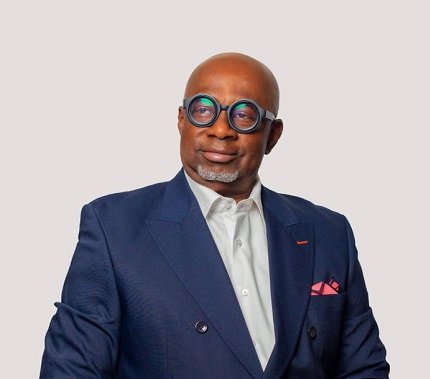
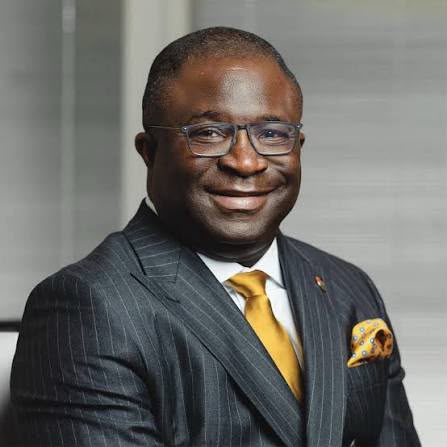
Daniel Duku calls for ethical leadership systems to strengthen Ghana’s institutions

- /home/u249204778/domains/spectator.com.gh/public_html/wp-content/plugins/mvp-social-buttons/mvp-social-buttons.php on line 27
https://spectator.com.gh/wp-content/uploads/2025/12/WhatsApp-Image-2025-12-16-at-13.59.38.jpeg&description=Daniel Duku calls for ethical leadership systems to strengthen Ghana’s institutions', 'pinterestShare', 'width=750,height=350'); return false;" title="Pin This Post">
- Share
- Tweet /home/u249204778/domains/spectator.com.gh/public_html/wp-content/plugins/mvp-social-buttons/mvp-social-buttons.php on line 72
https://spectator.com.gh/wp-content/uploads/2025/12/WhatsApp-Image-2025-12-16-at-13.59.38.jpeg&description=Daniel Duku calls for ethical leadership systems to strengthen Ghana’s institutions', 'pinterestShare', 'width=750,height=350'); return false;" title="Pin This Post">
Former public sector executive and governance advisor , Daniel Duku has called on leaders in Ghana to shift from personality-driven leadership to the deliberate construction of ethical systems that can sustain institutions beyond individual tenures.
According to Duku, Ghana has produced capable leaders across public and private sectors, but many institutions remain fragile because progress is often tied to individuals rather than strong governance frameworks.
“Ethics in our institutions cannot depend solely on the character of individuals in political positions. We as a country, must endeavour to put systems in place to ensure consistency in processes and outcomes” he said.
“What defines success is not how influential a leader becomes, but whether the institution continues to function effectively after that leader exits.” He noted.
Mr. Duku explained that Ghana’s leadership challenge is less about a lack of vision or basic resources but more about systemic weaknesses.
“Frequent changes in political leadership, board appointments, and executive management mean that institutions in Ghana must be built to withstand transitions” he mentioned.
He emphasized that ethical leadership must extend beyond public rhetoric and be embedded into the operational structures of organizations.
The former Chief Executive Officer of Ghana’s Venture Capital Trust Fund, highlighted procurement processes, financial controls, performance management systems, and decision-making frameworks as critical areas where ethics must be institutionalized, as properly designed systems protect not only institutions but also leaders by reducing exposure to risk and controversy.
Daniel Duku identified board governance as one of the most underutilized mechanisms in Ghana’s leadership ecosystem.
He noted that boards often function as ceremonial bodies rather than independent oversight institutions.
“Boards exist to protect the institution. They must be willing to ask difficult questions and act in the long-term interest of the organization.” he clarified.
He added that ineffective boards contribute significantly to institutional failure and loss of public trust.
Addressing leadership lapses, Duku outlined several shifts he believes are necessary for Ghana’s leadership future, including moving from personality-centered leadership to institution-centered governance, strengthening accountability mechanisms, improving transparency, and prioritizing long-term national value over short-term gains.
He observed that Ghana’s public discourse often treats setbacks as final judgments rather than opportunities for reform.
He called for a more mature leadership culture that examines mistakes, documents lessons, and strengthens systems accordingly.
In concluding, he urged leaders across government, corporate, and civil society sectors to reflect on the legacy of their leadership and reiterated the need for system-driven institutions that continue to work when political leaders leave office, and continues to serve citizens consistently and effectively.
About Daniel Duku
Daniel Duku is a Ghanaian-American business executive, former Chief Executive Officer of Ghana’s Venture Capital Trust Fund, and current Chairman of Georgetown Group.
He is a governance advisor and public speaker focused on ethical leadership, institutional reform, and board effectiveness.
By: Ernest Kwabena Opare Owusu







News
Mahama chairs security meeting over drug trafficking, orders formation of inter-agency task force
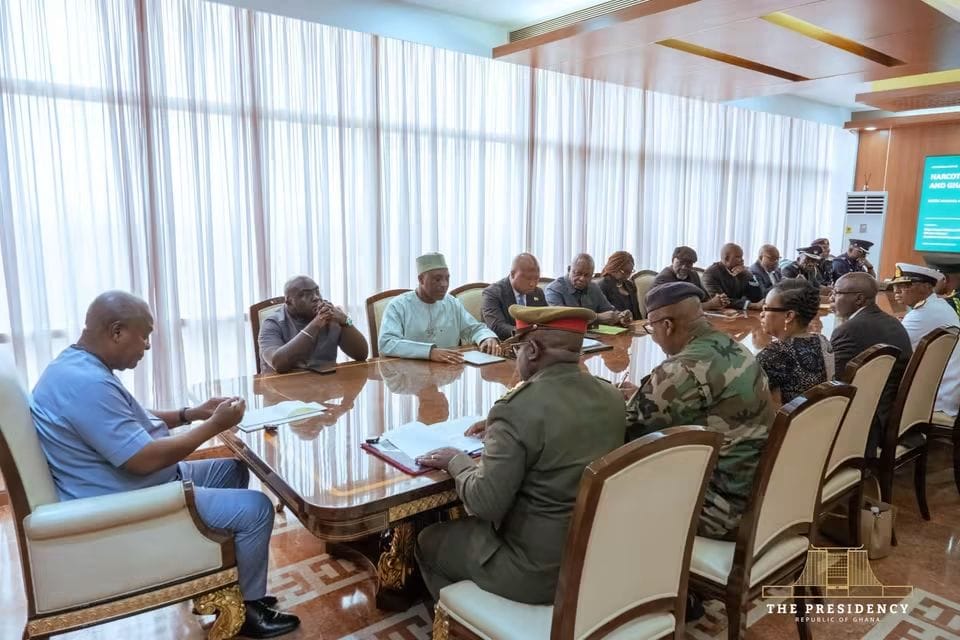
President John Dramani Mahama today chaired a meeting of security chiefs and received a detailed briefing on investigations into the recent trafficking of drugs out of Ghana’s ports.
The President was informed that ten individuals, including four officers of the Customs Division of the Ghana Revenue Authority (GRA), are being held while investigations continue.
The meeting reviewed the structure and security systems in place and recommended new actions.
President Mahama has directed that an inter-agency task force be formed to present a detailed roadmap, emanating from today’s meeting, on measures to prevent the trafficking of drugs through Ghana’s borders within two weeks.
By Edem Mensah-Tsotorme
A University of Ghana research on the New Patriotic Party (NPP) National General Secretary election has found that 74.2% of surveyed delegates expect former Subin MP Eugene Boakye Antwi to win the October 3 election.
The research, conducted by a team of lecturers from the University of Ghana, Legon, led by Dr Chris Atadika, involved 889 NPP stakeholders.
According to the findings, 657 of the 889 respondents, representing 74.2%, identified Eugene Boakye Antwi as the candidate they expected to win the General Secretary position.
Incumbent General Secretary Justin Frimpong Kodua was identified by 223 respondents, representing 25.1%, while six respondents, or 0.7%, mentioned Sylvester Tetteh.
The researchers, however, stressed that the figures reflect the expectations of the respondents and should not be interpreted as an independent prediction of the election outcome.
The study also examined other areas of the contest, including candidate preference, perceived ability to help the NPP win the 2028 general election and name recognition.
On candidate preference, 76.6% of respondents identified Eugene Boakye Antwi as their preferred candidate, compared with 23.1% for Justin Frimpong Kodua.
When asked which candidate they believed could help the NPP win the 2028 election, 60.1% mentioned Eugene Boakye Antwi, while 39.2% chose Justin Frimpong Kodua.
The research further found that Eugene Boakye Antwi had an 82.7% name recognition among respondents when they were asked to identify candidates contesting the position. Justin Frimpong Kodua recorded 13%.
The respondents also identified good communication skills and boldness, the ability to help the party secure victory in 2028, and the ability to unite the party as some of the key qualities needed in the next General Secretary.
The study recorded 100% awareness of the General Secretary election among the respondents.
The research team, led by Dr Chris Atadika, is expected to brief the media on the full findings at the Department of Political Science at the University of Ghana, Legon.
The NPP will elect its National General Secretary on October 3, 2026.
By: Jacob Aggrey

 News1 week ago
Ghanaian journalist celebrates Texas town’s ‘Eden of the Far West’ tag after mayor’s nod
- News3 days ago
48 Engineer Regiment to be major sub-contractor on Accra-Kumasi Expressway, $2bn ready- Prez Mahama
- Entertainment6 days ago
Fiifi Coleman Productions adapt ‘I Told You So’ stage play into feature film