News
Penile implant a cure for Erectile Dysfunction

- /home/u249204778/domains/spectator.com.gh/public_html/wp-content/plugins/mvp-social-buttons/mvp-social-buttons.php on line 27
Warning: Trying to access array offset on false in /home/u249204778/domains/spectator.com.gh/public_html/wp-content/plugins/mvp-social-buttons/mvp-social-buttons.php on line 27
&description=Penile implant a cure for Erectile Dysfunction', 'pinterestShare', 'width=750,height=350'); return false;" title="Pin This Post">
- Share
- Tweet /home/u249204778/domains/spectator.com.gh/public_html/wp-content/plugins/mvp-social-buttons/mvp-social-buttons.php on line 72
Warning: Trying to access array offset on false in /home/u249204778/domains/spectator.com.gh/public_html/wp-content/plugins/mvp-social-buttons/mvp-social-buttons.php on line 72
&description=Penile implant a cure for Erectile Dysfunction', 'pinterestShare', 'width=750,height=350'); return false;" title="Pin This Post">
Men in Ghana, including those as old as 80 are suffering from conditions like hypertension and diabetes, now have a reliable treatment option for Erectile Dysfunction (ED), which is penile implant surgery.
In an interview, a Consultant Urologist and Sexologist, Dr Samuel Amanamah, shared that 52 per cent of men aged 40–70 were affected by ED in varying degrees.
He described ED, referred to as impotence, as the persistent inability to achieve or maintain an erection sufficient for sexual intercourse.
The condition, he stressed, has contributed to marital breakdowns, low self-esteem, and even infertility.
“Men in this situation can now breathe a sigh of relief,” Dr Amanamah said, adding that, “Age or chronic conditions like diabetes are no longer barriers to treatment. Even 80-year-olds have successfully undergone the procedure.”
The penile implant was considered the final treatment option for men when all other interventions, including oral medications, injectables, and medical devices fail.
The procedure involved inserting a silicon rod into the erectile tissues of the penis, providing an immediate and controllable erection, stating that there were two types of implants: malleable, which is always firm, and inflatable, which allows the user to regulate erections.
Dr Amanamah mentioned that the surgery required only a small 4cm incision beneath the penis.
“The incision site is barely visible after healing,” he said, adding that the minimally invasive procedure usually lasts an hour. Patients are typically discharged within one or two days.
Aesthetically, the penis remains unchanged after the procedure, and it is almost impossible to distinguish between one with an implant and one without, he noted.
“Functionally, the implant is even superior to natural erections,” he underlined. “It can last over 20 years and allows for intercourse as often as the patient desires.”
He added that patients can still father children after the procedure, provided they do not have underlying fertility issues.
“Some patients who suffered from 10 years of infertility have gone on to have twins after the surgery,” he noted, adding that others have reconciled with spouses after being previously divorced due to ED.
Although complications were possible, the success rate of penile implants was as high as 93 per cent, Dr Amanamah emphasised, stating that occasional erectile failure does not qualify as ED.
He also outline that the dysfunction must be persistent. “Some men start with a good erection but lose it during intercourse. That still counts as ED.”
Furthermore, he explained that ED can stem from various causes, including cardiovascular issues, neurological disorders, hormonal imbalances, and chronic conditions like hypertension and diabetes.
Psychological factors such as unresolved marital problems also play a role. Conditions like priapism, that is, prolonged erection often linked to sickle cell disease or abuse of sex-enhancement drugs could also result in ED if not promptly treated.
Moreover, Dr Amanamah underscored the importance of treating the root cause noting that “simply giving medication without addressing underlying issues only delays the problem,” and added that “effective treatment must be holistic.”
“When oral or injectable medications and medical devices fail, the penile implant remains a safe and long-term solution for restoring sexual function and quality of life,” he noted.
From Ama Tekyiwaa Ampadu Agyeman, Koforidua

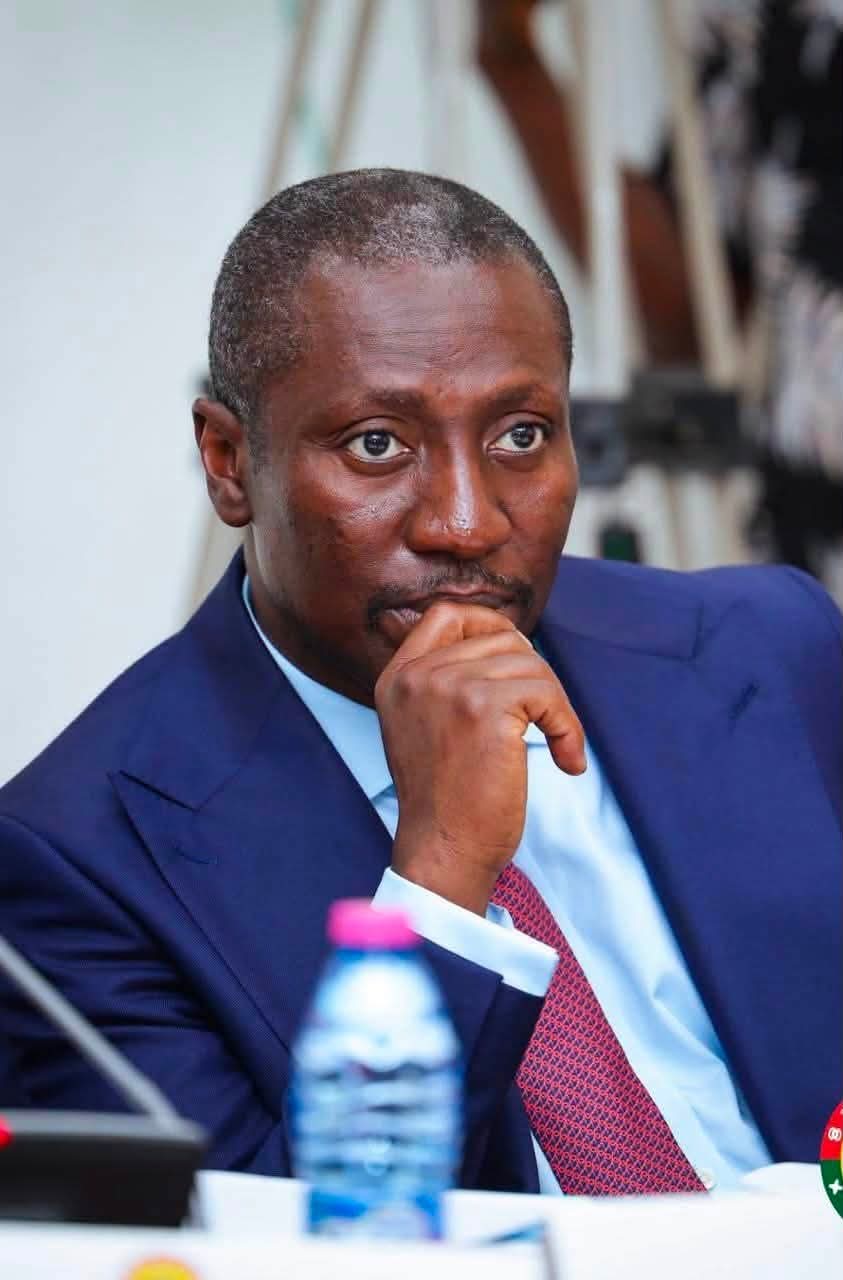
Minority Leader in Parliament, Alexander Afenyo Markin, says he has discharged his duties with the dignity and responsibility demanded by the office, stressing that he does not take the New Patriotic Party (NPP) for granted.
He made the remarks during a media briefing, where he also dismissed claims that there are compromising videos or audio recordings of him that could embarrass him, his family or the party.
Mr Afenyo Markin acknowledged that he is not perfect but insisted that he would not act recklessly, particularly given the responsibility attached to his position as Minority Leader.
“I have discharged my duty as a Minority Leader with all the dignity that must go with the office. I’m not a perfect guy, but I won’t be reckless,” he stated.
He said he was conscious of the history of the position he occupies, noting that it had previously been held by senior members of the NPP, including J.B. Danquah, J.H. Mensah and Busia, Dumbo.
According to him, the party’s elders did not entrust him with the leadership of the parliamentary caucus without considering the responsibility involved.
“I don’t take NPP for granted. It’s a tradition I respect. The elders of this party, they don’t just get up to say, ‘Our son, lead the caucus.’ From day one, they entrusted me with this position,” he stated.
Mr Afenyo Markin said he has always recognised the weight of the party’s history and the need to conduct himself in a manner that protects the image of the NPP.
He rejected claims that individuals have videos or audio recordings of him engaging in activities that could be used to embarrass him.
“Nobody has any video of me doing anything. Nobody has any audio of me doing anything to embarrass myself, my family and the party,” he insisted.
He described the claims as part of the challenges politicians face in the era of social media, where allegations and rumours can spread quickly.
Mr Afenyo Markin maintained that despite such claims, he would continue to carry out his responsibilities with caution and respect for the office he occupies.
By: Jacob Aggrey
Minority Leader in Parliament, Alexander Afenyo Markin, has denied that his concerns over the GoldBod and the Domestic Gold Purchase Programme are aimed at any particular individual.
He explained that his criticism has always been directed at the institution and the way the programme is being implemented, rather than at any person.

“I have never, on any occasion, mentioned anyone’s name. I have always been talking about the GoldBod institution,” Mr Afenyo Markin stated.
He made these remarks today during a press briefing August 31, 2026,Speaking to when cultural troupes from Winneba visited his residence in Accra
the Minority’s position is that although the Domestic Gold Purchase Programme is a good initiative, its implementation has created challenges that need to be examined.
He described the programme as an initiative introduced under former Vice President Dr Mahamudu Bawumia to use Ghana’s gold resources to help stabilise the economy.
Mr Afenyo Markin maintained that the Minority supports the idea but is concerned about what he described as losses arising from its implementation.
He referenced concerns raised by the International Monetary Fund (IMF) regarding losses associated with the programme, arguing that such issues should be properly investigated.
He therefore rejected suggestions that the matter had become a personal attack.
“We need to elevate the conversation so that it doesn’t become a personality contest,” he added.
Responding to arguments that the reported losses could instead be exchange rate losses on the Bank of Ghana’s own accounts and that the central bank was following international best practices, Mr Afenyo Markin called for patience.
He indicated that the planned parliamentary probe would provide an opportunity for all sides to present their positions and establish the facts.
“When October comes and we start the discussion, wherever the truth is, we will all get to know,” he stated.
By: Jacob Aggrey