Editorial
Children’s early dental care essential

- /home/u249204778/domains/spectator.com.gh/public_html/wp-content/plugins/mvp-social-buttons/mvp-social-buttons.php on line 27
Warning: Trying to access array offset on false in /home/u249204778/domains/spectator.com.gh/public_html/wp-content/plugins/mvp-social-buttons/mvp-social-buttons.php on line 27
&description= Children’s early dental care essential', 'pinterestShare', 'width=750,height=350'); return false;" title="Pin This Post">
- Share
- Tweet /home/u249204778/domains/spectator.com.gh/public_html/wp-content/plugins/mvp-social-buttons/mvp-social-buttons.php on line 72
Warning: Trying to access array offset on false in /home/u249204778/domains/spectator.com.gh/public_html/wp-content/plugins/mvp-social-buttons/mvp-social-buttons.php on line 72
&description= Children’s early dental care essential', 'pinterestShare', 'width=750,height=350'); return false;" title="Pin This Post">
Early dental care is essential for children, and parents are urged to begin their children’s dental care as soon as their first teeth appear.
This is because early oral hygiene habits could guarantee strong, healthy teeth for the rest of one’s life and prevent long-term dental issues.
Dental care is therefore crucial in order to maintain good oral health and avoid any problems that can develop as the child gets older.
Introducing children to dental care also provided parents with advice on good oral hygiene habits, according to Dr. Kakra Bonsu Appiah, Head of the Dental and Oral Surgery Department at Tema General Hospital.
These include proper tooth and gum hygiene, the value of fluoride, and dietary practices that promote strong, healthy teeth.
Establishing proper oral hygiene habits early on is crucial since it prevents cavities, gum disease, and other dental problems while laying the groundwork for a lifetime of healthy living. However, some caregivers begin this practice later.
Toothache and other gum or tooth-related issues should not be treated lightly because they cause excruciating pain that affects every part of the body and impairs attention.
Many children enjoy eating sweets, but since sugary diets are a major cause of cavities, parents should advise their children to restrict their intake.
The dentist advises using fluoride toothpaste to clean one’s teeth twice a day and flossing once a day.
In order for this to be successful, caregivers must set an example by maintaining proper dental hygiene so that their children can easily follow suit.
In addition, parents need to feed their children a healthy food.
The dentist advised against prolonged thumb-sucking, which is a frequent behaviour among young children, as it may result in an open bite, in which the child’s lower and upper front teeth do not touch correctly when their mouth closes.
According to him, this misalignment may impair the child’s capacity to properly bite and chew food and may also result in speech issues, including issues with articulation and pronunciation.
In order to lower the chance of future oral health problems, The Spectator pleads with parents to make sure their children’s dental growth stays on course, as advised by the dentist.

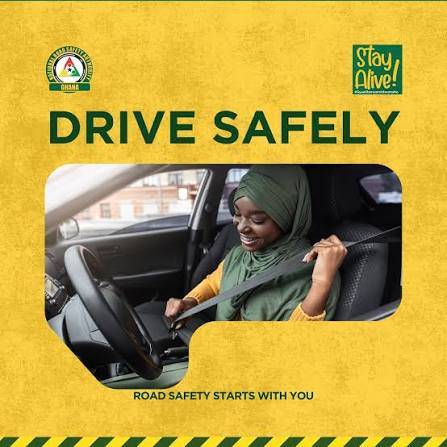
Dear Editor,
Before we start blaming the government, the authorities and how bad our roads are, perhaps we should first ask ourselves what role we played in making our roads unsafe.
Road safety is often discussed as though it is solely the responsibility of the government and law enforcement agencies, neglecting our roles we play to make the roads unsafe.
While authorities have an important role to play, the behaviour of individual road users remains equally important.
A driver who speed, overtakes recklessly, uses phone while driving or drives when tired is making a decision that could affect many lives.
A motorcyclist who ignored traffic light and also refuse to wear a helmet, passengers who encourage the driver to speed and the pedestrians who crosses a busy road carelessly can also contribute to danger.
We must therefore develop a strong culture of personal responsibilities on our roads.
Drivers should obey speed limit, avoid distractions and ensure their vehicles are road worthy, passengers should also not encourage reckless driving simply because they want to arrive at their destination quickly whiles pedestrians must also exercise greater caution when crossing roads.
At the same time authorities must continue to improve road infrastructures, enforce traffic regulations consistently and educate the public about responsible road use.
Road safety cannot succeed through enforcement alone; it requires change in attitude. If each road user understand that another person’s life may depend on their decision, our road can become safer.
Let us not wait for another crash before we remember the value of life. Thank you for the space.
From Akwasi Aaron
Accra.
Dear Editor,
I was concerned by a point raised during a radio review about the growing expectation among some parents that once their children attend government schools, particularly under the Free SHS programme, the government must provide virtually everything they need.
This mindset deserves serious public discussion.
The introduction of Free SHS has undoubtedly lifted a significant financial burden from parents. Government is already absorbing substantial costs associated with the education of thousands of Ghanaian children. Students in public second-cycle institutions also benefit from provisions such as tuition support, meals and other essential services.
However, Free SHS should not be interpreted as free parenting. A parent should not expect the government to provide every personal item a child needs simply because the child attends a public school. Items such as mattresses, sponges, toiletries, clothing, chop boxes and other personal necessities should, where possible, remain part of the parent’s responsibility.
The same principle applies at the basic-school level. Government has a responsibility to provide quality education and create an enabling environment for children to learn. Parents, however, have an equally important responsibility to support their children’s education and welfare.
Government cannot and should not replace the family. When parents gradually transfer every responsibility to the state, we risk creating a culture of dependency in which citizens expect government to solve every personal problem. That is neither sustainable nor healthy for our development as a nation.
We must therefore appreciate the support government provides while recognising that education is a shared responsibility. Parents must continue to contribute according to their means, schools must do their part, and government must continue providing the necessary educational infrastructure and support. Rather than asking, “What else will government give us?” parents should also ask, “What can I do to support my child’s education?”
Free education is a public investment, not an invitation for parents to abandon their responsibilities. Ghanaians must therefore change the mentality that government must provide everything. The state can carry a significant portion of the burden, but the family must never surrender its responsibility.
Free SHS should make education more accessible not make parenting optional.
From Desmond Aidoo
Sowutuom