Profile
Patriotism, sacrifice and service — the veterans’ perspective

- /home/u249204778/domains/spectator.com.gh/public_html/wp-content/plugins/mvp-social-buttons/mvp-social-buttons.php on line 27
https://spectator.com.gh/wp-content/uploads/2025/03/Captain-Ben-Edmund-Duah-Rtd.jpg&description=Patriotism, sacrifice and service — the veterans’ perspective', 'pinterestShare', 'width=750,height=350'); return false;" title="Pin This Post">
- Share
- Tweet /home/u249204778/domains/spectator.com.gh/public_html/wp-content/plugins/mvp-social-buttons/mvp-social-buttons.php on line 72
https://spectator.com.gh/wp-content/uploads/2025/03/Captain-Ben-Edmund-Duah-Rtd.jpg&description=Patriotism, sacrifice and service — the veterans’ perspective', 'pinterestShare', 'width=750,height=350'); return false;" title="Pin This Post">
For men and women with battlefield experience, patriotism, sacrifice, and service are not just abstract ideas, they are lived experiences deep-rooted in hardship and sustained endurance in the line of duty.
Such lifelong duty goes beyond the uniform to include the values of duty, honour, and commitment, long after active military service.
Such has been the life of Ex Lance-Corporal Wisdom Edmund Kudowor, a 97-year-old World War Two (WWII) Veteran, who volunteered for recruitment in 1943 at the age of 15.
He was to be trained and enrolled as a soldier and tradesman for the Artisan Work Company of the then Gold Coast Regiment.
Though looking frail currently after a few days of head surgery, the ex-serviceman’s ability to recall his past experiences was exceptional.
Ex-Lance-Cpl Kudowor lived in an era that saw many young Africans recruited and conscripted to fight for their colonial masters in a war that ravaged half of Europe and claimed almost 85 million lives.
In a brief yet straight to the point interaction with the Ghana News Agency, he expressed no regret in volunteering, despite the imminent danger and harrowing stories about WWII back then.
More surprising was his nonchalant attitude towards the fact that he was not put on pension immediately after service. He expressed no bitterness nor pain.
He returned to the Gold Coast in 1946 after four years of service without any benefits, not until two years ago when he began receiving an annually paid British grant, which was recently increased to 1,350 pounds sterling.
Though the grant did not match the sacrifice, “it is still better than nothing,” he said. Despite his past experiences, the old veterans’ patriotism, sacrifice and service did not wane after his return in 1946, at age 18, to the then Gold Coast.
He gained scholarship to further his education (both home and abroad) and with the knowledge acquired, he served his country for almost half a century, first as a pupil teacher, and rising to become the Headmaster of the Kpando Technical Institute. He headed other educational institutions and retired as a civil servant.
The veteran was not happy about the decline in patriotism and sacrifice, especially among young people in contemporary Ghana.
Listening attentively due to a hearing challenge, the frail-looking veteran pointed to the attitude of the current generation, most of whom were unwilling to go the extra mile to support their country.
He expressed worry over their focus on immediate gains and monetary rewards for little services rendered.
His observation was corroborated by Captain Ben Edmund Duah (Rtd), a veteran, who began his service with the Field Engineer Regiment soon after being commissioned at age 24 as a young officer in the early 1970s.
The retired Army Captain, who once served with the Delta Company of the Five Battalion of Infantry (5BN) among other positions, said: “Patriotism is non-existent in today’s Ghana, unlike our time when we took pride in openly exercising these values.” He, however, did not entirely blame the youth for not exhibiting such traits.
Capt. Duah (Rtd) attributed the seeming non-patriotism by the youth to the struggles they see the veterans go through just to survive, after sacrificing for humanity.
The needs and concerns of patriots and forerunners, particularly veterans in Ghana, were largely unmet, compared to other countries, he said.
“The veterans brought honour to our colonial masters and by extension to Ghana. They were not given what they were promised. Right now, the British Government gives them some support and that is what sustains a lot of them.” Captain Ben Duah stressed the urgency for the country to pay more attention to the concerns and needs of veterans.
“We should see them as people who voluntarily decided to sacrifice their lives for us. If anybody does this for you, you should be fair enough to look at his interest…these are people who have devoted their lives to save us, therefore we should be nice to them in the form of caring for them,” he noted.
When asked for their opinion on many of the youth trying to seek greener pastures abroad due to their lack of confidence in the economy, Capt Duah and L/Cpl Kudowor both agreed that Ghana was still worth sacrificing for, despite the challenges.
Captain Duah, who served during an era awash with military coups d’etats, urged Ghanaians to respect, recognise and be willing to support veterans because government could not shoulder the responsibility alone.
“Citizens should realise that these are people who, some time ago, in their youthful years, sacrificed their precious lives to save others…We expect that as veterans, people will respect and admire them for their values and bravery,” he said.
“I will advise the youth to utilise existing opportunities as a means to serve Ghana. Service to the country, I believe, should be the youths’ primary goal”, Ex L/Cpl Kudowor said.
The two justified the continuous celebration of Veterans Day on the 28 of February as a step in the right direction.
This serves as a platform for the youth to learn about the three values of patriotism, service and sacrifice, the history behind the celebration and the need to respect veterans.
On February 28, 1948, Veterans of World War II, who had fought with the Gold Coast Regiment of the Royal West African Frontier Force, organised a peaceful demonstration, marching to the Christainborg Castle at Osu in Accra, the capital of the Gold Coast, to hand a petition to the colonial governor, demanding their end of war benefits, which they had been promised.
Before reaching the castle, the veterans were ordered to disperse by the colonial police chief. When they refused, he opened fire on them, instantly killing three of the ex-servicemen – Sergeant Adjetey, Corporal Attipoe, and Private Odartey Lamptey.
The 28 February Crossroads Shooting is commemorated every year to honour the veterans for their sacrifice to the country.
—GNA






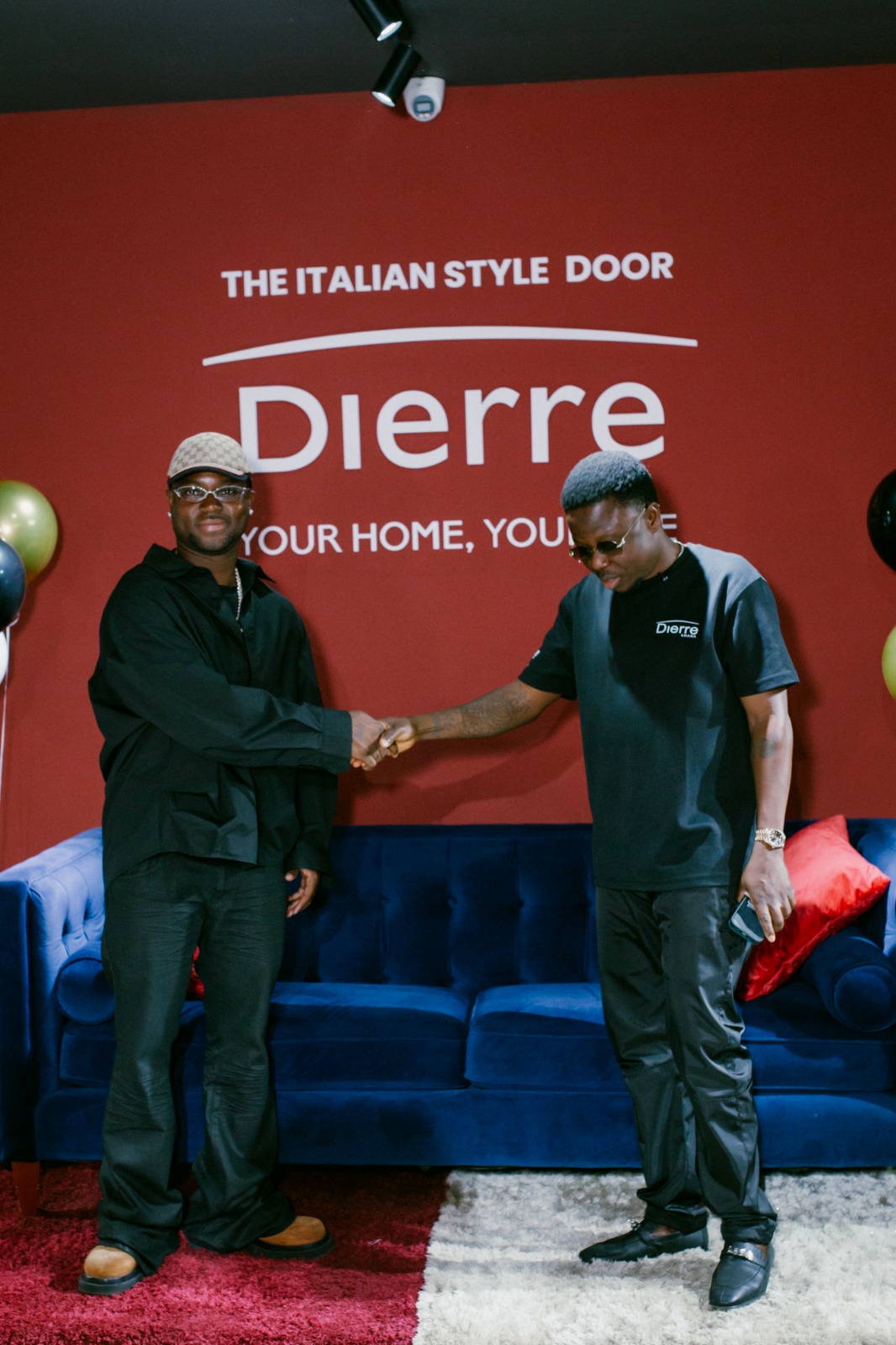
Italian premium security door manufacturer Dierre S.p.A. has named award-winning Ghanaian Afrobeats and Highlife artiste King Promise (Gregory Bortey Newman) as the face of its new Ghana and West Africa marketing campaign.
The partnership, managed by Regiments Management Company Limited, forms part of Dierre’s efforts to strengthen its presence in the West African market.
The two-week campaign, themed “Secure What Matters,” will run across digital, outdoor and influencer platforms, with King Promise featuring in a campaign film showcasing Dierre’s Prestige and Synergy security door ranges.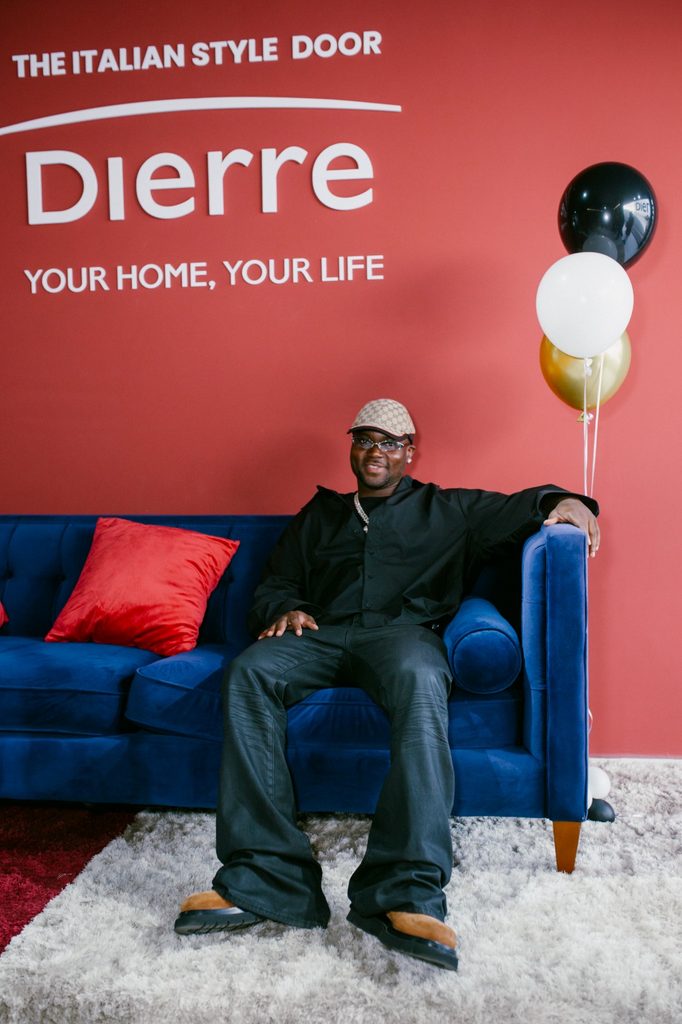

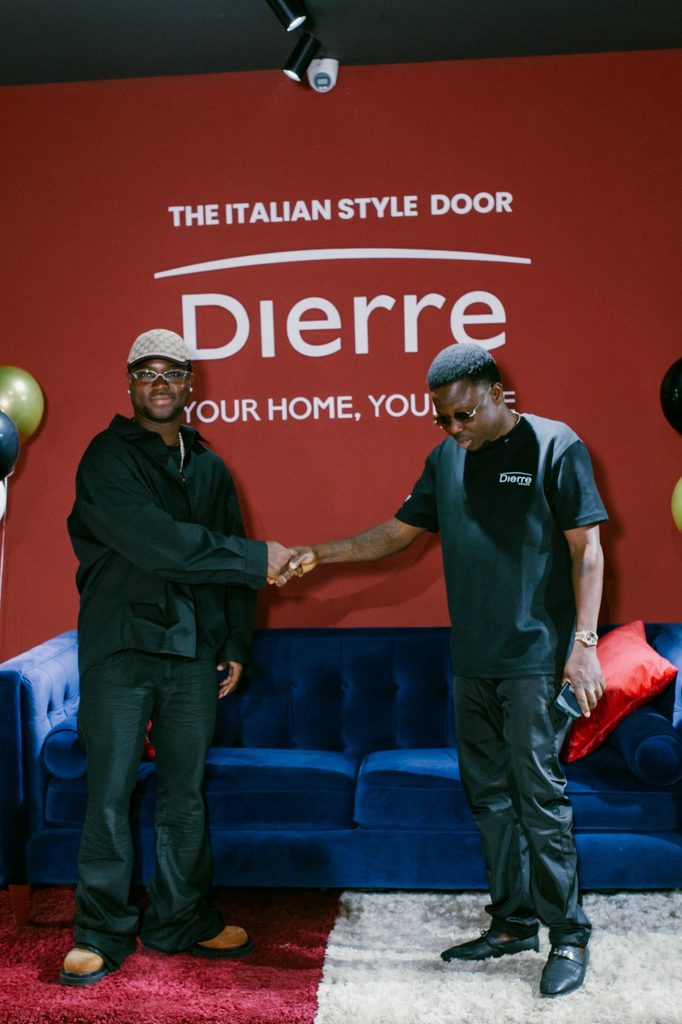

“Home is everything. It is where you protect the people and things that matter most. Dierre builds doors that reflect exactly that security, quality and style without compromise. I am proud to represent a brand that stands for those values,” King Promise said.
Founded in Italy, Dierre is a global manufacturer of armoured security doors, interior doors and fire-protection systems. Its products carry international anti-burglary certifications across Classes 3, 4 and 5, with the company producing hundreds of thousands of doors, locks and safes annually.
King Promise is one of Ghana’s leading Afrobeats and Highlife artistes, known for his distinctive sound, international collaborations and growing global audience.
The partnership combines Dierre’s security and design expertise with King Promise’s influence in contemporary African music and culture, as the brand expands its consumer engagement in Ghana and across West Africa.
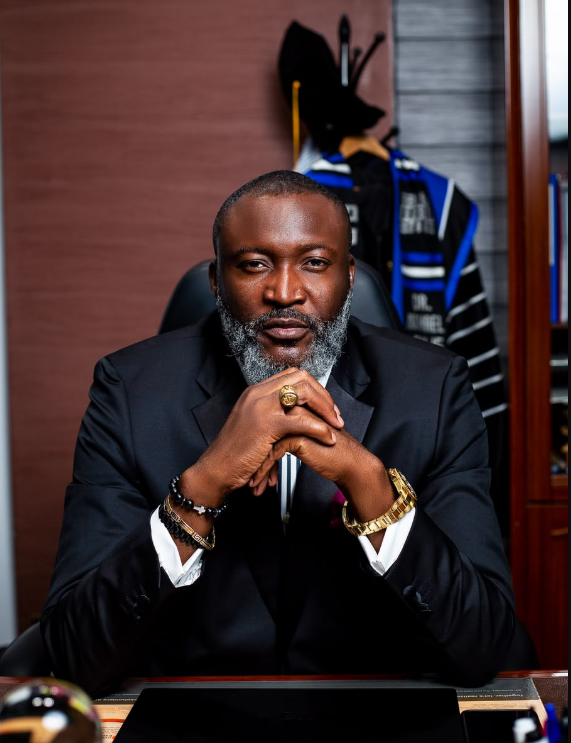
From humble beginnings to building an enterprise with global ambitions, Michael L. Bartlett-Vanderpuye’s journey is a story of discipline, independence, resilience and the belief that businesses should be built to outlive their founders.
Long before he became the Group Chairman of M&C Group, Michael L. Bartlett-Vanderpuye was building from modest beginnings.
His entrepreneurial journey did not start in a sophisticated corporate office or with a large team behind him.
At one stage, he was working from his room with limited resources, focused on turning an idea into a viable business.
That beginning became an important part of his philosophy: build the business first, then let the infrastructure grow with it.
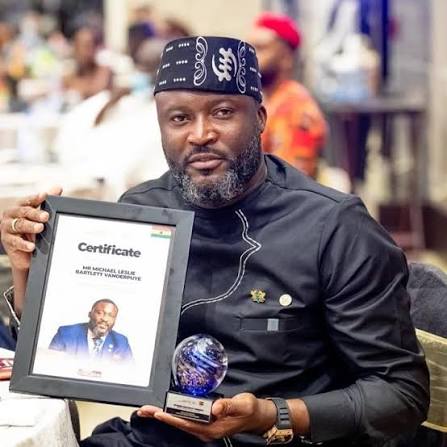
Michael’s early experiences shaped his determination to become an entrepreneur. After university and periods of professional employment, including banking, accounting, marketing, packaging and logistics, he developed a deeper understanding of how businesses operate and how different industries connect.
His exposure to mining advisory work, property and other commercial opportunities broadened his perspective and helped him identify opportunities beyond a single sector.
But the journey was far from easy.
He recalls the uncertainty of sending proposal after proposal without knowing which one would eventually open a door.
Even after establishing an office in East Legon, some people assumed he was working for someone else because they could not imagine that the business belonged to him.
The confidence and corporate presence associated with success today were built through years of uncertainty, rejection, experimentation and persistence.
His evolution from working out of a room to leading M&C Group reflects a broader philosophy that has guided his business life: do not build an image before you build the substance.
For Michael, entrepreneurship is not simply about owning a company. It is about learning how to turn knowledge, relationships, opportunities and resources into sustainable value.
He believes professionals in every field can develop an entrepreneurial mindset by creating assets, building networks, investing in opportunities and developing additional sources of value alongside their careers.
That philosophy has influenced the way he approaches business expansion. Rather than viewing companies as isolated entities, Michael sees opportunities to create connections between industries, people and services.
Strategic partnerships, in his view, can create greater value than treating every other business as a competitor.
His approach has also been shaped by research and international exposure. He argues that entrepreneurs must understand the markets they enter rather than simply copy businesses they see succeeding elsewhere.
Behind every successful enterprise, he believes, are structures, regulations, relationships, research and decisions that may not be immediately visible from the outside.
As his business interests have grown, so has his ambition. M&C Group represents a significant chapter in that evolution, reflecting his drive to build an enterprise that extends beyond a single venture.
His vision is rooted not merely in personal wealth, but in creating businesses capable of generating employment, developing people, building partnerships and contributing to the wider economy.
Michael is particularly concerned about the role of the private sector in addressing unemployment and creating sustainable opportunities. For him, a successful business should ultimately do more than enrich its owner. It should employ people, develop skills, support suppliers and create opportunities that extend beyond the founder.
That long-term perspective is central to his understanding of success.
He is cautious about equating visibility with achievement. In an age where social media can make a business appear larger than it is, Michael believes the real measure of an enterprise lies in its systems, customers, assets, operations and results. The brand should be supported by substance.
His personal journey has therefore become a lesson in patience and discipline. The man who once had to convince people that the business was actually his now speaks about building systems, protecting capital, understanding markets and thinking beyond the immediate reward.
And his ambitions do not stop with the present generation.
Michael describes legacy as something that should extend beyond his children to future generations. His objective is to build something sustainable-something that can continue creating value after he is no longer at the centre of it.
From a modest room and limited resources to the boardroom and the development of a growing business group, Michael L. Bartlett-Vanderpuye’s story is ultimately about building before displaying, learning before expanding and creating something designed to last.
His journey is a reminder that global ambition does not necessarily begin with global resources. Sometimes, it begins with little more than an idea, discipline, persistence and the willingness to start where you are. – MyStoryMagazine

 Entertainment1 week ago
Rhythms On Da Runway returns November 28 with 16th edition themed ‘Unbound’
- Entertainment1 week ago
Ohemaa Mercy’s Tehillah Experience outfit was priestly regalia, not costume – Management clarifies
 News1 week ago
Janet Asana Nabla criticises Mahama over China curriculum controversy involving Haruna Iddrisu