Entertainment
Ded Buddy calls for urgent reforms in music industry

- /home/u249204778/domains/spectator.com.gh/public_html/wp-content/plugins/mvp-social-buttons/mvp-social-buttons.php on line 27
https://spectator.com.gh/wp-content/uploads/2025/02/IMG-20250225-WA0014-688x600.jpg&description=Ded Buddy calls for urgent reforms in music industry', 'pinterestShare', 'width=750,height=350'); return false;" title="Pin This Post">
- Share
- Tweet /home/u249204778/domains/spectator.com.gh/public_html/wp-content/plugins/mvp-social-buttons/mvp-social-buttons.php on line 72
https://spectator.com.gh/wp-content/uploads/2025/02/IMG-20250225-WA0014-688x600.jpg&description=Ded Buddy calls for urgent reforms in music industry', 'pinterestShare', 'width=750,height=350'); return false;" title="Pin This Post">
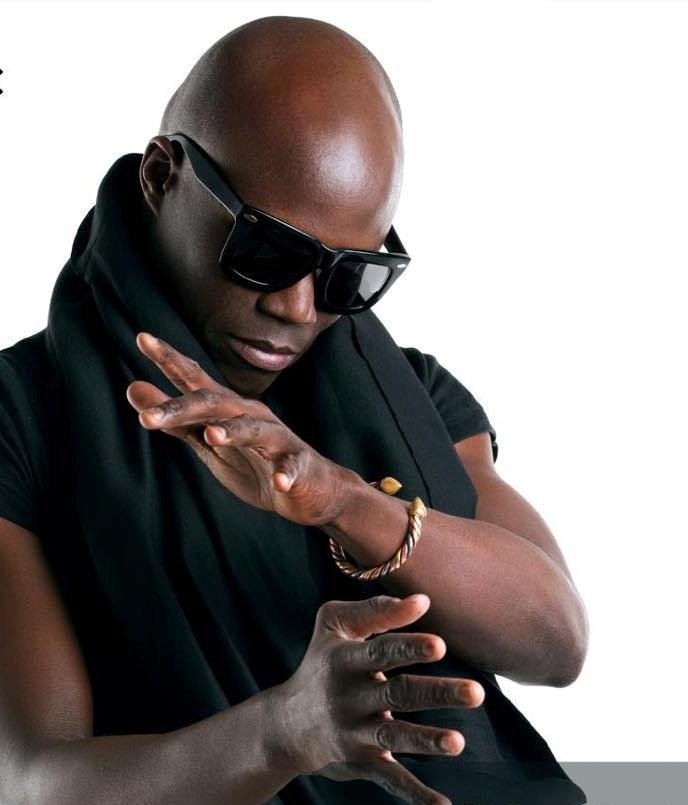
Ghanaian R&B singer and songwriter Eric Kwasi Turkson, better known by his stage name Ded Buddy or Cwesi, has called on the government to take action to improve the way the Ghana Music Rights Organisation (GHAMRO) operates.
His appeal follows mounting worries that, in spite of their music’s extensive distribution on numerous platforms, Ghanaian musicians are not being fairly compensated for their labour.
He revealed that after six months of their music being played on radio, television, and streaming services, many musicians only receive GH¢100 to GH¢200 in royalties.
“This is a crisis that threatens the survival of an industry that has the potential to generate significant revenue for our economy—it is not just an insult to the creative community,” he said.
He mentioned that Ghana has the talent and cultural clout to assert its legitimate share of the global music industry, which is worth billions of dollars.
He cautioned, though, that the nation runs the risk of missing out on economic opportunities in the absence of a transparent and effective Collective Management Organisation (CMO).
“Even though their music is widely consumed, the lack of proper rights management discourages investment, stifles growth, and forces many musicians into financial hardship,” he added.
For this reason, he demanded that CMO’s management be changed in order to guarantee equitable remuneration for all musicians, including producers and songwriters.
He emphasised how crucial it is to set up a functional CMO that ensures an open and fair distribution of profits.
Ded Buddy cited prosperous examples from nations like South Africa and Nigeria, whose music industries have flourished due to effective royalties collection and distribution.
“Ghana must not be abandoned,” he declared. Jobs for producers, engineers, marketers, event planners, and others are created by a flourishing music industry.
Additionally, it enhances the country’s standing as a centre of culture, drawing in foreign partnerships and tourists.
Ded Buddy added that organisations prepared to offer tracking systems for radio and television are part of the Alliance for Change in the Ghana Music Industry, of which he is a member, along with other important stakeholders.
The goals of these systems are to guarantee musicians receive just compensation and get rid of the inefficiencies that GHAMRO is currently experiencing.
Under the previous Attorney General, the Alliance pushed for a licence to establish a new CMO, but they haven’t seen any results yet. He called on the Attorney General and the President to step in and create a new, accountable, and transparent CMO that genuinely serves creatives.
He emphasised that while their creations benefit others, Ghana’s musicians, producers, and songwriters cannot be ignored any longer.
He declared, “This is a pivotal moment to address the injustice and put the music industry on a path to prosperity. To make this a reality, we are prepared to work with your office. Our music is an essential component of Ghana’s economic and cultural identity and serves as more than just entertainment. Let’s empower those who create it, so that it fulfils its proper function.”






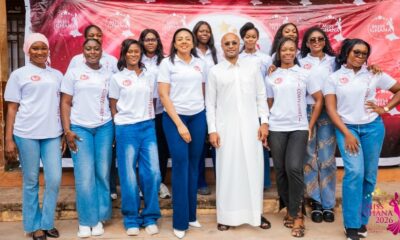
An International Relations student at Cumbria University, Rumzia Sule, has been officially crowned Miss Ghana 2026, emerging victorious over 12 other contestants to claim the coveted national title.
The grand finale of the 69th edition, held under the theme “Empowering Women, Enduring Legacy,” saw the University of Ghana graduate Fatimatu Zara Ishacu finish as the first runner-up and Whitney Opoku Nketia adjudged the second runner-up.
Other awards, such as Miss Fitness, Miss Talent, Miss Eloquent, Most Beautiful Skin, Miss Congeniality, Most Disciplined, and Miss Photogenic, went to Nedlyn Appiah, Lucille Akua Oputa-Otutu, Davinia Owusu Kuffuor, Lawrencia Serwaa Amankwa, Fatimatu Zara Ishacu, Anita Appiah, and Whitney Opoku Nketia, in that order.
Rumzia also won the Beauty with Purpose award.
Unlike previous editions, this year’s pageant adopted a strategic, scaled-down format. Shifting away from traditional pomp and pageantry, to a more personal and community skills development theme.
The final selection was held at the Oak Plaza Hotel in Accra before an elite panel of judges, relatives of contestants amongst others present to witness the historic occasion.
According to the organisers, Exclusive Events Ghana and the Miss Ghana Foundation, the format change was a deliberate choice, as part of preparations towards the upcoming milestone for the brand both nationally and internationally, that is, next year’s landmark 70th, in Ghana and this year’s 75th anniversaries, internationally.
Despite the cozy setting of the coronation, the finalists underwent the full, rigorous pageant journey following nationwide auditions on June 27, 2026.
The young women participated in intensive, weeks-long mentorship, leadership, and entrepreneurship programme designed to test their resilience, empathy, discipline, and professionalism.
Furthermore, the contestants demonstrated their commitment to national development by rolling up their sleeves for the National Clean-Up Exercise, supporting President John Dramani Mahama’s call to restore cleanliness across Ghana by desilting choked gutters in parts of Accra.
The Foundation emphasised that these outreach programmes were vital evaluation tools used to identify a queen who genuinely embodies compassion and a willingness to serve society beyond the glamour of the stage.
Rumzia’s exceptional public speaking and commanding vision ultimately separated her from the field.
As the new Miss Ghana 2026, Rumzia will now begin preparations to represent the nation on the international stage at the upcoming Miss World pageant in Vietnam.

Born on August 14, 1980 in Cape Coast, where centuries-old castles still whisper of slavery, resistance and survival, musician Lexikon says his life has been shaped by the weight of history and the hope of renewal.
Growing up among the relics of the transatlantic slave trade, the artist developed an early hunger for truth, justice and identity.
That search took him from the halls of Mfantsipim School to the Chartered Institute of Marketing in the UK, where he fused academic training with a growing passion for artistry.
But it is on stage, through reggae and dancehall, that Lexikon’s voice finds its fullest expression.
According to him, “Music is not just entertainment. It is a call to the youth, a challenge to corrupt power, and a hymn of hope.”
Over the years, Lexikon has built a catalogue of 15 albums. Through his Baanfire Revolution, he champions Pan-Africanism, self-reliance and empowerment. With his Christ-For-I Mission, he uses the same platform to redirect hearts to faith and purpose.
Industry watchers describe his work as more than sound, a movement, a sermon, and in his words, “a revolution wrapped in melody.”
Now based in Accra, the father, artist and advocate says he remains committed to speaking for Africa’s young people.
For Lexikon, music is the tool: a reminder that even in struggle, there is room for renewal, and that, as he puts it, “music can be the whip of change.”
As Ghana’s creative scene continues to evolve, Lexikon stands as one of the voices merging culture, spirituality and social commentary rooted in Cape Coast history, but speaking directly to a new generation across the continent.
By Edem Mensah-Tsotorme