News
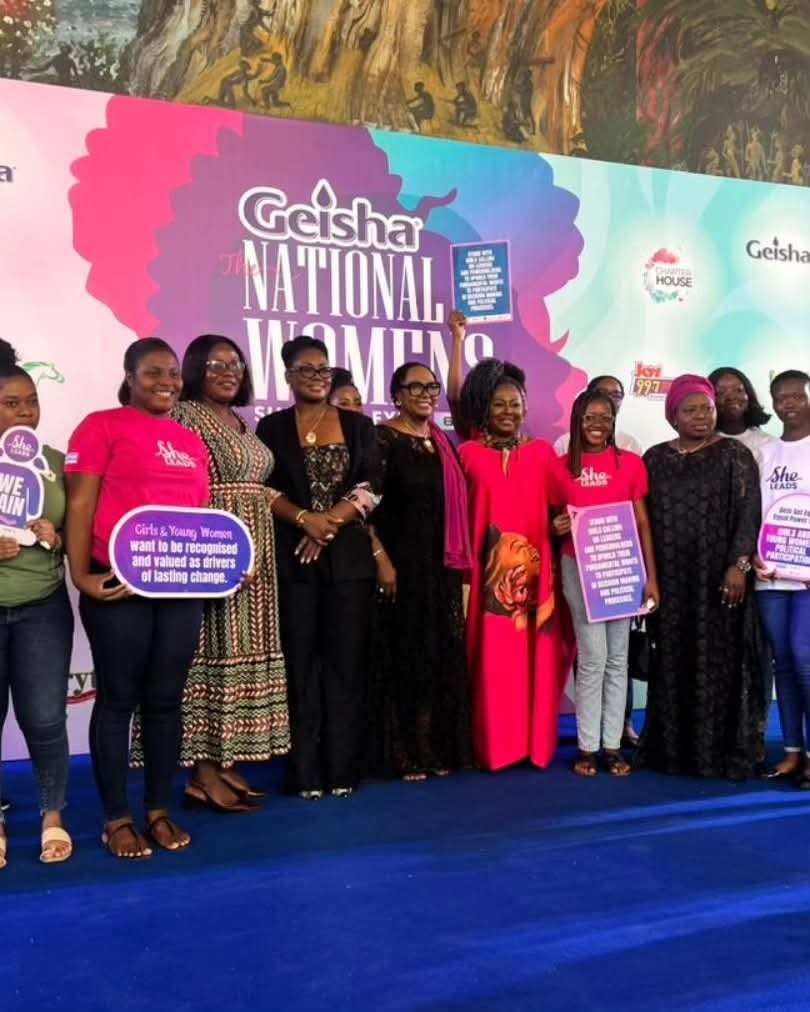
The 7th National Women’s Summit & Expo introduces Industry Spotlight

- /home/u249204778/domains/spectator.com.gh/public_html/wp-content/plugins/mvp-social-buttons/mvp-social-buttons.php on line 27
https://spectator.com.gh/wp-content/uploads/2025/02/FB_IMG_1739557653240-810x600.jpg&description=The 7th National Women’s Summit & Expo introduces Industry Spotlight ', 'pinterestShare', 'width=750,height=350'); return false;" title="Pin This Post">
- Share
- Tweet /home/u249204778/domains/spectator.com.gh/public_html/wp-content/plugins/mvp-social-buttons/mvp-social-buttons.php on line 72
https://spectator.com.gh/wp-content/uploads/2025/02/FB_IMG_1739557653240-810x600.jpg&description=The 7th National Women’s Summit & Expo introduces Industry Spotlight ', 'pinterestShare', 'width=750,height=350'); return false;" title="Pin This Post">
As the world confronts the complex challenges of sustainable development, food security, and economic growth, one thing is clear: women are essential to the future of agribusiness.
Recognizing this vital contribution, the 7th National Women’s Summit & Expo is set to shine a spotlight on women in agribusiness through its new Industry Spotlight Series with an event dubbed; ‘Women in Agribusiness Industry Mixer’.
This exciting initiative aims to elevate the voices, achievements, and impact of women within the agricultural sector, ultimately strengthening Ghana’s food value chain and boosting economic development. The event is slated for Friday, 21st February at the Kosmos Innovation Center at 5pm prompt.
Agriculture: The Backbone of Ghana’s Economy
Agriculture is the beating heart of Ghana’s economy, supporting millions of livelihoods—particularly those of women.
The sector accounts for around 20% of the country’s GDP and plays an essential role in driving economic growth. Women are at the forefront of food production, processing, distribution, and market innovation, making crucial contributions to the sector’s ongoing development. Yet, despite their significant impact, women in agribusiness still face barriers such as limited access to finance, technology, and markets, which hinder their full participation and potential.
Unlocking the Potential of Women in Agribusiness
The 7th National Women’s Summit & Expo aims to tackle these challenges head-on, providing a platform for engagement, knowledge-sharing, and policy discussions.
On February 21, 2025, the Women in Agribusiness Industry Mixer at the Kosmos Innovation Center will gather women entrepreneurs, agribusiness professionals, investors, and key stakeholders.
The event will facilitate idea exchange, explore potential partnerships, and drive collaborative solutions. Discussions will focus on four critical areas:
The 7th National Women’s Summit & Expo 2025 is more than just an event—it’s a call to action for gender equality. By focusing on agribusiness, an industry crucial to economic transformation, this year’s summit will serve as a launchpad for meaningful engagement, policy dialogue, and business opportunities.
Participants will
• Network with industry leaders, investors, and policymakers
• Explore partnerships and collaborative solutions
• Engage in high-level discussions on key industry challenges
• Showcase innovative products and services
• Champion the future of women in agribusiness
At the National Women’s Summit & Expo on March 7, will focus thought-provoking and in-depth discussion on “Women in Agribusiness” as part of our Industry Spotlight series.
Additionally, they will delve into the following topics;
1. Access to Finance and Investment Opportunities for Women in Agriculture
Access to finance remains one of the biggest hurdles for women in agribusiness, restricting their ability to scale and innovate. The Industry Mixer will offer a unique opportunity for women entrepreneurs to connect with investors, financial institutions, and development partners, exploring innovative financing models and investment opportunities that can fuel growth.
2. Sustainable and Innovative Agricultural Practices
As pressure mounts for the agricultural sector to adopt sustainable and innovative practices, the event will spotlight best practices in sustainable agriculture. Success stories will be shared, and participants will gain insights into innovative approaches that enhance productivity while minimizing environmental impact in production, processing, and distribution.
3. Market Expansion and Value Chain Optimization
Many women in agribusiness struggle with limited access to markets and value chains.
The mixer will focus on strategies to overcome these barriers, facilitating discussions on how women-led ventures can tap into local, regional, and even global markets, thereby unlocking growth and expanding their reach.
4. Policy Advocacy for Gender-Inclusive Agribusiness Growth
To create an environment where women in agribusiness can truly thrive, policy reform is key.
The event will bring together policymakers, industry leaders, and civil society organizations to discuss and advocate for policy initiatives that foster gender-inclusive growth within the agribusiness sector.
The Industry Spotlight Series – Women in Agribusiness is a Charterhouse production and brought to you by Geisha in partnership with Kosmo Innovations Center.
Admission is absolutely free!







News
Vice President Opoku-Agyemang meets Ghanaian community in Rwanda, shares updates on reset agenda
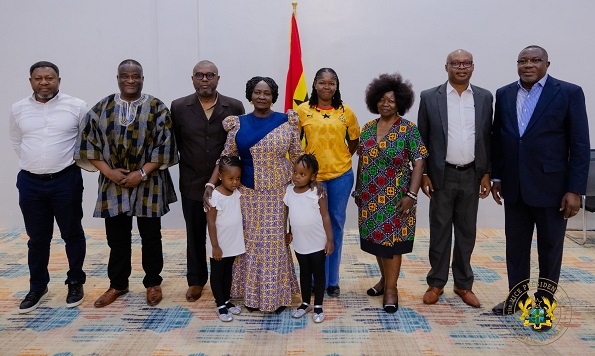
Vice President Prof. Naana Jane Opoku-Agyemang has met with members of the Ghanaian community in Kigali, Rwanda, to discuss their experiences abroad and developments back home.
The meeting, held while she was in Kigali for the inaugural Africa Mindset Reset Forum, saw the Vice President encouraging Ghanaians living abroad to register with Ghana’s diplomatic missions to stay connected and access support when needed.
She and her team shared updates on government’s Reset Agenda, highlighting progress in stabilising the economy and government’s commitment to prudent spending and responsible resource management.
“Our approach is to build from the ground up so that national development reaches communities,” Prof. Opoku-Agyemang said.
She noted that this includes major investments in road infrastructure, explaining that good roads support virtually every aspect of development. Government is also deepening decentralisation and directing more resources to local development through the District Assemblies Common Fund, with guidelines to ensure the funds translate into tangible improvements across districts.
On health, the Vice President said government’s broad objective remains universal healthcare.
She pointed to Free Primary Healthcare as a measure to strengthen preventive care and access at the community level, while the Ghana Medical Trust Fund supports treatment for costly non-communicable diseases. Together with the uncapping of the National Health Insurance Scheme, she said, these interventions aim to progressively close gaps in healthcare access.
She added that government continues to strengthen secondary schooling through dedicated and sustainable funding, while addressing some of the challenges that affected performance.
Prof. Opoku-Agyemang thanked the Ghanaian community for the warm reception and for upholding Ghana’s good reputation in Rwanda, and encouraged them to continue looking out for one another and to remain worthy ambassadors of the country.
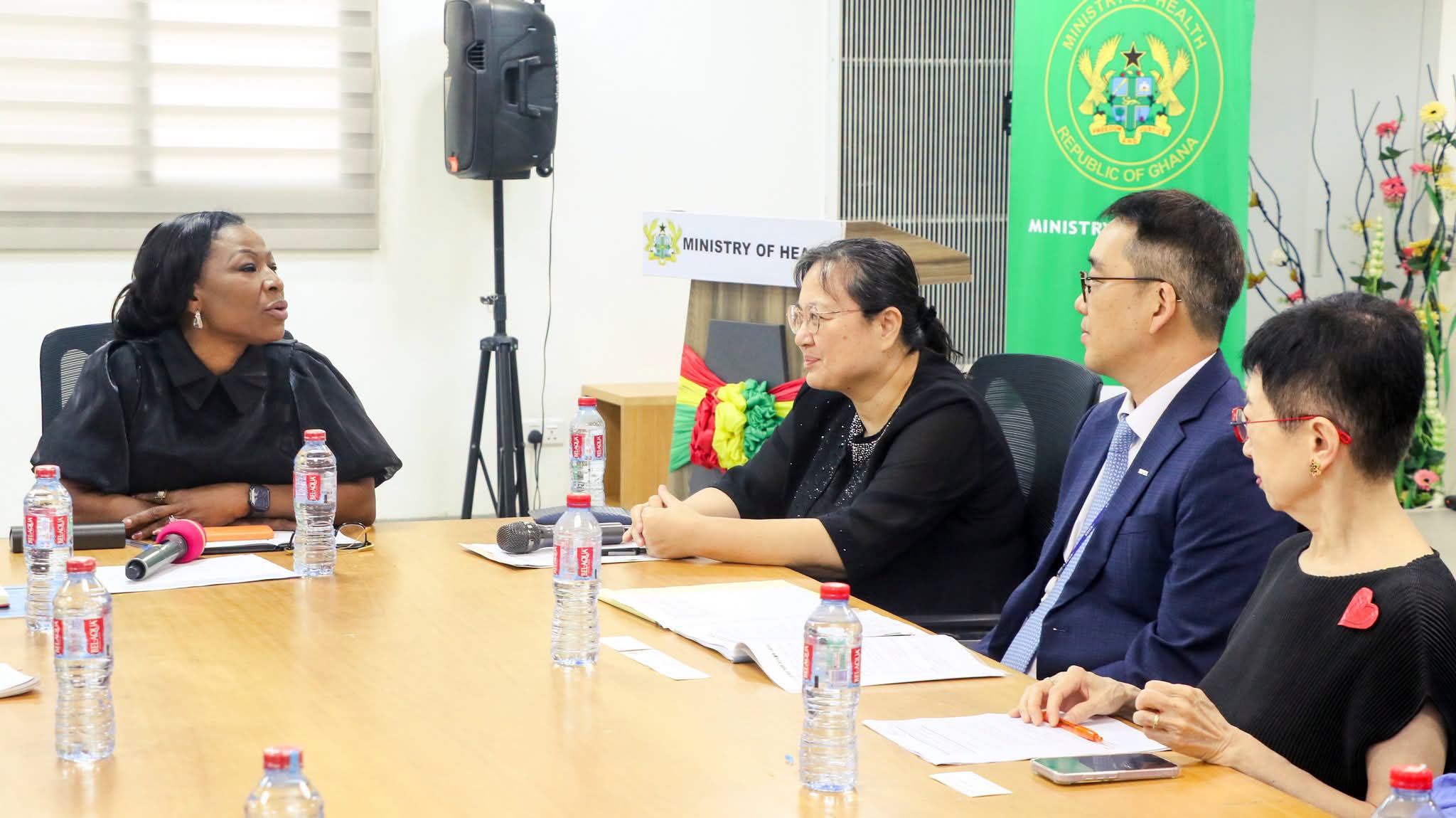
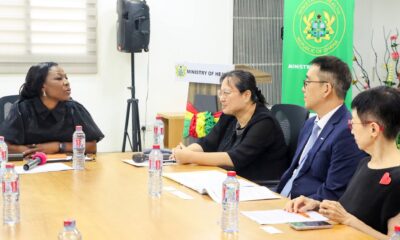
A delegation from the Korea International Cooperation Agency (KOICA) has paid a courtesy call on the Deputy Minister for Health, Prof.Dr. Grace Ayensu-Danquah, to explore areas of collaboration in support of Ghana’s efforts to reduce maternal mortality.
The delegation was led by the Country Director of KOICA, Mr. Dong Wan Woo.
The meeting focused on Ghana’s Maternal Mortality Action and Response Programme (MMARP) and how KOICA can support the country’s push to end preventable maternal deaths.
The engagement provided an opportunity for both parties to discuss strategies to strengthen maternal healthcare services.
Also, they looked at how to address gaps in care delivery, and improve health outcomes for mothers across the country.
By Edem Mensah-Tsotorme