Editorial
Let’s do our part to stop suicide attempts

Urgent action is needed to stop suicide attempts because suicide poses major public health risks and have long-lasting social, emotional, mental, physical, and economic effects.
Suicide refers to taking one’s own life. People may use it as a means of escaping pain or misery.
Research indicates that for those aged 10 to 34, suicide is the second most common cause of death, and for those aged 35 to 54, it is the fourth most common.
In light of this, immediate action is needed to guarantee that suicide mortality rates are lowered.
This September, as the world observes National Suicide Prevention Awareness Month, The Spectator wishes to appeal to all individuals and organisations across the nation to raise awareness of the issue of suicide and promote its prevention.
Last Sunday, was World Suicide Prevention Day. The theme was “Creating Hope Through Action.”
The rate of suicide attempts is disturbing. Now children are included in addition to the teens. There is an urgent need to address suicide.
Suicide can be linked to a high unemployment rate that creates financial difficulties, poverty, neglect, and major health issues.
Due to the high divorce rate in society today, marital dissolution could possibly be linked to suicide.
A number of mental health issues, including depression, post-traumatic stress disorder, and emotional stress, have been linked to a higher risk of suicide. According to research, 46 percent of suicide victims had a diagnosable mental health issue.
The Spectator urges all to come onboard to address this issue as suicidal thoughts can afflict everyone, regardless of age, gender, or background.
Governmental and non-governmental organisations must strengthen their support systems, particularly for people who have attempted suicide, in order to prevent future occurrence.
A woman who had tried suicide described how she had suicidal thoughts and believed that was her only option. She suggested that there should be separate rooms for doctors sharing consulting rooms as patients do not feel comfortable discussing problems while visiting the hospital.
To help families manage people who are at danger of suicidal behaviours, healthcare officials should educate the public on coping and problem-solving techniques.
Another crucial area that requires attention from policymakers is the improvement of access to and delivery of suicide care.
Individuals who display violent behaviour, mood swings, increased alcohol and drug use, and withdrawal from friends, family, and the community must be recognised and given support by their families and communities.
Some families have lost loved ones to suicide. No one is safe, that is why we need to raise awareness, advocate for alternatives to suicidal acts, and provide support for those who survived.

In addition to the severe flooding that Accra is already experiencing a major sanitation crisis is imminent as the Kpone dump approaches closure.
Currently, there are now just two significant disposal sites in the area: the Adepa dumpsite in the Ga West Municipal Assembly, which is close to Amasaman, and the Kpone Waste Landfill.
Inquiries so far, revealed that the Kpone site is almost at capacity and will likely close in the next six months. As a result, waste is accumulating at local markets and municipal collection points throughout the capital.
The situation has been made worse by the recent terrible floods, and immediate action is required to prevent the impending crisis.
The fundamental issue is that accumulating uncollected waste during rainy seasons poses significant threats to public health, including the possibility of cholera, typhoid, and malaria outbreaks.
Subsequent investigations showed that the Kpone plant, which was initially built to manage 500 tonnes of waste per day, has been handling almost twice that much, shortening its lifespan.
Many towns’ waste collection operations have been badly impacted by this looming shutdown, and the fact that Accra has few disposal choices is even more disturbing.
Now, waste collection vehicles face abnormally long queues at the Kpone site, and residents complain that most of the tricycles, referred to as “Aboboyaa,” leave rubbish uncollected in residential and commercial areas.
Although the Zoompak waste transfer station was authorised by the government to reopen in order to help manage daily waste volumes, it is still unable to handle the enormous volumes of waste generated every day.
According to Dr. Peter Kwesi Dagadu, Managing Director of the Landfills Company Limited, managing the capital’s expanding waste burden has become extremely difficult due to the scarcity of disposal facilities, especially in light of the city’s fast population increase and rising waste production.
As a result, the situation has put a great deal of strain on the infrastructure already in place and jeopardizes attempts to keep Accra’s waste management system sustainable and effective.
The Spectator agrees with him that new infrastructure for disposing of waste is desperately needed, as a change to a more environmentally friendly waste management techniques.
It is admirable that he suggests Ghana adopt recycling and garbage recovery as a long-term solution to the nation’s sanitation problems.
We therefore, implore the government to support this recycling objective by enacting strict laws, regulations, investments, and enforcement measures to enhance waste management nationwide.
In order to address the waste problem as quickly as possible, everyone must be involved, including private waste management companies, individuals, and households.
Dear Editor,
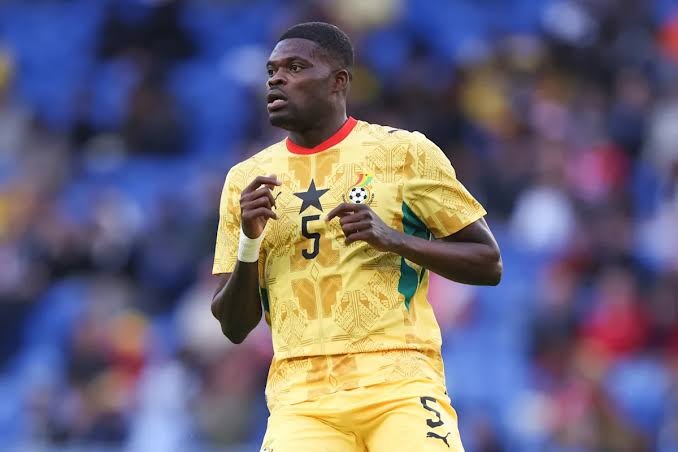
I wish to express concern over the allegations that some officials of the Ghana Football Association (GFA) demanded money from players before they are selected for national teams.
If these allegations are true, then, they threaten fairness and integrity in Ghana football.
Just as is done in other countries, selection into any national team should be based solely on merit -talent, discipline, hard work and performance, not on a player’s ability to pay money.
Such practices, if allowed to continue, will discourage many talented but less privileged players from pursuing their dreams. It will also damage the reputation of the GFA and reduce public confidence in the country’s football administration.
Those reports are quite unfortunate but some of us want to believe in the response issued by the FA but would also advise the GFA to conduct some investigation, because like it is often said, there is no smoke without fire.
If it means an individual is going about making such demands on the blind side of the FA, such an investigation can expose the person.
I therefore urge the GFA to investigate these allegations thoroughly and transparently. Any official found guilty should face the appropriate sanctions. At the same time, individuals making the allegations should provide credible evidence so the truth can be established.
Ghanaian football belongs to all of us, and we must protect its integrity by ensuring that merit, transparency and accountability guide player selection.
From John Boateng,
Mamprobi