News
Religious institutions urged to engage sign language interpreters

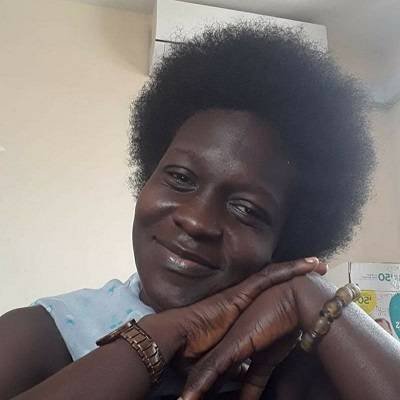
Ms Nukunu Akushika Deku, an Advocate for Persons who are Deaf
An advocate for the deaf, Ms. Nukunu Akushika Deku, has asked religious institutions to engage the services of sign language interpreters to make their meetings friendly for the hearing-impaired in society.
In an interview with The Specta¬tor on Tuesday, Ms. Deku, pointed out that the deaf have not been fairly treated in this regard and said it was about time every religious institution saw the need for inter¬preters to facilitate communication between the hearing community and the deaf.
The absence of the sign language interpret¬ers in the churches, mosques and religious institutions has for decades, restricted the deaf from joining their events, a situation Ms Deku found as discrimi¬natory.
“Clearly, this de¬feats the purpose for the establishment of these institutions whose messages are supposed to be propagated to all manner of persons, re¬gardless of their physical challenges,” she said.
The deaf, she said, “just like other physically chal¬lenged persons, suffer various forms of discrimination and injustice and to think that the church or the mosque and others which should be places for them to find solace have not addressed these concerns; it leaves much to be desired.”
She recalled as a child how she followed her grandmother to church and there was no sign language interpretation, making her uncom¬fortable because she could not hear to benefit in any way.
Ms. Deku said her grandmother explained that she did not want her to go to churches with interpreters for the deaf because she hoped to hear with time.
She said her ability to follow church proceedings was a huge relief to her and so she could appreciate the inconvenience religious institu¬tions which do not have sign lan¬guage interpreters were taking their members through.
She said if the churches and mosques assisted deaf persons to un¬derstand their sermon and activities, it would encourage more of them to patronise their activities and begin to enjoy that sense of belonging.
Ms. Deku said the current state of affairs made deaf persons feel excluded because every activity obviously was not planned with them in mind.
She questioned how they were supposed to understand readings, teachings, songs and announcements if there were no sign language inter¬pretation.
She said it was about time reli¬gious institutions prioritised the deaf like all other persons by train¬ing sign language interpreters to bridge the gap between the hearing and non-hearing.
She said when the deaf were offered the platform, they would be efficient to enhance growth wherev¬er they find themselves.
She bemoaned the development where decisions or major policies about them can be taken without consulting them and appealed to religious institutions to take the initiative to embrace the deaf com¬munity.
From Dzifa Tetteh Tay, Adjei Kojo


The Ghana High Commission in Pretoria has advised Ghanaians living in South Africa to remain vigilant and take precautionary measures ahead of planned protest activities expected on June 30.
In a public advisory issued on Monday, June 29, the Mission urged Ghanaian nationals to prioritise their safety following a deadline announced by a group known as “March and March” and its affiliated organisations, which could lead to demonstrations and disruptions in parts of the country.
The High Commission advised Ghanaians to stay indoors, especially in central business districts, transport hubs, informal trading areas and other locations where protests may occur.
It encouraged them to temporarily close their businesses where necessary and avoid unnecessary movement until the situation stabilises.
The Mission further urged members of the Ghanaian community to avoid confrontations or provocative discussions, including on social media, and to ensure that their passports, residence permits and other identification documents were readily available at all times.
According to the High Commission, emergency telephone lines have been activated to provide assistance and receive reports from Ghanaians who may require help during the period.
It encouraged Ghanaians to remain calm, obey the laws of South Africa and cooperate fully with local authorities.
The Mission advised them to rely only on information from credible official sources and avoid sharing unverified reports or rumours that could create unnecessary panic.
The Ghana High Commission assured the Ghanaian community that it would continue to monitor developments and provide updates when necessary, adding that it remained committed to protecting the welfare of all Ghanaian nationals in South Africa.
By: Jacob Aggrey
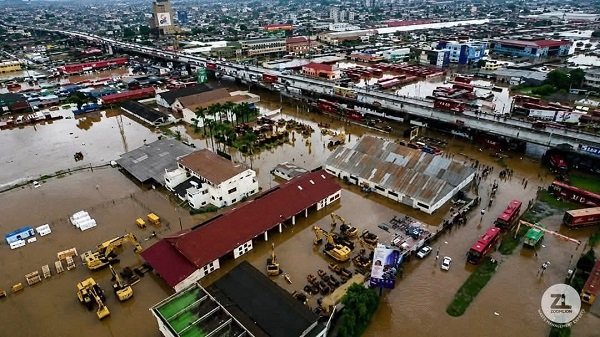
The New Patriotic Party (NPP) has criticised the government’s handling of the flooding that hit parts of Accra and surrounding communities on Monday, urging it to move beyond what it described as public relations activities and take decisive action to address the country’s flood challenges.
In a press release issued on June 29, the party expressed sympathy to thousands of people affected by the floods but maintained that the government had failed to respond effectively to the recurring disaster.
The NPP noted that communities including the N1 Highway, Apenkwa, Achimota, Kaneshie, Weija, Spintex, Darkuman Junction and the Kwame Nkrumah Interchange were flooded after heavy rains.
According to the party, these communities have experienced flooding repeatedly over the years, making it necessary for government to adopt long term solutions.
The NPP argued that the current administration had created confusion by splitting responsibility for flood management between the Ministry of Local Government and the Ministry of Works, Housing and Water Resources.
It claimed that the arrangement had resulted in poor coordination, with the two ministries competing over responsibilities instead of working together to address the problem.
The party questioned the decision to place Deputy Chief of Staff Stan Dogbe in charge of coordinating flood response efforts.
According to the NPP, he does not have the authority to direct ministers, making the current command structure ineffective.
The opposition party further alleged that some anti flood measures announced by the government had either not been implemented or had been poorly executed.
It claimed that delays in the release of funds for flood mitigation programmes had affected ongoing interventions.
The NPP rejected recent comments by President John Dramani Mahama that flooding was partly caused by poor environmental practices and indiscipline among some citizens.
It argued that while public cooperation was important, the government should take responsibility for designing and implementing effective flood management policies.
The party called on the President to place flood management under one ministry, appoint a single minister to lead the response, and provide a public account of the work and spending of the Anti Flood Task Force.
It also urged the government to work closely with Metropolitan, Municipal and District Assemblies and technical experts to improve land use planning, sanitation management and drainage infrastructure.
The statement, signed by the NPP General Secretary, Justin Kodua Frimpong, stressed that the party would continue to hold the government accountable while standing with families affected by the floods.
By: Jacob Aggrey